Folic acid in foods: where there is plenty — and what cooking takes away
Futures Nutrition Editorial Team · 27 August 2026

The short answer: foods contain no folic acid but folate — and the table values describe the raw, fresh food. Between field and plate, storage, soaking and heat remove 20 to 70 per cent depending on the preparation, and of what is left the body takes up only about half. Anyone wanting to estimate their intake has to count both losses. This is precisely why measured intake figures regularly come out below what the menu promises on paper.
The good news comes first: folate is widely distributed. It is in green vegetables, in pulses, in cabbage, in wholegrains and in eggs. A diet without folate hardly exists — but one that just misses the reference values does, because something is lost at three points at once.
Where the name comes from and why it matters here
"Folate" derives from the Latin folium, the leaf — the compound was first isolated from spinach leaves in 1941. The name is therefore a place of discovery, not a chemical description.
For this article the distinction is of practical relevance: folate is the umbrella term for the naturally occurring forms in food, folic acid the synthetic compound in preparations and fortified products. Both do the same job in the body, but they are absorbed to different degrees. What this means for the conversion is set out in detail in Folic acid or folate: where the difference lies.
The foods with the highest contents
The following values come from the German Federal Food Code (Bundeslebensmittelschlüssel) and refer to 100 grams of the raw, ready-to-eat food.
| Food | Folate per 100 g |
|---|---|
| Beef liver | 590 µg |
| Wheat germ | 520 µg |
| Soya beans, dried | 240 µg |
| Chickpeas, dried | 340 µg |
| Lentils, dried | 170 µg |
| Kale | 190 µg |
| Spinach | 145 µg |
| Lamb's lettuce | 145 µg |
| Brussels sprouts | 180 µg |
| Broccoli | 110 µg |
| Asparagus | 110 µg |
| Egg | 65 µg |
| Wholemeal bread | 30 µg |
| Orange | 30 µg |
Two rows need a comment. Liver heads every folate table, but it is expressly not recommended for pregnant women: it contains so much vitamin A that a single portion exceeds the upper limit. The recommendation to forgo liver in pregnancy therefore stands in the way of the very food richest in folate.
Dried pulses appear in the table with high values because the water is missing from them. Cooked, chickpeas come to around 50 to 60 µg per 100 g — the content is distributed over the water taken up. Anyone who confuses dry weight with plate weight calculates themselves rich by a factor of three to four.
The three points at which folate disappears
Storage
Folate is sensitive to light and oxygen. At room temperature spinach loses a considerable part of its content within three days; in the fridge the breakdown runs more slowly, but it runs. Frozen vegetables often do better here than supposedly fresh goods that have been travelling for days — they are usually flash-frozen a few hours after harvest.
Soaking
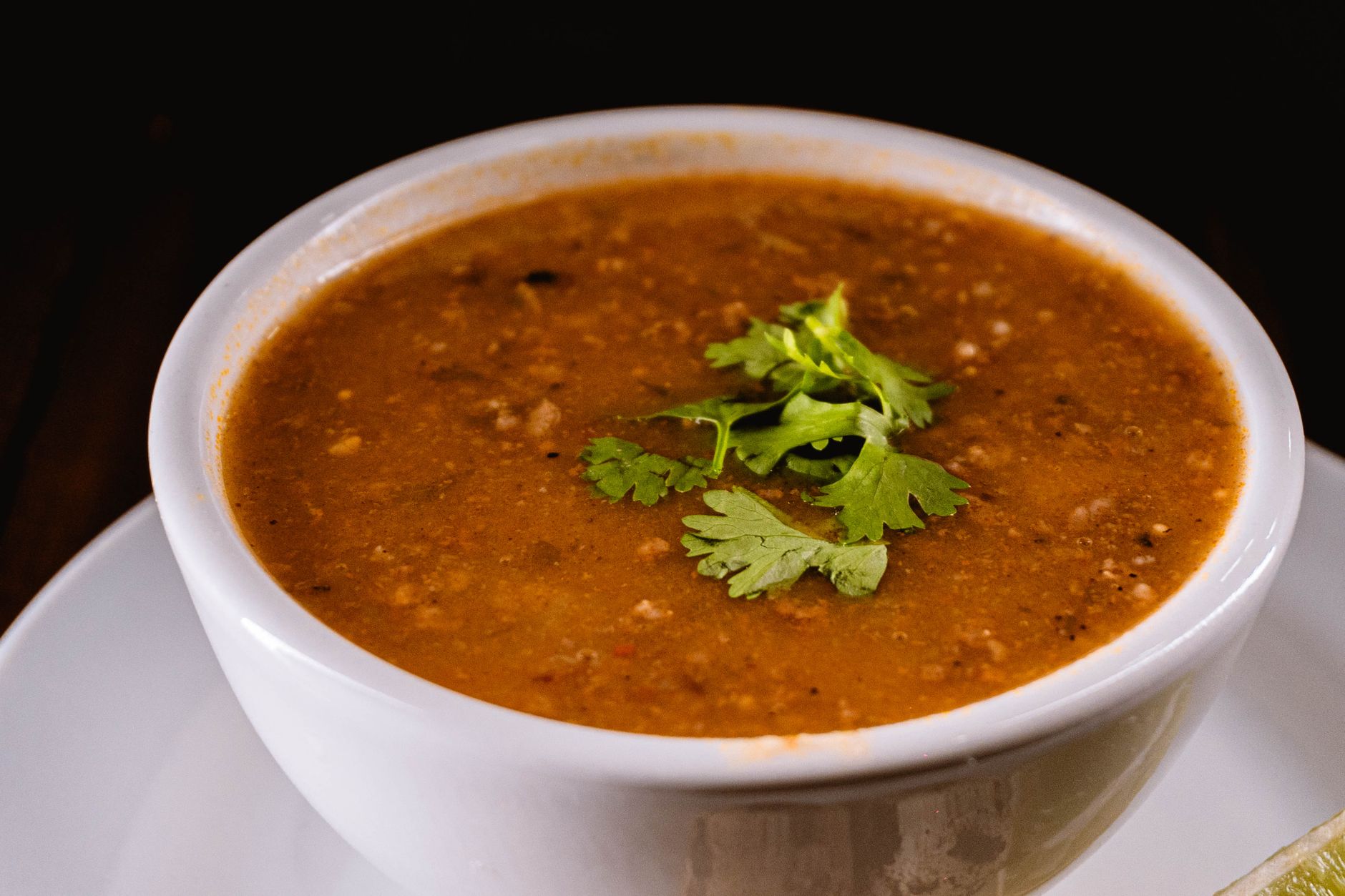
Folate is water-soluble. Anyone who cuts vegetables small and then soaks them or boils them in plenty of water gives part of it up to the cooking water. For leafy vegetables in generous water, losses of 50 per cent and more are documented — not destroyed, but poured away.
Heat
On top of this comes thermal breakdown. The losses rise with temperature and duration. Taking soaking and heat together, the figures for cooked leafy vegetables lie between 20 and 70 per cent depending on the method.
From this follow three ways of preparing food that make the difference: steam instead of boil, short instead of long, use the cooking water instead of pouring it away — as a soup base, for instance. And where the taste allows: raw. Lamb's lettuce delivers its folate in full, cooked spinach only a part.

What the body takes up from it
After the preparation comes the second halving. Folate from foods is present predominantly as polyglutamate and has to be cleaved in the gut before it can be absorbed. Bioavailability is therefore put at around 50 per cent, while synthetic folic acid from preparations is about 85 per cent available.
Exactly this difference lies behind the conversion factor 1.7, with which folic acid is converted into folate equivalents. It is not a judgement — it is a conversion between two quantities that would otherwise not be comparable.
One day, worked through
A menu that looks good on paper:
- 200 g cooked spinach
- 150 g cooked chickpeas
- 2 slices of wholemeal bread (100 g)
- 1 egg
- 1 orange
Calculated raw, that comes to around 640 µg folate. After realistic preparation losses, roughly 350 to 450 µg remain on the plate depending on the method. At a bioavailability of around 50 per cent that corresponds to approximately 175 to 225 µg folate equivalents — against a reference value of 300 µg for adults.
The menu is not bad. It is above average in folate. And it still lands below the reference value, because two halvings take place one after the other. How the various reference values relate to one another and which figure applies to what is set out in Folic acid daily requirement: 200, 300 or 400 µg?.
Where diet alone is not enough
For the general case a folate-rich menu is a sensible and sufficient answer. There is one situation in which the expert bodies see it differently: trying to conceive and early pregnancy.
The reason is not mistrust of vegetables but the time window. Neural tube closure is complete about four weeks after conception — at a point when many women do not yet know about the pregnancy. A change of diet works too slowly to fill a store in time. This is why supplementation is added to the diet here. The details are set out in Folic acid in pregnancy.
A second vitamin that needs thinking about
Anyone covering their folate intake through plant foods does not cover vitamin B12 with it — that occurs practically only in animal products. Both vitamins work in the same metabolic pathway, and a high folate intake can conceal the blood count changes of a B12 deficiency while the neurological consequences carry on. Why this combination deserves attention particularly with a plant-based diet is set out in Folic acid and vitamin B12.
What is on the pack

Folic acid 1,000 µg supplies 500 % of the nutrient reference value per tablet. Further strengths and combinations are in the folic acid category. What to look at when comparing two packs is set out in the folic acid buying guide.
Food supplements are not a substitute for a balanced and varied diet and a healthy lifestyle.
For folate, eight claims are authorised in the EU under Regulation (EU) No 432/2012; these five apply regardless of whether the folate comes from the food or from a preparation:
Folate contributes to normal blood formation.
Folate contributes to normal amino acid synthesis.
Folate contributes to normal psychological function.
Folate contributes to the reduction of tiredness and fatigue.
Folate contributes to maternal tissue growth during pregnancy.
Frequently asked questions
Is frozen spinach worse than fresh? As a rule not — often it is better. Frozen vegetables are usually processed a few hours after harvest, while "fresh" goods have transport and storage behind them, during which folate is broken down. What matters more is how gently they are prepared afterwards.
Can I make up for the losses with larger portions? Arithmetically yes, in practice only to a point. The losses are proportional, not absolute — a double portion loses the same share. It is more effective to start with the preparation: steam instead of boil, cook for less time, use the cooking water as well.
Are fortified foods an alternative? They contain synthetic folic acid, which is better available than folate from the food. Unlike in some countries, the fortification of flour is not mandatory in Germany but voluntary — the contribution therefore depends on which products actually end up in the shopping basket. Anyone using several fortified products plus a preparation should add the amounts together; the upper limit applies to the sum of all synthetic sources.
How do I tell whether my intake is enough? Not from the menu but from the laboratory value — and there not from every one. Serum folate fluctuates with the last meals, while red cell folate reflects the supply over months. Which value is meaningful when is set out in Recognising folate deficiency.