Magnesium daily requirement: 375, 350 or 250 mg?
Futures Nutrition Editorial Team · 10 August 2026

10 August 2026
In short: the 375 mg printed on almost every pack is not your personal daily requirement. It is a single EU reference value for labelling. The figure that adult intake in Germany is actually oriented towards is lower – 350 mg for men and 300 mg for women. And the amount that the German Federal Institute for Risk Assessment (BfR) proposes as a maximum for a food supplement is lower still: 250 mg per day.
Three numbers, three different meanings. Because they are cheerfully mixed up on packs, in tables and in buying guides, it is easy to come away with the impression that 375 mg has to be added on top every day. That is a misunderstanding – and an expensive one. This article sorts the figures out and shows how much an ordinary diet already covers.
Magnesium contributes to the reduction of tiredness and fatigue. Magnesium contributes to normal muscle function. Magnesium contributes to the normal functioning of the nervous system.
The three figures at a glance
| Figure | Who sets it | What it applies to |
|---|---|---|
| 375 mg | EU, Regulation (EU) No 1169/2011 | Nutrient reference value (NRV) – the basis for the percentages on the label |
| 350 mg (men) / 300 mg (women) | D-A-CH reference values, published among others by the German Nutrition Society (DGE) | Estimated value for adequate intake from all sources: food, drink, supplements |
| 250 mg | BfR | Proposed maximum level for magnesium in a food supplement, in addition to the diet |
The decisive difference is in the right-hand column. The D-A-CH value means total daily intake, so first and foremost what lands on the plate and in the glass. The BfR value means only the amount that comes on top as a capsule or tablet. Adding the two figures together, or playing them off against each other, makes no sense – they describe different things.
Why the NRV is higher than the estimated value
The NRV is one single value for everybody: men, women, adolescents. So that it fits as many people as possible, it is oriented towards the upper end of the reference values rather than their middle. "100 % NRV" on a pack therefore only means: this daily portion contains 375 mg of magnesium. It does not mean: that is how much you are missing.
An estimated value is an estimated value
For magnesium the D-A-CH reference values explicitly give estimated values and not a "recommended intake". That is not word play but a statement about the evidence: the available studies are not sufficient for a firm recommendation, so a value is given that is regarded as adequate.
There is a second point worth knowing before clinging to a number: according to the DGE there is currently no suitable biomarker for magnesium status. Magnesium sits mainly inside cells and in bone; the serum level stays stable for a long time even when intake has been low for an extended period. A single laboratory value therefore does not reliably answer the question "do I need more?". Interpreting blood values belongs in medical hands in any case.
Reference values by age and life stage
The current D-A-CH estimated values (state of revision: 2021) in milligrams per day:
| Age | male | female |
|---|---|---|
| 1 to under 4 years | 170 | 170 |
| 4 to under 7 years | 190 | 190 |
| 7 to under 10 years | 240 | 240 |
| 10 to under 13 years | 260 | 230 |
| 13 to under 15 years | 280 | 240 |
| 15 to under 19 years | 330 | 260 |
| 19 years and over | 350 | 300 |
| Pregnant women | – | 300 |
| Breastfeeding women | – | 300 |
Two things stand out.
First: from the age of 19 nothing changes any more – not even in later life. Someone of 70 has the same estimated value as at 25. What does change over the years is actual intake: smaller portions, less wholegrain, fewer pulses. And with long-term medication it is worth asking at the doctor's surgery, because individual groups of medicines affect magnesium balance.
Second: pregnant and breastfeeding women have the same value as other women aged 19 and over. Older tables and many guides give higher figures here – the reference values were revised in 2021. Whether a food supplement makes sense during pregnancy and breastfeeding is not decided from a table but in conversation with a doctor or midwife.
And sport? There are no separate reference values for athletes. The authorised statements here are simply: magnesium contributes to electrolyte balance and magnesium contributes to normal muscle function. Anyone who trains a lot usually eats more as well – and therefore takes in more magnesium anyway.
What the diet contributes
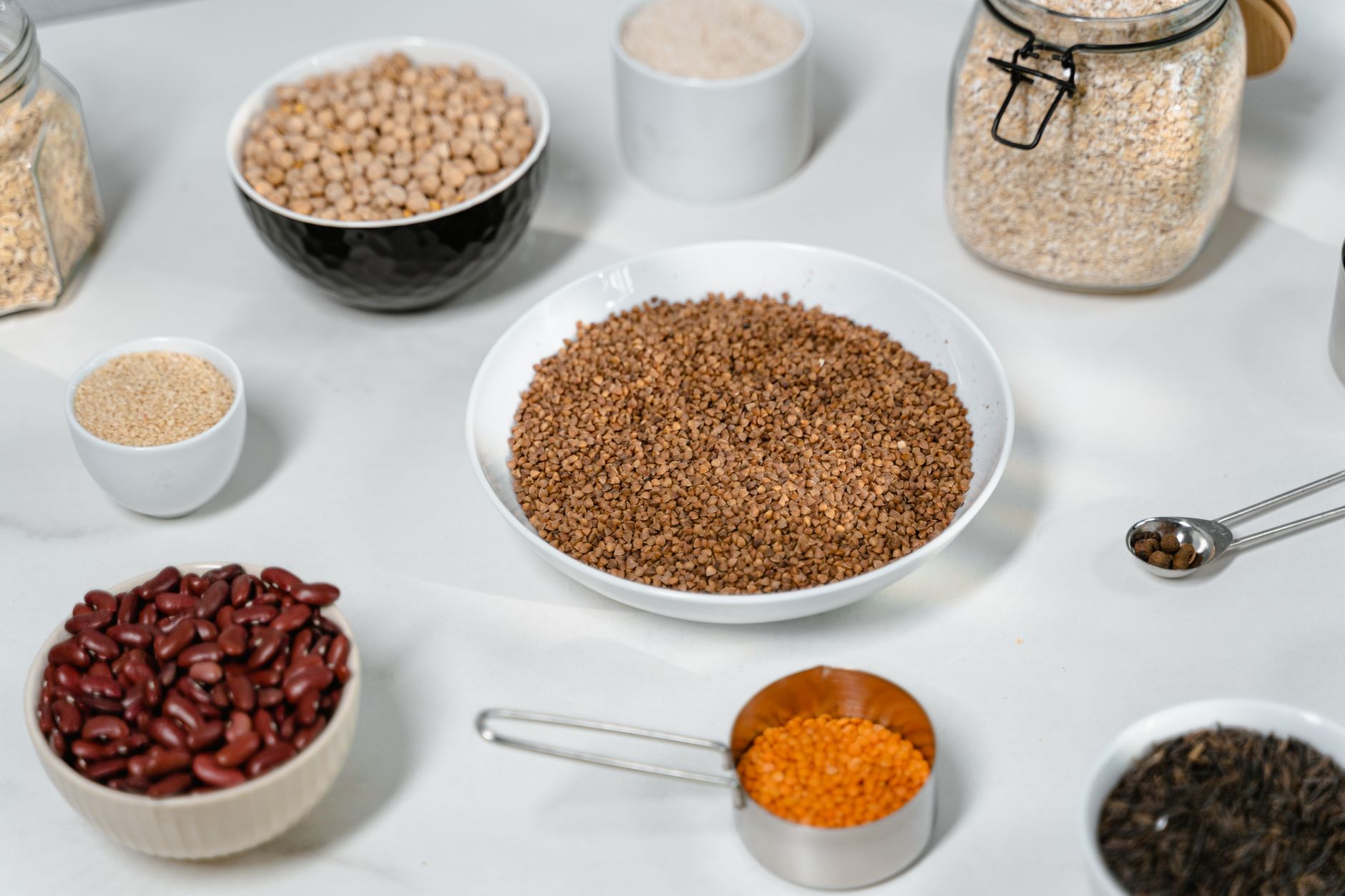
This is the part that buying guides like to skip. According to the German National Nutrition Survey II, daily magnesium intake in Germany averages around 345 mg in men and 284 mg in women – close to the estimated values, and slightly below them for women. The gap that could be at issue at all is therefore small for most people, and not 375 mg wide.
This example shows how quickly an ordinary day adds up:
| Food | Amount | Magnesium (approx.) |
|---|---|---|
| Rolled oats | 60 g | 80 mg |
| Wholegrain bread | 2 slices (100 g) | 60 mg |
| Almonds | 25 g | 65 mg |
| Wholegrain pasta, cooked | 200 g | 90 mg |
| Broccoli, cooked | 200 g | 40 mg |
| magnesium-containing mineral water | 1 litre | 50 mg |
| Total | around 385 mg |
The values are averages from nutrition tables and vary with variety, soil and preparation. The point is not the second decimal place but the order of magnitude: a day with wholegrain, nuts and pulses lands in the range of the reference values. A day with white bread, a ready meal and lemonade lands clearly below it.

An often overlooked source is drinking water. In Germany mineral water may be labelled as "contains magnesium" if it holds more than 50 mg of magnesium per litre; some waters are well above that. The content is given in the analysis on the bottle label – two litres of a mineral-rich water can contribute more than a tablet.
If you do supplement: which figure do you calculate with?
If a gap remains after this stocktaking, the question is one of milligrams of elemental magnesium – and this is where the second confusion lies in wait: "500 mg of magnesium citrate" is not 500 mg of magnesium, because the binding partner is on the scales too. Which compound brings how much of it is set out in Magnesium forms compared.
As a guide: our magnesium bisglycinate 150 mg provides 150 mg of elemental magnesium per tablet, that is 40 % of the nutrient reference value. Two tablets come to 300 mg and thus exceed the BfR maximum of 250 mg – which is why the daily portion stated on the pack is not a suggestion but the limit.

In combination products such as hawthorn + magnesium the magnesium share per daily portion is smaller; here too the figure on the pack applies. You will find an overview in the minerals category.
Food supplements are not a substitute for a balanced and varied diet and a healthy lifestyle.
The authorised claims for magnesium
So that it is clear what may be said at all – this is the complete list (Regulation (EU) No 432/2012):
- Magnesium contributes to the reduction of tiredness and fatigue.
- Magnesium contributes to normal muscle function.
- Magnesium contributes to the normal functioning of the nervous system.
- Magnesium contributes to electrolyte balance.
- Magnesium contributes to normal energy-yielding metabolism.
- Magnesium contributes to the maintenance of normal bones and teeth.
None of these claims is tied to a particular daily amount above the reference values. More magnesium therefore does not mean more authorised effect.
Frequently asked questions
Why does the pack say 375 mg when the reference value is 350 mg?
Because the two figures come from different sets of rules. The 375 mg is the EU-wide nutrient reference value for labelling, laid down in the food information regulation. The 350 and 300 mg are the estimated values of the D-A-CH reference values for adults in Germany, Austria and Switzerland. The NRV is what counts for the percentage on the label, the estimated value for placing your own requirement.
Do I have to add 375 mg on top of what I eat?
No. The estimated value refers to total intake, and for most adults the diet covers the largest part of it. That is precisely why the BfR proposes a maximum of 250 mg per day for food supplements – not 375 mg.
How do I notice that I am getting too little?
Reliably, not at all: there is no simple self-test, and the serum value on its own says little. Anyone who suspects an inadequate supply or takes medicines long term should have this clarified by a doctor rather than supplementing on suspicion.
Do children need a magnesium supplement?
The reference values for children are considerably lower than for adults, and the usual products are designed for adults. Food supplements for children are a decision that belongs in the paediatric practice, not on the shelf.
Matching products from our range
Sources: Regulation (EU) No 1169/2011, Annex XIII (nutrient reference values); Regulation (EU) No 432/2012 (authorised claims); D-A-CH reference values for nutrient intake, magnesium (2021 revision), German Nutrition Society (DGE); DGE, selected questions and answers on magnesium; German Federal Institute for Risk Assessment, proposed maximum levels for magnesium in food supplements; German National Nutrition Survey II; German Mineral and Table Water Ordinance (labelling "contains magnesium"). Back to the Magazine