Magnesium and exercise: what sweat actually costs
Futures Nutrition Editorial Team · 10 August 2026

10 August 2026
"You lose electrolytes when you train" – that is true. The sentence is simply used for the wrong mineral most of the time. What the body gives off in sweat in any appreciable quantity is sodium, along with chloride and, to a smaller extent, potassium. Magnesium is present in sweat only in traces: even a hard session producing a litre and a half of sweat costs, according to the measured concentrations, barely more than fifteen milligrams – around four per cent of the daily reference amount.
That does not mean magnesium plays no part in training. It means the reason is usually a different one than sweat. Where the authorised claims run, what can be demonstrated by arithmetic and what the data actually say about the perennial calf-cramp question is set out here.
Magnesium contributes to electrolyte balance. Magnesium contributes to normal muscle function.
What sweat actually contains
Sweat is not a concentrate of every mineral in the body but, first and foremost, water with table salt in it. The concentrations vary widely – between individuals, with training status, with heat acclimatisation and even between two sessions in the same person. The ranges below summarise what review articles on sweat analyses in athletes report:
| Electrolyte | typical range per litre of sweat |
|---|---|
| Sodium | 230 – 2,070 mg |
| Chloride | 350 – 3,190 mg |
| Potassium | 78 – 310 mg |
| Calcium | 12 – 80 mg |
| Magnesium | 0.5 – 10 mg |
The orders of magnitude are far apart. Between sodium and magnesium there is a factor of 200 in the least favourable case, and considerably more in the typical one. Anyone wanting to replace electrolyte losses is replacing salt above all.

A training day, worked through
Take a demanding session: two hours in warm weather, roughly 1.5 litres of sweat. So that the sum does not flatter the result, it is calculated with the upper end of the measured concentrations – most people are below it.
| Loss with 1.5 l of sweat | for comparison | |
|---|---|---|
| Sodium | up to 3,100 mg | DGE reference value: 1,500 mg per day |
| Potassium | up to 465 mg | DGE reference value: 4,000 mg per day |
| Magnesium | up to 15 mg | nutrient reference value: 375 mg per day |
For sodium the loss exceeds the daily reference value – which is why salty drinks and salty food are a topic during long sessions in the heat. For magnesium it is four per cent of the daily reference amount in the worst case, one to two per cent in the realistic one. A single wholemeal roll delivers more. An overview of what each food contributes can be found in Magnesium in food: table & realistic portions.
Why requirements may still be somewhat higher
Sweat is not the only route. Two further points in particular are discussed: a higher turnover in energy metabolism and a temporarily increased excretion in urine after intense exertion. Work on the subject puts the additional requirement arising from this in the order of 10 to 20 per cent compared with non-athletes – so roughly 30 to 70 mg per day, not double.
More important than the sport itself is often the way of eating. Weight-class sports, phases with reduced energy intake and monotonous meal plans lower the intake of all minerals at once. Professional bodies regularly attribute low micronutrient intakes in athletes to this – not to sweat.
What the authorised claims cover
In the EU it is exhaustively regulated what may be said about a nutrient (Regulation (EU) No 432/2012). For magnesium that is this list – four of the six claims have a direct bearing on training:
| Authorised claim | Bearing on sport |
|---|---|
| Magnesium contributes to electrolyte balance. | the point sports products usually invoke |
| Magnesium contributes to normal muscle function. | concerns the musculature in general, not performance |
| Magnesium contributes to normal energy-yielding metabolism. | concerns metabolism, not endurance |
| Magnesium contributes to the reduction of tiredness and fatigue. | general, not related to training fatigue |
| Magnesium contributes to the normal functioning of the nervous system. | – |
| Magnesium contributes to the maintenance of normal bones and teeth. | – |
Two subtleties are decisive. First, these claims apply to the nutrient, not to a particular compound: a bisglycinate may not assert anything a citrate could not assert as well. Where the forms actually differ – namely in elemental content and in tolerability – is set out in Magnesium forms compared.
Second, all six claims describe a normal function. In legal terms "normal" is the opposite of "enhanced". So "contributes to normal muscle function" does not become a statement about more strength, more watts or faster recovery – not even through clever rephrasing.
What is not covered – and why
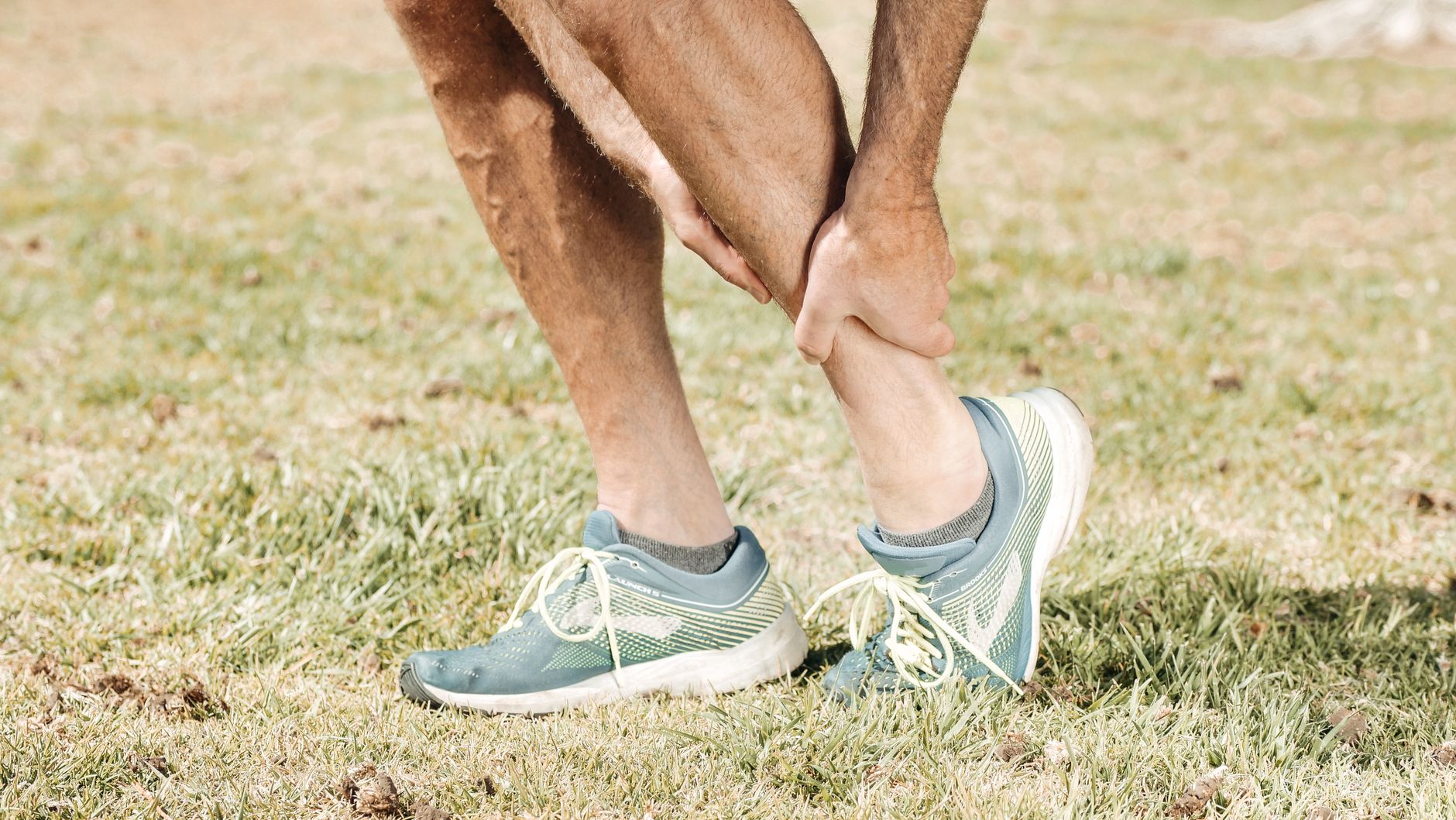
Three assertions are especially common on the sports shelf. None of them is authorised, and for two of them the data are weak as well.
Muscle cramps. The classic. A Cochrane review summarised the controlled studies in 2020 and found no clinically meaningful effect of magnesium on cramp frequency in older adults; for exercise-related cramps in athletes the data were insufficient for a conclusion. The explanation for cramps during exercise that currently prevails is a different one anyway: disturbed control between nerve and muscle under fatigue, not an empty mineral store. For the widespread notion that a cramp is a magnesium deficiency there are no reliable indications.
Performance and endurance. Systematic evaluations of magnesium and athletic performance reach inconsistent results; an authorised health claim on the matter does not exist. Where effects have been described, they mostly concerned people with a low baseline intake – which argues for "closing a gap" rather than for "more helps more".
Recovery and muscle soreness. Here too there is no authorised claim. What is not on the list may not be asserted, however plausible it sounds.
In practice: amount, timing, tolerability
Anyone supplementing is dealing with four practical quantities:
- The amount. The German Federal Institute for Risk Assessment proposes a maximum of 250 mg of magnesium per day for food supplements – in addition to the diet. That figure is not the daily requirement but an upper limit for the preparation. The difference is the most common arithmetical error on this subject.
- The portion size. Larger single amounts can have a laxative effect. The BfR therefore recommends splitting the daily amount over at least two portions – and for the same reason a large portion immediately before an intense session is not a good idea.
- The timing. Neither "before training" nor "afterwards" is covered by an authorised claim. In practice what counts is regularity, not the time of day.
- The label. What matters is the "magnesium" line in the nutrition table, not the number on the front. "500 mg magnesium citrate" is around 80 mg of magnesium.
A word on sports drinks: their composition is designed around water, sodium and carbohydrates – the items that actually move during long sessions. Any magnesium they contain is usually in the single-digit milligram range per serving and replaces neither a meal nor a measured preparation.
Our magnesium bisglycinate 150 mg provides 150 mg of elemental magnesium per tablet, that is 40 % of the nutrient reference value. Two tablets spread over the day come to 300 mg; anyone following the BfR maximum level stays with one.

An overview of all magnesium products can be found in the magnesium category; the remaining minerals are listed under minerals.
Food supplements are not a substitute for a balanced and varied diet and a healthy lifestyle.
Caution belongs somewhere else
Two notes belong to this subject because they are easily lost in a sports context. Where kidney function is impaired, the amount of magnesium belongs in a doctor's hands and not on the back of the pack – excretion is then no longer reliable. And anyone taking medicines regularly should watch the intervals: magnesium can affect the absorption of certain active substances. The package leaflet is what counts.
One common misunderstanding remains: a low magnesium value in blood serum is not a good gauge, because the body regulates that value tightly while the greater part of the magnesium sits in bone and cells. Little therefore follows from an unremarkable laboratory value – and from a cramp, certainly no diagnosis.
Frequently asked questions
Do I need a magnesium supplement as a recreational athlete?
Not automatically. Three to five training sessions a week raise requirements by perhaps 30 to 70 mg per day on paper. That is a handful of pumpkin seeds or a portion of oats. The question becomes more interesting at very high training volumes, in phases with reduced energy intake or with a monotonous diet.
Is a sports drink with magnesium better than water?
For sessions under an hour, water is enough. When it gets longer, hotter or sweatier, the limiting item is sodium – not magnesium. A drink with magnesium is not bad for that reason; it simply solves a different problem than the label suggests.
How much magnesium do I lose during a marathon?
With three to four litres of sweat and the upper measured concentrations it is around 30 to 40 mg, realistically more like 5 to 15 mg. For comparison: the sodium loss in the same situation is in the range of several grams.
I regularly get calf cramps when running. Does more magnesium help?
That is the most common expectation attached to this subject, and the studies do not support it. Exercise-related cramps are today explained predominantly by neuromuscular fatigue – volume increased too quickly, unfamiliar intensity, heat. If cramps occur frequently, are very painful or have no discernible trigger, a medical assessment is the more sensible route than a higher dose.
Matching products from our range
Sources: Regulation (EU) No 432/2012 (authorised claims); Regulation (EU) No 1169/2011, Annex XIII (nutrient reference values); Baker LB, "Sweating Rate and Sweat Sodium Concentration in Athletes: A Review of Methodology and Intra/Interindividual Variability", Sports Medicine 2017; American College of Sports Medicine, Position Stand "Exercise and Fluid Replacement", 2007; Thomas DT, Erdman KA, Burke LM, "Nutrition and Athletic Performance" (Joint Position Statement AND/DC/ACSM), 2016; Nielsen FH, Lukaski HC, "Update on the relationship between magnesium and exercise", Magnesium Research 2006; Garrison SR et al., "Magnesium for skeletal muscle cramps", Cochrane Database of Systematic Reviews 2020; Schwellnus MP, "Cause of exercise associated muscle cramps (EAMC)", British Journal of Sports Medicine 2009; German Nutrition Society, reference values for magnesium, sodium and potassium; German Federal Institute for Risk Assessment, proposed maximum levels for magnesium in food supplements.