Vitamin D3 dosage: 1000 IU to 10000 IU – what makes sense?
Futures Nutrition Editorial Team · 24 March 2026
24 March 2026
The question of the right vitamin D3 dosage leaves many consumers uncertain. While official bodies often issue conservative recommendations, the market offers dosages from 1000 IU all the way up to very high 50000 IU. But how many units (IU) do you actually need to reach an adequate level, and what role does interval dosing play?
In this guide we work through all the dosage levels, explain the difference between daily and weekly intake, and show why high dosages such as 20000 IU or 50000 IU are often used to replenish stores quickly.
The different dosage levels at a glance
Depending on the goal and your current blood values, different dosages are used. Here is how the most common amounts fit together:
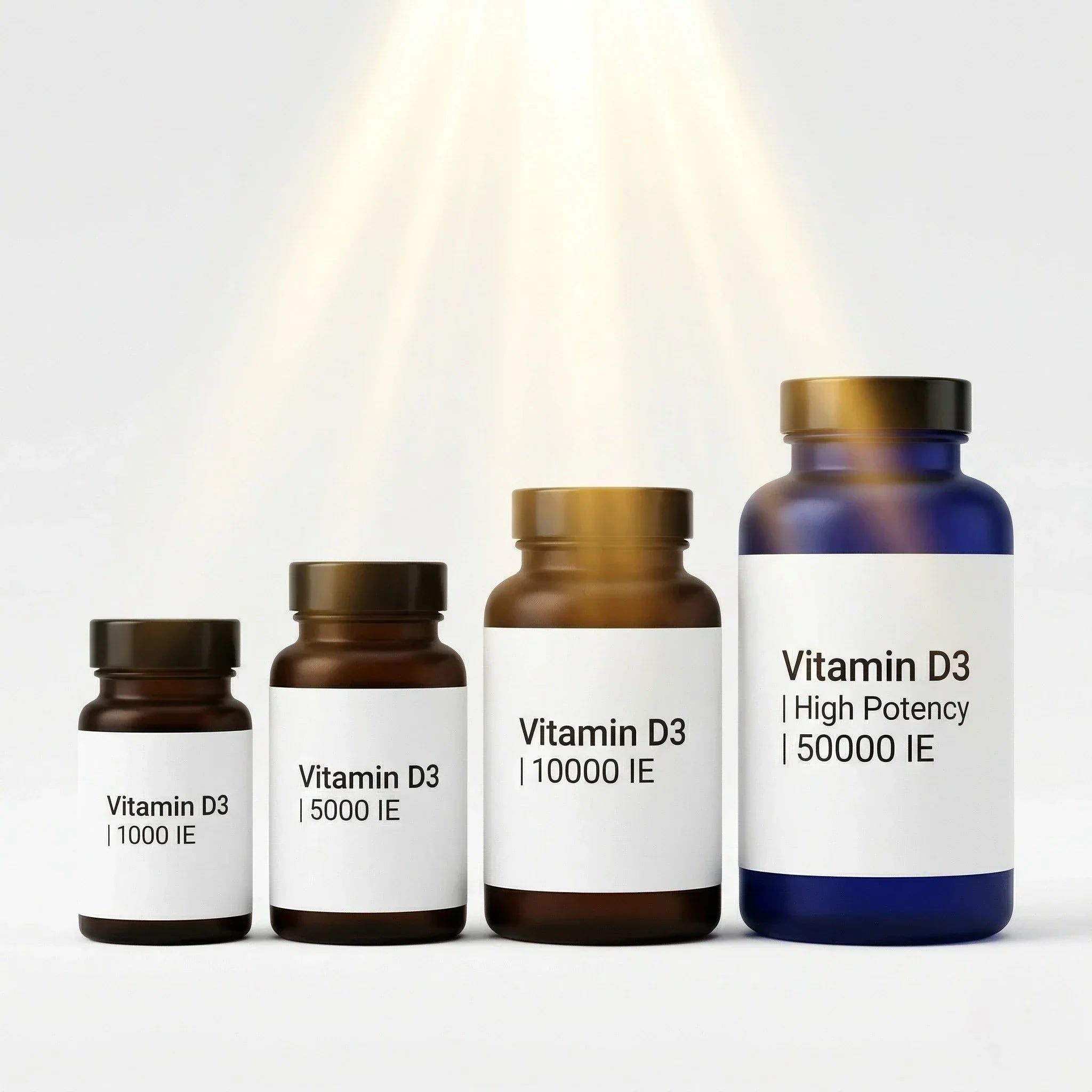
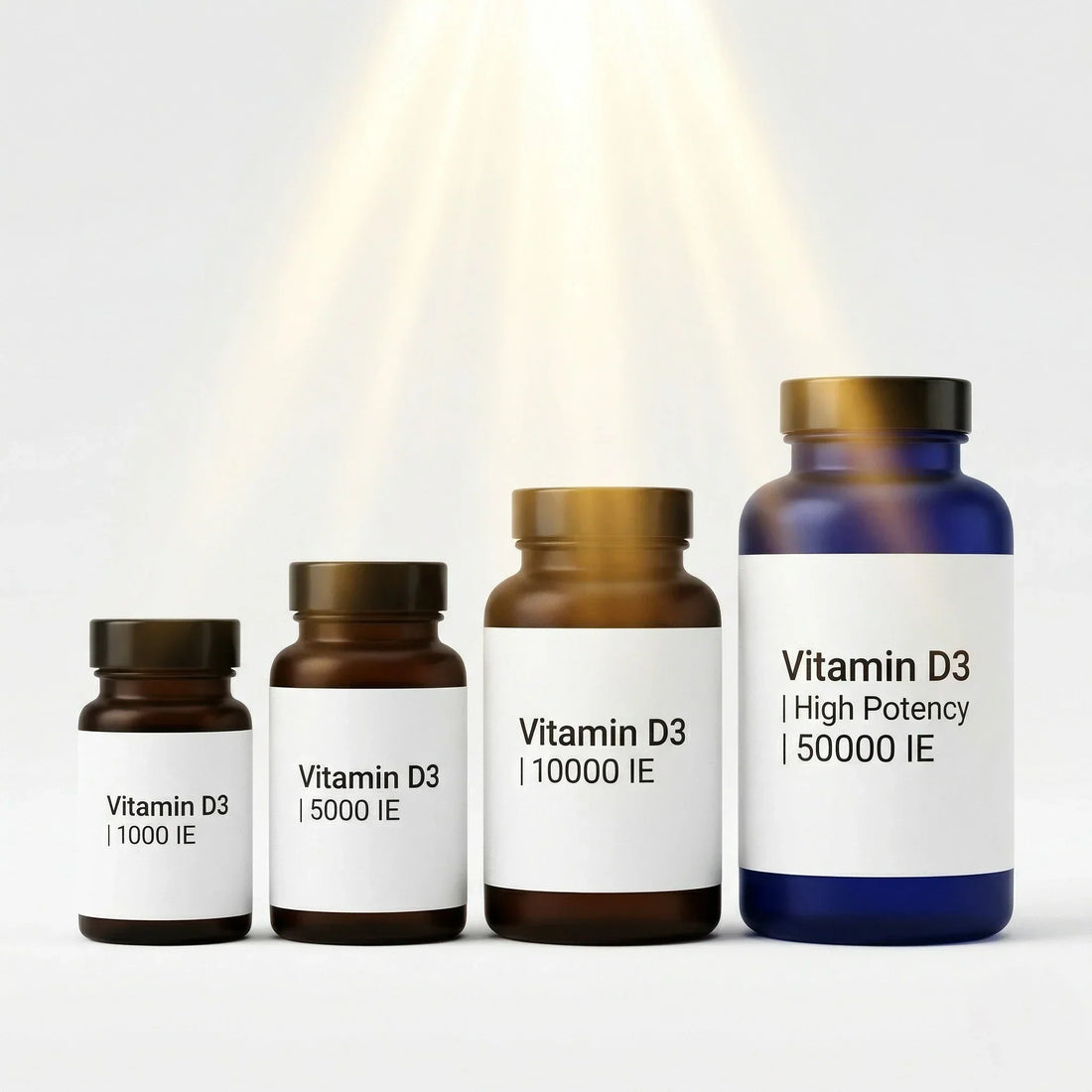
- 1000 IU to 2000 IU: amounts intended mainly to maintain an already adequate level.
- 5000 IU: a moderately high dosage, suited to the daily needs of athletes or people with a higher body weight.
- 10000 IU: the classic depot dosage. Ideal for taking every 10 days, to stay steadily within the desired range.
- 20000 IU: a dose often used for weekly intake (equivalent to roughly 2,800 IU per day).
- 50000 IU: the highest amount, for replenishing stores quickly. It is often taken every two weeks or once a month, to make up a substantial deficiency rapidly.
Daily or weekly: which is better?
Because vitamin D is fat-soluble and stored in the body, the interval is secondary. What matters is the total amount over the month.
Example with 20,000 IU: for many people, one tablet a week is easier to fit into everyday life than swallowing smaller doses daily.
How much vitamin D do I need per day? (calculation)
The DGE (German Nutrition Society) recommends 800 IU per day. Many international experts and studies (including on PubMed) consider this figure too low.
Rule of thumb for maintenance:
Roughly 40 to 60 IU are needed per kilogram of body weight. An adult weighing 80 kg therefore needs about 3200 to 4800 IU daily. In that case our 10000 IU depot or 20000 IU weekly supply is the most efficient choice.
Note for 20000 IU and 50000 IU: at these high amounts, good utilisation of calcium is particularly important. Vitamin D contributes to normal absorption of calcium, vitamin K to the maintenance of normal bones – which is why combining with vitamin K2 (MK-7) is recommended. Details in our report on D3-K2 synergy.
Conclusion: the advantages of high-dose depot preparations
A price comparison quickly shows that preparations with 20,000 IU or 50,000 IU in large packs are considerably more economical than pharmacy products. Bioavailability is identical, provided the product is lab-tested.
Looking for your individual dose? Discover all dosages in our shop.
FAQ: frequently asked questions about vitamin D dosage
What is rapid replenishment with 50,000 IU?
This involves taking very high doses for a short period, in order to refill stores that are empty after winter or where a substantial deficiency has been established.
Is vitamin D 20000 IU available without a prescription?
Yes, in Germany these dosages are freely sold as food supplements, provided they are declared for interval intake (weekly, for example).
Can you take 50000 IU once a month?
Yes, that is common practice for maintenance. Weekly or daily intake, however, often gives a more even level.