Vitamin D3: drops or tablets — what actually counts?
Futures Nutrition Editorial Team · 11 August 2026
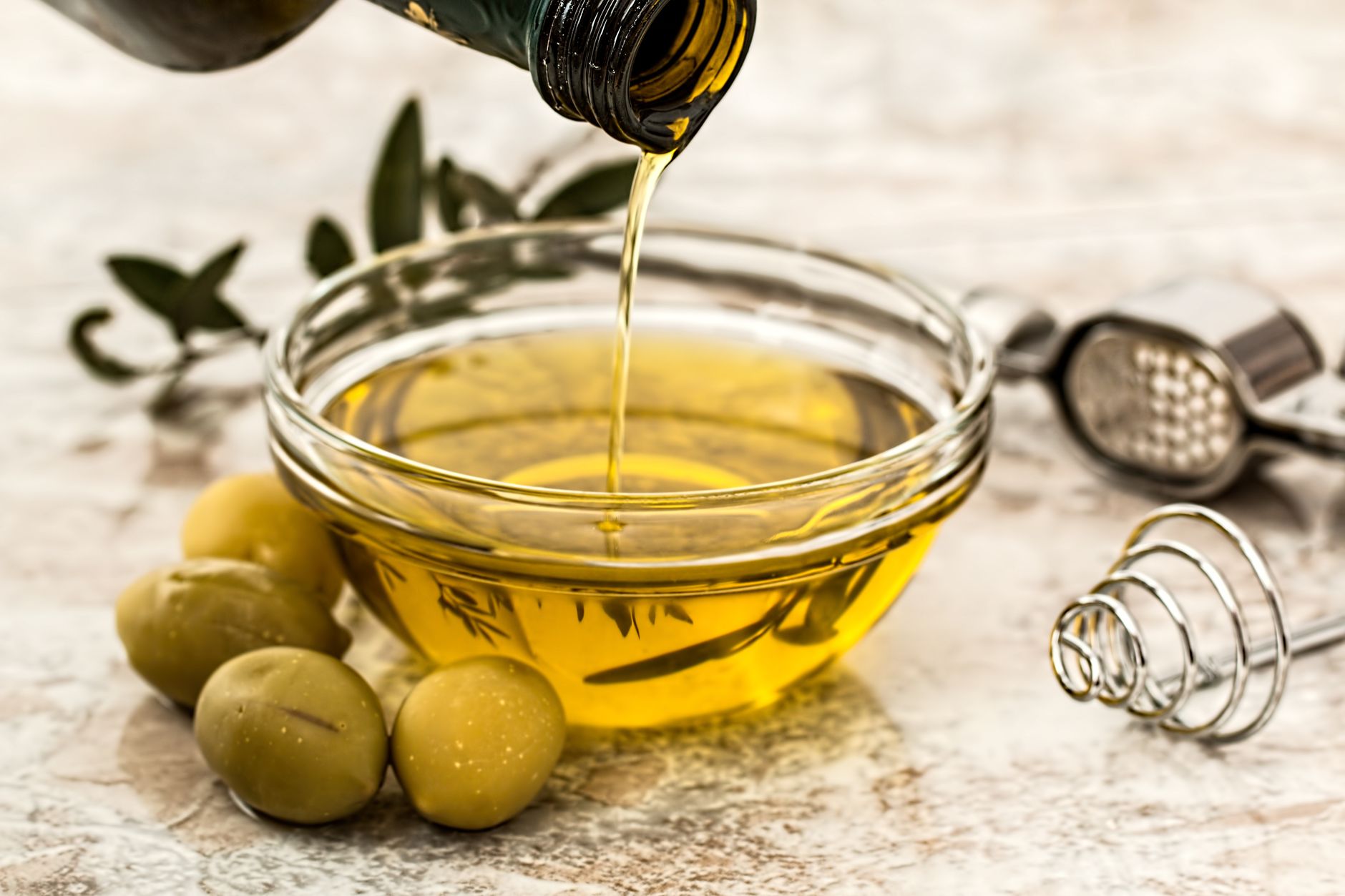
The short answer: both contain the same molecule, and the difference in absorption is smaller than the difference a meal makes. Vitamin D3 dissolved in oil is absorbed somewhat more reliably than a dry tablet — that is documented. Only this point rarely decides the choice in front of the shelf. Two others do: how precisely a single portion is measured out, and how long the product keeps once opened. On both counts the tablet is ahead.
This article sorts the dosage forms — oil drops, softgel, tablet, spray, liposomal capsule — by what practically separates them, and clears up a miscalculation that turns up surprisingly often: that the few drops of oil in the product could replace the fatty meal.
The forms at a glance
| Form | How the vitamin is present | Dosing precision | After opening |
|---|---|---|---|
| Oil drops | dissolved in oil (MCT, olive, sunflower oil) | depends on the drop | oil ages, usually a few months |
| Softgel capsule | dissolved in oil, portioned | fixed per capsule | shell protects, until best-before date |
| Tablet | dry, pressed onto a filler | fixed per tablet | until best-before date |
| Spray | in oil or alcohol/water | fixed per spray, provided the pump delivers cleanly | a few months |
| Liposomal capsule | embedded in phospholipids | fixed per capsule | until best-before date |
"Best before" is not the same as "after opening": with an opened oil bottle, air and light come along with every use; with a tablet tin, practically not.
Why fat comes up with vitamin D at all
Cholecalciferol does not dissolve in water. To get from the small intestine into the body it has to be packed into mixed micelles — tiny droplets made of bile acids and fat breakdown products. The gallbladder releases bile acids above all when fat arrives in the duodenum. Without fat there are fewer micelles and therefore less dissolved vitamin D. This route, together with the comparative studies, is set out in detail in Can you take vitamin D3 on an empty stomach?.
From this it is often concluded: whoever takes oil brings the fat along at the same time. That is exactly what is not true.
The miscalculation: a drop of oil is not a meal
One drop from a normal pipette holds roughly 0.03 to 0.05 millilitres depending on the oil and the opening — that is around 30 to 45 milligrams, so less than a twentieth of a gram of fat. A slice of bread with butter and cheese comes to a good 15 grams. The fat contribution of the product is therefore in the range of a rounding error; as a "meal" it is of no use.
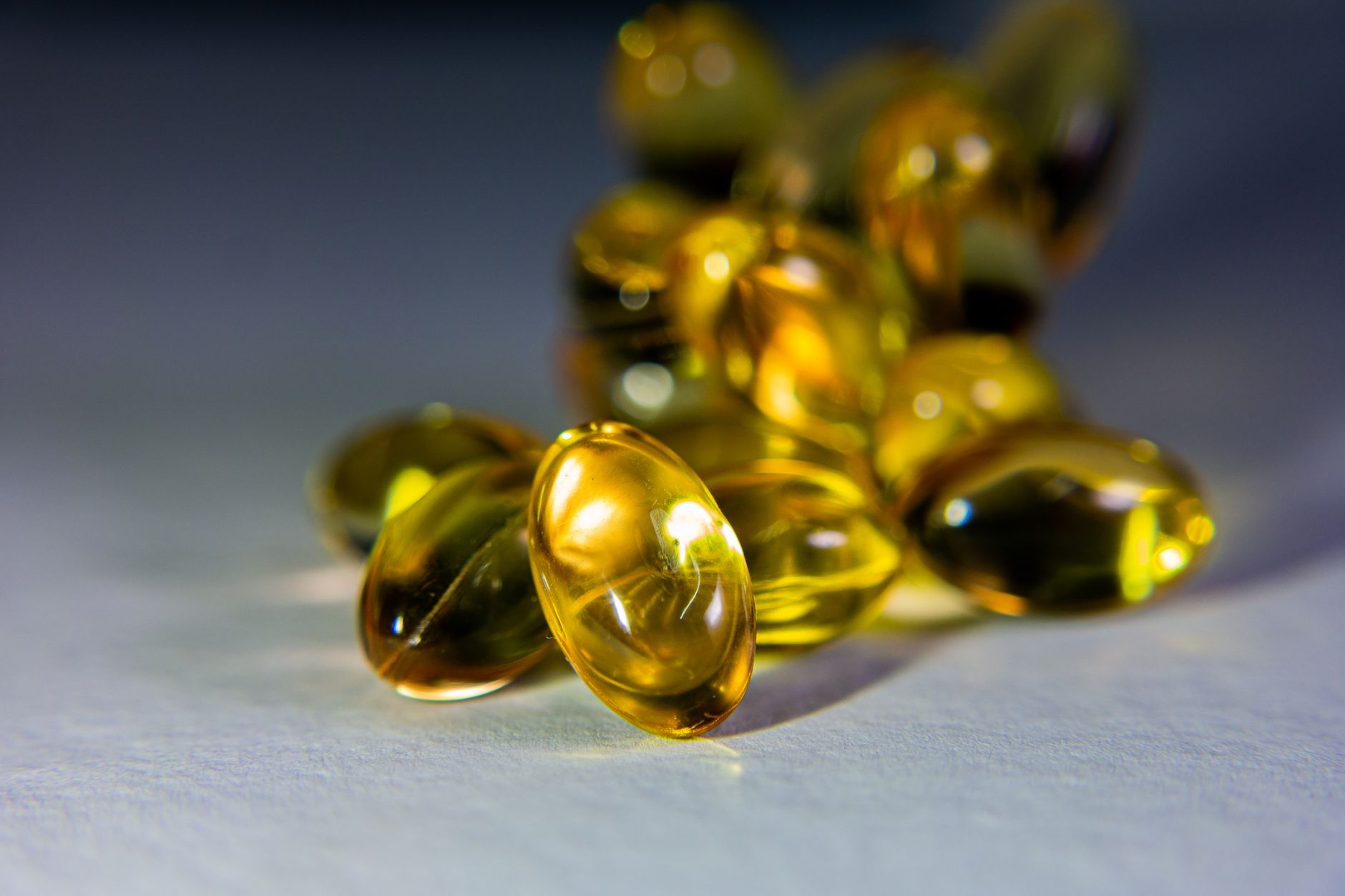
Why the oil solution nevertheless performs better has a different reason: the vitamin is already dissolved in it. The step that food would otherwise have to trigger — freeing the molecule from a dry matrix and emulsifying it — is partly done in advance. It is not about the amount of fat, but about the state in which the vitamin arrives. That is why the investigation by Cavalier and colleagues (Nutrients 2016) found no notable difference between fasting and fed for an oil solution, while for dry preparations about a third of the absorbed amount lies between the two situations.
Practically, the order of importance follows from this: the meal first, then the form. A tablet with lunch ranks above a drop on an empty stomach — not the other way round.
What counting drops costs
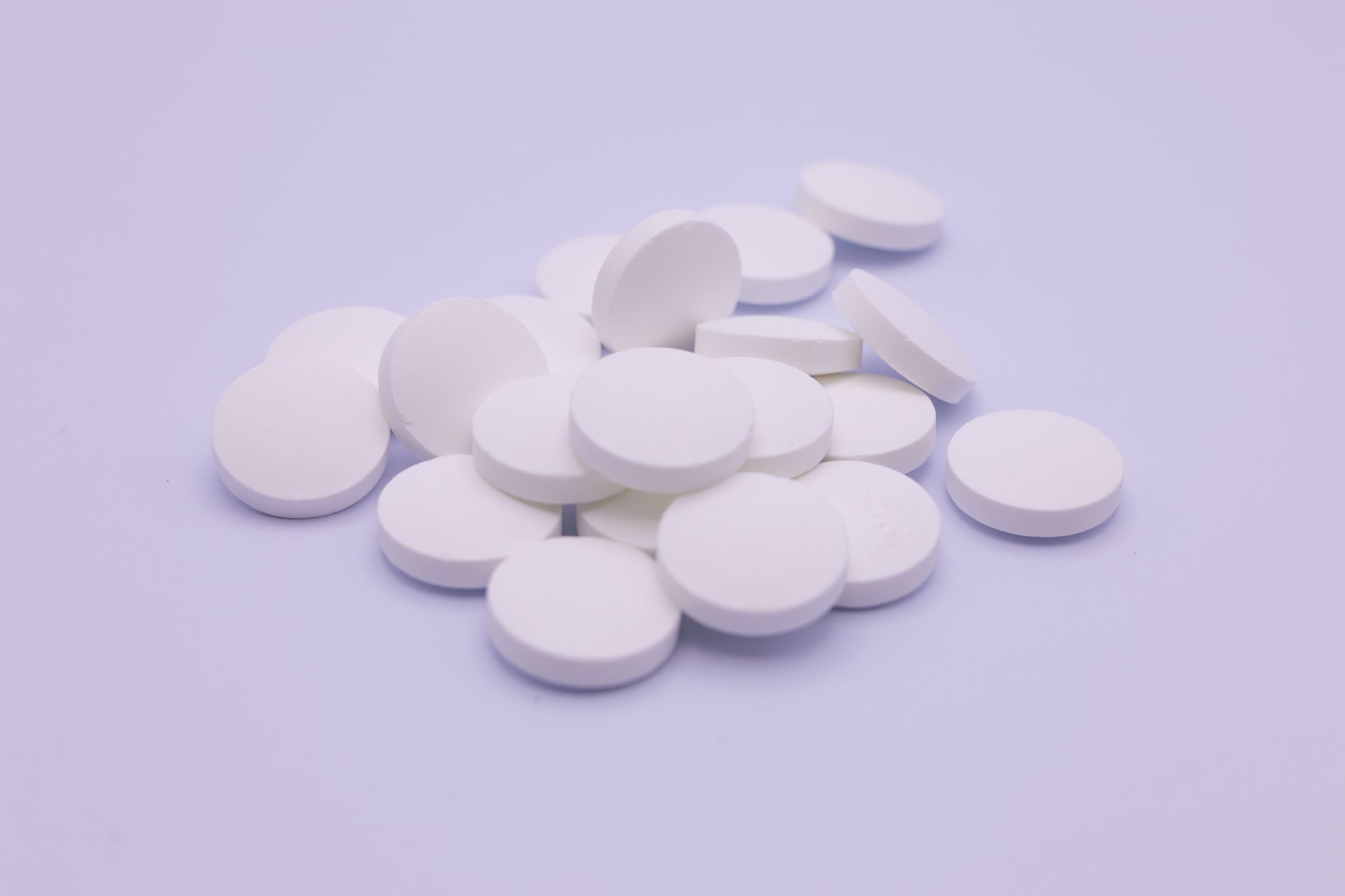
A tablet is a unit. A drop is an estimate. How large it turns out depends on several quantities at once: on the viscosity of the oil, which varies with temperature, on the angle of the bottle, on the remaining fill level and on how quickly it is squeezed. Counting in a cool bathroom gives different drops than at a warm kitchen window.
On top of that comes the manufacturing tolerance, which applies equally to all forms: under the European Commission's guidance on tolerances for nutrient values declared on a label (December 2012), the measured vitamin content in a food supplement may lie between −20 % and +50 % of the declared value. With the tablet, that is the entire uncertainty. With the drop, the spread in dosing comes on top.
How big this problem can become was described by the German Federal Institute for Risk Assessment in August 2026 (communication No 045/2026): the occasion was a severe vitamin D overdose in an infant who had accidentally been given a high-dose adult product. In this context the BfR explicitly advises against highly concentrated liquid preparations, because with them too much is quickly given by mistake, and recommends products with at most about 20 µg (800 IU) per daily portion for adolescents and adults. For adults with a steady hand that is no drama — but for anything heading towards children, care situations or poor eyesight, the counted unit is the safer construction.
Shelf life: the argument that counts in everyday use
Oil ages. Light, warmth and atmospheric oxygen attack the unsaturated fatty acids of the carrier, which is why oil drops are filled into brown bottles and the note "use within a few months after opening" appears on the label. Anyone taking a small daily amount will hardly empty a 50 ml bottle within that window.
A tablet does not have this problem: it is dry, individually insensitive to the air exchange when the tin is opened, and stays stable until the best-before date. That is the real reason why year's supplies and depot strengths are almost always pressed rather than dropped — with a pack that stands in the cupboard for twelve months, stability is not a side issue but the precondition.
Ingredients, shell and the vegan question
The dosage form co-determines which ingredients are needed at all:
- Oil drops and softgels need a carrier oil. The usual ones are MCT oil from coconut, olive oil and sunflower oil — different in taste and in shelf life.
- Softgels additionally need a shell; the classic one is gelatine, so of animal origin. Plant-based alternatives are mostly made of hydroxypropyl methylcellulose (HPMC).
- Tablets need a filler, frequently microcrystalline cellulose or inulin, plus an anti-caking agent.
The question of the origin of the vitamin itself — lanolin from sheep's wool or lichen — is independent of this and is taken apart in Vitamin D forms: D2 or D3, lanolin or lichen. Only both questions together give the full picture: a product can contain lichen D3 and still not be vegan because of the gelatine shell.
Spray and liposomal — what lies behind them
With the spray, the promise is that the vitamin is absorbed through the oral mucosa and bypasses the gut. Solid comparative data on this are thin, and in practice most of a spray burst is swallowed anyway. What remains as an argument is above all the handling — for people who dislike swallowing, that is a real one.
Liposomal means that the vitamin is embedded in phospholipids, that is, in the same building blocks that cell membranes are made of. The idea is plausible and the same as with the oil: the molecule is already present in an absorbable environment. A documented advantage over a plain oil solution cannot be derived from this, however, and the intake recommendation for such products still names a meal.
What our range contains
Our vitamin D3 products are tablets — for the two reasons given above: counted units and shelf life across a year's supply. The Vitamin D3 4,000 IU year's supply is the entry-level strength, intended for taking every second day with a meal.

The only exception to the tablet form is the liposomal vitamin D3 5,000 IU + K2: a capsule with an HPMC shell in which the D3 is present as a liposomal complex of erythritol, phospholipids and cholecalciferol. Here too, "with a meal" appears in the intake recommendation. All strengths side by side are in the vitamin D3 category.

What the form does not change
The reference values apply to the amount supplied, whatever shell it sits in. Conversion is always with 1 µg = 40 IU:
| Value | Amount per day | Source |
|---|---|---|
| Nutrient reference value (NRV) | 5 µg (200 IU) | Regulation (EU) No 1169/2011, Annex XIII |
| Estimated value without endogenous production | 20 µg (800 IU) | German Nutrition Society (DGE) |
| Proposed maximum level per daily portion | 20 µg (800 IU) | German Federal Institute for Risk Assessment (BfR) |
| Tolerable upper intake level (UL) | 100 µg (4,000 IU) | EFSA, adults and adolescents from 11 years |
Which strength belongs to which intake rhythm is compared in Vitamin D3 dosage: 1000 IU to 10000 IU. The authorised claims also remain unchanged: Vitamin D contributes to the normal function of the immune system. Vitamin D contributes to the maintenance of normal bones (Regulation (EU) No 432/2012). Food supplements are not a substitute for a balanced and varied diet and a healthy lifestyle.
Frequently asked questions
Is vitamin D from oil really absorbed better than from a tablet? Somewhat better, yes — and that is because it is already present in dissolved form there. The gap closes, however, as soon as the tablet is taken with a meal containing some fat. Anyone who swallows it with food anyway gives up nothing worth mentioning with the tablet.
Can I crush a tablet and stir it into oil? That does not deliver what it promises: in the tablet the vitamin is bound to a dry matrix and does not reliably dissolve into the oil when stirred. Simpler and more effective is to take it with a meal in which fat occurs.
Why is there a use-by period after opening on oil bottles but not on tablet tins? Because the carrier oil reacts with light and atmospheric oxygen as soon as the bottle is opened. Tablets are dry and stay stable until the best-before date — which is why year's supplies are almost always pressed.
Is a spray the more practical solution for children? More practical in handling, riskier in the amount. For children the BfR explicitly warns against highly concentrated liquid preparations, because a dosing error cannot be seen in them. What children should receive belongs in the hands of the paediatrician anyway.