Ashwagandha for skin: traditional use at a glance
Futures Nutrition Editorial Team · 11 February 2024
25 March 2024
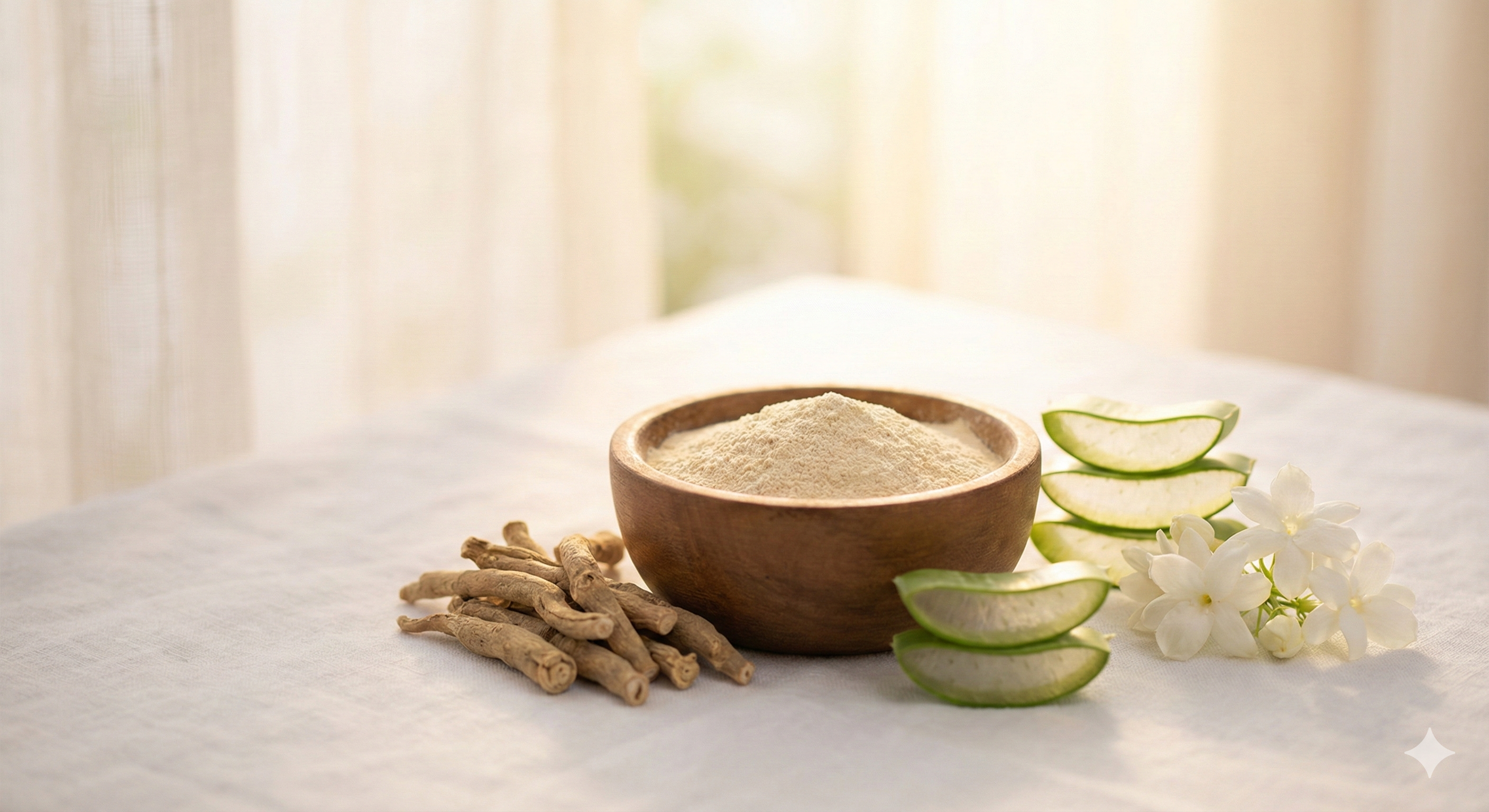
Ashwagandha (Withania somnifera) is one of the best-known plants in Ayurveda and is enjoying a comeback in modern natural care. More and more people are taking an interest in the root as part of their daily routine – whether as a food supplement or as an ingredient in home-made care rituals.
In this article we introduce the plant, look at its long tradition and show how ashwagandha – as a powder or in capsules – can be woven into a daily care and nutrition routine.
Skin and whole-routine care: the idea behind it
In many holistic traditions, skincare is seen as part of a considered overall routine. In Ayurveda, ashwagandha has always been mentioned in exactly this wider context – as one of many plants that can form part of a mindful daily routine.
Why ashwagandha is popular in natural care
1. Part of a wider ritual
In the Ayurvedic tradition, ashwagandha is mentioned in connection with a considered evening routine. Many people therefore build the plant into their daily self-care – alongside movement and sufficient fluids.
2. Characteristic plant substances
The root naturally contains secondary plant substances. In home-made natural cosmetics it is often combined with ingredients familiar from classic skincare, such as honey or vitamin-rich oils.
3. Withanolides as the hallmark
The characteristic constituents of the plant are the so-called withanolides. They are often used to describe the quality of an extract – for example via a standardised withanolide content.
Use: how do I use ashwagandha for beauty?
There are two routes: from within (as a supplement) and from outside (as a mask).
Method A: from within (as a food supplement)
Many people take ashwagandha as an extract in capsule form.
Our recommendation: work organic ashwagandha capsules into your evening routine – for example as a fixed part of your evening ritual.
Method B: DIY ashwagandha face mask
For an instant freshness boost you can mix a mask yourself:
- Mix 1 teaspoon of ashwagandha powder (opened from a capsule) with a little water or honey.
- Apply the paste to the cleansed face (avoiding the eye area).
- Leave on for 10–15 minutes, until it dries slightly.
- Rinse off with lukewarm water.
Note: always test the mixture on a small patch on your arm first, to rule out any intolerance.
The whole-routine approach: more than just a capsule
Ashwagandha is no magic bullet. If you care about well-tended skin, combine it with the basics of a good routine:
- Hydration: drink enough water throughout the day.
- Movement: make sure you move regularly in everyday life.
- Nutrition: go for a balanced, vitamin-rich diet with plenty of fresh fruit and vegetables (berries and citrus fruits, for example).
Conclusion
Ashwagandha is an Ayurvedic plant with a long tradition that fits into everyday life in many ways – as a food supplement or as an ingredient in home-made care rituals.
Would you like to try ashwagandha? Explore our selection.