Ashwagandha quality: what counts on the label
Futures Nutrition Editorial Team · 11 August 2026
11 August 2026
The short answer: quality is not visible in the number on the front of the tub, but in four details in the ingredient list — Latin species name, plant part, extract ratio and withanolide content per daily portion. If one of them is missing, the product cannot be compared with any other. And with ashwagandha the large milligram figure on the front is particularly often not a fill quantity at all, but a back-calculation: "6,000 mg" then means 500 mg of extract, converted back to the amount of root it was once made from.
How common this is has been counted by the North Rhine-Westphalia consumer association (Verbraucherzentrale Nordrhein-Westfalen). Its market survey report of 20 April 2026 examined 73 ashwagandha products from online and bricks-and-mortar retail. Only 20 of them — 26 per cent — said anything at all about how much ashwagandha or how many withanolides one daily portion contains.
The four details a label can be measured against
| Detail | What it looks like | What it settles |
|---|---|---|
| Latin species name | Withania somnifera | that this species is actually inside — "winter cherry" and "Indian ginseng" are common names for the same plant |
| Plant part | root / leaf / both | which compound profile to expect, and whether the product is customary in the EU at all |
| Extract ratio (DER) | 10:1 or 12:1 | how far it was concentrated — the basis for converting every large number on the pack |
| Marker content | 5% withanolides, 30 mg per daily portion | the only figure that lets two doses actually be compared |
The German Federal Institute for Risk Assessment (BfR) explains in its statement 039/2024 why exactly these details matter: both the plant parts used and the extraction process can "influence the concentration of the constituents contained in a preparation". Two tubs with the same word on the front are therefore not two pack sizes of the same substance. How differently two branded raw materials measure the same percentage is covered in KSM-66 vs Sensoril.
"6,000 mg" is usually not an amount but a calculation
An extract ratio of 12:1 means: twelve kilograms of dried root yield one kilogram of extract. From that figure, any amount of extract can be turned into an "equivalent to" claim that looks ten times more impressive — and that is exactly what happens routinely on the market.
| What the pack says | What is actually in the daily portion |
|---|---|
| "6,000 mg ashwagandha" (footnote: extract ratio) | 500 mg of extract |
| "12:1 extract = 3,600 mg pure root powder per capsule" | 600 mg of extract per daily portion (two capsules) |
| "ashwagandha root extract (1.7%)" | no amount at all, just a share of the formula |
All three examples come from the market survey. They are not false — the back-calculation is arithmetically correct, and the footnote is usually somewhere on the pack. They are simply not what the buyer is looking for. The usable figure sits in the nutrition table under "per daily portion", not in the heading of the listing.
A second stumbling block: the percentage refers to the extract, not to the tablet. "10% withanolides" does not mean ten per cent of the tablet's weight — fillers and pressing aids weigh something too.
Percentages, milligrams and the question of method
The percentage only becomes interesting once it is multiplied by the amount of extract. Doing that for the 20 products that state an amount produces figures that lie far apart:
| Declared daily portion | Average | Range | Maximum permitted in Poland |
|---|---|---|---|
| Ashwagandha | 833 mg | 50 – 6,000 mg | 3,000 mg |
| Withanolides | 46 mg | 7.5 – 150 mg | 10 mg |
Poland is not an arbitrary comparison here but the only obvious one: Germany has no maximum amount for ashwagandha, Poland does — 3 g of root powder and 10 mg of withanolides per daily portion. The average declared withanolide amount in German retail is 4.5 times that value. The trend is unambiguous: in 2013 the BfR found declared contents of 1.5 to 8 per cent and daily amounts of 4.5 to 61 mg of withanolides; in 2026 it is 5 to 35 per cent and 25 to 140 mg.
On top of that comes the question of how the measurement was made. Withanolide contents are determined either chromatographically (HPLC) or gravimetrically, and gravimetric values come out systematically higher, because whatever is not a withanolide is weighed along with it. If the method is not on the pack, only the certificate of analysis helps, which can be requested from the supplier.
Expensive does not mean carefully declared
This is the most uncomfortable finding of the market survey. The three mandatory notices under the German food supplements regulation — do not exceed the stated daily dose, no substitute for a balanced diet, keep out of the reach of young children — appeared complete and correct on only 70 per cent of products. The worst performer was, of all segments, the premium one: 54 per cent. Small packs reached 80 per cent, discount products 74 per cent. All seven products from bricks-and-mortar retail carried all three notices.
Price says little about the declaration either. On average the ingredient "organic ashwagandha" cost €13.53 per 100 mg, KSM-66 €24.85 and the branded extract AshwaMAX €88.86 — for ingredients that were not specified further, with 35 of 73 products the largest group, it was €22.04. A branded raw material makes comparison easier because its specification is public. It is not a quality seal.
Origin: what "from India" answers and what it does not
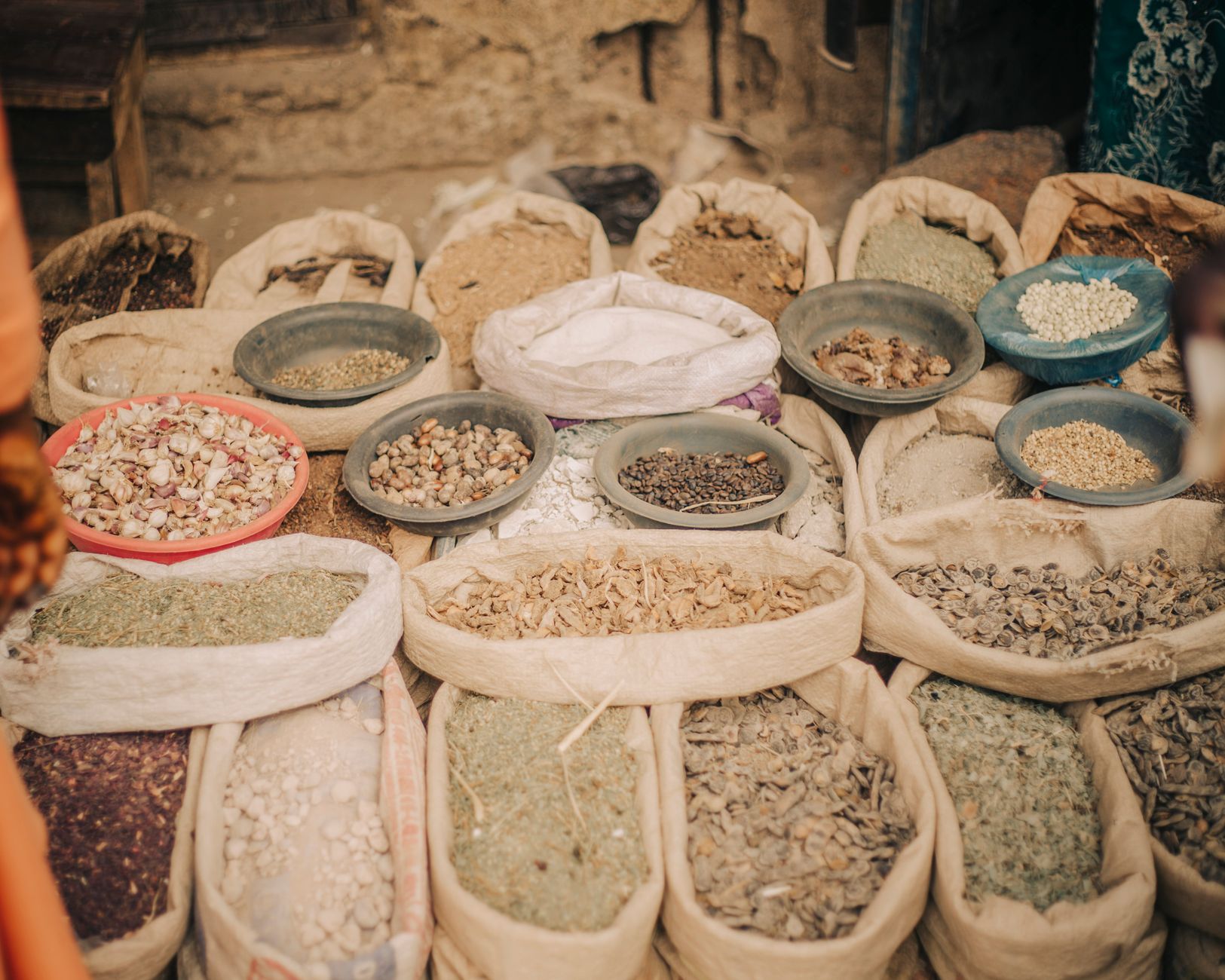
Almost all raw material comes from India; that is printed on many packs and on its own answers no quality question at all. What matters more is what happens to the root in the soil: it takes up whatever is there. Maximum levels under the contaminants regulation (EU) 2023/915 therefore apply to food supplements — 3.0 mg/kg lead, 1.0 mg/kg cadmium and 0.10 mg/kg mercury. Whether a supplier has this tested is rarely written on the tub, but it can be asked: a batch-related certificate of analysis states marker content and heavy metals in one document.
An organic seal under the EU organic regulation (EU) 2018/848 concerns cultivation, not withanolide content. It does not replace the four declaration details — it comes on top of them.
What our own tub says

Our ashwagandha extract declares "ashwagandha root extract (Withania somnifera, containing 10% withanolides)" — species name, plant part and marker content, then. The tub holds 365 tablets at 54 g net weight; the recommended intake is one tablet daily with a meal. What is not on the label is the extract ratio and the amount of extract in milligrams; anyone who needs those for a comparison is best off asking via contact. By the same yardstick this article applies, that is the detail missing there.
Anyone looking for ashwagandha together with melatonin in one tablet will find it in the combination with melatonin — there melatonin is the component for which an authorised claim exists. For ashwagandha itself, no health claim is authorised in the EU; the positive list of Regulation (EU) No 432/2012 says nothing about it, and the four applications submitted are sitting unassessed. A promotional sentence on an ashwagandha pack therefore always tells you something about the seller, not about the product. All articles and products on the topic are in the ashwagandha category.
Common questions
Is a branded extract like KSM-66 automatically better?
No, but it is easier to compare. For branded raw materials it is publicly documented which plant part they come from and what they are standardised to; with a tub that only says "ashwagandha extract", both remain open. In the market survey KSM-66 was, with 26 of 73 products, the most frequently named raw material — more expensive per 100 mg than the average of the unnamed ingredients, without that leading to better labelling.
What does a certificate of analysis give me?
It answers three questions at once: what marker content was actually measured, by which method, and how the batch performed on heavy metals. Reputable suppliers hand it over on request. What matters is the reference to the batch number of the tub in your hand — a certificate without a batch is an advertising leaflet.
How do I spot a product to stay away from?
By missing warnings. The consumer association puts it plainly: anyone who leaves out the notice the BfR recommends for children, pregnant and breastfeeding women and people with liver disease is not speaking in their own favour as a responsible manufacturer. Barely half of the products examined carried a notice for any group of people at all. What else has been reported on this is covered in ashwagandha side effects.
Is root powder more honest than an extract?
It is less concentrated, but not better declared — quite the opposite. On powder products the withanolide figure is almost always absent, because there is nothing to standardise. A pack only becomes comparable through the marker figure, and only a standardised extract delivers that. How long it is usually taken for is covered in how long to take it.
Food supplements are not a substitute for a balanced and varied diet and a healthy lifestyle.