KSM-66 or Sensoril: 5% vs 10% withanolides
Futures Nutrition Editorial Team · 11 August 2026
11 August 2026
The short answer: the two percentages do not mean the same thing, which is why 10% is not twice as much as 5%. KSM-66 is standardised to at least 5% withanolides and is made exclusively from the root. Sensoril is standardised to at least 10% withanolide glycosides and is made from root and leaf. Two different starting materials, two different measures — plus two different usual daily amounts, which level out the apparent lead again.
So anyone standing in front of two tubs and taking the bigger number for the better product is comparing apples with oranges. This article shows what exactly sits behind the two figures, how to convert them into milligrams, and how to read a label that carries no brand name at all — which is the normal case in Germany.
Two branded extracts, two recipes
Neither is a plant variety; both are raw materials from two manufacturers, sold worldwide to fillers and then used under other companies' tub names. What separates them is written in their specifications.
| KSM-66 | Sensoril | |
|---|---|---|
| Manufacturer | Ixoreal Biomed (India) | Natreon (USA/India) |
| Plant part | root only | root and leaf |
| Standardised to | ≥ 5% withanolides (HPLC) | ≥ 10% withanolide glycosides |
| Further specification | "full spectrum": constituents in the root's natural ratio | ≥ 32% oligosaccharides, ≤ 0.5% withaferin A |
| Extraction solvent | water; no alcohol, no chemical solvents | water; no chemical solvents |
| Extract ratio | around 12:1 | around 8:1 |
| Usual daily amount | 300–600 mg | 125–250 mg |
The "plant part" row is the most important one, and it is not at the top by accident. The German Federal Institute for Risk Assessment (BfR) describes exactly this point in its statement 039/2024: production uses "above all the root, but in part also other plant parts (such as leaves)", and different extraction methods are employed. Both together, the BfR writes, can "influence the concentration of the constituents contained in a preparation". Two ashwagandha extracts are therefore not simply two package sizes of the same substance.
Why 10% is not double 5%
The core of the misunderstanding is the analyte — that is, what is being counted in the first place.
KSM-66 states withanolides, measured by HPLC (high-performance liquid chromatography). This method separates the individual substances and quantifies them one by one; what ends up in the figure really are withanolides.
Sensoril states withanolide glycosides — withanolides with a sugar residue attached. That is a different group of substances with a different molecular mass. On top of that, the specification carries two figures KSM-66 does not give at all: at least 32% oligosaccharides and at most 0.5% withaferin A. Withaferin A is a single withanolide that occurs far more abundantly in leaves than in the root — so the upper limit in the specification is the manufacturer's answer to the leaf material in the starting material.
Then there is the question of the measuring method, and it concerns the whole market, not just these two raw materials. Withanolide contents are determined either chromatographically (HPLC) or gravimetrically. Gravimetric means: a fraction is extracted and weighed. Other constituents end up on the scales alongside the withanolides, and the figure comes out correspondingly higher. If a label says only "10% withanolides" without naming the method, that is not a figure you can calculate with — it is a number without a reference. The same problem turns up elsewhere in label reading: how the marker-substance figures of two different plants can be compared at all is covered in ashwagandha and ginseng compared.
Root alone, or root with leaf
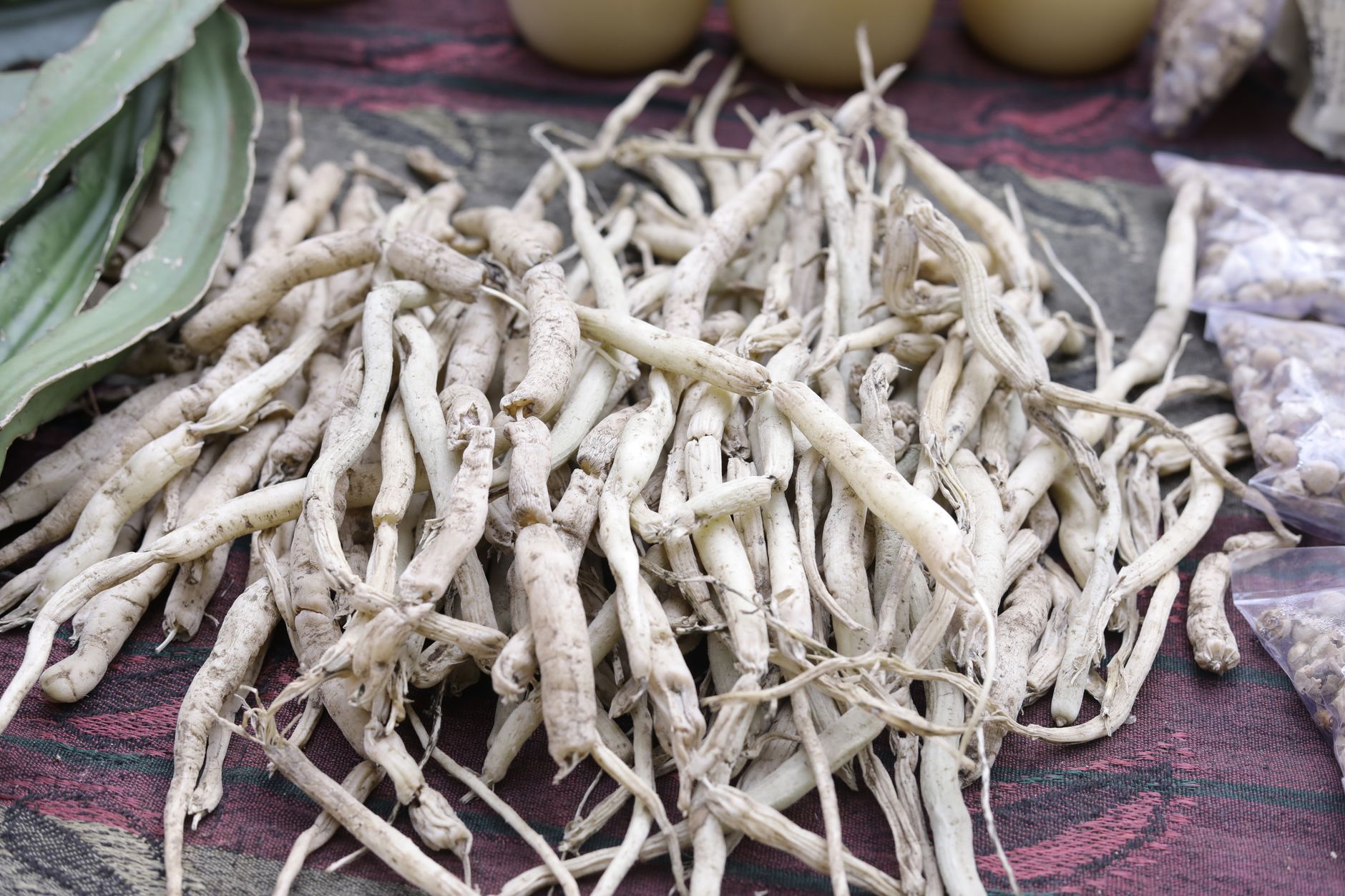
In the Ayurvedic tradition the root is the plant part used; the leaves were historically applied externally. KSM-66 advertises precisely that as a feature — the manufacturer writes that it uses "only the roots of the ashwagandha plant, without any addition of leaves". Sensoril uses both and justifies this with its own constituent profile.
For a buyer in Germany this is more than a matter of taste. Ashwagandha counts among the "other substances with a nutritional or physiological effect" whose use in the EU is, in the BfR's assessment, "so far insufficiently regulated". The consequence: member states handle it differently. Poland has set an upper limit for food supplements — at most 3 g of root powder and at most 10 mg of withanolides per daily portion. Germany has no such maximum amount, and root extracts dominate the trade. Which plant parts may legally be marketed in the EU is a separate and untidy question; anyone buying today is at any rate on the simpler side with a pure root extract.
Calculate in milligrams, not in percent

The percentage describes the extract, not the tablet — and certainly not the daily amount. What is interesting, therefore, is only the multiplication of extract amount and content:
| Preparation | Declared content | Calculated per day |
|---|---|---|
| KSM-66, 300 mg | 5% withanolides | 15 mg |
| KSM-66, 600 mg | 5% withanolides | 30 mg |
| Sensoril, 125 mg | 10% withanolide glycosides | 12.5 mg |
| Sensoril, 250 mg | 10% withanolide glycosides | 25 mg |
The ranges overlap almost completely. The extract with double the percentage is dosed at half the amount — and in the end both land in the same order of magnitude. And because the two figures count different groups of substances, even these milligrams cannot be set off one against the other. They serve as a ballpark, not as proof.
The Polish limit of 10 mg of withanolides per daily portion helps as a yardstick: it sits below what both branded extracts deliver, on paper, in their usual amounts. That shows what authorities look at — the amount supplied in milligrams, not the percentage on the front of the pack.
When there is no brand name on the tub at all
That is the rule rather than the exception in German retail, and it is no blemish. What matters are four entries in the ingredient list, and with a good unbranded extract they are there just as they are with a branded raw material:
- Latin species name — Withania somnifera, not just "ashwagandha".
- Plant part — root, leaf or both.
- Extract ratio — 10:1, for instance, meaning ten parts of dried root per part of extract.
- Marker-substance content — withanolides in percent, ideally with the method named, and the resulting amount in milligrams per daily portion.
Only a fraction of the packs examined in retail state all of this in full, and the gaps are usually in the last two points: the plant part is missing, or the percentage stands there without a method.
Our ashwagandha extract is such an unbranded root extract: Withania somnifera, root, a declared content of 10% withanolides, one tablet daily with a meal, purely plant-based and free from gelatine, lactose and gluten. Anyone looking for ashwagandha and melatonin in one tablet will find it in the combination with melatonin — there melatonin is the component for which an authorised claim exists, not the root.
Because this applies to both branded extracts alike: for ashwagandha, no health claim is authorised in the EU. The claims submitted are "on hold" in the register. What a manufacturer writes about its raw material is therefore not a permissible advertising sentence but a description of a raw material — and that is exactly how this article is to be read.
Milk-treated or vegan?
One detail that usually gets lost on the finished tub: in the raw-material trade KSM-66 comes in two versions — a conventional one, in which the roots are pre-treated with milk before extraction, and a milk-free, vegan one. Both carry the same brand name and the same standardisation to 5% withanolides. Anyone buying strictly vegan should therefore not look at the raw-material name but at the vegan declaration on the finished product, or ask the supplier. Sensoril is listed as vegan throughout.
Common questions
Is Sensoril "stronger" than KSM-66?
No — at least not in the sense in which the question is usually meant. The higher percentage refers to a different group of substances (withanolide glycosides instead of withanolides) and is offset again by the lower usual daily amount. On paper, 250 mg of Sensoril and 600 mg of KSM-66 deliver marker-substance amounts of the same order of magnitude.
How can I tell which method was used?
From the label, usually not at all. Reputable suppliers name HPLC either on the packaging or in the certificate of analysis, which you can request. If there is no statement at all, the percentage should be read with caution — gravimetrically determined values come out systematically higher than chromatographically determined ones.
Does it matter whether leaves are included?
Yes, in two respects. First, the constituent profile changes, in particular the proportion of withaferin A. Second, the root is the traditionally used plant part and the one common in Europe, whereas the assessment of leaf preparations differs between member states.
Who should not take ashwagandha preparations?
In its statement of 10 September 2024 the BfR advises children, pregnant and breastfeeding women and people with an existing or previous liver disease in particular not to take ashwagandha preparations; it advises the rest of the population to be cautious. Interactions with medicines for diabetes and high blood pressure and with immunosuppressants have also been described — with long-term medication, that belongs in a conversation with a doctor. What else has been reported is covered in ashwagandha side effects.
Food supplements are not a substitute for a balanced and varied diet and a healthy lifestyle.