Ashwagandha and ginseng compared: the differences
Futures Nutrition Editorial Team · 11 February 2024
25 March 2024
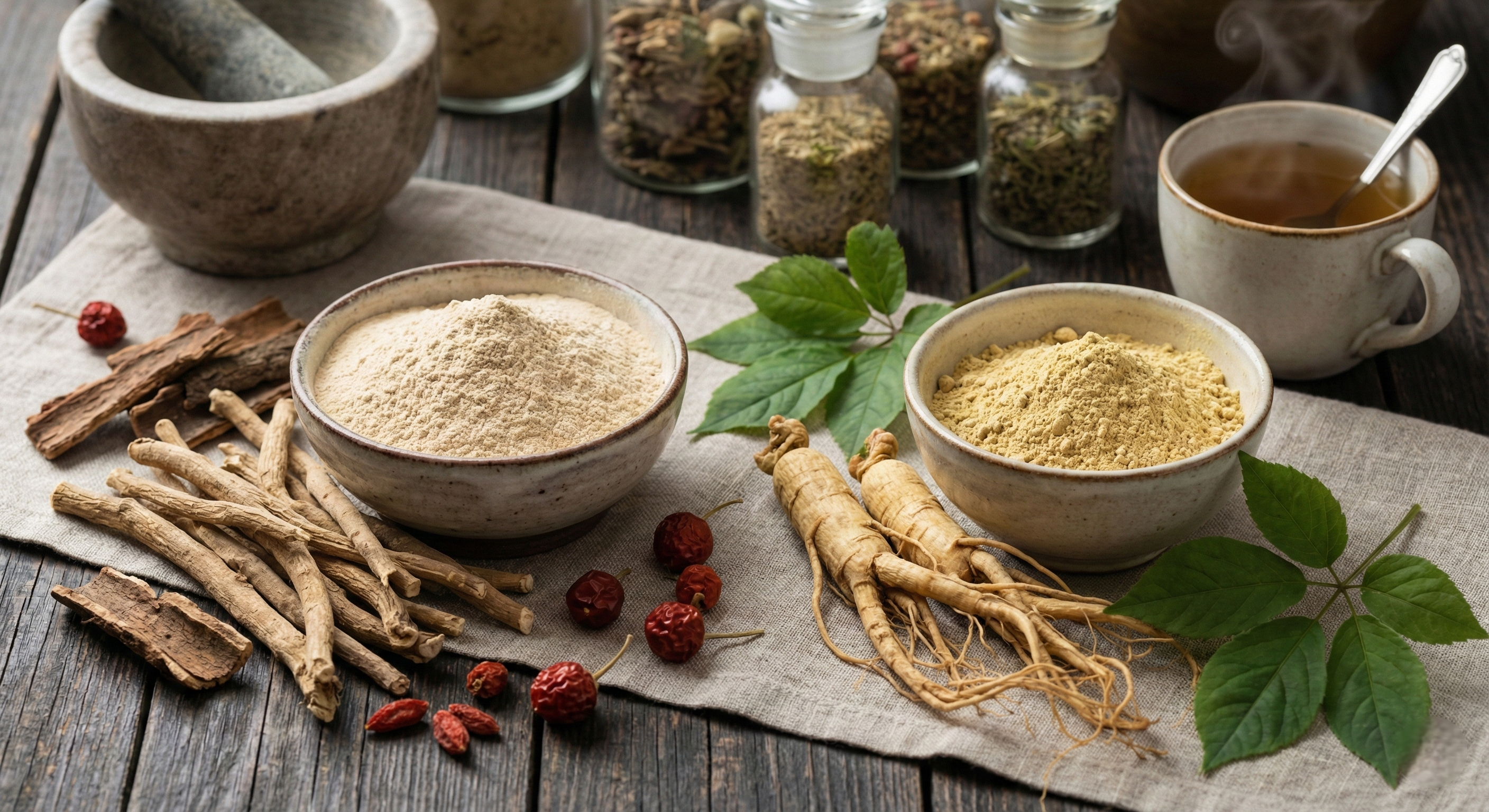
Choosing between ashwagandha and ginseng is difficult for many people, as both are among the best-known plants in traditional herbal lore. Traditionally, however, they are used in quite different ways.
In this article we set the two plants side by side – their origin, their botanical characteristics and their traditional use – and look at whether they can be combined.
The basic principle: two different plants
Although both belong to the traditionally used plants of herbal lore, the historical record places them almost like yin and yang:
- Ashwagandha: in the Ayurvedic tradition it is associated above all with the evening.
- Ginseng: in Traditional Chinese Medicine (TCM) it is associated above all with the morning.
1. Ashwagandha: the root from Ayurveda
Ashwagandha (Withania somnifera) comes from the Ayurvedic tradition of India, where the root has been used for centuries. It is traditionally associated above all with the evening.
Who might find ashwagandha interesting?
Many people take an interest in ashwagandha,
- if they are drawn to the Ayurvedic tradition,
- if they do a lot of sport and are looking for a root for their evening routine.
Practical tip on taking it:
Ashwagandha is traditionally taken in the late afternoon or in the evening. Look for products with a standardised content of withanolides (the characteristic constituents of the root).
2. Ginseng: the root from TCM
Panax ginseng (the "true" ginseng) has a long history in Traditional Chinese Medicine (TCM), where it is used above all in the morning.
Who might find ginseng interesting?
Ginseng is traditionally used mainly in the morning. Many people take an interest in this root,
- if they are drawn to Traditional Chinese Medicine,
- during periods with important projects or exams,
- or simply as a long-established ingredient for the start of the day.
Practical tip on taking it:
Ginseng is traditionally taken in the morning or early in the day. In the evening it is rather unusual.
Direct comparison: at a glance
| Characteristic | Ashwagandha | Ginseng (Panax) |
|---|---|---|
| Traditional origin | Ayurveda (India) | TCM (China) |
| Usual time of use | Evening | Morning / before training |
| Popular with... | Athletes | Students, working people |
Frequently asked questions (FAQ)
Can I take ashwagandha and ginseng together?
Yes, many people combine the two plants and take their cue from the course of the day. A common approach is:
- In the morning: ginseng to start the day.
- In the evening: ashwagandha as part of the evening routine.
We do recommend, however, not swallowing both capsules at once, but spreading them across the day.
How long should the plants be taken?
Plants of this kind are traditionally not taken occasionally, but over an extended period.
- Ginseng: often taken as a course over several weeks.
- Ashwagandha: traditionally taken regularly over several weeks.
How do I recognise good quality?
For ashwagandha, look for root extracts (not leaves); for ginseng, check the age of the root (matured for at least 4–5 years) as well as organic quality, to avoid pesticides.
Conclusion: listen to your body
There is no "better" winner in this contest. What matters is which one fits your daily rhythm better.
- Looking for a root for your evening routine? Go for ashwagandha.
- Looking for a root for the morning? Go for ginseng.
Ready to give it a try? Discover our selection of high-quality, lab-tested organic extracts right here in the shop.