Taking milk thistle: timing, duration, fat
Futures Nutrition Editorial Team · 14 August 2026

There is less to decide about timing than the guides suggest. The EU monograph of the EMA for traditional milk thistle medicines states “before meals” — but only for three of nine preparations; for the remaining six no timing is given at all. Our own product recommends one tablet after a meal. Both are right, because the two statements answer different questions: one comes from traditional use, the other from tolerability in the stomach.
The third common recommendation — “take it with fat” — is the only one that cannot be substantiated in that form. What actually got more of the substance into the bloodstream in the investigations was not a spoonful of oil with the meal, but the formulation of the product itself. One thing at a time.
Before or after eating: where the two statements come from
The authoritative source for amounts and timing is the EU monograph Silybum marianum (L.) Gaertn., fructus (EMA/HMPC/294187/2013, as of 5 June 2018, ema.europa.eu). It applies to traditional herbal medicinal products — so not directly to a food supplement, but it is the only officially reviewed compilation of what has been recorded about this plant in terms of dosage and intake. As a point of orientation there is nothing better.
| Preparation per EMA monograph | Single dose | Frequency | Timing |
|---|---|---|---|
| Comminuted fruit as tea | 3–5 g in 100 ml boiling water | 2–3× daily | before meals |
| Powdered fruit | 300–600 mg (max. 1,800 mg/day) | 2–3× daily | before meals |
| Dry extract DER 20–70:1 (acetone) | 82–239 mg (max. 478 mg/day) | 2–3× daily | before meals |
| Dry extract DER 30–40:1 (ethanol 96%) | 200 mg (= daily dose) | 1× daily | no statement |
| Dry extract DER 36–44:1 (ethyl acetate) | 173.0–186.7 mg | 3× daily | no statement |
| Dry extract DER 20–34:1 (methanol 90%) | 70 mg | 3× daily | no statement |
The pattern is clear: “before meals” appears with the preparations that come out of the tea tradition — tea and ground fruit — and with the oldest of the extracts. For the more modern extracts the monograph left the timing out, because there is no data basis for it.
The recommendation on our own milk thistle product with 100 mg of silymarin — one tablet daily after a meal — aims at something else: at the stomach. The monograph lists mild gastrointestinal complaints among the possible undesirable effects, among them nausea, gastric irritation and diarrhoea. Anyone who takes a tablet with a meal instead of on an empty stomach tends to notice least of that. This is not an absorption argument but a tolerability one — and that is why it does not contradict the monograph.
What happens in the body, and what follows from it for the timing
The assessment report accompanying the monograph (EMA/HMPC/294188/2013, 78 pages) summarises the pharmacokinetics. Silymarin is poorly water-soluble; as reasons for the low oral availability the report names degradation by gastric juice and poor uptake in the intestine (Saller et al. 2001; Usman et al. 2009).
| Parameter (silibinin) | Value | Source |
|---|---|---|
| Time to peak blood concentration | around 1.3–2 hours | Zhu et al. 2013; Kim et al. 2003 |
| Peak plasma level after 100–360 mg | 200–1,400 µg/l | EMA assessment report |
| Proportion present in conjugated form | around 75% | EMA assessment report |
| Half-life in blood | about 6 hours | Pradhan & Girish 2006 |
| Mean residence time in serum | 4.9 hours | Lorenz et al. 1984 |
| Mean residence time in bile | 8.1–8.4 hours | Lorenz et al. 1984 |
| Accumulation when dosed every 8 h over 7 days | not detectable | Schrieber et al. 2011 |
For practice there are two messages in this. First: it happens quickly — the peak is reached after one to two hours, and after a few hours most of it is gone again. That is why the medicinal preparations spread their daily amount over two to four portions and not over one. Second: nothing builds up. Over seven days of repeated dosing no accumulation was found in the blood — the question “how many days in a row” is therefore not a question of stores in the body.
The matter of fat
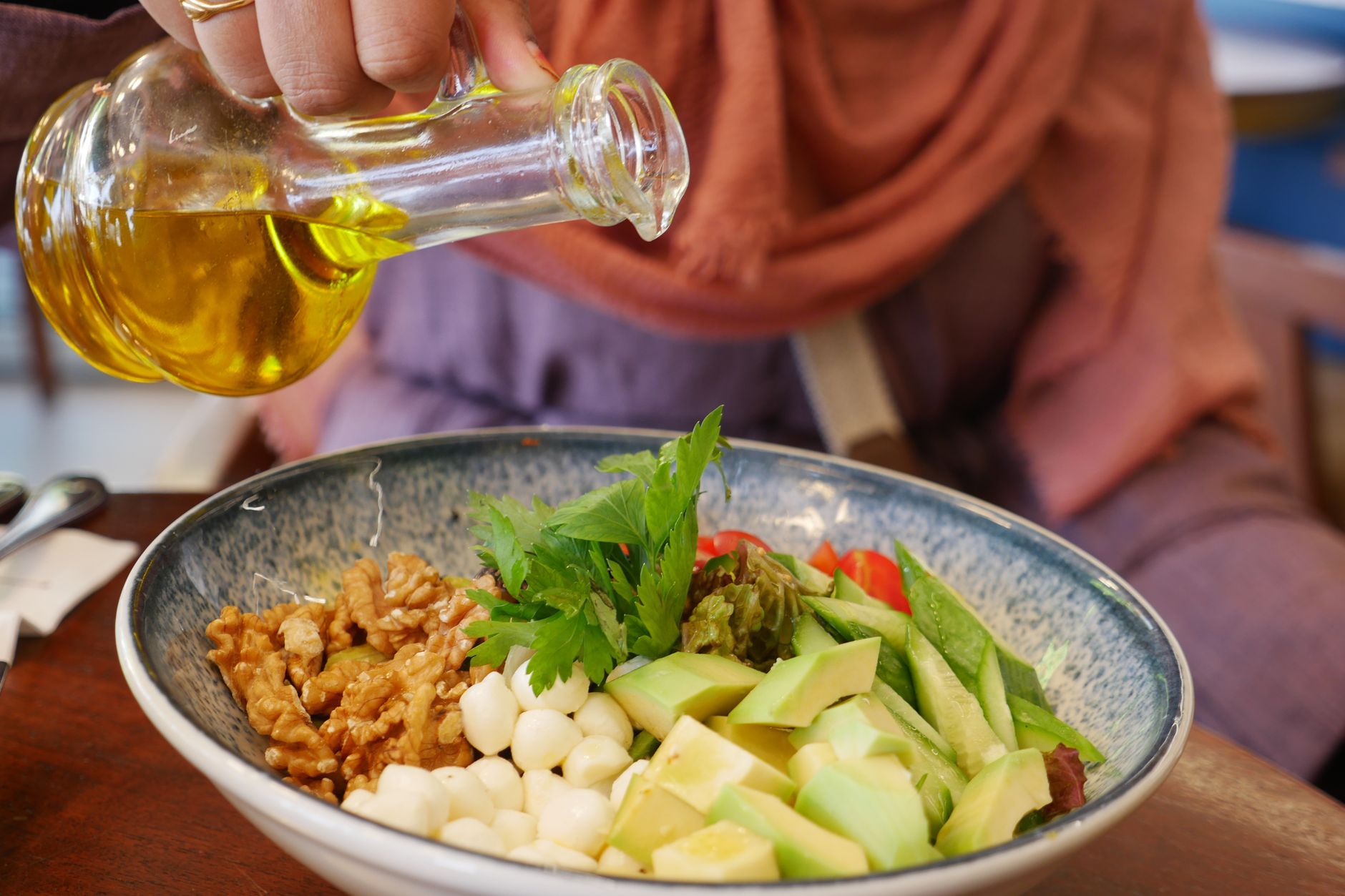
The advice to take milk thistle “with a little fat” sounds plausible: silymarin is barely water-soluble, and with fat-soluble vitamins that is exactly how it works. Only, the EMA assessment report contains not a single investigation that compared intake with and without a fatty meal. What it does contain is something else — and more interesting.
In 1992 Schandalik et al. compared, in nine patients after gallbladder removal, ordinary silymarin with a silibinin–phosphatidylcholine complex, that is, a compound of the active substance with a phospholipid. Over 48 hours 11.2% of the dose was recovered in the bile instead of 3.0%; the peak level was 116 instead of 29 µg/ml, and the relative availability 420 ± 60% against 100%. And in 2003 Kim et al. gave 24 volunteers the same 120 mg of silibinin from three different products — one reached an area under the concentration curve of around 252% and 326% of the other two.
The fat that makes the difference here is therefore chemically bound to the active substance and part of the product. A tablespoon of olive oil alongside the tablet does not achieve that, and nobody has measured whether it achieves anything at all. Anyone who cares about a well-absorbed preparation decides that at the point of purchase, through the formulation — not at the dinner table.
One dose or several?
The monograph divides the daily amount into two to four single doses. That fits the half-lives above and daily amounts of several hundred milligrams of extract, as are usual for medicines. Food supplements are as a rule below that: 100 mg of silymarin per tablet, once daily, is an order of magnitude at which splitting changes little — and a tablet that you reliably take every day is worth more in practice than two that you forget.
More important than the timing is regularity. If you tie the intake to a fixed meal — breakfast or dinner — you no longer have to ask the “before or after” question at all: you answer it the same way every day.
For how long at a stretch?

The monograph does not name a fixed maximum duration. It names a different limit, and one that is more useful in practice: if complaints persist for longer than two weeks during use, that belongs in a doctor's hands. If they worsen, or if yellowing of the skin or a changed colour of urine or stool appears, medical advice should be sought without delay.
For a food supplement that translates as: it is not a tool for sitting out a symptom. As a daily supplement over weeks and months, however, taking it is customary — the fact that the substance does not build up in the body does not argue against it. Food supplements are not a substitute for a balanced and varied diet and a healthy lifestyle.
Tolerability, and who should not take it
The monograph records hypersensitivity to Asteraceae as a contraindication — these include mugwort, chamomile and marigold. Children and adolescents under 18 are excluded because there are insufficient data on this; the same applies to pregnancy and breastfeeding, which is why use is not recommended there. Listed as undesirable effects are mild gastrointestinal complaints (dry mouth, nausea, stomach upset, gastric irritation, diarrhoea), headache and allergic reactions, each with unknown frequency. On interactions the monograph notes briefly in section 4.5: none reported.
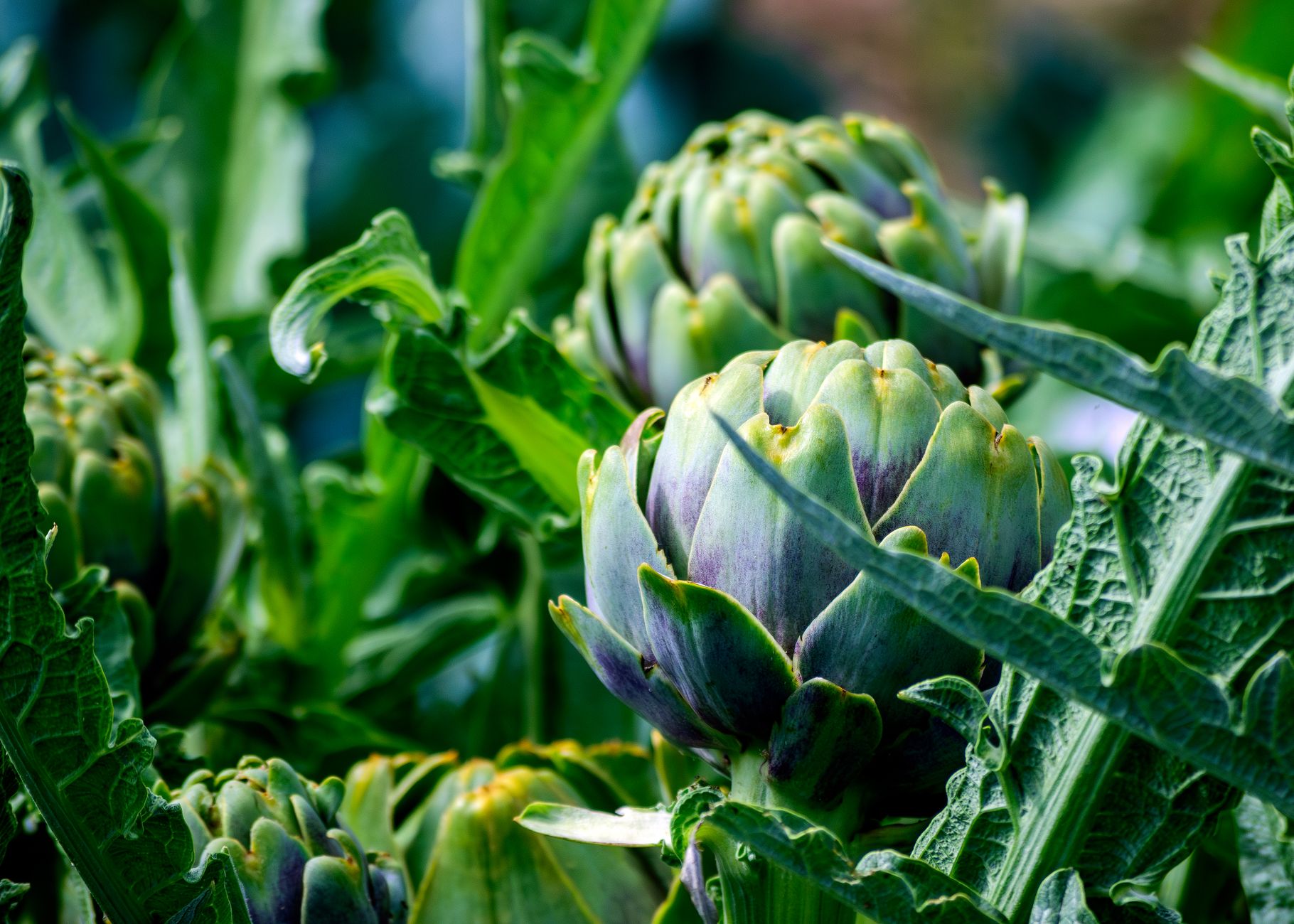
What ends up in the product are the ripe fruits, not leaves or herb — and for a tea that means something different than for an extract. The preparations themselves can be found in the Liver category.

Frequently asked questions
On an empty stomach or with food? Both are defensible. The EMA monograph states “before meals” for tea, powder and the acetone extract, and no timing at all for the remaining extracts. Anyone prone to a sensitive stomach takes the tablet with or after a meal — that is the recommendation on our own pack.
Morning or evening? There are no data on this. Neither the monograph nor the assessment report distinguishes by time of day. Take it at the time you will keep to most reliably.
Do I have to take a break? There is no substantiated need for one; the monograph knows no maximum duration, but rather the two-week rule for complaints that persist. Nor was accumulation in the body found with daily dosing over seven days (Schrieber et al. 2011).
Does it help to take the tablet with oil or a fatty meal? That is not substantiated. The documented improvement in absorption comes from products in which silibinin is bound to a phospholipid (Schandalik et al. 1992, relative availability 420%) — not from additional dietary fat.