Milk thistle or artichoke: the difference
Futures Nutrition Editorial Team · 14 August 2026
Milk thistle and artichoke are often mentioned in the same breath, and on the shelf they usually share a compartment. They are indeed related — both belong to the daisy family (Asteraceae). That, however, is where the common ground ends: they are different genera, a different plant part is used, and the constituents they are standardised on have nothing chemically to do with each other. With milk thistle it is the ripe fruit with its silymarin, with artichoke the dried leaf with its caffeoylquinic acids.
That is the practical core: anyone comparing the two preparations is not comparing two strengths of the same thing but two entirely different extracts. The figures on the packs — extract ratio, milligrams, percentages — therefore cannot be set off against one another.
Two thistles, two genera
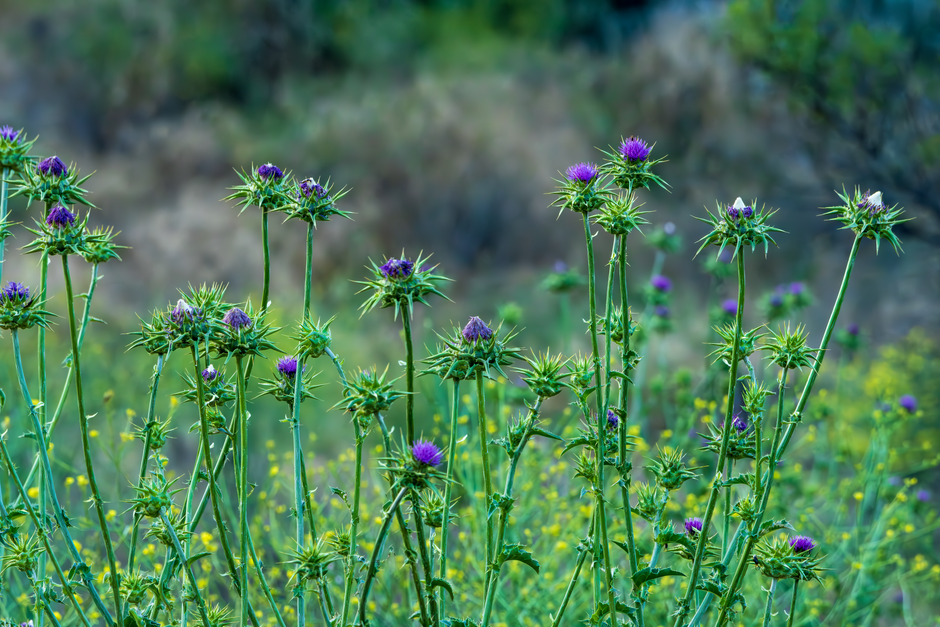
The botanical name of milk thistle is Silybum marianum (L.) Gaertn. It is an annual to biennial plant, grows 1 to 2 metres tall and stands out for its white-marbled leaves. More on its origin and appearance is in Milk thistle: plant, origin and use.
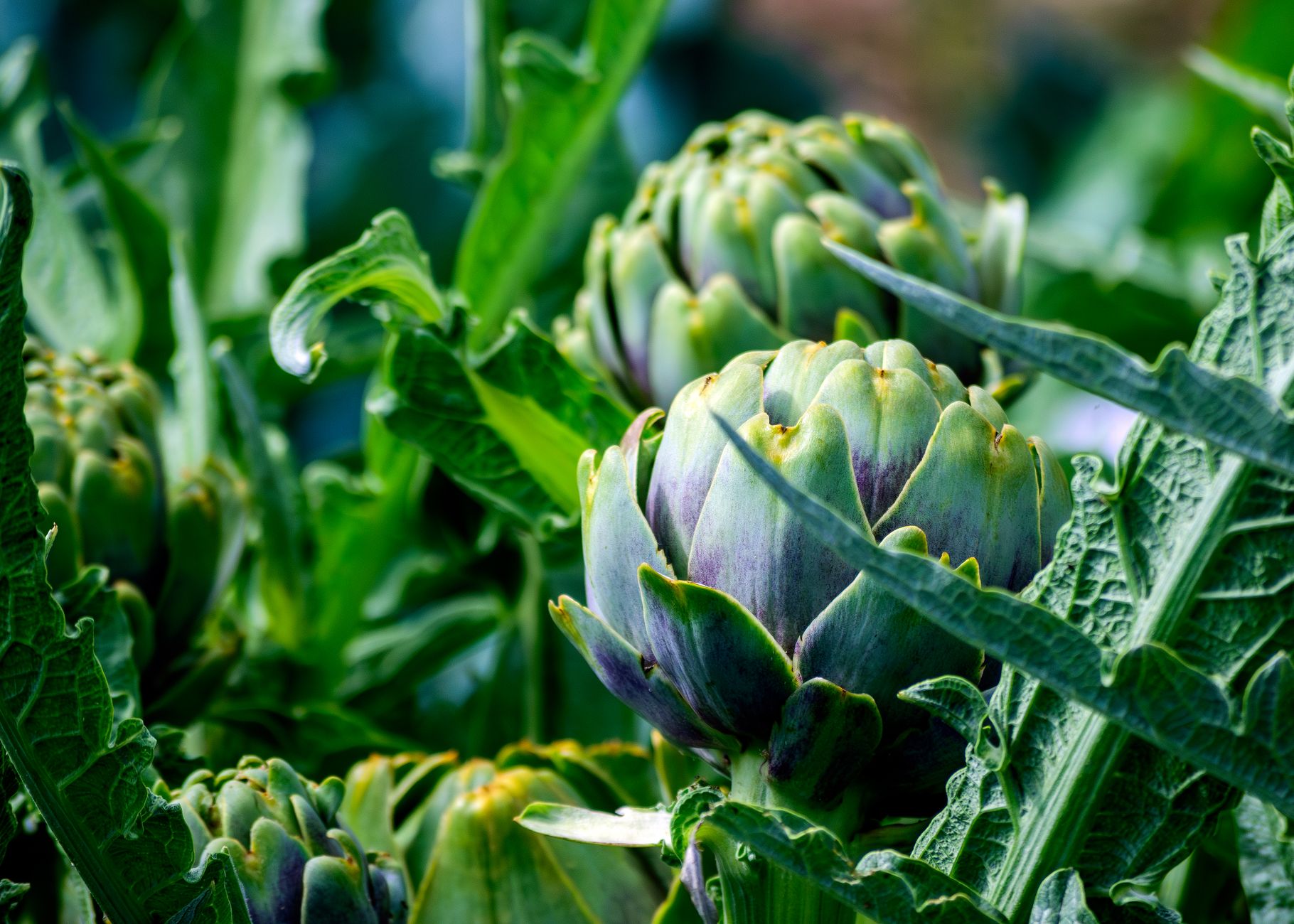
The European Pharmacopoeia today lists the artichoke as Cynara cardunculus L.; the older name Cynara scolymus L. counts as a synonym. Following a taxonomic revision of the genus, cardoon and globe artichoke are treated as two cultivated forms of the same subspecies. It is perennial, grows 1.5 to 2 metres tall and bears arching, deeply lobed, silvery green leaves 50 to 80 centimetres long. The edible part is the flower bud, 8 to 15 centimetres across: the fleshy lower sections of the bracts and the base, the heart. The immature florets in the middle are called the choke and are not eaten (assessment report of the European Medicines Agency, EMA/HMPC/194013/2017).
Both plants come from the Mediterranean. The artichoke has been grown there since antiquity; it was first cultivated as a vegetable around the middle of the 15th century in Naples. The alcoholic leaf extract is still the basis of bitter liqueurs today — roughly 10 grams of dried leaf per litre.
The decisive difference: fruit versus leaf
For preparations, only the ripe fruit of milk thistle is used, usually called seed on labels. Leaves and flowers play no part.
With artichoke it is the other way round: pharmacopoeial quality belongs to the dried basal leaf, not to the bud that ends up on the plate. Anyone eating artichokes is therefore not taking in what a leaf extract contains. This holds in particular for the bitter compound cynaropicrin: it occurs in the highest amount in young leaves, while root, fully developed fruits and flowers are practically free of it.
What is inside
| Milk thistle | Artichoke | |
|---|---|---|
| Botanical name | Silybum marianum (L.) Gaertn. | Cynara cardunculus L. (syn. C. scolymus L.) |
| Family | daisy family (Asteraceae) | daisy family (Asteraceae) |
| Life cycle | annual to biennial | perennial |
| Part used | ripe fruit | dried basal leaf |
| Marker substances | silymarin (flavonolignans: silibinin, silychristin, silydianin) | caffeoylquinic acids (chlorogenic acid, cynarin), flavones (luteolin glycosides) |
| Bitter compounds | none worth mentioning | 0.4 % sesquiterpene lactones, of which 47–83 % cynaropicrin |
| Pharmacopoeia monograph | Ph. Eur. 1860 | Ph. Eur. 1866 |
| Minimum content of the herbal drug | 1.5 % silymarin (calculated as silibinin) | 0.8 % chlorogenic acid (dried drug) |
| Taste | mild, oily | distinctly bitter |
The figures come from the EMA assessment reports (EMA/HMPC/294188/2013 for milk thistle, EMA/HMPC/194013/2017 for artichoke). Artichoke leaf additionally contains up to 2 % phenolic acids, 0.1 to 2 % flavonoids as well as tannins, phytosterols and inulin. Inulin is also the reason why this dietary fibre turns up so often in plant preparations — why it is in our milk thistle product and what the amount there means is in Milk thistle with inulin: what the 100 mg mean.
Why the extract ratios cannot be compared
Milk thistle preparations carry high ratio figures: the EU monograph lists dry extracts from 20:1 to 70:1. For artichoke, the monograph lists only 2:1 to 7.5:1 for the aqueous dry extract from dried leaves — but 15:1 to 35:1 for the extract from fresh leaves.
The same raw material, two very different numbers: fresh leaf consists largely of water, which disappears on evaporation. In that case the high ratio figure mainly describes water removed, not a stronger extract. That is exactly why the extract ratio on its own is no yardstick — neither between two plants nor within one. What the number actually says and where it misleads is in Extract ratio 20:1: what the number means.
| Preparation | Milk thistle (fruit) | Artichoke (leaf) |
|---|---|---|
| Tea | 3–5 g in 100 ml, 2–3× daily before meals | 1.5 g in 150 ml, 4× daily, or 3 g, 1–2× daily; daily dose 3–6 g |
| Powder | 300–600 mg per single dose, up to 1,800 mg daily | daily dose 600–1,500 mg, spread over 2–4 intakes |
| Dry extract | DER 20–70:1 (acetone): 82–239 mg per single dose, up to 478 mg daily | DER 2–7.5:1 (water): 200–640 mg per single dose, 400–1,320 mg daily |
| Age limit | not for people under 18 | not for children under 12 |
The source of both columns are the EU monographs EMA/HMPC/294187/2013 (milk thistle, 5 June 2018) and EMA/HMPC/194014/2017 (artichoke, 27 March 2018). They apply to registered traditional herbal medicinal products, not to food supplements — as an order of magnitude they are nevertheless the most usable reference point there is.
What may be said — and what may not
The same applies to both plants: there is no authorised health claim. Under Regulation (EC) No 1924/2006, a food supplement may only advertise with claims authorised in the EU register — and neither silymarin nor artichoke leaf appears there.
The register can be checked case by case. For Cynara scolymus, claims on drainage and on the excretory function of the organism were rejected, on the grounds that the asserted effect is not a beneficial physiological effect within the meaning of the regulation. For a standardised milk thistle extract, a claim on milk production during breastfeeding was rejected as unsubstantiated (Regulation (EU) No 666/2011).
Registered traditional herbal medicinal products are a different matter: they may name an indication resting solely on the long tradition of use. The EMA monographs word it for artichoke as symptomatic relief of digestive disorders such as dyspepsia with a feeling of fullness, bloating and flatulence; for milk thistle as symptomatic relief of digestive disorders, a feeling of fullness and indigestion, and to support liver function once a physician has ruled out serious conditions. These sentences belong to the medicinal product and may not appear on a food supplement — not even when the same plant is inside.
Food supplements are not a substitute for a balanced and varied diet and a healthy lifestyle.
Differences in the warnings
This is where the two monographs diverge most clearly. For milk thistle, the only contraindication named is hypersensitivity to the daisy family. For artichoke, obstruction of the bile ducts, inflammation of the bile ducts, liver disease, gallstones and other biliary conditions are expressly added, all of which belong in medical hands.
The age limits differ too: artichoke leaf is not recommended for children under 12, milk thistle not for people under 18. In both cases use during pregnancy and breastfeeding is advised against for lack of data. Undesirable effects described for artichoke leaf are mild diarrhoea with abdominal cramps, upper abdominal complaints such as nausea and heartburn, plus allergic reactions; the frequency is not known in each case. If complaints persist for longer than two weeks, medical advice should be sought — that stands in both monographs.
What is in our own range

We carry milk thistle, not artichoke: Milk thistle (silymarin) + inulin contains per tablet an extract from milk thistle seeds at a ratio of 20:1 with 80 % silymarin, giving 100 mg of silymarin, plus 100 mg of inulin from chicory root. An artichoke preparation would not be a stronger or weaker product of the same kind but a different one — different plant part, different marker substance, different warnings. What else stands in this category can be compared there.
Common questions
Can I simply eat artichokes instead of a leaf extract? Not equivalently. What is eaten is the flower bud; what is used for extracts is the basal leaf. The bitter compound cynaropicrin, which makes up 47 to 83 % of the sesquiterpene lactones, sits mainly in young leaves; fully developed flowers and fruits contain practically none. Artichokes on the plate are a vegetable, not a replacement for a standardised extract.
Why does artichoke taste bitter but milk thistle does not? Because the bitterness comes from the sesquiterpene lactones and the caffeoylquinic acids of the leaf — substances that play no part in the milk thistle fruit. Its silymarin is unremarkable in taste. Anyone expecting a tablet without a bitter note is dealing with milk thistle; a bitter tea points to artichoke leaf.
Can the two be taken together? Combination preparations exist, in some EU countries even as registered medicinal products. For the combination itself, however, there is no monograph of its own and no authorised claim. Anyone taking medicines or under medical treatment for the bile ducts or liver should check first — for artichoke leaf, biliary conditions are expressly named as a contraindication.
Is 600 mg of artichoke extract more than 100 mg of silymarin? The numbers cannot be set against each other. One denotes an amount of extract, the other the content of a marker substance. Only figures of the same kind are comparable: extract with extract, marker substance with marker substance, and even then only within the same plant and the same method of determination.
Sources: European Medicines Agency, EU monograph on Cynara cardunculus L. (syn. Cynara scolymus L.), folium, EMA/HMPC/194014/2017 (27 March 2018) · assessment report thereto, EMA/HMPC/194013/2017 (with details on Ph. Eur. 1866) · EU monograph on Silybum marianum (L.) Gaertn., fructus, EMA/HMPC/294187/2013 (5 June 2018) · assessment report thereto, EMA/HMPC/294188/2013 (with details on Ph. Eur. 01/2014:1860) · EU Register of nutrition and health claims (entries on Cynara scolymus and on silymarin extract) · Regulation (EC) No 1924/2006 · Regulation (EU) No 666/2011 · Directive 2001/83/EC, Article 16a ff.