Milk thistle: the plant, its origin and its seeds
Futures Nutrition Editorial Team · 14 August 2026
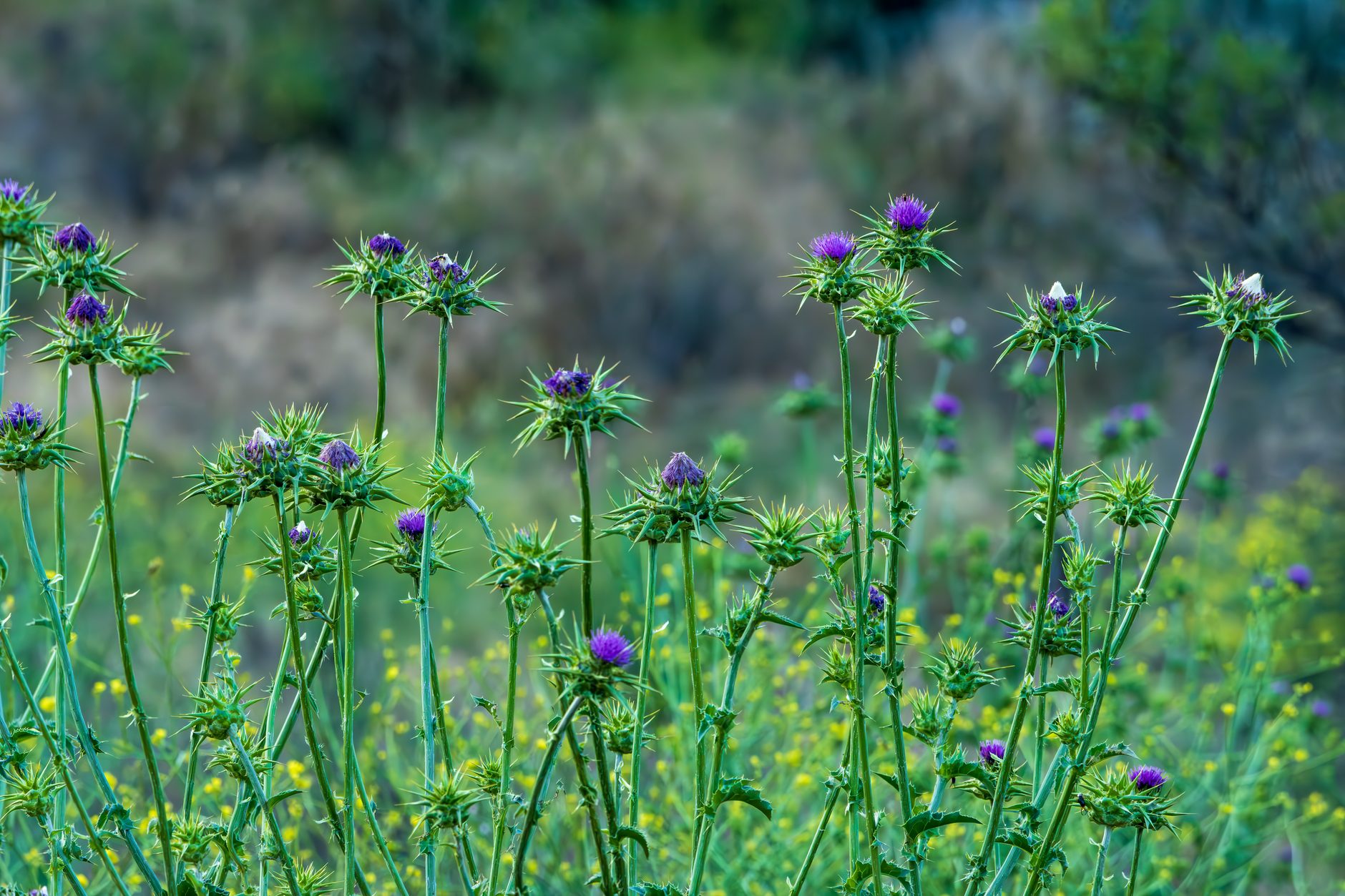
Milk thistle (Silybum marianum) is an annual to biennial thistle from the Mediterranean region, recognisable from a distance by its white-marbled leaves. Only a small part of the whole plant is used for supplements, though: the ripe fruits, usually called "seeds" on labels. Leaves, stems and flower heads stay in the field — they do not contain the substance this is all about in any meaningful amount.
That is the practical core of this article. Anyone standing in front of the shelf will find milk thistle as a tea, as a herb, as an oil and as an extract, and these forms come from different parts of the same plant. How much silymarin each form actually delivers is set out in Milk thistle: tea, tincture, capsule or tablet?. What ends up in which form is decided in the field and at harvest — not in the advertising.
The plant: one you do not mistake for another
Milk thistle belongs to the daisy family (Asteraceae) and grows 1 to 2 metres tall. In its first year it forms a leaf rosette; the lower leaves reach around 0.5 metres in length and 0.3 metres in width, are pinnately lobed and carry hard, yellowish spines about 5 millimetres long along the margin. The flower heads measure 3 to 5 centimetres, are spherical to egg-shaped and surrounded by spiny bracts; the inner bracts are 25 to 30 millimetres long and spineless. The tubular florets are red-violet, more rarely white, and about 30 millimetres long. Flowering and fruiting run from May to August (Zhang et al., Frontiers in Pharmacology 2024;15:1417655, PubMed 39055491).
The most reliable identifying feature is the leaf pattern: white veins on a green background that look as though milk had run across the leaf. That is exactly where the name comes from — according to tradition, the Virgin Mary's milk is said to have dripped onto the leaves. The synonyms in the technical literature carry the same reference: St. Mary's thistle, Marian thistle, botanically Carduus marianus L. (EMA assessment report, EMA/HMPC/294188/2013).
Where it comes from and where it grows today
The species is native to North Africa, southern Europe, southern Russia and Anatolia; today it also grows in South Australia as well as in North and South America (Marmouzi et al., Journal of Ethnopharmacology 2021;265:113303, PubMed 32877720). The reason it has spread so widely is how undemanding it is: it copes with cold, drought and saline soils and colonises fallow land, roadsides and pastures. In Central Europe you therefore mostly encounter it as an escape from gardens or on disturbed ground.
For cultivation that is both an advantage and a problem. The plant grows fast and dense — after about two months a stand forms a barrier impenetrable to livestock — but it ripens unevenly, and the ripe heads open. Harvest too late and part of the fruit is lost to the wind.
What is harvested: the fruit, not the seed
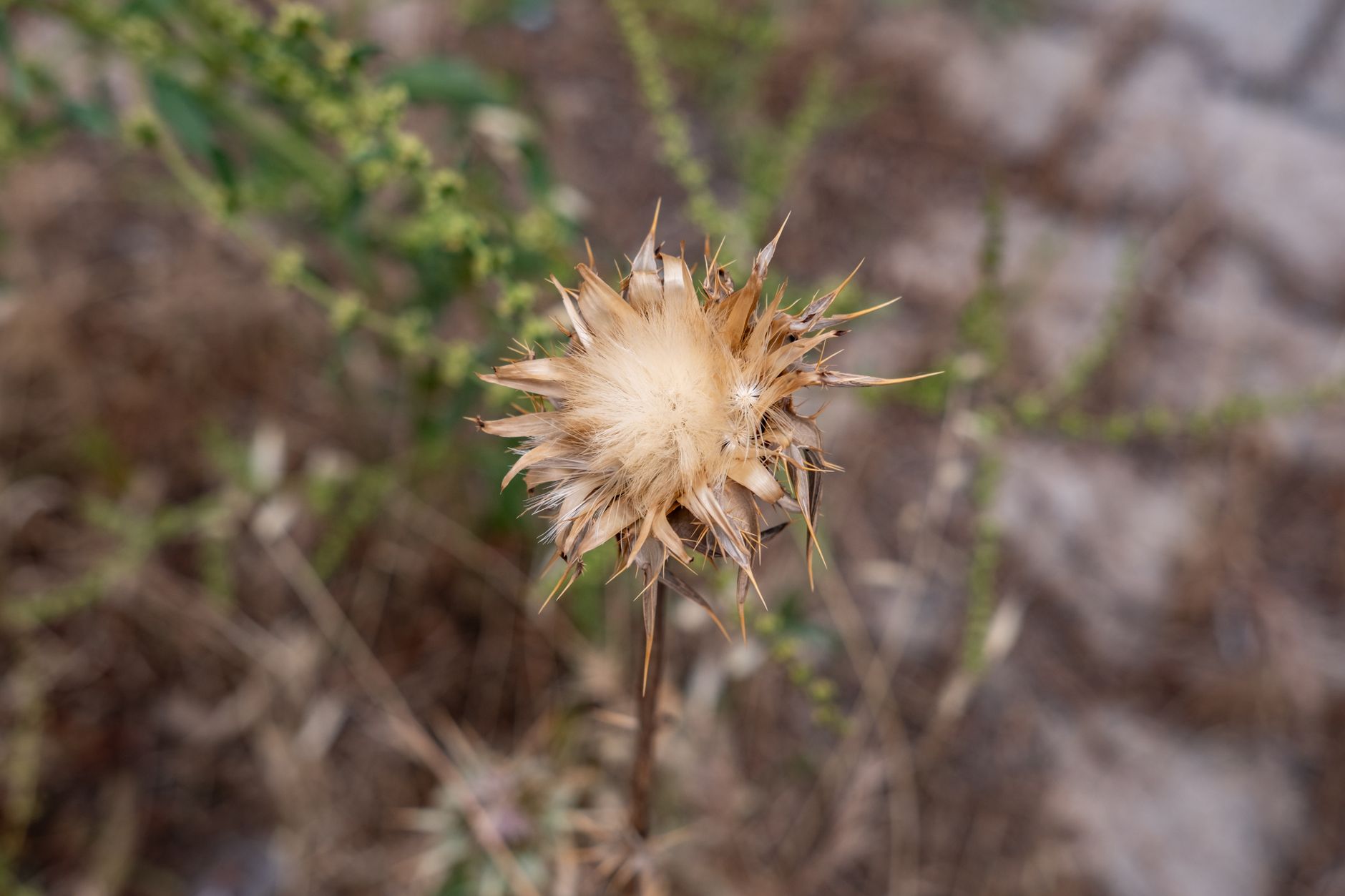
Botanically, what is traded is not a seed but an indehiscent fruit — an achene. It is strongly flattened, glossy, 6 to 8 millimetres long, around 3 millimetres wide and 1.5 millimetres thick, brown with darker longitudinal stripes; in cross-section two large, white, oily cotyledons are visible. At the upper end sits a pappus, the parachute of fine hairs that lets the wind carry the fruit.
The pappus is not incidental but a quality criterion: the monograph of the European Pharmacopoeia (Ph. Eur. 01/2014:1860, "Milk thistle fruit") requires the ripe fruit without the pappus and a content of at least 1.5 % silymarin, calculated as silibinin. Anyone gathering their own therefore has two work steps that the raw-material trade handles by machine — and no way to check the content.
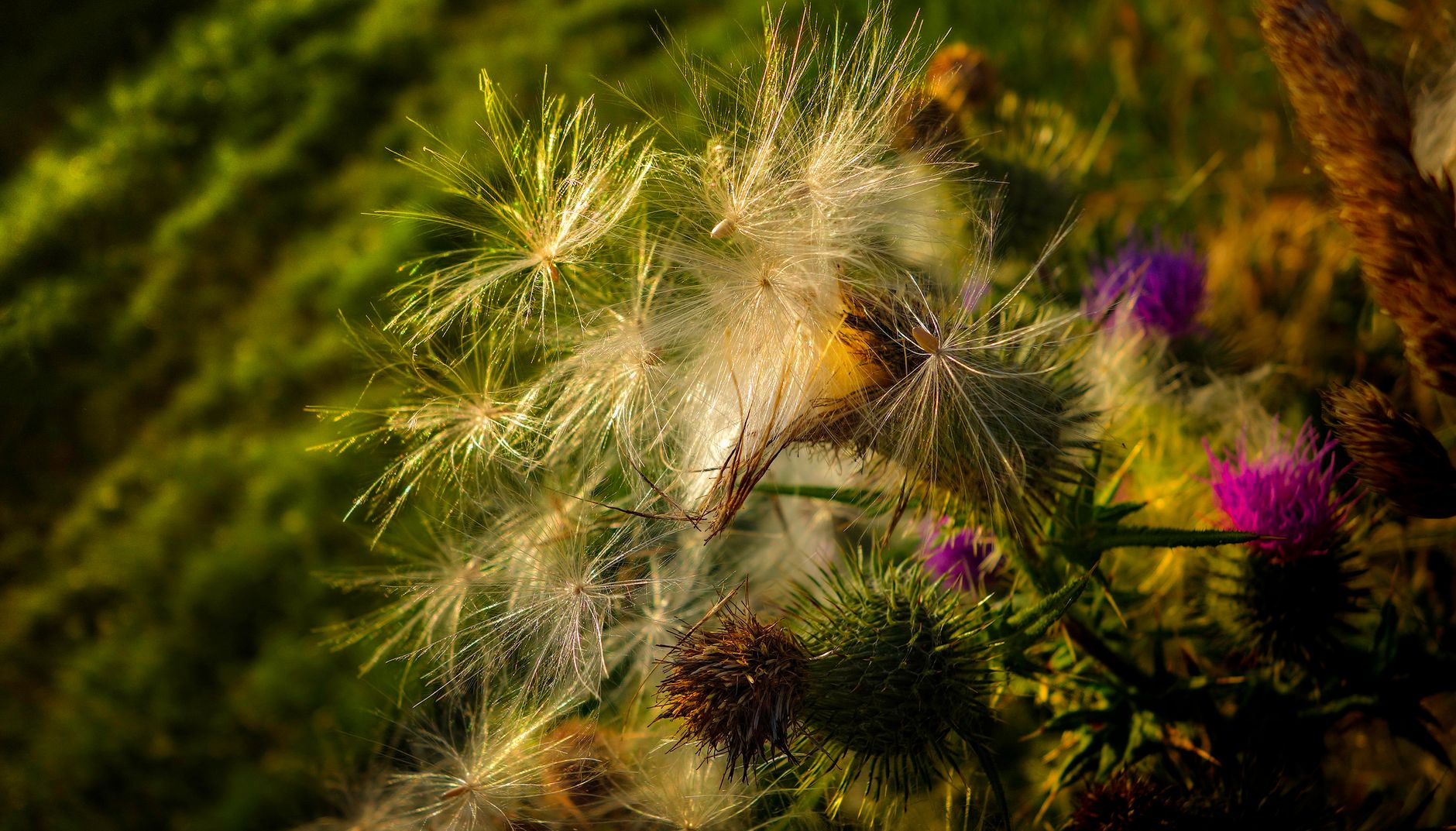
Why packs nonetheless say "milk thistle seed" is purely a matter of usage: the trade has always called the fruit a seed, and the ingredient list follows suit. It makes no difference to the matter itself — the same achene is always meant.
| Part of the plant | What is in it | What it is used for |
|---|---|---|
| Ripe fruits ("seeds") | Silymarin, fatty oil, protein | Extracts, tea, edible oil |
| Young leaves | no appreciable flavonolignans | traditionally as a vegetable |
| Flower heads, stems | — | no use in the supplement |
| Press cake after oil extraction | Starch, protein | Animal feed |
What is in the fruit
The composition of the fruit is well studied. The following ranges come from the EMA assessment report and the 2024 review:
| Component | Share of the dry fruit | Note |
|---|---|---|
| Flavonolignans (silymarin) | 1.3–3 % | silibinin A/B, isosilibinin A/B, silychristin, silydianin |
| Fatty oil | 20–30 % (literature values up to 35 %) | linoleic acid 35–55 %, oleic acid 24–30 %, palmitic acid 8–12 % |
| Protein | around 20 % | basis for protein meal from the press cake |
| Starch | around 30 % | remains after extraction |
| Phytosterols | 0.2–0.6 % | mainly β-sitosterol |
Two of those figures explain the price differences on the shelf. First: silymarin is not a single substance but a mixture of more than 20 described flavonolignans — which isomer ratio an extract has depends on the process; what that means for the number on the pack is set out in Milk thistle 20:1 or 80 %: what the label means. Second: at 1.3 to 3 % in the fruit, heavy concentration is needed before an extract exists that fits into a tablet.
That is exactly what the drug-to-extract ratio describes. The pharmacopoeia monograph for the refined, standardised dry extract (Ph. Eur. 01/2019:2071) provides for a silymarin content between 30 and 65 %; extracts for food supplements are not subject to that pharmacopoeia monograph, which is why other declared contents occur there too. Our own preparation is an example: it declares a milk thistle seed extract 20:1 with 80 % silymarin and, from that, 100 mg of silymarin per tablet, plus 100 mg of inulin from chicory root.

Traditional use: liver and bile, since antiquity
Milk thistle is one of the longest-documented medicinal plants in Europe. The EMA assessment report summarises that preparations of the plant have been used since Greco-Roman times and that physicians in the USA in the late 19th and early 20th century used preparations of the fruits for complaints of the liver, spleen and kidneys. The 1986 monograph of the German Commission E describes an infusion (3.5 g of fruit in 150 ml of water), a decoction (3.0 g in 150 ml) and a tincture.
Not everything handed down has held up. The WHO monograph of 2002 explicitly lists a whole series of folk-medicine uses as not supported by data, among them hay fever, constipation and varicose veins. Such lists are a useful corrective: traditional use is a historical statement, not evidence.
Today two separate legal frameworks stand side by side for the same plant, and that explains why two packs on the same shelf are labelled so differently:
- As a traditional herbal medicinal product, a preparation of milk thistle fruit can be registered. The EU monograph of the Committee on Herbal Medicinal Products (HMPC) of the European Medicines Agency of 5 June 2018 (EMA/HMPC/294187/2013) names tea preparations for this (3–5 g in 100 ml, two to three times daily before meals) and dry extracts with drug-to-extract ratios of 20:1 to 70:1. Such a medicinal product may carry a therapeutic indication on the label.
- As a food supplement it may not. For milk thistle and silymarin there is no health claim authorised under the Health Claims Regulation (EC) No 1924/2006; applications concerning botanicals have been left unprocessed ("on hold") for years. A food supplement containing milk thistle therefore describes what is in it — and says nothing about what it is meant to do. Food supplements are not a substitute for a balanced and varied diet and a healthy lifestyle.
If you want to know which preparations from our range belong in this context, you will find them in the liver category.
Oil, vegetable, bee forage: the other uses
Because a quarter to a third of the fruit is oil, it is also pressed. Cold-pressed milk thistle oil is rich in linoleic acid and contains tocopherols; the remaining press cake with around 30 % starch and 20 % protein goes into animal feed. The young leaves were traditionally eaten as a vegetable — de-spined, much like chard. And because the plant flowers long and abundantly, it is regarded as productive bee forage (Zhang et al. 2024).
These are not footnotes but the reason milk thistle is traded in several qualities: oilseed, feed and extract raw material place different demands on ripeness, cleanliness and silymarin content.
What is on the pack — and why
The 2018 EU monograph names one contraindication and several warnings for preparations of milk thistle fruit, which reappear in the labelling of food supplements:
- Hypersensitivity to plants of the Asteraceae family (the daisy family) is a contraindication — anyone allergic to mugwort, chamomile or ragweed should be careful here.
- Use in children and adolescents under 18 years is not substantiated for lack of data and is not recommended.
- For pregnancy and breastfeeding there are no sufficient data; use is not recommended.
- Reported adverse effects are mild gastrointestinal complaints (dry mouth, nausea, diarrhoea), headache and allergic reactions; the frequency is not known.
Our own tin carries the same restrictions — not as decoration, but because they belong to the plant.
Frequently asked questions
Why does the label say "seeds" when they are fruits? Because the trade has always called the achenes seeds and the ingredient list follows that usage. Botanically "fruit" would be correct; the European Pharmacopoeia accordingly lists the herbal drug as milk thistle fruit.
Can you grow milk thistle in the garden and harvest it yourself? Growing it, yes — the plant is undemanding and can be raised as an annual. For a supplement, your own harvest is still of little use: the fruits ripen unevenly, the pappus has to be removed, and the silymarin content varies with variety, site and harvest date. The pharmacopoeia requires at least 1.5 % — and that cannot be checked at home.
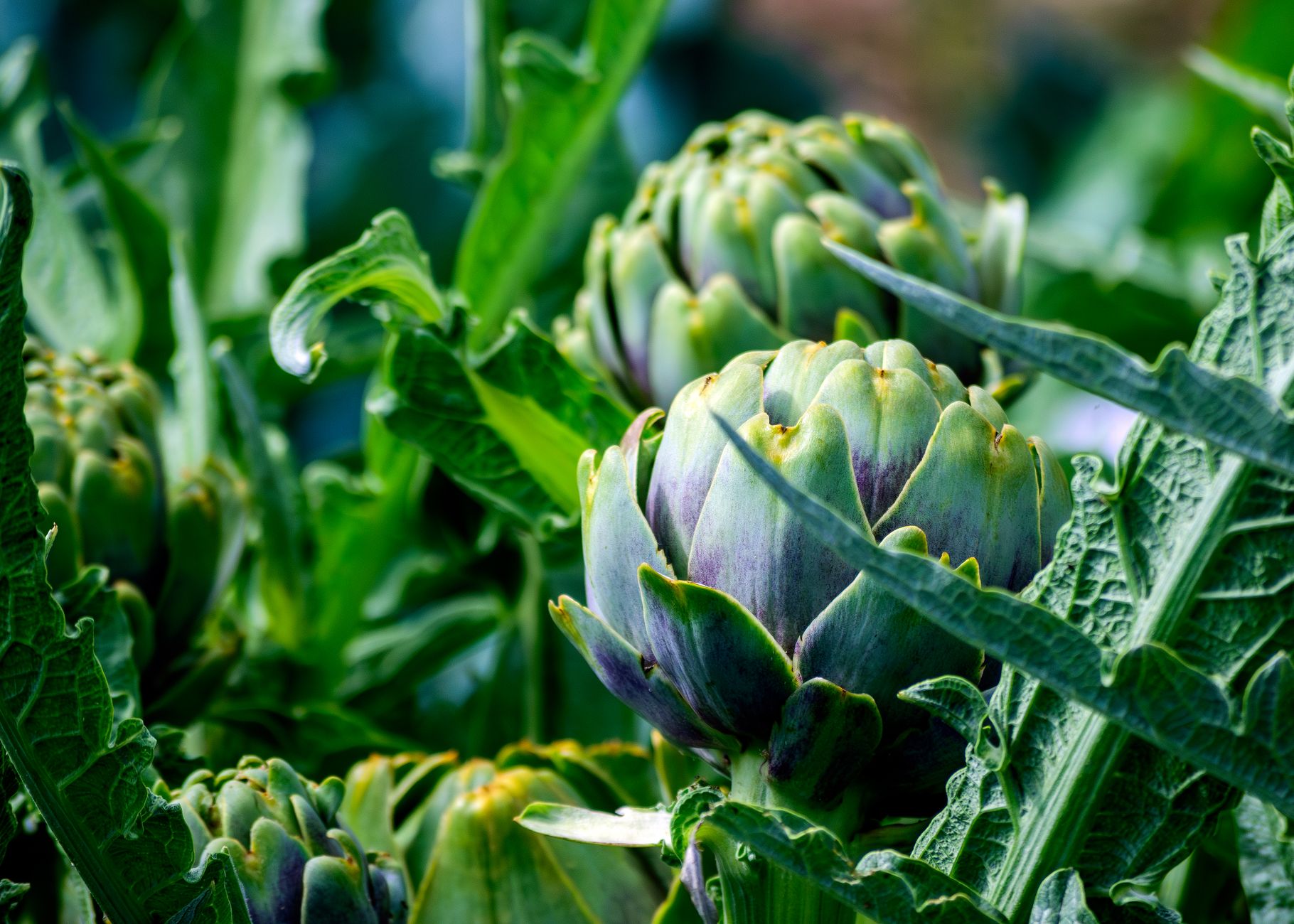
Is milk thistle related to the artichoke? Both belong to the daisy family and are thistles in the broader sense, but they are different genera (Silybum and Cynara) with entirely different constituents: silymarin sits in the milk thistle fruit, the bitter compounds of the artichoke in its leaves.
Why does a pack from the pharmacy say more than a food supplement? Because there are two legal frameworks. A product registered as a traditional herbal medicinal product may name a therapeutic indication; a food supplement may only do so with an authorised health claim — and for milk thistle there is none.
Sources: European Medicines Agency, EU monograph on Silybum marianum (L.) Gaertn., fructus, EMA/HMPC/294187/2013 (5 June 2018) · assessment report thereto, EMA/HMPC/294188/2013 (with details on Ph. Eur. 01/2014:1860, Ph. Eur. 01/2019:2071, Commission E 1986, ESCOP 2009, WHO 2002) · Zhang X et al., Frontiers in Pharmacology 2024;15:1417655 (PubMed 39055491) · Marmouzi I et al., Journal of Ethnopharmacology 2021;265:113303 (PubMed 32877720) · Regulation (EC) No 1924/2006 · Regulation (EU) No 432/2012.