Milk thistle 20:1 or 80 %: what the label means
Futures Nutrition Editorial Team · 14 August 2026
Milk thistle packs almost always carry two numbers, and they are regularly confused: a ratio such as 20:1 and a percentage such as 80 % silymarin. The ratio says how much dried fruit goes into one part of extract. The percentage says how much silymarin is in that extract. The two figures describe different things — and neither of them on its own says how much silymarin ends up in the tablet.
That third number is the one that matters when comparing products: milligrams of silymarin per daily portion. Ratio and percentage explain how it comes about.
What the ratio means: drug-extract ratio
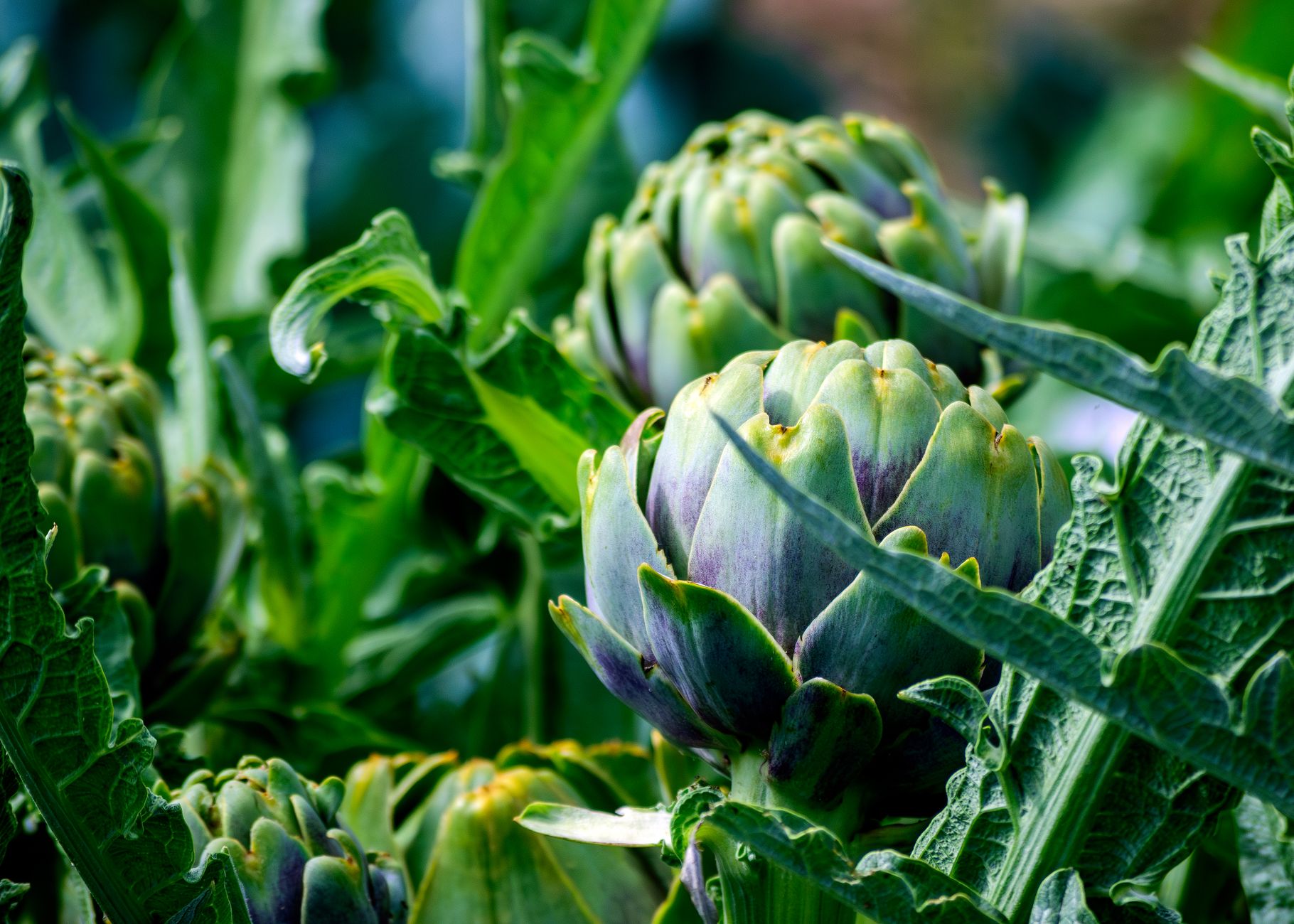
The technical term is drug-extract ratio (DER). Here, drug means nothing more than dried plant material — in this case the ripe milk thistle fruits. 20:1 means: 20 kilograms of dried fruit yield 1 kilogram of extract.
Two misunderstandings are common:
- 20:1 does not mean 20 times as strong. Extraction does not only concentrate, something is also lost along the way. How much of the fruit's silymarin actually ends up in the extract depends on the solvent and on the process.
- A higher ratio is not automatically better. All it says at first is that more raw material went in. Whether more of the desired substance comes out is another matter — that is what the percentage is for.
The EU monograph of the Committee on Herbal Medicinal Products (HMPC) at the European Medicines Agency lists several preparations of milk thistle fruit side by side, each with its own ratio and its own solvent (EMA/HMPC/294187/2013, 5 June 2018):
| Preparation | Drug-extract ratio | Solvent |
|---|---|---|
| Dry extract | 20–70:1 | Acetone |
| Dry extract | 30–40:1 | Ethanol 96 % (V/V) |
| Dry extract | 20–35:1 | Ethyl acetate |
| Dry extract | 26–45:1 | Ethyl acetate |
| Dry extract | 36–44:1 | Ethyl acetate |
| Dry extract | 20–34:1 | Methanol 90 % (V/V) |
| Soft extract | 10–17:1 | Ethanol 60 % (V/V) |
Two things stand out. First, the ratio is almost never a single figure but a range — the fruit varies in content, so the amount needed for one kilogram of extract varies too. Second, the solvent is part of the statement: acetone, ethyl acetate and ethanol dissolve different amounts out of the same fruit. A ratio without a solvent is therefore only half a specification.
What the percentage means: silymarin content
Silymarin is not a single substance but a mixture of more than twenty flavonolignans — above all silibinin A and B, isosilibinin A and B, silicristin and silidianin. The dried fruit contains around 1.3 to 3 % of them; the European Pharmacopoeia requires at least 1.5 % silymarin for the herbal drug milk thistle fruit, calculated as silibinin (Ph. Eur. 01/2014:1860).
The extract has a monograph of its own. According to the EMA assessment report, the refined and standardised milk thistle dry extract (Ph. Eur. 01/2019:2071) has a nominal silymarin content between 30 and 65 % (m/m), and the amount actually measured has to lie between 90 and 110 % of the value stated on the label. On top of that, the composition of the silymarin is prescribed:
| Constituent | Share of silymarin |
|---|---|
| Silicristin + silidianin | 20–45 % |
| Silibinin A + B | 40–65 % |
| Isosilibinin A + B | 10–20 % |
That is the difference between standardised and just some extract: in the pharmacopoeia extract not only the total content is fixed, but the pattern of the individual substances as well. Important for placing this on the shelf: food supplements are not subject to this pharmacopoeia monograph. They may follow it, but they do not have to — which is why contents outside the 30 to 65 % range occur there.
Both numbers together: the rough calculation
Ratio and fruit content together allow an estimate of which percentage is possible at all. The calculation: ratio × silymarin share of the fruit.
| Ratio | Arithmetically possible content (at 1.3–3 % in the fruit) |
|---|---|
| 10:1 | 13–30 % |
| 20:1 | 26–60 % |
| 36–44:1 | above 47 % (arithmetically over 100 %) |
| 70:1 | arithmetically far above 100 % |
Once the ratio arithmetically yields more than 100 %, the calculation is of course no longer to be taken literally — it only shows that at high ratios a considerable part of the silymarin is lost in the process. At low ratios it is the other way round: they cap how high the content can be.
What this looks like in practice is shown by the market data in the EMA assessment report (EMA/HMPC/294188/2013). For an Estonian medicine it states: one hard capsule contains 167.69 to 206.44 mg of native dry extract (DER 36–44:1, ethyl acetate), corresponding to 140 mg of silymarin. Converted, the content lies between roughly 68 and 84 % depending on the batch — for one and the same product. What is kept constant is the milligram figure, not the percentage. Another preparation in the same compilation contains 40.9 to 56.3 mg of extract (35–50:1) with 22.5 mg of silymarin, that is 40 to 55 %.
Two methods of measurement, two numbers
There is a second reason why percentages are hard to compare: the content can be determined photometrically (via a colour reaction) or by HPLC (chromatographically), and the two methods return different values for the same sample. The EMA assessment report gives both figures side by side for the same extracts:
| Extract | Photometric | HPLC |
|---|---|---|
| DER 35–40:1, acetone | 70 mg | 60 mg |
| Acetone 95 % (V/V) | 140 mg | 108.2 mg |
The photometric value is therefore roughly 17 to 29 % above the HPLC value. That is not an error but method: the colour reaction also captures related substances that chromatography separates out and discards. Anyone comparing two packs is therefore, in case of doubt, comparing two methods — not two qualities. If the method is not stated, comparing two percentages or two milligram figures says little.
Reading one label
Our own preparation is a good exercise, because both numbers are on it. What is declared is a milk thistle seed extract 20:1 with 80 % silymarin, giving 100 mg of silymarin per tablet, plus 100 mg of inulin from chicory root; the recommendation is one tablet a day after a meal.

Read in order, that goes: 20:1 is the ratio of fruit to extract. 80 % is the silymarin share within the extract. 100 mg is the amount that ends up in the tablet as a result — and that is the value you hold up against another product. Arithmetically it corresponds to around 125 mg of extract per tablet.
That 80 % lies above the pharmacopoeia range of 30 to 65 % ties back to the section above: food supplements do not follow the pharmacopoeia monograph, and a content determined photometrically comes out systematically higher than one determined by HPLC. Which figure you have in front of you therefore has a say — and precisely for that reason the milligram statement is the more reliable point of reference than the percentage. Further preparations for the same context are in the liver category.
What the ratio does not say
Neither the drug-extract ratio nor the percentage is a statement about what a product does. For milk thistle and silymarin there is no health claim authorised under the Health Claims Regulation (EC) No 1924/2006; applications concerning botanicals have been on hold for years. A food supplement containing milk thistle therefore describes what is in it. Food supplements are not a substitute for a balanced and varied diet and a healthy lifestyle.
What the 2018 EU monograph records for preparations from milk thistle fruit also remains to be observed: hypersensitivity to plants of the daisy family (Asteraceae) is a contraindication; for children and adolescents under 18 years of age as well as for pregnancy and breastfeeding, no sufficient data are available.
Frequently asked questions
Is an extract at 80:1 better than one at 20:1? Not as a matter of course. A high ratio means that a lot of raw material went in, not that a lot of silymarin comes out. Two products only become comparable via the milligrams of silymarin per daily portion — and even then only if the same method of measurement stands behind both.
Why do some packs carry no ratio at all? Because what is processed there is not an extract but powdered fruit. Then there is nothing to concentrate: 500 mg of milk thistle powder at 1.5 % silymarin contains around 7.5 mg — a different order of magnitude from an extract, even if the milligram figure on the front looks larger.
Can I calculate the amount of silymarin from the ratio? Only as a rough upper limit. Ratio × content of the fruit (1.3–3 %) gives what can be in there at most. How much it really is only appears where the manufacturer states the milligrams.
What does native extract mean? The pure extract without excipients. Many finished products additionally contain carriers so that the mass can be compressed — the term native excludes these, which is why the milligram figure for the native extract comes out lower than for the adjusted one.
Sources: European Medicines Agency, European Union herbal monograph on Silybum marianum (L.) Gaertn., fructus, EMA/HMPC/294187/2013 (5 June 2018) · Assessment report on the same, EMA/HMPC/294188/2013 (with details on Ph. Eur. 01/2014:1860, Ph. Eur. 01/2019:2071 and the market data of the member states) · Regulation (EC) No 1924/2006.