Milk thistle: tea, tincture, capsule or tablet?
Futures Nutrition Editorial Team · 14 August 2026
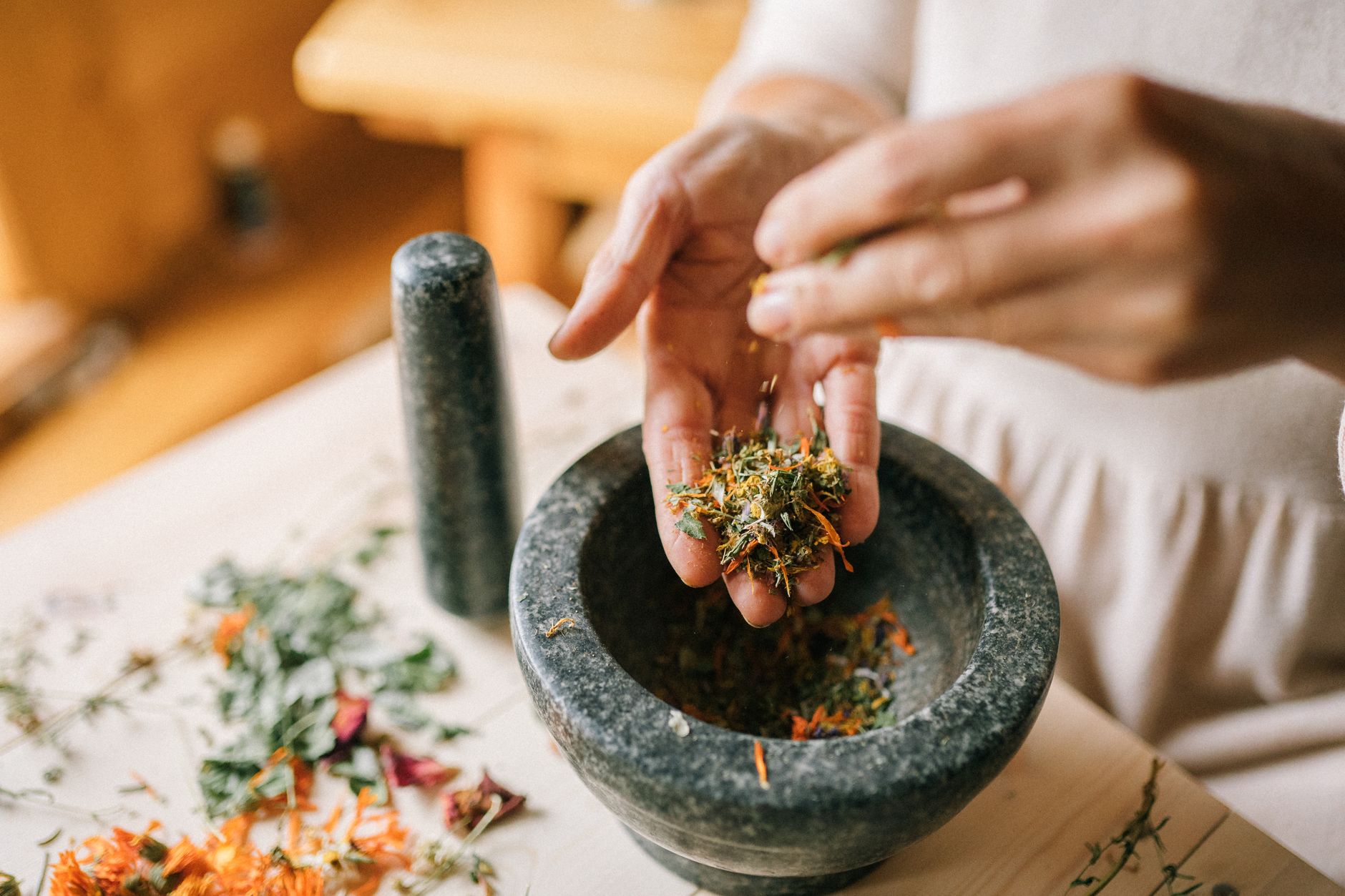
Milk thistle comes as a tea bag, as drops in a brown bottle, as a capsule and as a tablet. The short answer to the question of which form to take: it does not decide the taste, it decides whether there is any amount on the pack at all. Tea and tincture deliver an amount of silymarin that nobody quantifies — with tea it is additionally small, because the group of active compounds barely dissolves in water. Capsule and tablet, by contrast, contain a standardised dry extract with a declared milligram figure. And between capsule and tablet themselves the difference is smaller than most people assume: what matters is not the shell, but the extract inside it.
Four forms, three preparations
In its EU monograph on milk thistle fruit (EMA/HMPC/294187/2013, version of 5 June 2018), the European Medicines Agency listed which preparations made from the fruit are on the market at all — and with which amounts. That table is the most useful overview there is on the subject, because preparation and dose stand side by side:
| Form | What is inside | Statement on the pack | Dose per the EMA monograph |
|---|---|---|---|
| Tea | comminuted whole fruit | grams of herb, no silymarin | 3–5 g in 100 ml boiling water, 2–3× daily before meals |
| Powder in capsules | ground whole fruit | mg of powder | 300–600 mg per single dose, up to 1,800 mg daily |
| Tincture, liquid extract | ethanolic extract | ml or drops | soft extract 10–17:1 (ethanol 60 %): 392 mg twice daily |
| Capsule or tablet | dry extract, standardised | mg of extract and mg of silymarin | depending on the extract 70–250 mg per single dose |
One row stands out. The jump from 1,800 mg of powder to 70 mg of extract looks like a contradiction, but it is precisely the point. In a dry extract, depending on the solvent, 20 to 70 kilograms of fruit are concentrated down into one kilogram of extract; the small figure stands for more plant, not for less. How extract ratio and content declaration relate to one another is set out in detail in Milk thistle 20:1 or 80 %.
Tea: what passes from the fruit into the water
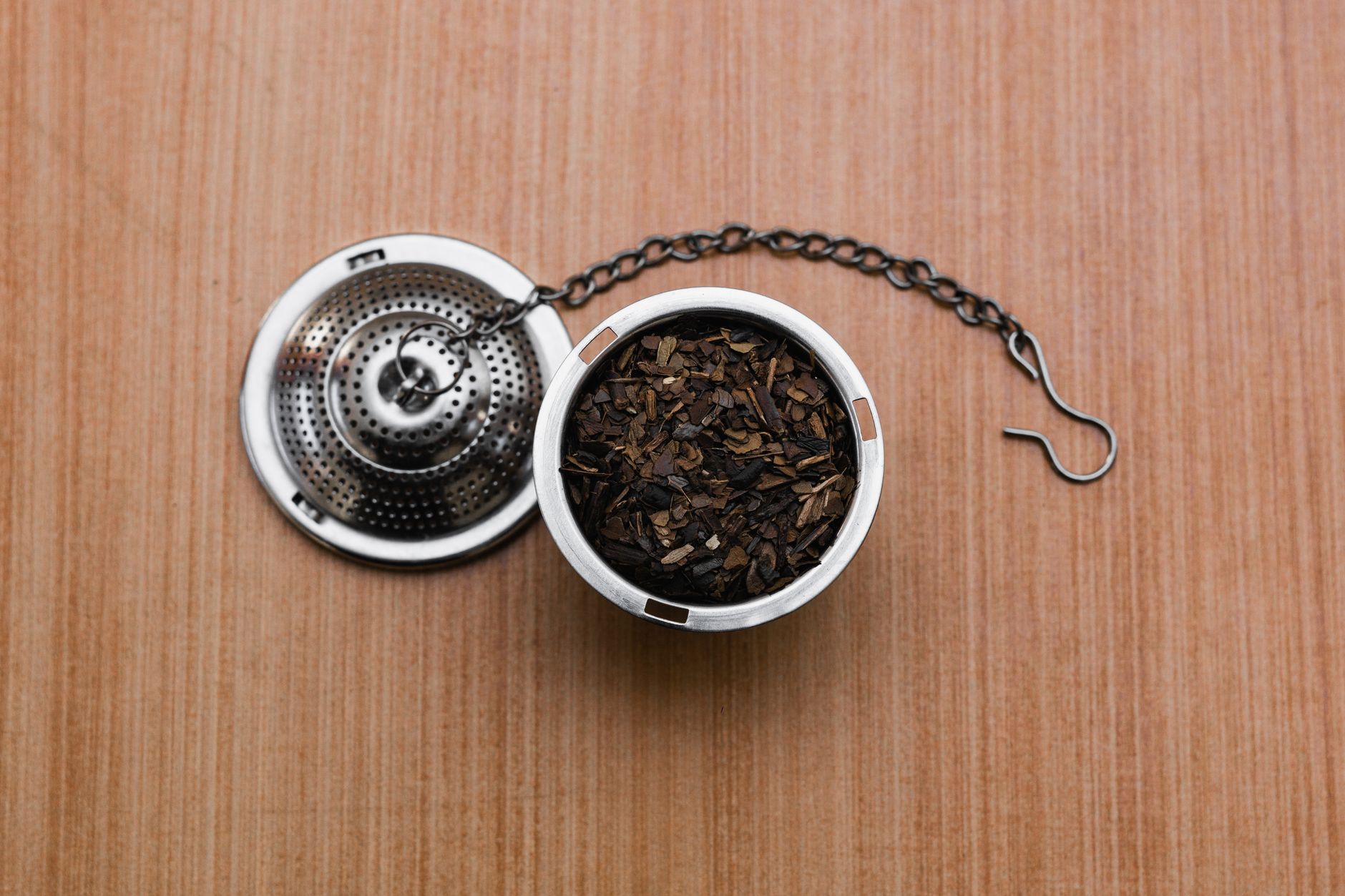
Let us do the arithmetic on the cup of tea. The European Pharmacopoeia requires milk thistle fruit to contain at least 1.5 % silymarin, calculated as silibinin (Ph. Eur. 01/2014:1860). So 3 to 5 grams of comminuted fruit — the daily portion from the monograph — contain at least 45 to 75 mg of silymarin. That sounds like a usable order of magnitude.
Only most of it stays in the fruit. The EMA assessment report (EMA/HMPC/294188/2013) records the reason in a single sentence: milk thistle extract is insoluble in water. For isolated silibinin the order of magnitude has been measured: around 41 µg per millilitre of water (Duan et al., Acta Pharmacologica Sinica 2011, vol. 32, pp. 108–115, PubMed 21170082). Even if a 100 ml cup went all the way to saturation, that would be a good 4 mg — an upper limit on paper, not a measurement on a real infusion, but it shows the dimension. On top of that, the fruit consists of 20 to 30 % fatty oil: the flavonolignans sit in a fatty matrix out of which hot water dissolves them only poorly.
It does not follow that milk thistle tea is pointless — in the monograph it even has its own indication. There it reads, for registered traditional herbal medicinal products: for the symptomatic relief of digestive disorders, a feeling of fullness and flatulence, and for the support of liver function, after a doctor has excluded serious conditions. What a tea is not: a way of taking in a defined amount of silymarin. Anyone preparing the fruit as a tea should crush it shortly before the infusion — whole fruits give up even less — and let it steep covered. That it is the fruit and not the seed, incidentally, is not hair-splitting but is written that way in the pharmacopoeia.
Tincture and liquid extracts
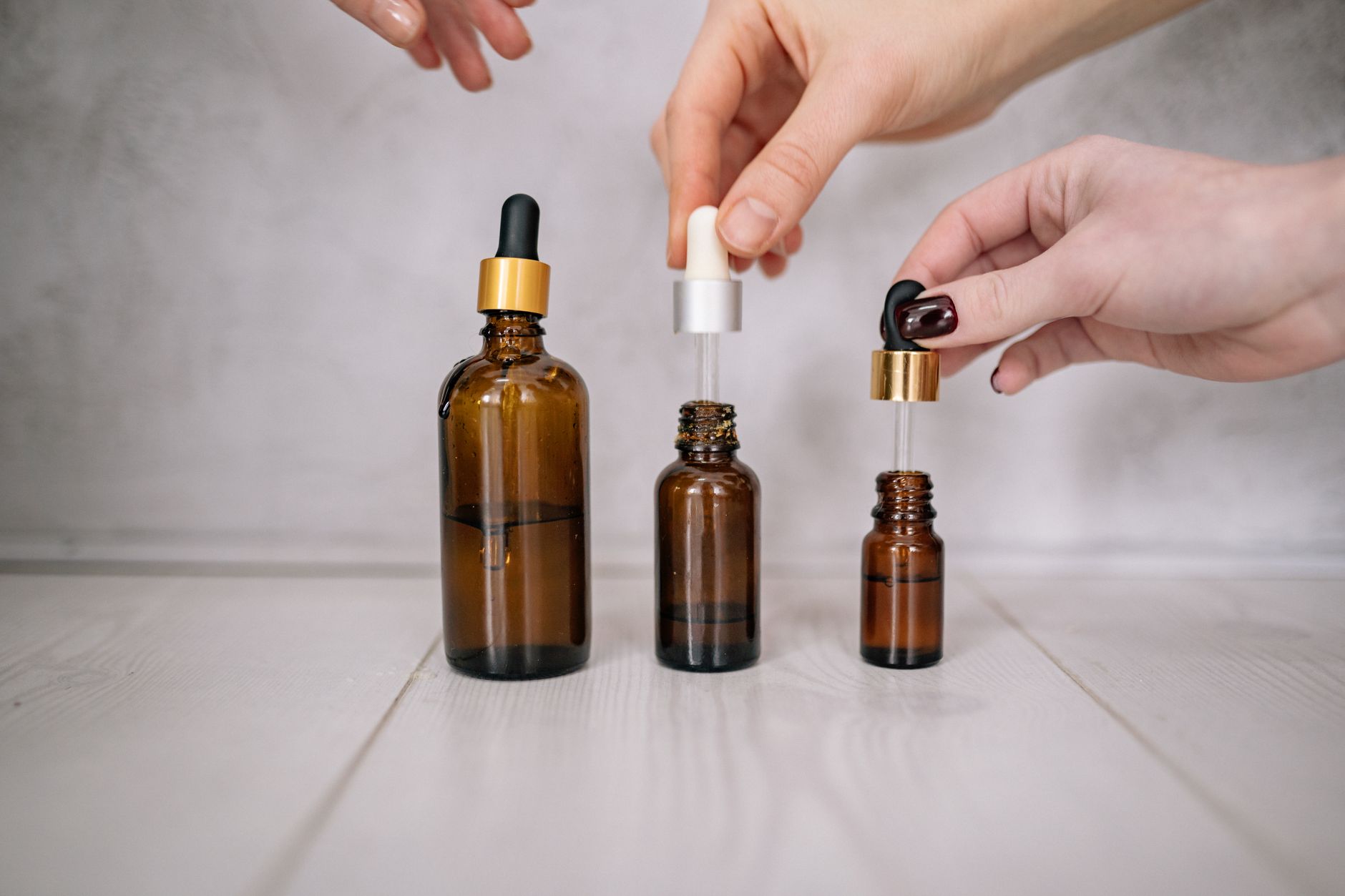
Alcohol dissolves the flavonolignans markedly better than water. That is exactly why every standardised extract is produced with an organic solvent: for the refined and standardised milk thistle dry extract (Ph. Eur. 01/2019:2071) the pharmacopoeia permits ethyl acetate, acetone, ethanol or methanol, in each case also mixed with water — water alone is not on the list. A tincture is therefore chemically the better extract than a tea.
Its problem is a different one: as a rule it is not standardised. The dosages circulating for tinctures come from the Commission E monograph of 1986 and are given there in drops — 15 to 25 drops four to five times daily, or 1 to 2 ml three times daily. A number of drops is not a statement of quantity: drop size depends on the pipette, on viscosity and on temperature, and how much silymarin is contained per millilitre is usually not stated on a food supplement in liquid form. That makes a tincture simply not comparable with a capsule.
The EMA lists exactly one liquid preparation with a clear figure: a soft extract at a ratio of 10–17:1 with ethanol 60 %, 392 mg twice daily. It comes with a practical note that the monograph explicitly requires: for tinctures and extracts that contain ethanol, the alcohol content must be labelled. Anyone avoiding alcohol thus has an exclusion criterion that has nothing to do with silymarin.
Capsule or tablet: the smaller difference
One decides between these two forms less often than one thinks — usually the same dry extract is in both anyway. The differences lie in manufacture: a capsule is a shell of gelatine or cellulose into which the extract powder is filled. A tablet is produced by compression, which requires fillers, binders and release agents.
| Criterion | Capsule | Tablet |
|---|---|---|
| Additives | few, but the shell | filler, release agent, coating if any |
| Vegan | only with a cellulose shell, not with gelatine | as a rule yes |
| Divisible | no | only with a score line |
| Size at the same amount | usually larger | usually more compact |
| Silymarin content | depends on the extract | depends on the extract |
The last row is the important one. Whether 100 or 200 mg of silymarin are in the daily portion has nothing to do with capsule or tablet, but with the extract and its standardisation. What to look for on the label — which part of the plant, which method of analysis, which declaration — is a question of its own.
A special case is the capsule with ground fruit instead of extract. It looks like an extract preparation, but it is the powder row from the table above: at a minimum of 1.5 % silymarin in the powder, 600 mg deliver around 9 mg of silymarin. The difference from an extract capsule is thus roughly one order of magnitude — and on the label it can only be spotted by watching for the word “extract” and for a silymarin figure.
Why medicines and food supplements look different
All the dosages named so far come from medicines law. They apply to registered traditional herbal medicinal products and to preparations with well-established medicinal use — not to food supplements. A food supplement is legally a foodstuff; it may not name indications, and for milk thistle there is no authorised health claim in the EU either, because the applications on plant substances have been on hold for years. The same plant, two legal frameworks.
In practice that means: the EMA figures are a yardstick for placing orders of magnitude, not a prescription. Food supplements are not a substitute for a balanced and varied diet and a healthy lifestyle.
What applies equally to all forms is set out in the monograph under the warnings: hypersensitivity to composite plants (Asteraceae) is a contraindication; for children and adolescents under 18 years of age and for pregnancy and breastfeeding there are insufficient data. Listed as undesirable effects are mild gastrointestinal complaints, headache and allergic reactions, in each case with unknown frequency.
Which form fits which question
- “I want a defined amount of silymarin daily.” Dry extract in a capsule or tablet, with a silymarin figure per daily portion. Nothing else can be recalculated.
- “I like a warm drink with my meal.” Tea. It has its own traditional use — but one should not expect to reach the amount of an extract capsule with it.
- “I cannot swallow tablets.” Liquid extract or tincture, in the knowledge that the amount remains undefined and that alcohol may be present.
- “I watch out for additives.” Compare the ingredient list, not the form: a capsule with four excipients is no cleaner a choice than a tablet with three.
What is in our own preparation

Milk thistle (silymarin) + inulin is the tablet row from the table: a milk thistle seed extract at a ratio of 20:1 with 80 % silymarin, from which 100 mg of silymarin per tablet, plus 100 mg of inulin from chicory root. One tablet daily after a meal is recommended; why the recommendations differ on the timing is set out in Taking milk thistle: timing, duration, fat. What else on the subject is in the range is shown by the liver category.
Frequently asked questions
Is milk thistle tea ineffective? No — in the EU monograph it has a traditional use of its own for digestive complaints, and that rests on centuries of use, not on a silymarin content. What the tea does not achieve is a quantifiable intake of silymarin: the group of active compounds is practically insoluble in water, and that is why there is no mg figure on the tea pack either.
Why are the daily amounts of powder and extract so different? Because one is ground fruit and the other a concentrate. At a minimum of 1.5 % silymarin, 1,800 mg of powder contain a good 27 mg; an extract tablet fits three to eight times that into a single tablet. Anyone placing the two figures side by side without the addition “extract” is comparing two different things.
Are capsules better tolerated than tablets? For milk thistle there are no robust indications of that. The complaints named in the monograph — nausea, gastric irritation, loose stools — are listed equally for all preparations and are not assigned to a dosage form. Anyone who reacts sensitively usually gets further with the timing of intake than with a change of shell.
How do I tell from the label which form I have in front of me? By two words and one number. If it says “extract” with a ratio such as 20:1 and an amount of silymarin behind it per daily portion, it is an extract preparation. If it says only “milk thistle fruit, ground” or a figure in grams without a silymarin statement, it is powder or tea herb — both legitimate, but a different order of magnitude.
Sources: European Medicines Agency, European Union herbal monograph on Silybum marianum (L.) Gaertn., fructus, EMA/HMPC/294187/2013 (5 June 2018) · Assessment report, EMA/HMPC/294188/2013 (preparations, Commission E 1986, solubility) · European Pharmacopoeia, monographs 01/2014:1860 (milk thistle fruit, at least 1.5 % silymarin) and 01/2019:2071 (milk thistle dry extract, refined and standardised, 30–65 % silymarin) · Duan et al., Acta Pharmacol Sin 2011;32(1):108–115.