Lutein and zeaxanthin: origin, sources, evidence
Futures Nutrition Editorial Team · 13 August 2026
13 August 2026
The short answer: lutein and zeaxanthin are two yellow-orange pigments from the carotenoid group. They share the same molecular formula and differ in the position of a single double bond. The lutein in supplements almost always comes from the flowers of the African marigold (Tagetes erecta), zeaxanthin from peppers, wolfberries or chemical synthesis — the last of these is authorised in the EU as a novel food up to 2 mg per day. Neither substance has an approved health claim. And anyone comparing two packs should know this: "20 mg of lutein esters" is not 20 mg of lutein.
That covers the essentials. The rest is chemistry, provenance and label arithmetic — and that is exactly where comparing two products on the shelf most often goes wrong.
Two molecules, one double bond apart
Both substances belong to the xanthophylls, the oxygen-containing carotenoids. Each carries a hydroxyl group at either end and both share the molecular formula C₄₀H₅₆O₂ with a molar mass of around 569 g/mol. The difference lies in the end rings: zeaxanthin has two β-ionone rings, lutein one β- and one ε-ring.
That one shifted double bond has two consequences. First, in zeaxanthin the chain of conjugated double bonds extends across both rings, whereas in lutein it breaks off at the ε-ring — which is why zeaxanthin absorbs light at somewhat longer wavelengths. Second, neither substance has provitamin A activity: that would require an unsubstituted β-ionone ring, and the hydroxyl groups have cost both of them exactly that. Taking lutein therefore means taking no vitamin A, even though both substances can sit in the same tablet.
| Substance | Systematic name | End rings | Main dietary source |
|---|---|---|---|
| Lutein | (3R,3'R,6'R)-β,ε-carotene-3,3'-diol | one β-, one ε-ring | green leafy vegetables |
| Zeaxanthin | (3R,3'R)-β,β-carotene-3,3'-diol | two β-rings | yellow maize, peppers, egg yolk |
| meso-zeaxanthin | (3R,3'S)-β,β-carotene-3,3'-diol | two β-rings | virtually none |
The third row is the interesting special case. meso-zeaxanthin barely occurs in food; it forms in the eye itself. Bone and colleagues analysed the retina in concentric rings around the fovea and found: the further out, the more lutein and the less meso-zeaxanthin; infant retinas contained more lutein and less meso-zeaxanthin than adult ones. The authors concluded that lutein is converted into meso-zeaxanthin, above all in the macula (Exp Eye Res 1997;64(2):211–218, PMID 9176055).
Where the substance in a supplement comes from

Lutein for foods and food supplements is obtained from the flowers of Tagetes erecta — the African marigold, grown on a large scale for this purpose in India and Mexico. The flowers are dried, pelleted and solvent-extracted; the result is an oleoresin. The lutein in it is not present in free form but mostly as a diester with fatty acids, chiefly as dipalmitate and dimyristate (J Agric Food Chem 2002;50(1):66–70, PMID 11754543). Only saponification cleaves off the fatty acids and yields free lutein.
As a food colour, lutein carries the number E 161b. EFSA re-evaluated the substance in 2010 and, for lutein from Tagetes erecta with at least 80 % of the carotenoids consisting of lutein and zeaxanthin, derived an ADI of 1 mg per kilogram of body weight per day (EFSA Journal 2010;8(7):1678). For a person weighing 70 kg that amounts to 70 mg daily. This ADI was derived for the colour, but it is the only quantitative reference value that exists for lutein at all: EFSA has not set a tolerable upper intake level in the sense of a UL for lutein.
Zeaxanthin takes a different route. Natural zeaxanthin is, as the European Commission notes in Implementing Regulation (EU) 2018/1132, "a component of the normal diet" and occurs "in numerous fruits, in green vegetables and in egg yolk"; on that basis it is already used in food supplements under Directive 2002/46/EC. Synthetic zeaxanthin, by contrast, needed an authorisation of its own: Implementing Decision 2013/49/EU permitted it as a novel food ingredient in food supplements "for a maximum level of 2 mg per day". Until 2018 the label had to read "synthetic zeaxanthin"; since then that addition may be dropped, because other authorised synthetic substances on the Union list are not designated that way either.
20 mg of lutein esters is not 20 mg of lutein
Here lies the practical trap. A supplement may contain lutein esters and declare the amount of the ester — the pack then shows a bigger number than one with free lutein, without containing any more lutein. The arithmetic is simple: lutein weighs around 569 g/mol, the dipalmitate with its two attached palmitic acids around 1,046 g/mol. The lutein share is therefore about 54 %. So 20 mg of lutein esters works out at roughly 11 mg of lutein.
What matters is what does not follow from this: esters are not an absorption problem. In a comparative study with 18 people, at the same molar dose the diester preparation was in fact 61.6 % more bioavailable than the unesterified one, measured by the area under the serum curve (J Nutr 2002;132(12):3668–3673, PMID 12468605). The intestinal wall cleaves off the fatty acids; more decisive than the ester form, in that study, was how well the preparation dissolved in the first place. The difference is therefore not about the effect but about the number on the label — you need to know whether it refers to the ester or to lutein.
Our Vitamin A + E + Lutein declares 10 mg of lutein per tablet from Tagetes erecta extract, plus 400 µg of vitamin A (50 % NRV) and 20 mg of vitamin E (167 % NRV). The approved claim on this pack hangs on the vitamin A, not on the lutein: Vitamin A contributes to the maintenance of normal vision. Which four nutrients are allowed to carry that sentence at all is set out in Eye nutrients: what is approved and what is not.

What foods contain
The US nutrient database FoodData Central, run by the USDA, lists both substances as a single combined value, "lutein + zeaxanthin", because the usual analytical methods do not separate them as a matter of routine. All figures in micrograms per 100 grams:
| Food | Lutein + zeaxanthin (µg/100 g) |
|---|---|
| Spinach, raw | 12,200 |
| Spinach, cooked and drained | 11,300 |
| Kale, raw | 6,260 |
| Kale, cooked and drained | 4,980 |
| Green peas, raw | 2,480 |
| Broccoli, raw | 1,400 |
| Egg yolk, raw | 1,090 |
| Sweetcorn, yellow, raw | 644 |
| Sweetcorn, white, raw | 34 |
Two rows of this table teach more than all the others. The last two show that the variety decides the content: yellow and white sweetcorn differ by a factor of 19, even though it is the same vegetable. And the egg yolk, at 1,090 µg, sits far down the list yet punches above its number. When eleven people added around 1.3 cooked egg yolks to their daily diet, plasma lutein rose by 28 to 50 % and zeaxanthin by 114 to 142 % — but LDL cholesterol also rose by 8 to 11 % (Am J Clin Nutr 1999;70(2):247–251, PMID 10426702). The reason is the fatty environment: xanthophylls are fat-soluble, and in egg yolk they are already dissolved in fat, whereas in leafy vegetables they are bound to protein complexes.
You will not find a percentage of a reference value on any pack. Annex XIII of Regulation (EU) No 1169/2011 lays down reference values only for vitamins and minerals; lutein and zeaxanthin are neither. The statement "10 mg" is therefore complete, and the missing percentage is not a labelling defect.
What happens in the eye — and what does not follow from it
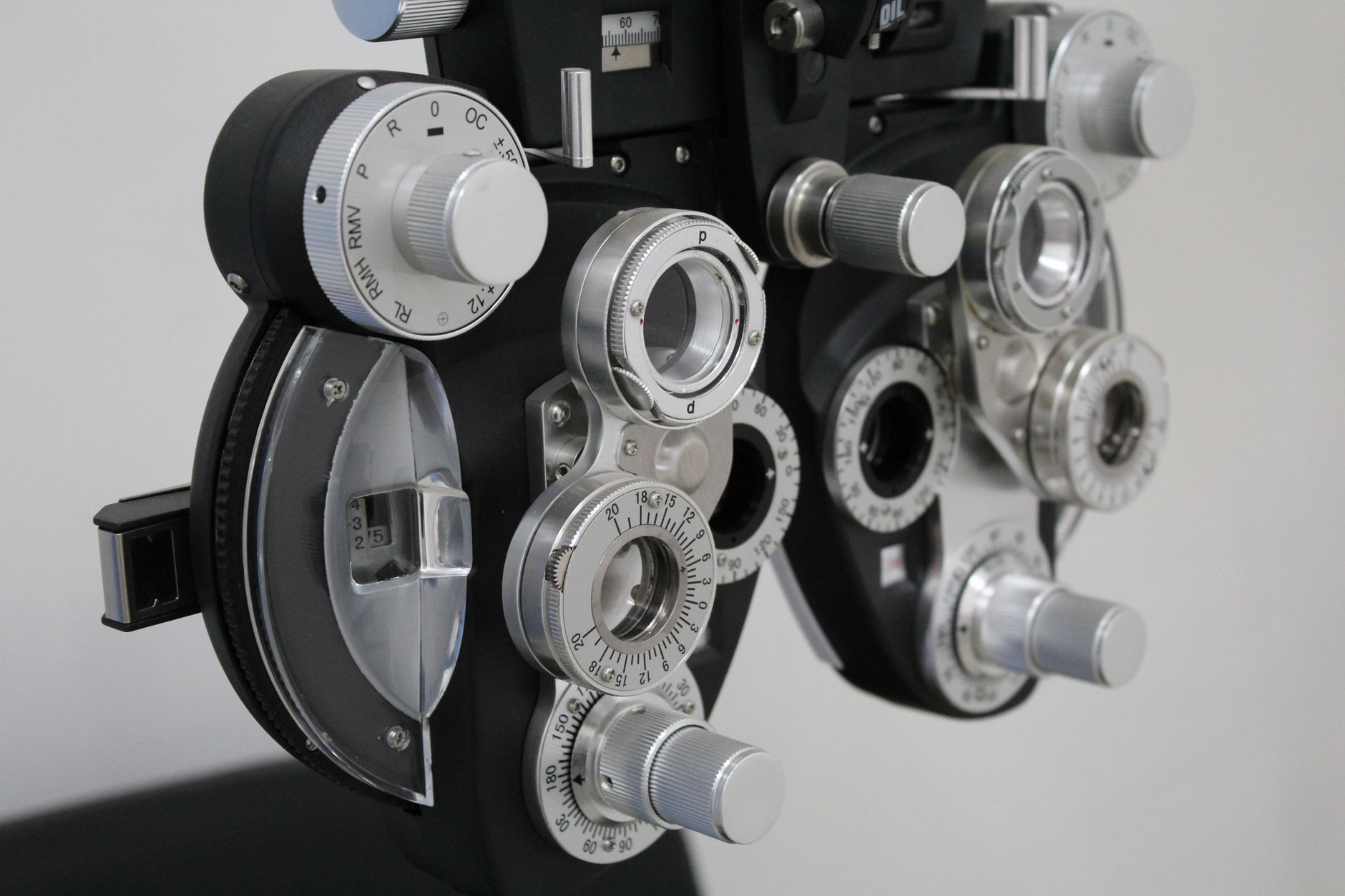
Lutein, zeaxanthin and meso-zeaxanthin together form the macular pigment — the yellowish colouring at the centre of the retina from which the macula lutea takes its name. That is settled anatomy and can be looked up in any textbook. But nothing follows from it about the effect of a tablet, and that is precisely where the chain broke in the EU assessment.
Health claims were applied for several times, both for each substance separately and for the two together. The EU register of nutrition and health claims records them along with the grounds for rejection:
| Claim applied for (extract) | Health relationship | EFSA opinion | Entry |
|---|---|---|---|
| "An optimal intake of zeaxanthin contributes to eye health … supports normal vision" | maintenance of normal vision | 2010;8(10):1724 | 1684 |
| "Zeaxanthin (from marigold/capsicum extract/wolfberries fruit): helps support eye health … is a constituent of the macular pigment" | maintenance of normal vision | 2010;8(10):1724 | 2169 |
| "Meso-zeaxanthin (derived from lutein of plant extract like marigold, spinach): helps optimising healthy eye functions" | maintenance of vision | 2010;8(2):1483 | 2096 |
| "Lutein/zeaxanthin: Eye protection factor(s)" | maintenance of normal vision | 2011;9(4):2039 | 1606 |
All four carry the status "Non-authorised" in the register with the same reasoning: on the basis of the scientific evidence assessed, the claimed effect has not been established for this food. The applications for lutein alone (entries 1931 and 2080) were decided in the same way.
The largest randomised trial on the subject is AREDS2. 4,203 participants aged 50 to 85 received 10 mg of lutein plus 2 mg of zeaxanthin or placebo over a median of five years, each in addition to the original AREDS formulation. The primary analysis found no statistically significant difference from the placebo group (hazard ratio 0.90; 98.7 % confidence interval 0.76–1.07; P = 0.12) — JAMA 2013;309(19):2005–2015, PMID 23644932. That same trial is incidentally the reason why so many supplements contain precisely 10 mg of lutein and 2 mg of zeaxanthin: the combination travelled from the study protocol onto the shelf, not from any official requirement. Food supplements are not medicines; anyone who notices problems with their eyes has them checked by an ophthalmologist, not in front of a shelf.
Food supplements are not a substitute for a balanced and varied diet and a healthy lifestyle.
Frequently asked questions
Does lutein have to be taken with a meal? Both substances are fat-soluble, and uptake from the gut runs via fat digestion. A meal containing some fat is therefore the obvious moment — less critical with capsules that use oil as a carrier than with a tablet. In the comparative study cited above, the solubility of the preparation was the more important factor, not the chemical form.
Is lutein from marigold the same as lutein from spinach? The molecule is identical. The difference lies in the packaging: in the flowers, lutein is present as a fatty acid ester; in leafy vegetables it is free but bound to protein complexes. The body cleaves the esters in the gut, which is why both origins reach the bloodstream. What differences between varieties can do is shown by yellow versus white sweetcorn in the table above.
How much is too much? There is no tolerable upper intake level (UL) for lutein and zeaxanthin. The only quantitative anchor is EFSA's ADI of 1 mg per kilogram of body weight for lutein from Tagetes erecta — 70 mg a day at 70 kg. Usual supplements, at 10 to 20 mg, stay well below that. Anyone taking several combinations at once adds up the daily total; what else the range holds is shown by the Eyes category.
Why does zeaxanthin so often come in exactly 2 mg? Because that is the maximum level for which synthetic zeaxanthin was authorised as a novel food in food supplements (Implementing Decision 2013/49/EU). That the same amount also appeared in the AREDS2 protocol is a coincidence that has further cemented 2 mg as the market standard.