Vegan vitamin D3 with K2: what to check
Futures Nutrition Editorial Team · 11 August 2026
A combined vitamin D3 and K2 supplement contains two active substances with two entirely different origin stories — and only one of them is still open when you buy. Vitamin K2 in the MK-7 form is produced by bacterial fermentation and is therefore of non-animal origin; that applies to virtually every product on the German market. Vitamin D3, by contrast, is usually obtained from lanolin, the wool fat of sheep. That very substance is named explicitly in the German guidelines as the thing that makes a food vegetarian — and precisely not vegan.
Anyone shopping vegan therefore checks the D on a D3/K2 tin, not the K. And after that, whatever else appears in the ingredient list: capsule shell, carrier oil, anti-caking agent.
Two vitamins, three origin questions
| Component | usual raw material | of animal origin? |
|---|---|---|
| Vitamin D3 (cholecalciferol) | lanolin from sheep's wool | yes |
| Vitamin D3 (cholecalciferol) | lichen | no |
| Vitamin D2 (ergocalciferol) | UV-treated yeast or mushrooms | no |
| Vitamin K2 (MK-7) | fermentation with Bacillus subtilis | no |
| Capsule shell | gelatine — or HPMC (cellulose) | depends on the product |
| Carrier oil in drops and softgels | MCT, olive or sunflower oil | usually no |
| Anti-caking agent "magnesium salts of fatty acids" | plant or animal fatty acids | depends on the product |
The table explains why the word "vegan" on a pack says more than any single ingredient: it refers to the product as a whole, not just to the vitamin in the product name.
Why lanolin marks the dividing line
To this day there is no EU-wide definition of the terms "vegan" and "vegetarian". Article 36(3)(b) of the Food Information Regulation (EU) No 1169/2011 explicitly instructs the Commission to adopt implementing rules for them — it has not happened. In Germany, two documents fill the gap: the definitions agreed by the Conference of Consumer Protection Ministers on 22 April 2016, and the Guidelines for vegan and vegetarian foods of the German Food Code in the revised version of 10 September 2024 (BAnz AT 09.10.2024 B2), which adopt those definitions.
Vegan, according to these, are foods "which are not products of animal origin and to which, at no stage of production and processing, ingredients (including food additives, carriers, flavourings and enzymes) or processing aids … of animal origin … have been added or used". Vegetarian are foods that meet the same requirements but where a short, exhaustively listed group of animal substances remains permitted: milk, colostrum, farmed poultry eggs, bee honey, beeswax, propolis — and "wool fat/lanolin obtained from the wool of living sheep".
That settles the matter for vitamin D3 without any need to debate animal welfare. No animal is killed for lanolin; it is a by-product of washing shorn wool, which is exactly why it appears on the vegetarian list. It does not appear on the vegan one. When a vitamin D tin is labelled "vegetarian" rather than "vegan", that is as a rule not an oversight by the marketing department but information about the raw material.
Strictly speaking the guidelines apply to foods that imitate products of animal origin — a tablet is not one of them. The definitions themselves, however, come from the ministers' decision and are the yardstick food inspection applies elsewhere too.
Lichen: where vegan D3 comes from
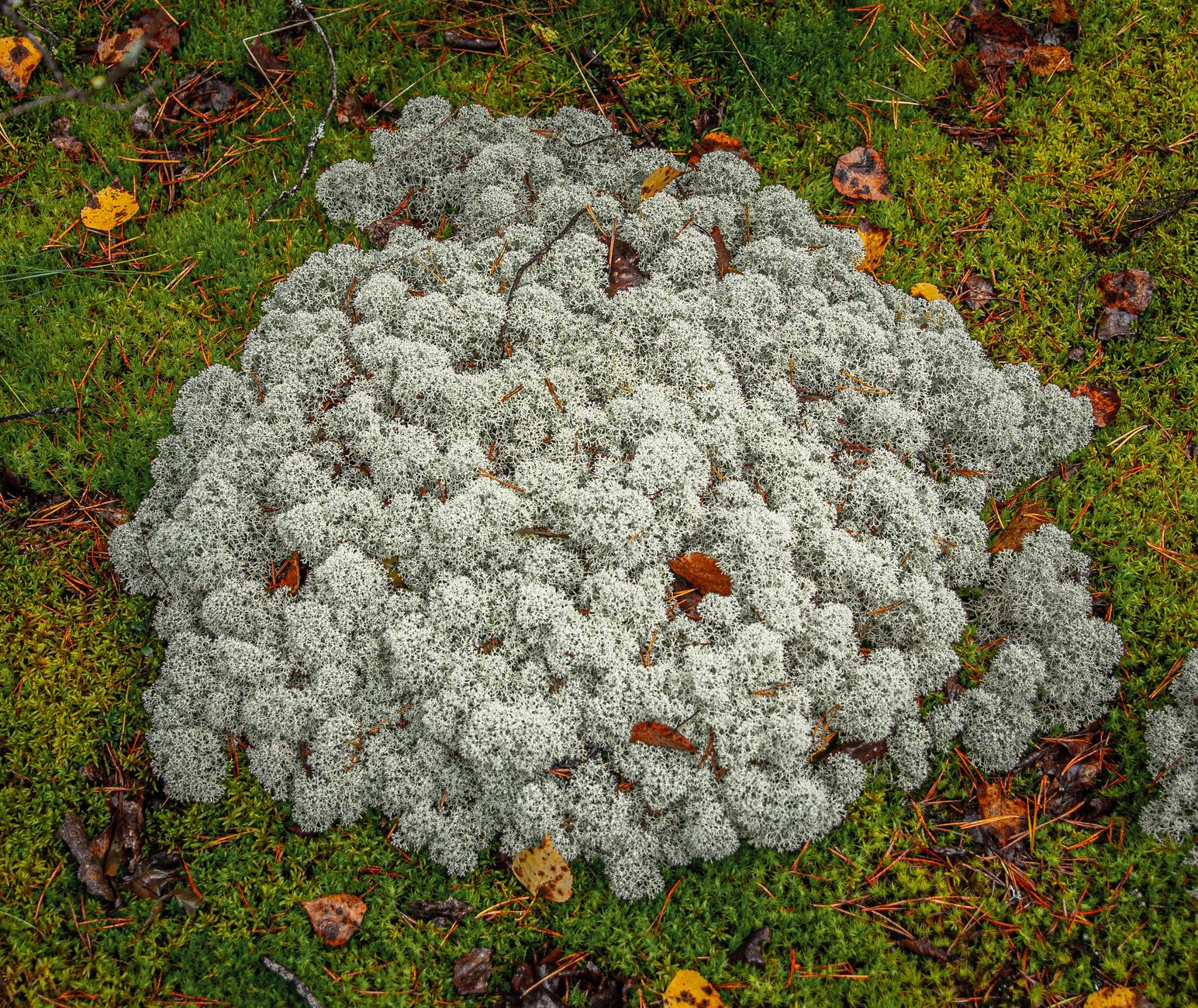
A lichen is not a moss but a partnership between a fungus and an alga or a cyanobacterium. That it contains vitamin D3 is well documented: Wang and colleagues detected provitamin D2, vitamin D2 and vitamin D3 in the reindeer lichen Cladina arbuscula and determined the D3 content at 0.67 to 2.04 µg per gram of dry matter (Journal of Photochemistry and Photobiology B, 2001). The content rose with UV-B exposure at the growing site, measured across populations along an arc from Finland to Greece — the same photochemistry, then, that also runs in human skin.
Those figures also explain why no tablet simply contains dried lichen. 20,000 IU of vitamin D3 correspond to 500 µg. At 2 µg per gram you would have to press around 250 grams of lichen into a single tablet. What is processed is therefore an extract standardised to a defined content — comparable to the route lanolin D3 takes as well.
The origin changes nothing about the molecule. Annex II of Directive 2002/46/EC lists cholecalciferol and ergocalciferol as the vitamin D compounds for food supplements — without any requirement as to the starting material. In both cases the ingredient list reads "vitamin D3 (cholecalciferol)"; the origin appears there only if the manufacturer chooses to add it. With the Vitamin D3 10,000 IU year's supply it has therefore been pulled into the product name — "vegan (from lichen)" — and the ingredient list adds "magnesium salts of fatty acids (plant-based)" for the anti-caking agent.

Which other forms of the vitamin exist and how D2 relates to D3 is covered in detail in Vitamin D forms: D2 or D3, lanolin or lichen.
K2: the question is usually already answered
With vitamin K2 the check is short. The Commission authorised as a novel food ingredient, by Decision 2009/345/EC, "vitamin K2 (2-methyl-3-all-trans-polyprenyl-1,4-naphthoquinone)" from Bacillus subtilis natto — an oil suspension consisting predominantly of MK-7. That is bacterial fermentation, and on this the guidelines say one sentence in section 1.1.1 that closes the question: "Microorganisms (bacteria, yeasts and fungi) are of non-animal origin and are, where applicable, also used in foods labelled as 'vegan'." The synthetically produced MK-7 in all-trans configuration that is common today likewise brings no animal raw material with it.
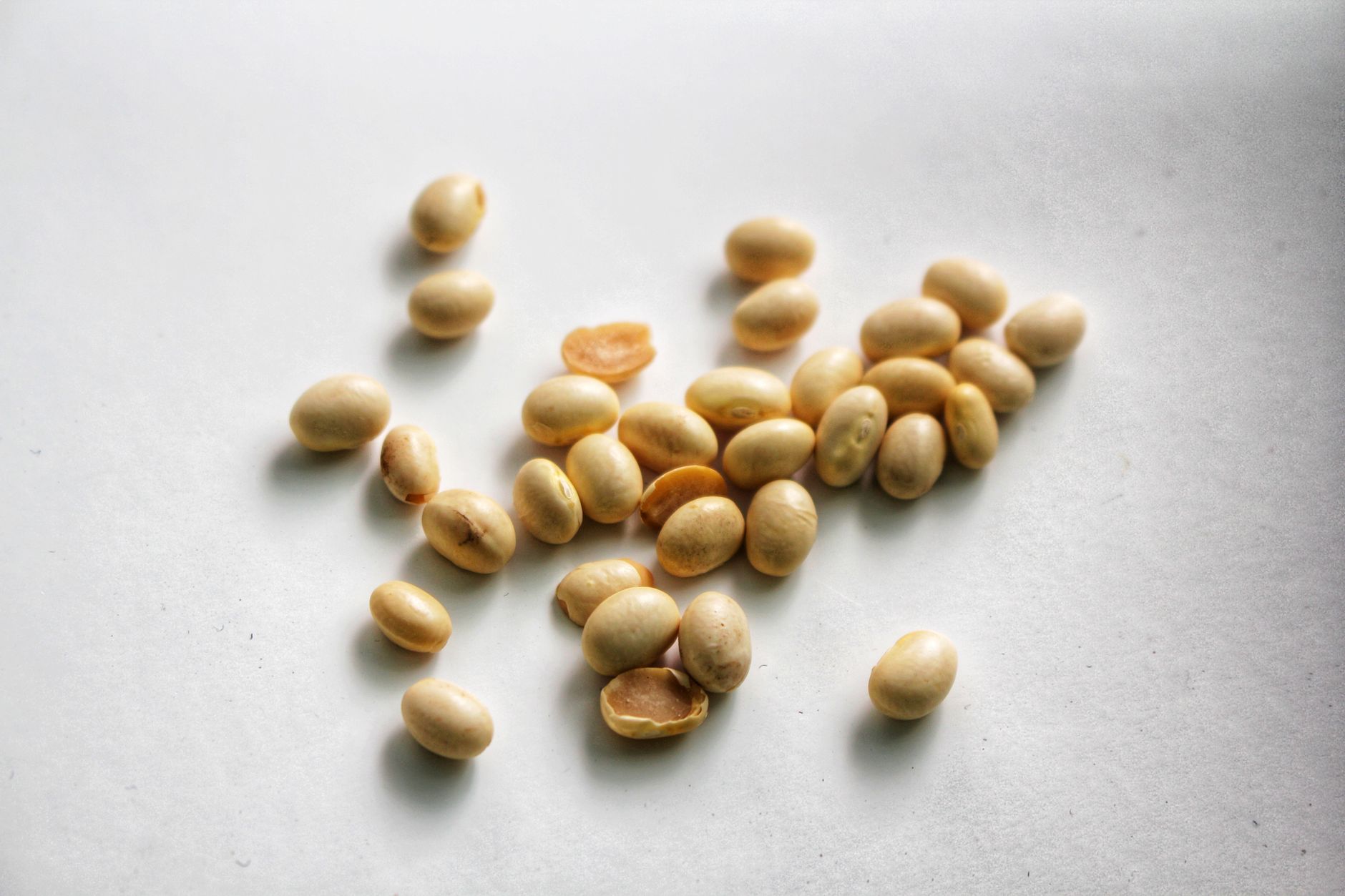
One detail is still worth a look: the substrate of the fermentation is the soybean. Under Annex II of Regulation (EU) No 1169/2011 soy is among the allergens subject to labelling, and whether it still has to be declared in the finished supplement depends on the purity of the raw material. Anyone watching out for soy therefore reads the allergen line — it is a different statement from "vegan". The second form of vitamin K2, MK-4, plays practically no role here; why is explained in Vitamin K2: MK-7 or MK-4.
What else is in there besides the vitamins
A supplement can contain lichen D3 and fermented MK-7 and still not be vegan. The points where that tips over are always the same:
- Capsule shell. Softgels are classically made of gelatine, obtained from cattle, pigs or fish. The plant-based alternative is hydroxypropyl methylcellulose, HPMC for short — a cellulose derivative. Our Liposomal vitamin D3 + K2 5,000 IU lists it under "capsule shell: hydroxypropyl methylcellulose (HPMC)". With tablets the question does not arise at all.
- Carrier oil. Vitamin D is fat-soluble, so drops and oil capsules need an oil. MCT oil from coconut, olive or sunflower oil are the usual choices; fish oil would be the problem.
- Anti-caking agent. "Magnesium salts of fatty acids" — often referred to as magnesium stearate — can be made from plant as well as animal fatty acids. The name does not say which; the manufacturer has to.
- Coatings and glazing agents. Beeswax and shellac are on the vegetarian list, not the vegan one.
- Liposomal formulations. The phospholipids usually come from sunflower or soy lecithin.
The shorter the ingredient list, the less of this there is to check — which other lines on a tin matter when comparing is set out in Buying vitamin D3 + K2: label, price, supply. On our Vitamin D3 20,000 IU + K2 (MK-7) vegan it consists of four entries: vitamin D3 (cholecalciferol), vitamin K2, bulking agent microcrystalline cellulose, anti-caking agent magnesium salts of fatty acids.

Which strength suits you is a question of its own and has nothing to do with origin — Vitamin D3 + K2 dosage: 1,000 or 5,000 IU? works through the common steps. And since a depot tablet is taken every few days, the timing is worth a look: Taking vitamin D3 + K2: timing, meals, fat explains why the meal matters more here than the hour of the day.
Seal or ingredient list?
The V-Label and the Vegan Flower are private marks, not official ones. They are useful nonetheless, because behind them stands a check of the entire formulation — exactly what is hard to reconstruct from the tin alone. Conversely, a missing seal does not mean a product is not vegan: certification costs money, and many manufacturers simply write "vegan" on the label instead. That statement is not an empty claim — it has to stand up to the definitions quoted above, otherwise it is misleading within the meaning of the Food Information Regulation. All strengths side by side are in the vitamin D3 category, the K2 products in the vitamin K2 category.
What may appear on the tin
The authorised health claims are set out in Regulation (EU) No 432/2012 and apply to the vitamin, not to its raw material. Lichen D3 may therefore carry exactly the same wording as lanolin D3:
- Vitamin D contributes to the maintenance of normal bones.
- Vitamin D contributes to the normal function of the immune system.
- Vitamin K contributes to the maintenance of normal bones.
- Vitamin K contributes to normal blood clotting.
Food supplements are not a substitute for a balanced and varied diet and a healthy lifestyle.
Common questions
Is vitamin D3 from lanolin vegetarian?
Yes. The guidelines name "wool fat/lanolin obtained from the wool of living sheep" explicitly among the substances that may be contained in a vegetarian food. That does not make such a supplement vegan — the raw material remains of animal origin, even though no animal is killed for it.
Is lichen D3 the same molecule as lanolin D3?
Yes, in both cases the substance is cholecalciferol. Annex II of Directive 2002/46/EC lists it without any statement of origin, and both carry the same designation in the ingredient list. There are differences in the starting material and in the price, not in the vitamin.
Do I have to check the origin of the K2?
Hardly. The vitamin K source that may be marketed in the EU is menaquinone in the MK-7 form, and that comes from bacterial fermentation or from synthesis — both without animal raw material. What is worth checking is the "all-trans" statement and the microgram amount.
Is "plant-based" on the pack enough?
No. Under the guidelines, "plant-based" and similar formulations are explicitly not equivalent indications of the vegan character of a food. Only the word "vegan", a corresponding mark — or the ingredient list read in full — are unambiguous.
Sources: Guidelines for vegan and vegetarian foods with similarity to foods of animal origin, revised version of 10 September 2024 (BAnz AT 09.10.2024 B2, GMBl 39/2024, pp. 844–848), sections 1.1.1 and 1.1.2; definitions of the Conference of Consumer Protection Ministers of 22 April 2016; Regulation (EU) No 1169/2011, Article 36 and Annex II; Directive 2002/46/EC, Annex II as amended by Regulation (EC) No 1170/2009; Commission Decision 2009/345/EC on the placing on the market of vitamin K2 (menaquinone) from Bacillus subtilis natto; Regulation (EU) No 432/2012; Wang T et al., "Provitamins and vitamins D2 and D3 in Cladina spp. over a latitudinal gradient: possible correlation with UV levels", Journal of Photochemistry and Photobiology B 62(1–2), 2001 (PubMed 11693362).