Vitamin B12 forms: cyano-, methyl-, hydroxocobalamin
Futures Nutrition Editorial Team · 12 August 2026
12 August 2026
The short answer: four forms are approved, and the body makes the same thing out of all four. Cyanocobalamin, hydroxocobalamin, methylcobalamin and 5-deoxyadenosylcobalamin are listed on equal terms in Annex II of Directive 2002/46/EC — the list of substances that may be used as a source of vitamin B12 in food supplements. None of them is the "right" one, none is the forbidden one.
The differences lie somewhere other than where advertising usually puts them: in shelf life, in a tiny molecular remnant, and in whether a form comes as a tablet or as an injection. What hardly matters at all is the term most often advertised — "bioactive".
One metal, four residues
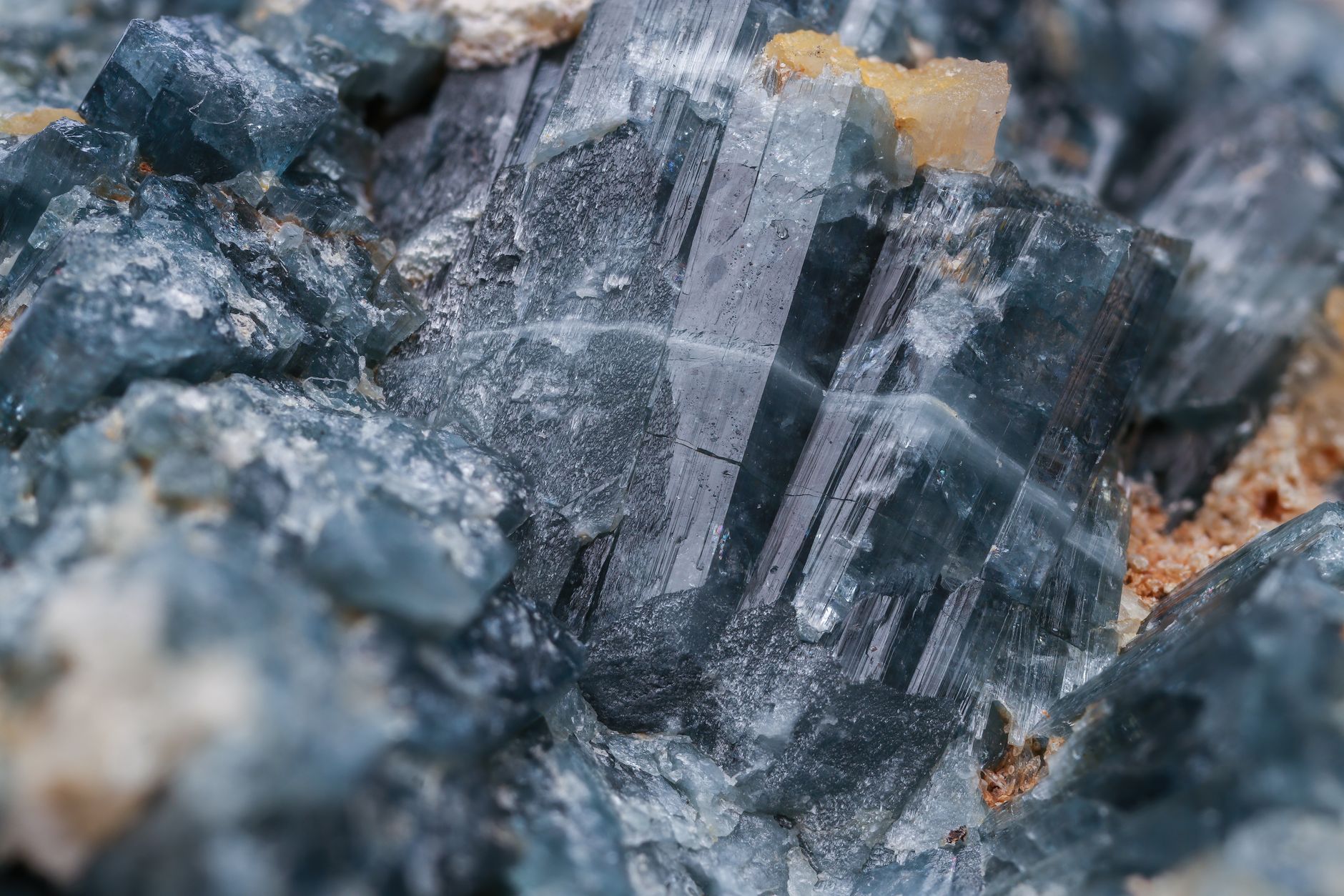
All B12 forms share the same basic body: a ring-shaped molecule, the corrin, with a cobalt atom at its centre. Hence the collective name cobalamin — and hence the deep red colour every B12 solution has, whatever the form.
Five of the cobalt's six binding sites are taken up by the ring. Exactly one stays free, the sixth. What sits there gives the form its name: a cyanide group, a hydroxide group, a methyl group or a 5-deoxyadenosyl residue. The difference between the four forms is therefore a single residue at a single position — on a molecule with a molar mass of roughly 1,355 g/mol.
| Cyanocobalamin | Hydroxocobalamin | Methylcobalamin | Adenosylcobalamin | |
|---|---|---|---|---|
| Residue on the cobalt | cyanide (–CN) | hydroxide (–OH) | methyl (–CH₃) | 5-deoxyadenosyl |
| Occurs naturally | no | yes | yes | yes |
| Coenzyme form in the body | no | no | yes | yes |
| Light sensitivity | low | medium | high | very high |
| Usual presentation | tablet, fortified foods | injection (medicinal product) | tablet, lozenge | tablet, more rarely |
| Approved in food supplements | yes | yes | yes | yes |
What the body does with each form
Only two forms are active in human metabolism, and they work in two different places: methylcobalamin in the cytoplasm as the coenzyme of methionine synthase, adenosylcobalamin in the mitochondria as the coenzyme of methylmalonyl-CoA mutase. That is why packaging likes to call these two the "coenzyme form". Up to that point it is accurate.
The catch comes one step later. Whichever of the four forms is swallowed, the residue on the cobalt is detached first inside the cell. What remains is a shared intermediate, cob(II)alamin, and from that intermediate the cell rebuilds both coenzyme forms, regardless of what was originally taken. A methyl group already attached to the molecule is removed along the way just as a cyanide group is.
That is exactly how the EFSA saw it when it assessed methylcobalamin and 5-deoxyadenosylcobalamin as B12 sources in 2008: both were said to be bioavailable, and their metabolic fate and distribution in the body expected to be similar to those of other dietary B12 sources (EFSA Journal 2008, 815). That is a clearance — not confirmation of an advantage. Anyone reading "bioactive" learns something about the raw material used, not about what arrives at the enzyme.
Cyanocobalamin: the form with the arithmetic
Cyanocobalamin is by far the most common form in tablets and in fortified foods, and it is the only one of the four that practically does not occur in nature. It arose as a purification artefact: activated charcoal was used in the historic isolation of the vitamin from liver, and the cobalamin picked up a cyanide group in the process. What began as a laboratory accident became the standard raw material — because it is the most stable one.
How clear the gap is shows in a comparison under UV light: after 60 minutes of irradiation, cyanocobalamin had degraded by about 4%, hydroxocobalamin by 28%, methylcobalamin by 39% — under UVA conditions the coenzyme forms break down within seconds. For a manufacturer who has to guarantee a shelf life of more than two years, that is a solid argument.
That leaves the question everyone asks at the word "cyanide". It can be worked out. The cyanide group weighs 26 g/mol, the whole molecule roughly 1,355 g/mol. From 1,000 µg of cyanocobalamin, then, about 19 µg of cyanide is released in the body. The EFSA has derived an acute reference dose for cyanide of 20 µg per kilogram of body weight; for an adult weighing 70 kg that is 1,400 µg per day. A tablet with 1,000 µg of cyanocobalamin therefore sits at around 1.4% of that figure — less than a portion of linseed can contribute.
The residue only becomes practically relevant in particular situations, then: with impaired kidney function, for example, or with certain rare disorders of cobalamin metabolism. At that point it is no longer a labelling question but one for a doctor.
Methylcobalamin and adenosylcobalamin
Both coenzyme forms occur naturally in foods of animal origin — adenosylcobalamin above all in offal, fish, eggs and dairy products. As raw materials they are more expensive and more delicate; on the other hand they are the form the body produces anyway.
Their light sensitivity is not an argument against them, but an argument about packaging: an opaque tin rather than a transparent pouch, and storage somewhere other than the windowsill. In a closed tablet tin the matter is settled.
Methylcobalamin is the form we stock. One tablet contains 1,000 µg and is intended as one intake per day: Vitamin B12 1000 µg as methylcobalamin, 180 tablets.

Methylcobalamin is at the same time the form that works right beside folate in the methylation cycle: methionine synthase needs both. That is why folic acid products and B12 come up together in almost every advisory conversation.
Hydroxocobalamin: the form from the ampoule

Hydroxocobalamin is the form bacteria produce — B12 in supplements comes, as a matter of principle, from bacterial fermentation, not from plants or animals. In Germany it is mainly encountered as an injection, and that is a medicinal product, not a food supplement: whether it is an option is decided by a doctor, not by the shelf.
The reason for this form in the ampoule is how it binds to the transport proteins in blood: hydroxocobalamin stays in the body longer than cyanocobalamin, which is why injections are given at wider intervals. Incidentally, the same circumstance explains a curiosity: at very high doses hydroxocobalamin is used in emergency medicine as an antidote in cyanide poisoning — it captures cyanide and in doing so turns into cyanocobalamin itself. Same vitamin family, two opposite roles.
As a tablet, hydroxocobalamin is approved in Germany but rarely on the market.
What the label says — and what it does not
As with other vitamins, the form does not appear in the nutrition table. All that stands there is "vitamin B12" in micrograms and the percentage of the nutrient reference value. Which of the four forms is inside is revealed by the ingredients list — that is where "cyanocobalamin" or "methylcobalamin" turns up. Anyone who wants to know what they are buying reads the small line, not the big number.
The reference values you meet along the way:
| Value | Amount per day | Origin |
|---|---|---|
| Nutrient reference value (NRV) | 2.5 µg | Regulation (EU) No 1169/2011, Annex XIII |
| Reference value for adults aged 15 and over | 4.0 µg | German Nutrition Society (DGE) |
| Adequate Intake, adults | 4.0 µg | EFSA (2015) |
| Proposed maximum amount per daily portion | 25 µg | German Federal Institute for Risk Assessment (BfR) |
| Tolerable Upper Intake Level (UL) | not derived | EFSA |
Two things stand out. First: the BfR proposal of 25 µg is a recommendation to the legislator, not a maximum amount in force — there are as yet no binding upper limits for vitamins in food supplements in Germany. Second: the EFSA has not derived a Tolerable Upper Intake Level for B12, because the available data did not yield a threshold for harmful effects.
That also explains the number printed on every high-dose tin: 1,000 µg corresponds to 40,000% of the nutrient reference value. It sounds absurd and has a sober reason. The active absorption route via intrinsic factor is saturated at just a few micrograms per meal; of anything above that, only a small percentage is still taken up passively through the intestinal lining. High tablet amounts are calculated around that percentage — they say nothing about how much the body needs. The route is described in detail in Vitamin B12 absorption. For the form it makes no difference: the passive route does not distinguish between the four cobalamins.
Which form for whom
For most people the decision comes down to a preference, not to a measurable difference:
- Cyanocobalamin — the most stable and cheapest form, the longest studied, the standard in fortified foods.
- Methylcobalamin — the coenzyme form that occurs in the body, nature-identical, more sensitive to light. The usual choice for anyone who does not want a cyanide residue in their supplement.
- Adenosylcobalamin — the second coenzyme form, mostly in combination products with methylcobalamin.
- Hydroxocobalamin — as an injection a matter for the doctor's surgery, as a tablet a rarity.
All strengths and forms in our range are listed side by side in the vitamin B12 category.
Among the claims authorised for vitamin B12 are these, and they apply equally to all four forms: Vitamin B12 contributes to normal energy-yielding metabolism. Vitamin B12 contributes to normal functioning of the nervous system. Vitamin B12 contributes to normal red blood cell formation. Vitamin B12 contributes to the reduction of tiredness and fatigue. (Regulation (EU) No 432/2012). Food supplements are not a substitute for a balanced and varied diet and a healthy lifestyle.
Frequently asked questions
Is methylcobalamin better than cyanocobalamin? It is the naturally occurring coenzyme form, and it brings no cyanide residue with it. There is no demonstrated advantage in effect: in 2008 the EFSA found that metabolic fate and distribution in the body are expected to be similar to those of other B12 sources. Choosing methylcobalamin means choosing the raw material, not a different outcome.
Is the cyanide in cyanocobalamin a concern? About 19 µg of cyanide is released from 1,000 µg of cyanocobalamin — roughly 1.4% of the acute reference dose the EFSA derives for an adult weighing 70 kg. With impaired kidney function or rare metabolic disorders the assessment may differ; that belongs in medical hands.
How do I tell which form is in the pack? From the ingredients list. The nutrition table gives only "vitamin B12" in micrograms; the form appears below it as an ingredient. If it is missing there, only the manufacturer's information helps — and where no form is advertised, cyanocobalamin is the obvious assumption, because the more expensive forms are practically always promoted.
Is B12 from supplements vegan? The raw material is: B12 in food supplements comes from bacterial fermentation, not from animal material — that holds for all four forms. Whether the finished product is vegan depends on the remaining components, for instance a capsule shell made of gelatine. Only a declaration that covers the entire product is reliable.
Do combination products with two coenzyme forms make a difference? Going by what is known about the conversion, no: the cell builds both coenzyme forms itself from the same intermediate, whichever form was supplied. A combination product does no harm, it only costs more.