Vitamin B12 on a vegan diet: why a supplement belongs
Futures Nutrition Editorial Team · 12 August 2026
12 August 2026
The short answer: on a vegan diet there is no reliable source in the food itself — only fortified products and supplements. The German Nutrition Society (DGE) becomes unusually blunt at this point: "According to current knowledge, an adequate vitamin B12 supply on a vegan diet is only possible by taking a nutrient supplement."
It is the only nutrient the DGE phrases that way. For iron, zinc, calcium or iodine the wording is: pay attention to the selection, plan well, mind the preparation. For vitamin B12 the wording is: supplement. And the second surprise waits in the chilled aisle — the oat drink meant to close the gap usually contains no B12 at all. It particularly reliably contains no B12 when it is organic.
Why this nutrient of all things is missing
Vitamin B12 is produced exclusively by microorganisms — by bacteria, not by plants and not by animals. A cow therefore does not make its own B12: it is produced by bacteria in the animal's forestomach and taken up from there. Animal foods are thus not a producer but an intermediate store.
In humans the same thing happens in the wrong place. Our gut bacteria produce vitamin B12 as well — but they sit in the large intestine, and the vitamin is absorbed further up, in the last section of the small intestine. Whatever is formed behind that point never reaches the place where the body could let it in. That is why our own production is no help.
The reverse also follows from this, and that is the good news: because B12 comes from bacteria, the raw material in supplements is not of animal origin. It is obtained by bacterial fermentation — and that applies equally to all four authorised forms, as described in Vitamin B12 forms: cyano-, methyl-, hydroxocobalamin.
What plant-based labels promise — and what is inside
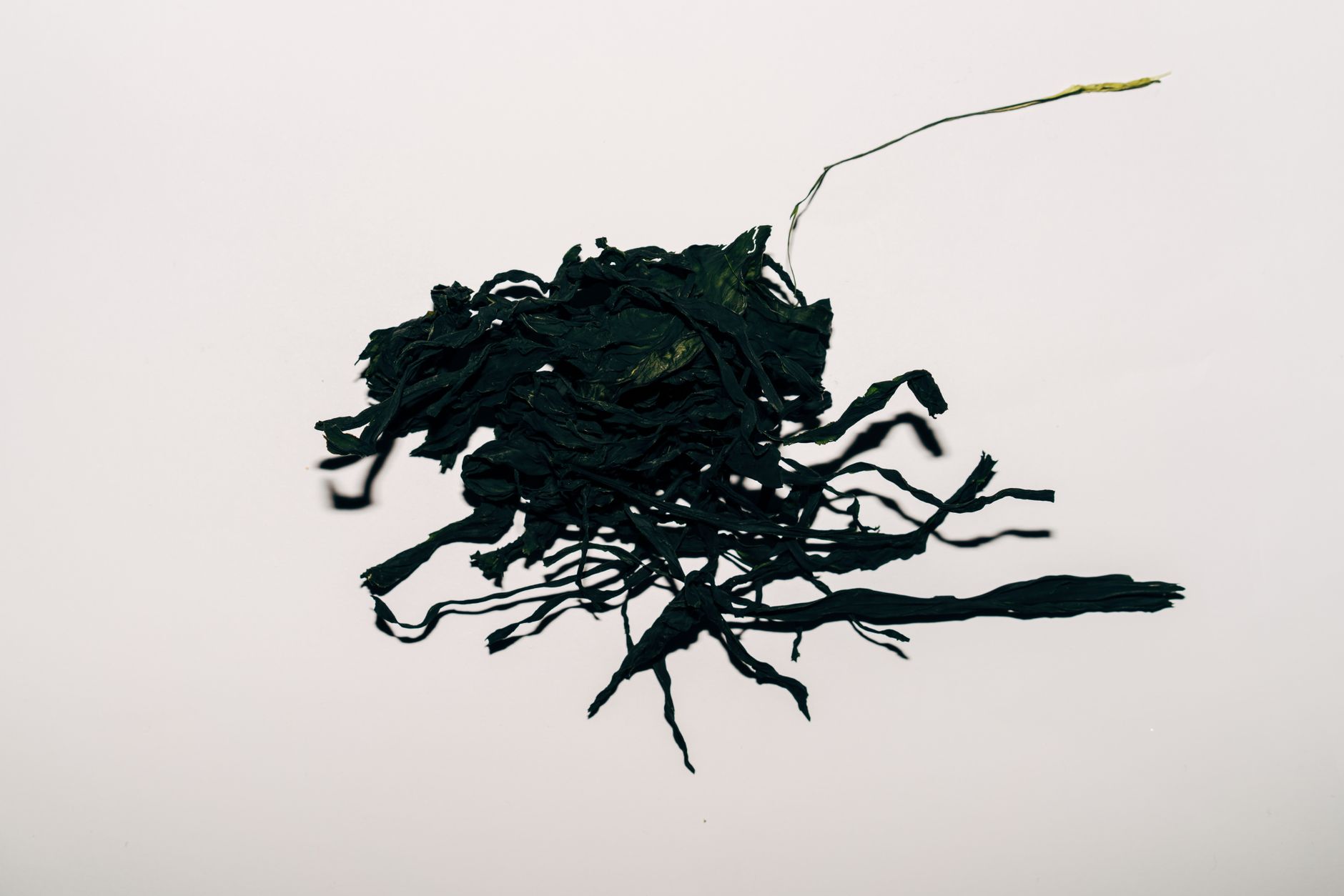
A stubborn circle of candidates surrounds plant-based B12 sources: algae, fermented vegetables, certain mushrooms, nutritional yeast flakes. The DGE sorts this out briefly: "There are so-called vitamin B12 analogues. They occur, for example, in some plant foods such as algae or sauerkraut. They do not contribute to an adequate supply of vitamin B12."
Analogues are molecules that resemble the vitamin but do not work at the human enzyme. Two things make them awkward: they occupy the same transport routes as the real vitamin, and simple laboratory methods measure them along with it. A serum value can therefore look better than the actual supply is.
| Food | What is true about it | Why it is not enough |
|---|---|---|
| Sauerkraut, fermented vegetables | contains traces from bacterial fermentation | traces, and predominantly analogues |
| Spirulina (cyanobacteria) | measures high in simple tests | predominantly pseudo-B12 with no effect at the enzyme |
| Nori and other seaweeds | active B12 detectable in individual studies | contents vary widely, not reliable as a basis |
| Shiitake and other mushrooms | are promoted as a source | amounts inconsistent and very small |
| Nutritional yeast flakes | can supply 1–5 µg per portion | only if fortified afterwards; yeast itself makes no B12 |
| Tempeh, miso, natto | fermentation by microorganisms | contents barely predictable, depending on culture and batch |
The only line with a dependable figure is the one about yeast flakes — and it is there only because a manufacturer added the vitamin. That is the distinction that matters: not plant versus animal, but fortified versus unfortified. Both are stated in the ingredients list.
The gap in the chilled aisle
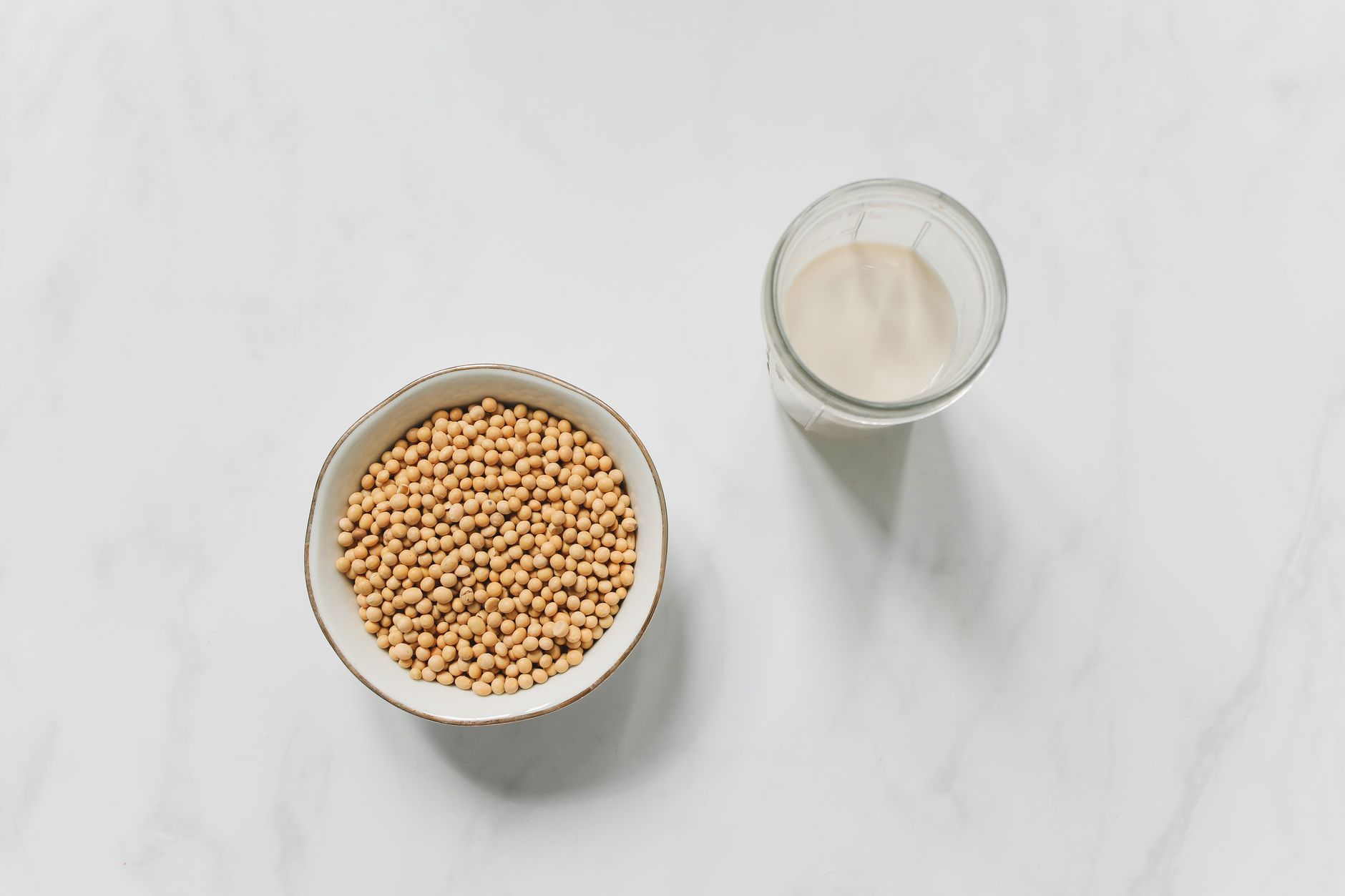
Plant drinks are considered the obvious substitute for milk — and in Germany they are the most popular way of replacing animal products. Except that they do not automatically replace the nutrients as well. Between July and September 2024, the consumer advice centre of North Rhine-Westphalia examined a total of 160 plant drinks from 22 manufacturers, 38 from conventional and 122 from organic production. The result falls apart along a single dividing line:
| Added nutrient | conventional drinks | organic drinks |
|---|---|---|
| Calcium | 87 % | just under 6 % |
| Vitamin B12 | 71 % | none |
| Vitamin B2 | 47 % | none |
| Iodine | 29 % | none |
The reason is not an oversight by manufacturers but the law: the EU Organic Regulation (EU) 2018/848 contains, in Article 7 and Annex II Part IV No. 2.2.2 f), a general ban on supplementation — vitamins and minerals may only be added to organic foods where another legal act expressly requires it. For plant drinks nobody requires it. The German Federal Administrative Court confirmed this line on 4 September 2025 (case no. 3 C 13.24): a food with added vitamins and minerals may not carry the organic logo.
So anyone reaching for the organic drink for good reasons is systematically buying the version without B12. And even the fortified drink contributes less than one might think: the most common added amount is 0.38 µg per 100 ml, modelled on the content of cow's milk. A 250 ml glass therefore brings around 0.95 µg — not even a quarter of the estimated value of 4.0 µg a day that the DGE gives for adults. Covering the daily amount from the drink alone would take a good litre.
How much, and how often
Against these figures the amount in a supplement looks absurdly high, and behind it lies a calculation, not exaggeration. The active absorption route via intrinsic factor is, in the assessment of the Scientific Committee on Food, already saturated at 1.5 to 2.5 µg per meal; anything above that passes only passively through the intestinal wall, at around 1 %. How the two routes work in detail is set out in Vitamin B12 absorption: intrinsic factor and the 1 % rule.
Two strategies follow from this, and both are common in vegan practice: many small amounts spread over the day, or one large amount rarely. The British Vegan Society names three ways — reach at least 3 µg with fortified foods two to three times a day, or take a supplement with at least 10 µg daily, or one with at least 2,000 µg weekly.
On the level, the DGE holds back: "There are currently no generally applicable recommendations on the level of supplementation." As orientation for food supplements there is also the proposal by the German Federal Institute for Risk Assessment of 25 µg per daily portion — a proposal to the legislator, not a maximum level in force. High-dose tablets lie above that because they are calculated around the one-per-cent share of the passive route.
Our supplement belongs in that category: one tablet a day with 1,000 µg as methylcobalamin, with no animal ingredients — Vitamin B12 1000 µg, 180 tablets.

Anyone who prefers to dose smaller and daily instead will find the available strengths side by side in the Vitamin B12 category.
Whether it is enough is shown by the blood
Whether the chosen amount fits cannot be answered from the label, only from the laboratory value. The DGE describes how: "To examine the supply status, a meaningful functional marker, e.g. MMA, should be determined together with a status marker, e.g. serum vitamin B₁₂ or holo-TC." Two values instead of one — precisely because a single serum value can turn out too flattering due to analogues from algae or fermented foods.
That this works in practice is shown by the German VeChi Youth Study of 401 children and adolescents between 6 and 18 years of age (115 of them vegan). Dietary intake among the vegan participants was predictably low — the blood values nevertheless unremarkable, because 88 % of them took a B12 supplement. What stood out instead were the vegetarians: lower holotranscobalamin and higher methylmalonic acid than in the omnivores. Someone who eats few animal foods but does not supplement, because the topic is less obvious, can be less well supplied than someone who lives consistently vegan and supplements.
What else is on the list besides B12
Vitamin B12 is the nutrient with the clearest statement, but not the only one. In its 2024 position paper the DGE also lists as potentially critical: iodine, protein, long-chain omega-3 fatty acids, vitamin D, vitamin B2, calcium, iron, zinc and selenium; vitamin A is newly added. For children, adolescents, pregnant and breastfeeding women and older people the DGE expressly issues neither a recommendation for nor against a vegan diet, because of the limited data.
Two of them are practically connected to B12. Iron from plant sources is absorbed less well than from meat — for that we have iron with inulin. And with zinc, what decides the reference value is not the avoidance of animal foods but the preparation of the grain: soaking, sourdough and sprouting reduce the phytate that otherwise binds the zinc. The matching supplement is zinc with vitamin B3.
Authorised statements for vitamin B12 include these: Vitamin B12 contributes to normal energy-yielding metabolism. Vitamin B12 contributes to normal functioning of the nervous system. Vitamin B12 contributes to normal red blood cell formation. Vitamin B12 contributes to the reduction of tiredness and fatigue. (Regulation (EU) No 432/2012). Food supplements are not a substitute for a balanced and varied diet and a healthy lifestyle.
Frequently asked questions
Are algae, sauerkraut or yeast flakes enough as a vegan B12 source? No. The DGE states that the vitamin B12 analogues contained in algae or sauerkraut do "not contribute to an adequate supply of vitamin B12". Yeast flakes are the only exception in this series — and only when the vitamin has been added to the product. That is stated in the ingredients list.
Is my oat drink fortified? If it is organic, then with very high probability not: the EU Organic Regulation prohibits the addition of vitamins and minerals, and in the market check by the consumer advice centre of North Rhine-Westphalia not a single organic drink was fortified with B12. Among conventional drinks it was 71 %. You can tell from the ingredients list and from the nutrition table, in which the vitamin then appears with an amount and a percentage figure.
A small amount daily or a large one weekly? Both are customary and follow the same calculation: the active absorption route is saturated from about 1.5 to 2.5 µg per meal, and everything above that is only absorbed passively at around 1 %. Small amounts use the active route several times a day, large amounts use the passive route once. According to the DGE there is currently no generally applicable recommendation on the level — which variant suits your own values is settled by medical monitoring.
Is the B12 in the supplement itself vegan? The active substance is: it comes from bacterial fermentation, not from animal material. Whether the finished product is vegan depends on the remaining components — a capsule shell made of gelatine would not be. Only a claim that refers to the entire product is reliable.
How quickly does a dietary change make itself felt? Usually not at all for years. The body holds a store of 2 to 3 mg, predominantly in the liver, and releases only 0.1 to 0.2 % of it a day. Anyone switching to a vegan diet first lives off that store — which is why the absence of a source is noticed late. That is exactly why the professional societies recommend having the supply checked regularly instead of waiting for signs.