Too much vitamin B12: no upper limit, still 25 µg
Futures Nutrition Editorial Team · 12 August 2026

The short answer: there is no tolerable upper intake level for vitamin B12 — not because the substance was examined and declared harmless, but because no amount could be found above which anything adverse happens. Without such a threshold, no limit can be calculated. The 25 µg that are nonetheless in circulation therefore do not come from toxicology, but from caution and from consumer protection.
This is the point at which most answers to this question diverge. Saying you cannot overdose on vitamin B12 is just as imprecise as saying 1,000 µg is 400 times the requirement and cannot possibly be healthy. Both sentences mistake a missing limit for a free pass — or a large number for a danger.
Why no upper limit has been derived
A tolerable upper intake level (UL) is not estimated, it is calculated. To do so you need a dose at which an adverse effect was observed, or at least the highest dose at which none yet occurred. That is exactly where the derivation for vitamin B12 failed. The European Commission's Scientific Committee on Food summarised in 2000: there were no adverse effects that could be attributed to a high B12 intake from foods or food supplements in healthy people — and therefore no basis for a UL.
The background is unusually well documented, because vitamin B12 has been used therapeutically for decades. In replacement therapy 1 to 5 mg are given, orally or by injection; where absorption is impaired, oral daily doses of 300 to 1,000 µg over long periods are common. In one study of 106 dialysis patients, a preparation containing 2.5 mg of vitamin B12 was given for three years — serum values ended up four times above the normal range, and no adverse effects were reported.
The committee did, however, add a caveat of its own that tends to get lost in the citing: these studies were not designed to find adverse effects. No finding is something other than proof of harmlessness. The question has not been reassessed since — EFSA has revised the upper limits of several nutrients since 2019, among them vitamins A, D, E, B6 and folate; vitamin B12 was not among them. The 2000 assessment still stands.
| Figure | Amount | What it means |
|---|---|---|
| Tolerable Upper Intake Level | not derived | the threshold from which one could be calculated was missing (SCF, 2000) |
| BfR proposal for food supplements | 25 µg per daily portion | a recommendation to the legislator, not a binding limit |
| BfR proposal for fortified solid foods | 6 µg per 100 g | so that fortified products stay below 50 µg in total |
| BfR proposal for fortified drinks | 1.6 µg per 100 ml | the same calculation, referred to the energy density of drinks |
| observed intake from supplements alone (95th percentile, USA) | 77 µg (men), 100 µg (women) | with no reported adverse effects; the starting point of the BfR calculation |
| hydroxocobalamin as an antidote in cyanide poisoning | up to 5 g intravenously | the same substance, 5,000,000 µg at once |
The last row does not appear in this table as a recommendation, but as a yardstick. It shows the order of magnitude in which this substance is moved in medicine — and why a tablet containing 1,000 µg troubles nobody toxicologically.
Where the 25 µg come from

The German Federal Institute for Risk Assessment (BfR) had to take a different route, because it lacked the UL as a starting point. Instead it took an intake that had actually been observed without anything being reported: 100 µg a day from food supplements. It split this amount half onto food supplements and half onto fortified foods — 50 µg and 50 µg. It then applied an uncertainty factor of 2 to the supplement share, because it cannot be ruled out that someone takes several preparations at the same time. What remains is 25 µg per daily portion.
Two things follow from this. First, this is a proposal to the legislator and not a binding maximum amount; to this day there are no binding upper limits for vitamins in food supplements in Germany. Second, the factor of 2 is not directed against a known danger, but against multiple intake from different products. Anyone who knows which preparations they take knows precisely the uncertainty this factor is meant to cover.
Remarkable in the same paper is the edge case it takes into account: the BfR explicitly also discusses toothpaste fortified with vitamin B12, which is available on the German market for people living vegan. In a twelve-week study with 36 participants, status markers rose measurably, even though the total amount taken up remained small. Legally, toothpaste is not a food — for the sum that accumulates daily, that makes no difference.
Where the surplus really goes
Water-soluble, so anything in excess is simply excreted — with vitamin B12, hardly any part of that sentence holds. It is the exception among the B vitamins: the body stores 2 to 3 mg, mainly in the liver, and releases only around 0.1 % of that per day. The main route of excretion is via the bile, but a large part of these biliary losses is reabsorbed in the ileum — a circuit, not a drain. Around 0.5 µg a day is lost in the stool on average.
Urine plays almost no role in this. It only becomes a route of excretion once the binding capacity in the blood plasma is exceeded, so in practice only after an injection or infusion. With a tablet, something else happens: the greater part is not absorbed in the first place. The receptors in the small intestine are saturated from about 1.5 to 2.5 µg per meal; anything above that can only pass through the intestinal wall passively, at around 1 %, and the rest leaves the body without ever having been in it. How this mechanism works in detail is set out in Vitamin B12 absorption: intrinsic factor and the 1 % rule.
That also explains why the question of too much is so hard to answer for this vitamin: intake can be increased at will, the amount absorbed barely at all.
What has actually been reported
The list of documented adverse effects is short, and it is worth knowing it in the original rather than adopting it in summary:
- Acne after injections. Ten cases were described in 1967 after up to twelve injections of 5 mg hydroxocobalamin each — it did not occur with cyanocobalamin. The authors suspected degradation products of the less stable form as the cause, without presenting further data. So this concerns an injection, not a tablet, and one form, not all of them. How the four forms of the vitamin differ is a topic of its own.
- A single case of an acne-like skin change in a 53-year-old woman who had taken a combination preparation containing 100 mg of vitamin B6, 100 µg of vitamin B12, 10,000 IU of vitamin A and zinc. After discontinuation the finding improved markedly; the attribution to B6 and B12 was made without further examination.
- An animal experiment from 1950, in which vitamin B12 promoted tumour formation in rats exposed to a cancer-causing substance. The committee explicitly classified this study as not relevant for the assessment in humans.
- An occupational contact allergy in a man who processed animal feed. Anecdotal and without follow-up, therefore not usable for a derivation.
That is the entire body of evidence. For a substance given intravenously in gram amounts as an antidote, it is strikingly thin — and that is precisely the reason the limit is missing.
The one observation worth knowing
There is a more recent study that should neither be concealed nor overstated. In the American VITAL cohort, 77,118 people between 50 and 76 years of age were followed for years; 808 of them developed lung cancer. Among men who had taken more than 55 µg of vitamin B12 a day on average over ten years from single-nutrient preparations, the incidence rate was around twice as high as among non-users (hazard ratio 1.98; 95 % confidence interval 1.32 to 2.97). A similar picture emerged for vitamin B6 above 20 mg a day (1.82; 1.25 to 2.65). No association was found in women, nor from multivitamin preparations, and the signal was clearest among smokers.
What follows from this? To begin with, nothing about cause and effect: this is an observational study with self-reported intake, and an association that appears only in men, only in smokers and only with single-nutrient preparations does not look like a simple dose-response relationship. The authors themselves draw the cautious conclusion that B vitamin preparations contribute nothing to cancer prevention and may possibly do harm. For practice, one sober sentence remains: more helps more is not an argument with vitamin B12. A high dose has a reason — limited absorption — and it has that reason only for as long as it is needed.
What else was in the same preparation
Vitamin B6 has now appeared twice in this text: at 100 mg in the combination preparation of the single case, and at more than 20 mg a day in the VITAL analysis. That is no coincidence, and it leads to the point at which the question of how much is too much actually becomes answerable. The preparation from the case report contained four substances — vitamin B6, vitamin B12, vitamin A and zinc. For three of them a derived upper limit exists. Vitamin B12 is the only one without.
Vitamin B6 is the closest counter-example, because it shares the same shelf and is nonetheless assessed entirely differently. EFSA re-derived the value in 2023 and set the tolerable upper intake level at 12 mg per day for adults, pregnant and breastfeeding women included. The starting point was a reference point of 50 mg a day from a case-control study, plus an uncertainty factor of 4; the decisive endpoint is nerve damage in the arms and legs. Previously the Scientific Committee on Food's value stood at 25 mg — so an upper limit can also fall when it is reassessed. The 100 mg from the case report are eight times today's value.
Vitamin A shows the same thing from the other side. The 10,000 IU in that tablet are 3,000 µg retinol equivalent — exactly the upper limit that EFSA confirmed in 2024 after renewed examination. The decisive factor there is the risk of malformations in the unborn child, which is why the value expressly applies to women of childbearing age as well.
Zinc, finally, has an upper limit that is not pinned to zinc itself but to copper: 25 mg per day from all sources combined, derived by the SCF in 2003 from a NOAEL of around 50 mg with a factor of 2. For food supplements the BfR proposes 6.5 mg per daily portion.
| Substance in the combination preparation | Amount there | Upper limit (UL) | What the limit hangs on |
|---|---|---|---|
| Vitamin B12 | 100 µg | not derivable | no effect threshold was found (SCF, 2000) |
| Vitamin B6 | 100 mg | 12 mg/day | nerve damage in the arms and legs (EFSA, 2023) |
| Vitamin A | 10,000 IU = 3,000 µg RE | 3,000 µg RE/day | risk of malformation in pregnancy (EFSA, 2024) |
| Zinc | not quantified | 25 mg/day, all sources | copper status in the gut (SCF, 2003) |
The difference is therefore not one of degree but one of principle: with the other three substances there is an observed effect behind the number, from which the calculation was made backwards. With vitamin B12 precisely that observation is missing. Anyone who takes the 1,000 µg on the B12 tin as evidence that nothing happens with food supplements anyway is transferring a property of this one substance onto an entire category.
How close such a limit actually sits on the shelf is best seen in a product that exhausts it: Zinc 25 mg + vitamin B3 contains per tablet exactly the 25 mg that apply to adults as the tolerable total intake from all sources — food included. One tablet a day and no second zinc-containing preparation alongside it is not a formula of caution there, it is the calculation itself. Anyone taking both should therefore not add up the milligrams in the tablets, but those from all zinc sources together — food included.

With vitamin B12 this calculation does not exist — neither as reassurance nor as a warning. There is only the BfR proposal, and that, as shown above, is built from an observed intake and a safety factor, not from harm.
When the blood value is high
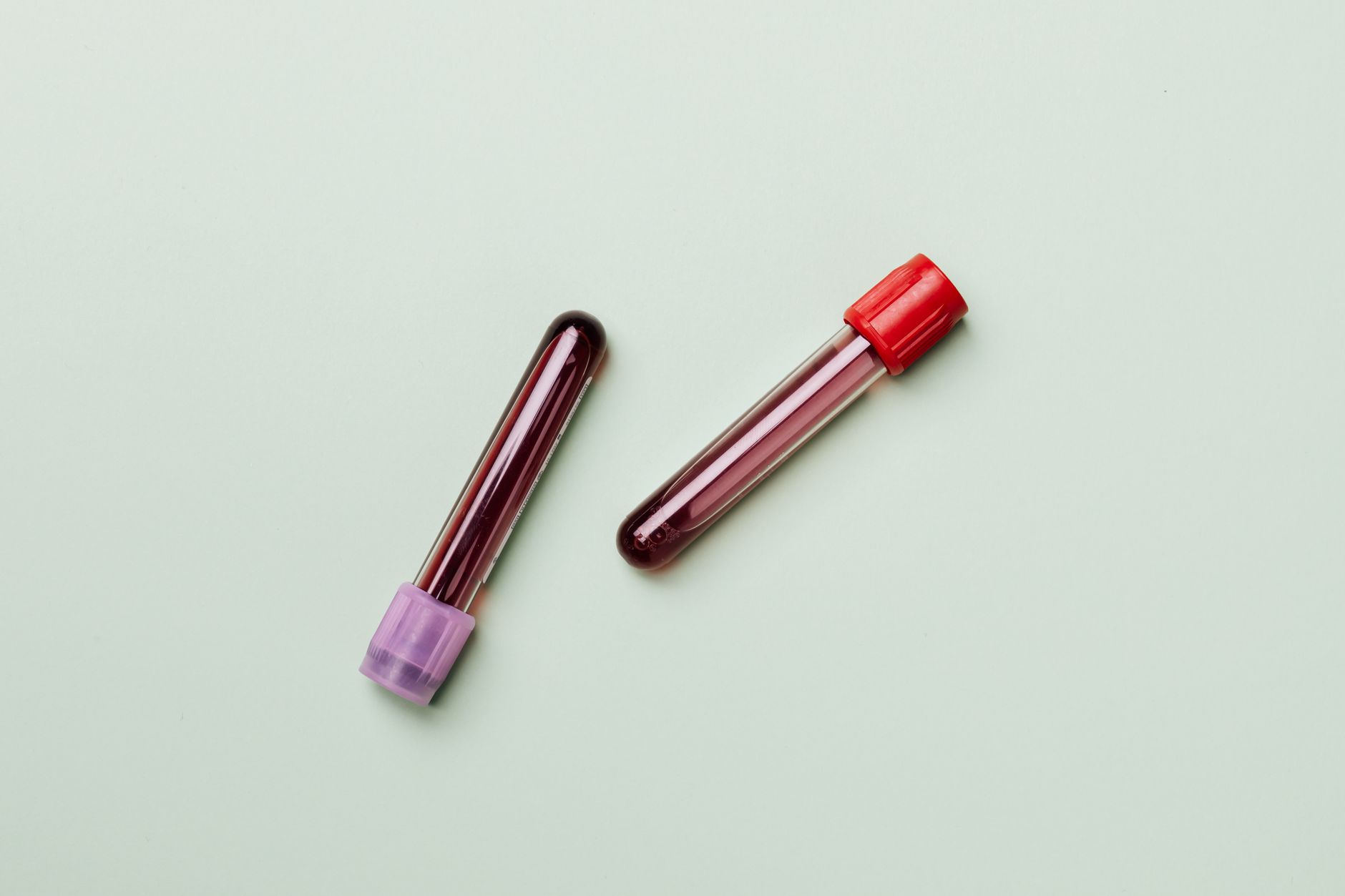
Anyone taking 1,000 µg a day has a high serum value. That is not a side effect but the calculation working out — in the dialysis example mentioned, the values were permanently four times above the normal range without anything being reported.
Conversely, a high value without a preparation is a finding that is followed up. In a British cohort of 757,185 people, from which everyone receiving B12 treatment had been excluded, the rate of new cancer diagnoses in the year after measurement was 4.7 times higher at values above 1,000 pmol/l than in the normal range. The explanation does not lie in a large amount of vitamin B12 in the blood being harmful, but in how it gets there: liver and kidney diseases as well as blood disorders release cobalamin and its transport proteins. The value is an indicator, not a cause.
The practical consequence lies in between: anyone going for a blood test should say that they take a B12 preparation. Otherwise an expected value is read as more conspicuous than it is — or a conspicuous one as expected. Which markers are meaningful at all, and in what order they change, is set out in Spotting a vitamin B12 deficiency.
What this means for buying
Anyone holding a high-dose tablet should be able to place the number correctly. 1,000 µg is far above the BfR proposal of 25 µg and far below any amount at which anything was observed. Both are true at the same time, and neither says anything about whether the dose makes sense for the individual — that is decided by absorption, not by safety.

Three points are more relevant in practice at the shelf than the maximum-amount debate:
Add up the labels. The BfR's uncertainty factor exists precisely for the case in which several products stand side by side. A B complex, a combination preparation and a single tablet can together add up to a multiple of what is stated on each individual pack. This frequently concerns vitamin B12 and folate together, because both work in the same metabolic step and are therefore often in the same product — anyone taking both separately, for instance as folic acid 1000 µg, should know the sum.
A blood count alone is not enough. The changes in the blood count in vitamin B12 deficiency cannot be distinguished from those in folate deficiency. That is why the two vitamins are almost never considered separately in counselling — and why an unremarkable blood count is not an all-clear.
The market has shifted. When the committee wrote in 2000, preparations typically contained 1 to 5 µg; products with 50 µg were considered a high-dose exception. Today 1,000 µg is the normal case on the shelf. This shift is the actual news, not a new safety finding. What is offered today, in which strength and form, stands side by side in the vitamin B12 category; what the reference values on the pack refer to is clarified in Vitamin B12 daily requirement.
Among the claims authorised for vitamin B12 are these: Vitamin B12 contributes to normal energy-yielding metabolism. Vitamin B12 contributes to normal functioning of the nervous system. Vitamin B12 contributes to normal red blood cell formation. Vitamin B12 contributes to the reduction of tiredness and fatigue. (Regulation (EU) No 432/2012). Food supplements are not a substitute for a balanced and varied diet and a healthy lifestyle.
Frequently asked questions
Can you overdose on vitamin B12? A tolerable upper intake level was never derived, because no dose was found from which an adverse effect sets in. That is not proof of harmlessness — the available studies were not designed to look for such effects. What is established: from foods and food supplements, no adverse effects are known in healthy people.
Is 1,000 µg a day too much? It is well above the BfR's proposed maximum amount of 25 µg per daily portion and well below anything ever observed as an effect threshold. In replacement therapy, 300 to 1,000 µg a day are given orally over long periods. The high number follows from the limited absorption in the gut, not from a high requirement.
Is excess vitamin B12 simply excreted? Only in part. The body stores 2 to 3 mg and loses around 0.1 % of that per day; excretion runs mainly via the bile but is largely reabsorbed. Practically nothing is lost via the urine as long as the binding capacity in the blood is not exceeded. What a high-dose tablet spares is the gut: the greater part is not absorbed in the first place.
My B12 blood value is too high — is that dangerous? Under a high-dose preparation a high value is the normal case and no warning sign in itself. A markedly raised value without a preparation, by contrast, is considered to require clarification, because liver, kidney and blood disorders release cobalamin. That is why the intake belongs in the conversation before the blood test.
Why does vitamin B6 have an upper limit and vitamin B12 does not — both are B vitamins? Because the evidence is different, not the vitamin family. For vitamin B6 an effect is documented from which a calculation can be made: in 2023 EFSA derived an upper limit of 12 mg per day from a reference point of 50 mg a day with an uncertainty factor of 4. For vitamin B12 this starting point is missing. Every upper limit therefore belongs to its own substance — from B12 has none, nothing follows for any other vitamin.
Is cyanocobalamin a concern because of the cyanide? At the usual amounts, the contributions of cobalt and cyanide are toxicologically insignificant; the committee classified this that way back in 2000. For completeness: hydroxocobalamin, another form of the same vitamin, is conversely used as an antidote in cyanide poisoning — in doses of up to 5 grams.