Vitamin B12 foods: what one portion delivers
Futures Nutrition Editorial Team · 12 August 2026
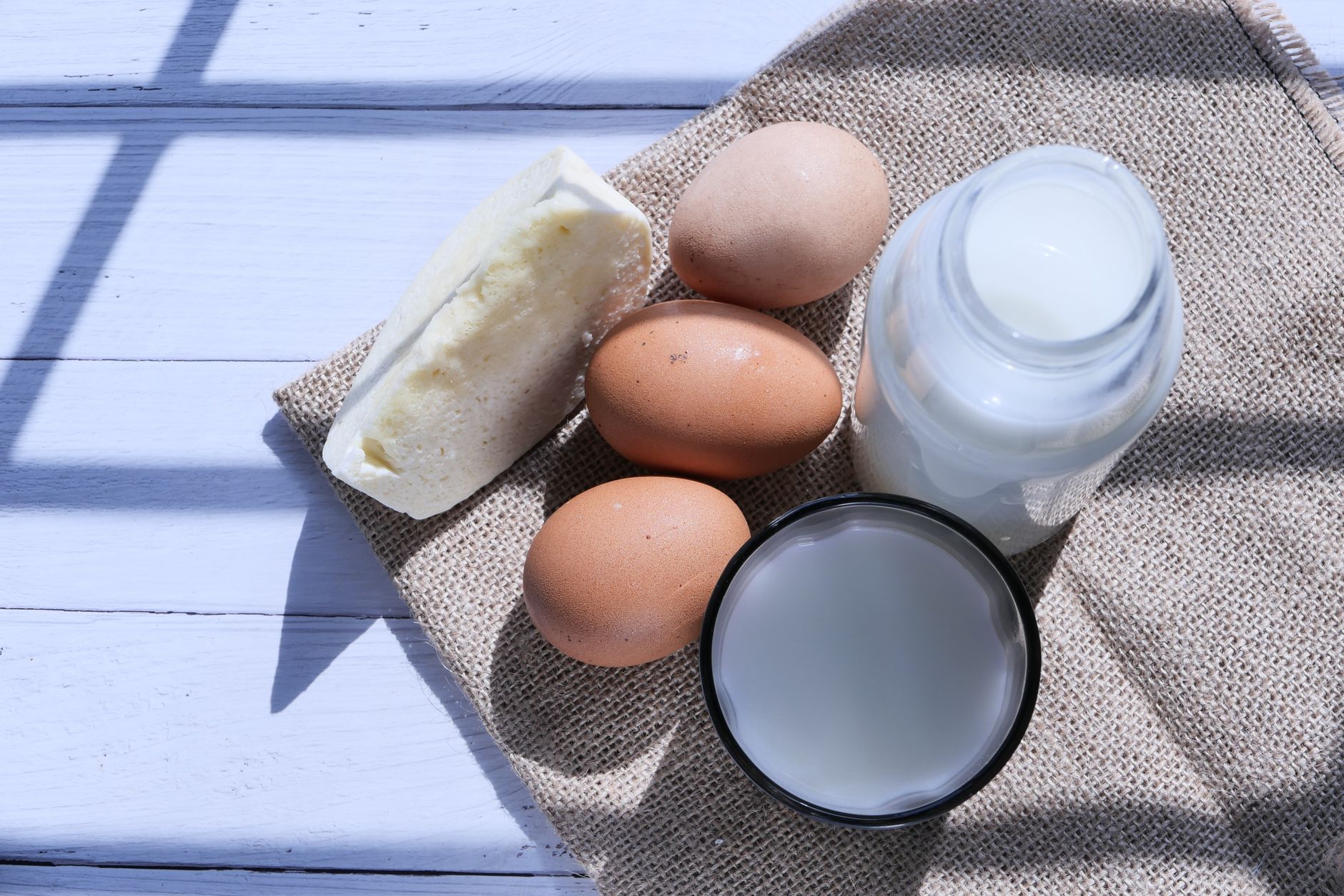
The short answer: vitamin B12 occurs in relevant amounts only in animal foods, and the reference value of 4.0 µg a day is not reached by one single front-runner but by the sum of ordinary portions. A small glass of milk, a pot of yoghurt, a boiled egg and two pieces of Camembert add up to 4.2 µg — that is an unremarkable day, not a diet plan.
The point where most tables on the internet mislead is the second one: they list triple-digit figures for dried algae. But a number in a B12 table does not mean that it is usable vitamin B12. Plant foods contain predominantly analogues — compounds that are measured along with the vitamin in the laboratory but achieve nothing in the body. The German Nutrition Society (DGE) puts it unambiguously: "According to current knowledge, an intake of vitamin B12 that reliably covers requirements exclusively from plant foods is not possible."
Three example days, as the DGE sets them out
In its FAQ the DGE shows three example calculations of "how a targeted selection of foods with a high vitamin B12 content can achieve an intake at the level of the reference value". They are instructive because they work with household portions rather than 100-gram blocks:
| Example | Food and portion | Vitamin B12 |
|---|---|---|
| 1 | 1 small glass (150 g) cow's milk, 1.5 % fat | 0.6 µg |
| 1 | 1 small pot (150 g) yoghurt, 1.5 % fat | 0.6 µg |
| 1 | 1 piece (60 g) egg, boiled | 1.14 µg |
| 1 | 2 portions (60 g) Camembert, 30 % fat in dry matter | 1.86 µg |
| 1 | Total | 4.2 µg |
| 2 | 1 portion (100 g) beef, lean, cooked | 4.5 µg |
| 2 | 2 portions (60 g) cream cheese, 50 % fat in dry matter | 0.3 µg |
| 2 | 1 portion (30 g) Gouda, 30 % fat in dry matter | 0.66 µg |
| 2 | Total | 5.46 µg |
| 3 | 3 heaped tablespoons (90 g) quark, 20 % fat in dry matter | 0.72 µg |
| 3 | 1 portion (70 g) salmon, cooked | 2.87 µg |
| 3 | 1 portion (100 g) mozzarella, 20 % fat in dry matter | 2.00 µg |
| 3 | Total | 5.59 µg |
Example 1 targets the reference value for adults (4.0 µg), examples 2 and 3 the higher value for breastfeeding women (5.5 µg). The figure on the pack is a different one again: there the nutrient reference value of 2.5 µg serves as the basis.
The same figures, calculated per 100 grams
Anyone wanting to compare foods with each other needs a common basis. The same data give, per 100 grams:
| Food | Vitamin B12 per 100 g |
|---|---|
| Beef, lean, cooked | 4.5 µg |
| Salmon, cooked | 4.1 µg |
| Camembert, 30 % fat in dry matter | 3.1 µg |
| Gouda, 30 % fat in dry matter | 2.2 µg |
| Mozzarella, 20 % fat in dry matter | 2.0 µg |
| Egg, boiled | 1.9 µg |
| Quark, 20 % fat in dry matter | 0.8 µg |
| Cream cheese, 50 % fat in dry matter | 0.5 µg |
| Cow's milk / yoghurt, 1.5 % fat | 0.4 µg |
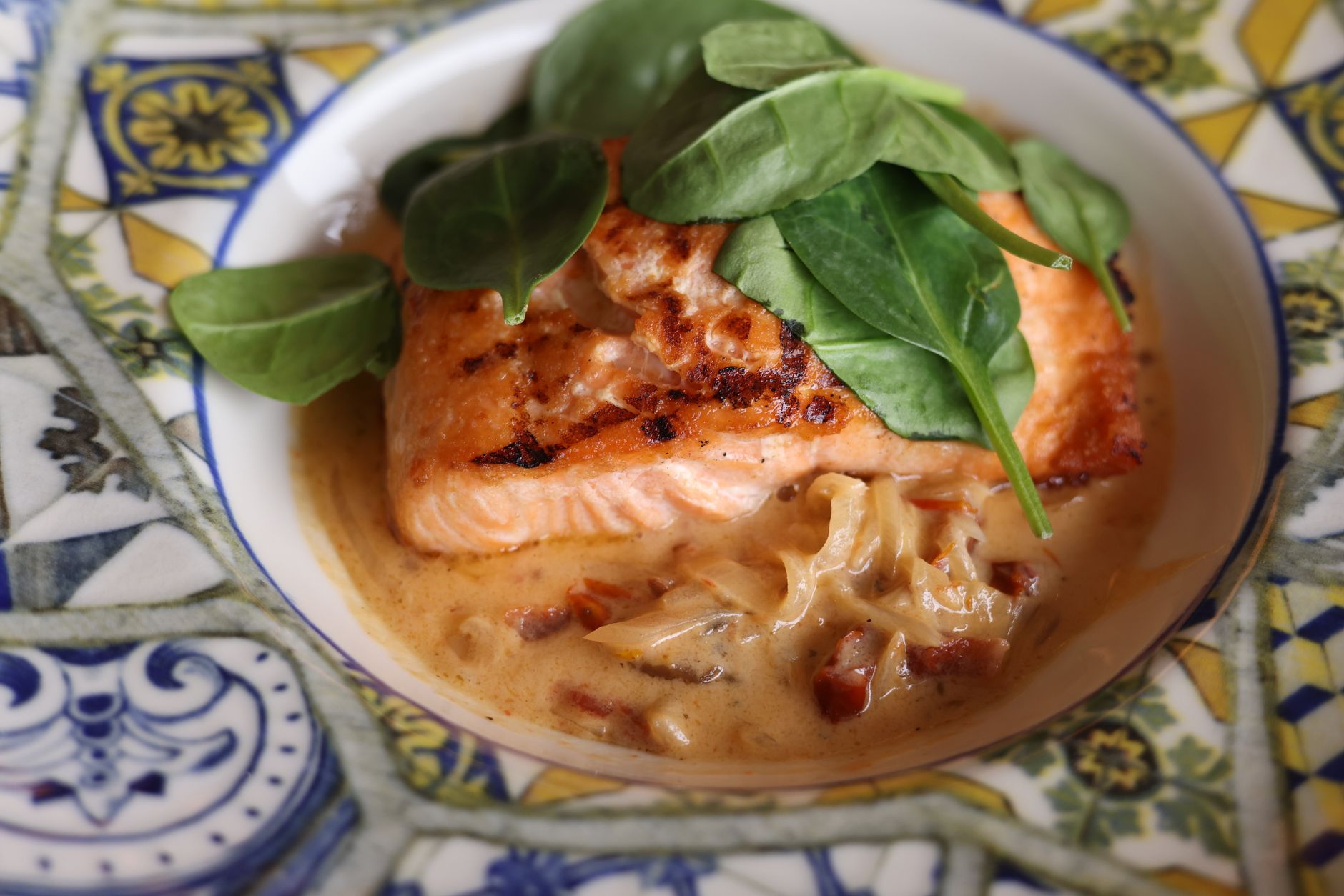
The difference between the two tables is the real reason why 100-gram figures deceive. Cheese sits high up with 2 to 3 µg — but 30 grams of it get eaten, not 100. Milk sits far down with 0.4 µg, yet it adds up across the glass, the coffee and the muesli. At the end of the day, portion size decides at least as strongly as the content.
Why the total counts and not the front-runner
Among everyday foods there is exactly one that covers the reference value in a single portion: 100 grams of lean beef with 4.5 µg. Everything else contributes. Two slices of Gouda on bread are 0.66 µg, an egg is 1.14 µg, half a litre of milk spread over the day around 2 µg.
That also explains why measured intake in Germany is rarely a problem as long as animal foods are on the plate: it takes neither liver nor herring, just three or four ordinary contributions. And conversely it explains why the gap becomes large immediately when this group disappears completely — not because one single item is missing, but because they all vanish at once.
Why plant foods do not count
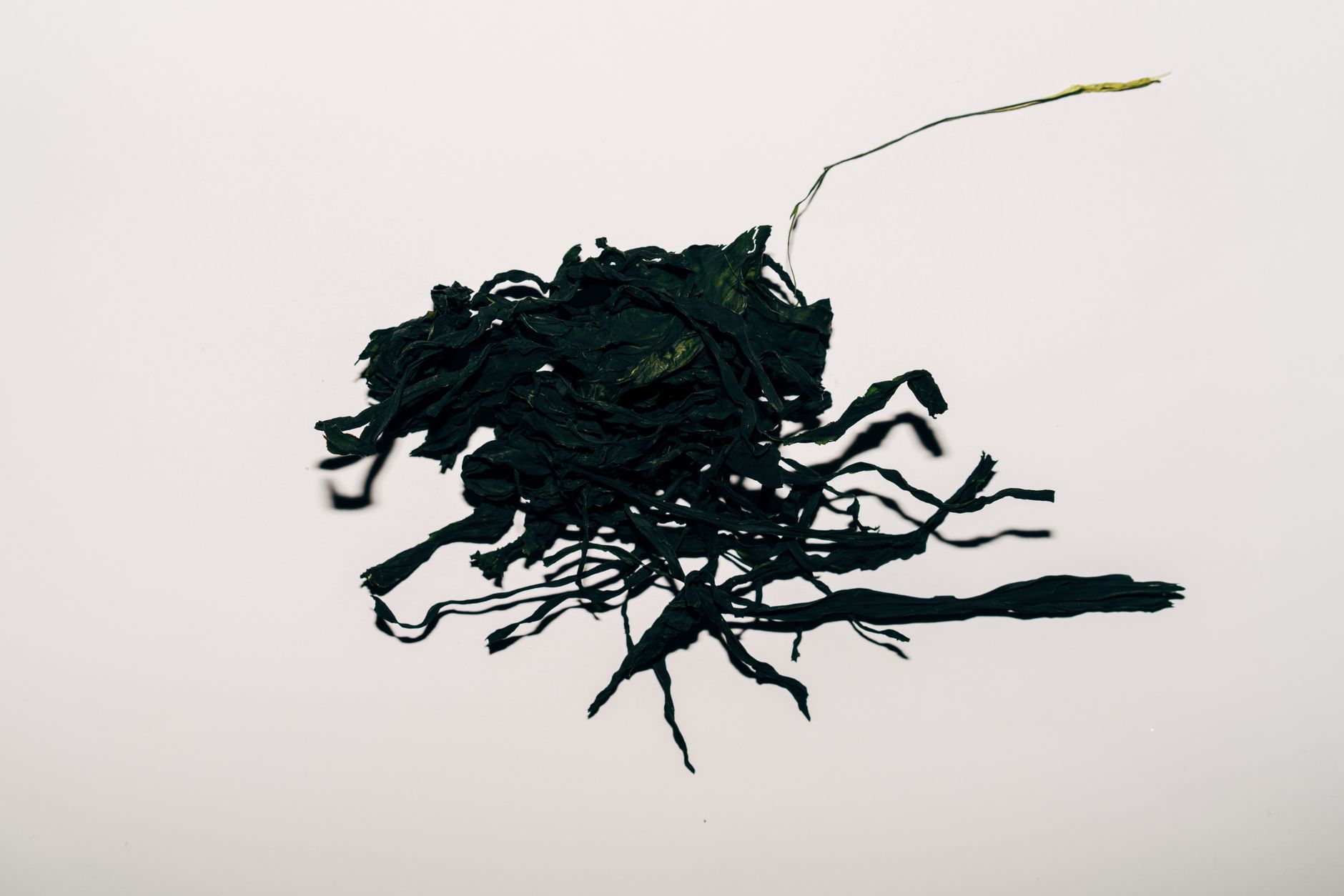
Vitamin B12 is formed by bacteria, not by plants. This is why plant foods can contain traces through bacterial fermentation — sauerkraut is the standard example — as can sea algae, shiitake mushrooms and cyanobacteria. The DGE records two things on this: the amounts contained "can fluctuate enormously", and they are to a large extent vitamin B12 analogues that do not contribute to an adequate supply. Worse still: they can even make the supply worse by blocking the body's transport systems.
In practice that means: a nutrient table listing a high B12 value for dried nori sheets is measuring something that can barely be separated analytically from real cobalamin. The number is not invented — it is simply not an answer to the question at hand.
What plant foods do reliably deliver is folate: pulses and green vegetables comfortably carry the reference value of 300 µg folate equivalents a day (DGE). The two vitamins are often mentioned in the same breath because the same authorised claim applies to both — folate contributes to normal blood formation and vitamin B12 contributes to normal red blood cell formation (Regulation (EU) No 432/2012). On the plate, however, they do not overlap: replacing meat with lentils does not trade one source for the other. For folate there are separate products, such as folic acid 1,000 µg.
Fortified foods: what may appear on the label
The third route besides animal foods and supplements is fortified products — plant drinks, breakfast cereals, nutritional yeast flakes. Here there are concrete figures. The German Federal Institute for Risk Assessment (BfR) proposed maximum amounts in 2021:
| Category | Proposed maximum amount |
|---|---|
| Fortified solid foods | 6 µg per 100 g |
| Fortified beverages | 1.6 µg per 100 ml |
| Food supplements | 25 µg per recommended daily portion |
A second threshold matters for the label. Under Regulation (EU) No 1169/2011, a nutrient may only be declared at all if at least 15 % of the nutrient reference value is present in solid foods and 7.5 % in beverages. With a reference value of 2.5 µg that means 0.38 µg per portion and 0.19 µg respectively — the BfR sets it out in the same opinion. So if "with vitamin B12" appears on a plant drink, there are at least 0.19 µg per 100 ml in it; a 200 ml glass therefore delivers at least around 0.4 µg, a similar amount to cow's milk.
Where absorption limits the calculation
A number on the plate is not yet a number in the body. Vitamin B12 is channelled through the small intestine via intrinsic factor, and this route has a fixed capacity: in the assessment of the Scientific Committee on Food, the receptors are saturated at roughly 1.5 to 2.5 µg per meal. Anything above that passes only passively through the intestinal wall, and only to a small percentage.
Something practical follows from this for food choice: three meals with 1.5 µg each bring in more than a single one with 4.5 µg. A cheese sandwich in the morning, quark at midday and fish in the evening are arithmetically the same as one large steak — but not in the body. How exactly this mechanism works, and why supplements are dosed so high because of it, is set out in Vitamin B12 absorption: intrinsic factor and the 1 % rule.
When the plate does not close the gap

If the animal group stays away permanently, fine-tuning portion sizes is no longer enough — then fortified foods or a supplement remain. Our vitamin B12 1,000 µg delivers one methylcobalamin tablet a day; which other forms exist and how they differ can be seen side by side in the vitamin B12 category.
The authorised claims read, in their official wording: Vitamin B12 contributes to normal energy-yielding metabolism, vitamin B12 contributes to normal functioning of the nervous system, vitamin B12 contributes to normal red blood cell formation and vitamin B12 contributes to the reduction of tiredness and fatigue (Regulation (EU) No 432/2012). Food supplements are not a substitute for a balanced and varied diet and a healthy lifestyle.
Frequently asked questions
Which food has the most vitamin B12? Among the everyday foods the DGE calculates with, lean beef is the front-runner with 4.5 µg per 100-gram portion, followed by cooked salmon with 2.87 µg per 70-gram portion. Offal lies above that but hardly features in a normal meal plan — and it is not needed to reach 4 µg either.
Is cheese alone enough? Arithmetically yes, in practice hardly. Camembert with 3.1 µg per 100 g would reach the target at a good 130 grams — about four portions of the size the DGE calculates with. More realistic is the mixture of dairy products, egg and one meat or fish meal.
Do algae and sauerkraut contain usable vitamin B12? They do contain it, but mostly not in usable form. To a large extent these are analogues, whose amounts also fluctuate enormously. According to current knowledge the DGE considers an intake that reliably covers requirements from plant foods alone to be impossible.
Is vitamin B12 lost during cooking? Part of it is lost with the cooking water and the meat juices. The values in the tables above already refer to prepared foods — "beef, lean, cooked" and "salmon, cooked" — so that is already accounted for in the calculation.
Sources: German Nutrition Society (DGE), FAQ vitamin B₁₂, table 1 (example calculations) · German Nutrition Society, reference values for nutrient intake, vitamin B₁₂ and folate · German Federal Institute for Risk Assessment, "Maximum amounts for vitamin B12 in foods including food supplements", opinion 2021 · Scientific Committee on Food, Opinion on vitamin B12 · Regulation (EU) No 1169/2011, Annex XIII · Regulation (EU) No 432/2012.