Vitamin D blood level: reading 25-OH-D correctly
Futures Nutrition Editorial Team · 11 August 2026
The short answer: the lab report says 25-OH-D, and the number next to it is worthless without its unit. A value of 30 in nanograms per millilitre (ng/ml) means good supply; in nanomoles per litre (nmol/l) it falls into the lowest category. The two units differ by a factor of 2.5 — and that is exactly where most self-reports online go wrong. First the unit, then the comparison with the thresholds, and only after that the question of dose.
This article explains what the lab actually measures, how the common thresholds were derived, why two labs can classify the same drop of blood differently, and when a measurement makes sense.
What the lab actually measures
Two forms exist in the body that could be measured, and only one of them says anything about supply.
25-hydroxy-vitamin D (25-OH-D, also calcidiol) is formed in the liver from cholecalciferol taken in or produced in the skin. It is the transport and storage form, has a half-life of around 15 days and therefore reflects intake over the past few weeks. This is the value that appears on the report.
1,25-dihydroxy-vitamin D (calcitriol) is the actually active form produced in the kidney. It has a half-life of a few hours and is tightly regulated by parathyroid hormone — it can be normal or even elevated while the storage form is low. For the question of how well supplied you are, it is therefore unsuitable, and anyone who finds it on the invoice without having asked for it has paid for the wrong parameter.
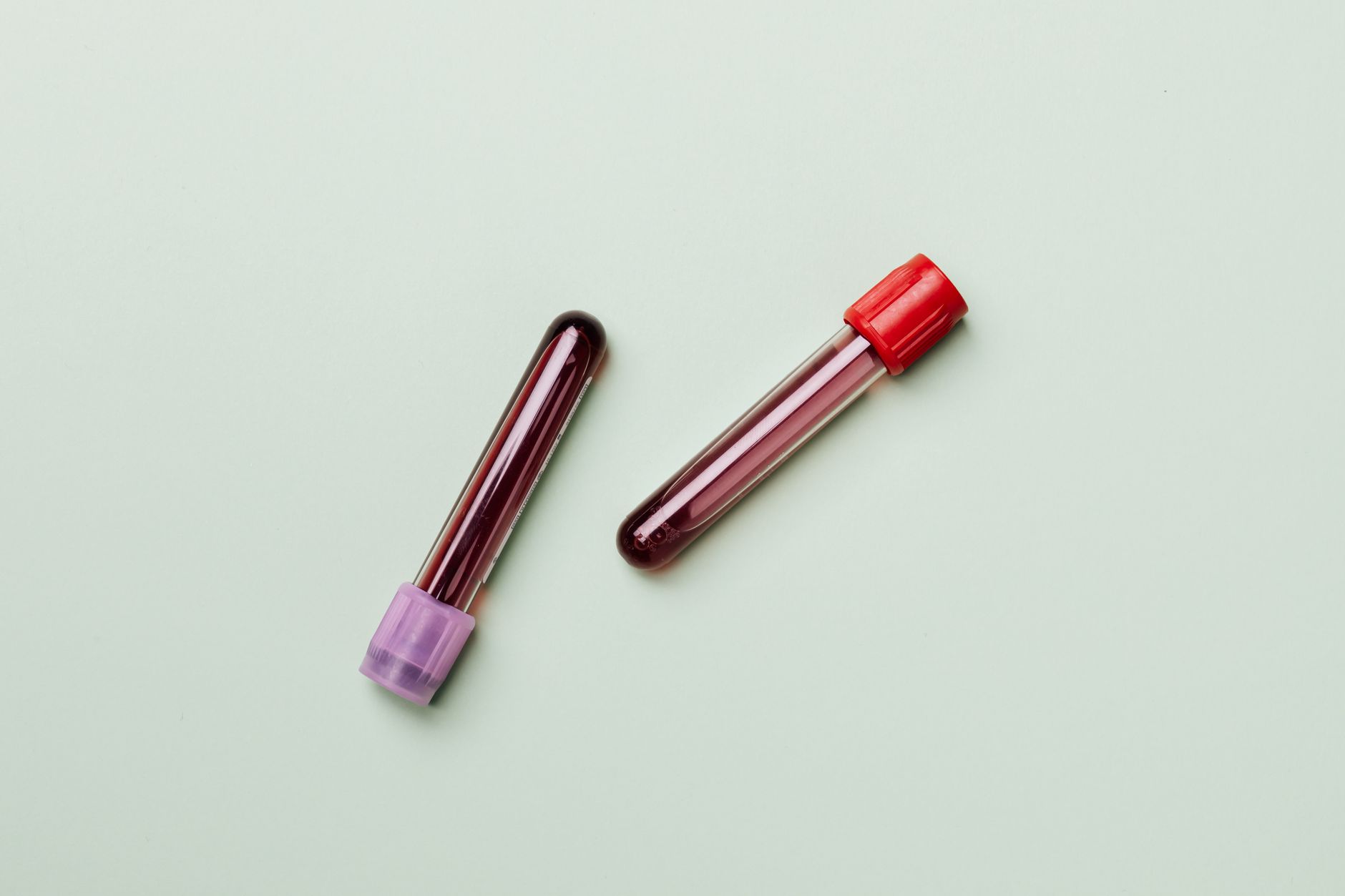
The measurement is taken in serum, usually by immunoassay or by mass spectrometry (LC-MS/MS). There is no need to fast beforehand.
The unit decides: ng/ml or nmol/l
German labs mostly report in nmol/l; some — and almost all English-language literature — use ng/ml. The conversion factor follows from the molar mass of 25-OH-D3 (400.6 g/mol):
1 ng/ml = 2.496 nmol/l, so in practice multiply by 2.5 or divide by 2.5.
| ng/ml | nmol/l | Classification per RKI/DGE |
|---|---|---|
| 8 | 20 | insufficient |
| 12 | 30 | lower bound of the middle category |
| 20 | 50 | sufficient for bone health |
| 30 | 75 | sufficient, clearly above the threshold |
| 40 | 100 | high, but unremarkable |
| 60 | 150 | range in which the benefit is unproven |
Anyone comparing a lab report with a guide has to put both into the same unit. A value of 25 is comfortable when read as ng/ml and a reason to talk to your doctor when read as nmol/l.
Which values count as sufficient
The thresholds do not come from a single study but from the assessments of several bodies, which largely agree:
| Range (nmol/l) | Range (ng/ml) | Assessment | Source |
|---|---|---|---|
| below 30 | below 12 | insufficient supply | Robert Koch Institute, following the US Institute of Medicine |
| 30 to below 50 | 12 to below 20 | suboptimal for bone health | same source |
| 50 and above | 20 and above | sufficient for almost everyone | DGE and IOM, in agreement |
| above 125 to 150 | above 50 to 60 | no proven additional benefit, caution advised | note by the IOM |
| above 220 | above 88 | range in which elevated calcium levels can occur | EFSA assessment of the upper limit |
Two things matter here. First, the threshold of 50 nmol/l was derived for bone health, not for arbitrary other goals — recommendations naming much higher optimum values go beyond what the reference values support. Second, the German Nutrition Society (DGE) derived its estimated value of 20 µg (800 IU) per day in exactly this way: as the amount that, in the absence of the body's own production, reaches 50 nmol/l on average. Diet typically supplies adults with only 2 to 4 µg per day.
Why two labs rate the same drop of blood differently
This is the point that hardly any guide mentions, although it directly affects the number on the report: the measurement methods are not calibrated identically.
How large the effect is can be seen in a recalculation of the German Health Interview and Examination Survey for Adults (DEGS1, collected 2008 to 2011). In the original analysis, 30.2 % of adults were below 30 nmol/l and 61.5 % below 50 nmol/l. In 2018 Rabenberg and colleagues recalibrated the samples (BMC Public Health) according to the protocol of the Vitamin D Standardization Program — same people, same blood samples, only a scale aligned with the reference method. After that, 15.2 % were below 30 nmol/l and 56.0 % below 50 nmol/l. The share in the lowest category had halved without anything having changed in a single person.
For an individual result this means:
- A value close to a threshold is not a decision but an estimate with room for error. 48 and 52 nmol/l are practically the same result.
- Follow-up measurements belong in the same lab. Otherwise you are comparing calibrations instead of values.
- Mass spectrometry is considered the more accurate method, but it is not standard everywhere. The report usually states which method was used.
When to measure — and when not to

The value fluctuates considerably over the year because the body's own production at our latitudes depends on the season. The low point is at the end of winter, in February and March; the peak is in late summer. Measuring in August means measuring your best month; measuring in March, your worst.
Three practical rules follow from this:
- An appointment at the end of winter is the most informative one. If the value holds up then, it holds up all year.
- Wait at least eight to twelve weeks after any change. Because of the half-life of about two weeks, the value needs that long to reach a new equilibrium. A check after two weeks measures an intermediate state.
- Do not measure the day after a depot tablet. Whether the intake is daily or at longer intervals makes little difference to the average — but it does make a difference to a single measurement shortly after a 20,000 IU tablet.
In Germany the test is not a routine screening: statutory health insurance covers it only where there is a justified suspicion, otherwise it is billed as a private service, usually in the range of 20 to 30 euros. Dried blood spot tests for home use measure the same parameter but depend more strongly on how cleanly the sample was taken and how quickly it was sent off.
From value to dose
As a rough rule of thumb: 1,000 IU (25 µg) per day raises the 25-OH-D level by around 25 nmol/l in the long run. The rule is deliberately rough, because the rise is not linear — it is markedly larger from a low starting value than from an already good one, and it also differs between individuals; at a higher body weight the same amount is distributed across more fat tissue.
Anyone at 40 nmol/l who wants to clear the 50 mark reliably will manage with the smaller strengths. The Vitamin D3 4,000 IU year's supply is designed for every second day and therefore works out at 2,000 IU per day.

Anyone who only wants to maintain a measured value needs less than the tablet strength suggests: through their intake interval, the depot products are designed to work out at 1,000 IU per day — with the Vitamin D3 10,000 IU year's supply, for instance, over a ten-day rhythm. All strengths stand side by side in the Vitamin D3 category; which strength fits which daily routine is compared in Vitamin D3 dosage: 1000 IU to 10000 IU.

At the upper end, EFSA sets the tolerable upper intake level from all sources at 100 µg (4,000 IU) per day for adults and adolescents from eleven years of age; the German Federal Institute for Risk Assessment (BfR) proposes a maximum of 20 µg (800 IU) per daily portion for food supplements. The nutrient reference value on the label is 5 µg (200 IU) and comes from Annex XIII of Regulation (EU) No 1169/2011. What happens if you stay above that permanently is set out in Can you take too much vitamin D?.
Regardless of the measured value, the claims authorised under Regulation (EU) No 432/2012 remain unchanged: Vitamin D contributes to the normal function of the immune system. Vitamin D contributes to the maintenance of normal bones. Vitamin D contributes to the maintenance of normal muscle function. Food supplements are not a substitute for a balanced and varied diet and a healthy lifestyle.
What the value does not tell you
The report measures total 25-OH-D in serum, and more than 99 % of that is bound to vitamin D binding protein and albumin. Whether the freely available fraction stands in the same ratio to it in everyone is an open question — methods for measuring it are not established in routine practice. Nor does the standard report distinguish whether the amount came from the skin or from a tablet; for classification that makes no difference, for the choice of preparation it does.
And finally: a number is not a diagnosis. A low value at the end of winter in someone who spends little time outdoors is to be expected. A very low value in high summer in someone with plenty of sun exposure is unusual and should be investigated by a doctor, because something other than intake may be behind it.
Frequently asked questions
My report says 32 — is that good or bad? That depends on the unit. 32 ng/ml corresponds to 80 nmol/l and is clearly in the sufficient range. 32 nmol/l corresponds to just under 13 ng/ml and falls into the middle category, which is suboptimal for bone health. The unit is printed on the report directly after the number.
Do I have to fast before the blood draw? No. 25-OH-D is not appreciably affected by a meal. What counts is the season and the interval since the last change in intake.
How often should you measure? With stable intake within the labelled amount, a check about once a year is enough, sensibly always in the same season and at the same lab. Measuring more often mainly produces noise: measurement uncertainty and seasonal variation are larger than most of the changes you are trying to capture.
Can I stop taking it once the value is high? The store depletes with a half-life of about two weeks, so a value of 90 nmol/l is back near the threshold after around two months without intake — reliably so in winter, when the body's own production is absent. A high summer value is therefore not a reserve for the dark half of the year.