Vitamin K2 MK-7 all-trans: what the label says
Futures Nutrition Editorial Team · 11 August 2026
In short: MK-7 describes how long the side chain of the molecule is. All-trans describes how it is shaped — and only that shape is biologically active. The same molecule can be kinked the other way round at several points along its side chain; such cis isomers have the same molecular formula, the same molecular weight and show up in a coarse analysis as vitamin K2 without playing the same role in the body. That is exactly why all-trans appears on labels at all: it is the statement that turns 200 µg of MK-7 into 200 µg of usable MK-7.
For the buyer this means the number on the tub is only complete once it says what share of it is all-trans. This article explains what the two statements mean chemically, where cis fractions come from, what measurements on commercial supplements have found and what a well-declared label should say.
What MK-7 means — and what it leaves open
Vitamin K2 is not a single substance but a family: the menaquinones. They all share the same head — a naphthoquinone ring — and differ in the side chain, which consists of a certain number of isoprene units. The number after MK is exactly that count. MK-4 has four units, MK-7 has seven. In EU legal language MK-7 is described by the molecular formula C46H64O2.
The chain length determines the behaviour in the body: MK-7 stays in the blood considerably longer than MK-4, which is why it is the usual form in supplements. Which of the two is used for what is set out in more detail in Vitamin K2: MK-7 or MK-4 — what the difference is.
What MK-7 does not say: how the seven isoprene units are arranged in space. The side chain contains double bonds, and at each of them the two halves of the chain can sit on the same side (cis) or on opposite sides (trans). The naturally occurring molecule is trans-configured throughout — hence all-trans. Only the trans form is regarded as biologically active; for cis forms, no activity or only very little activity has been described.
Where cis fractions come from: fermentation and synthesis
There are two routes to MK-7, and they differ at precisely this point.
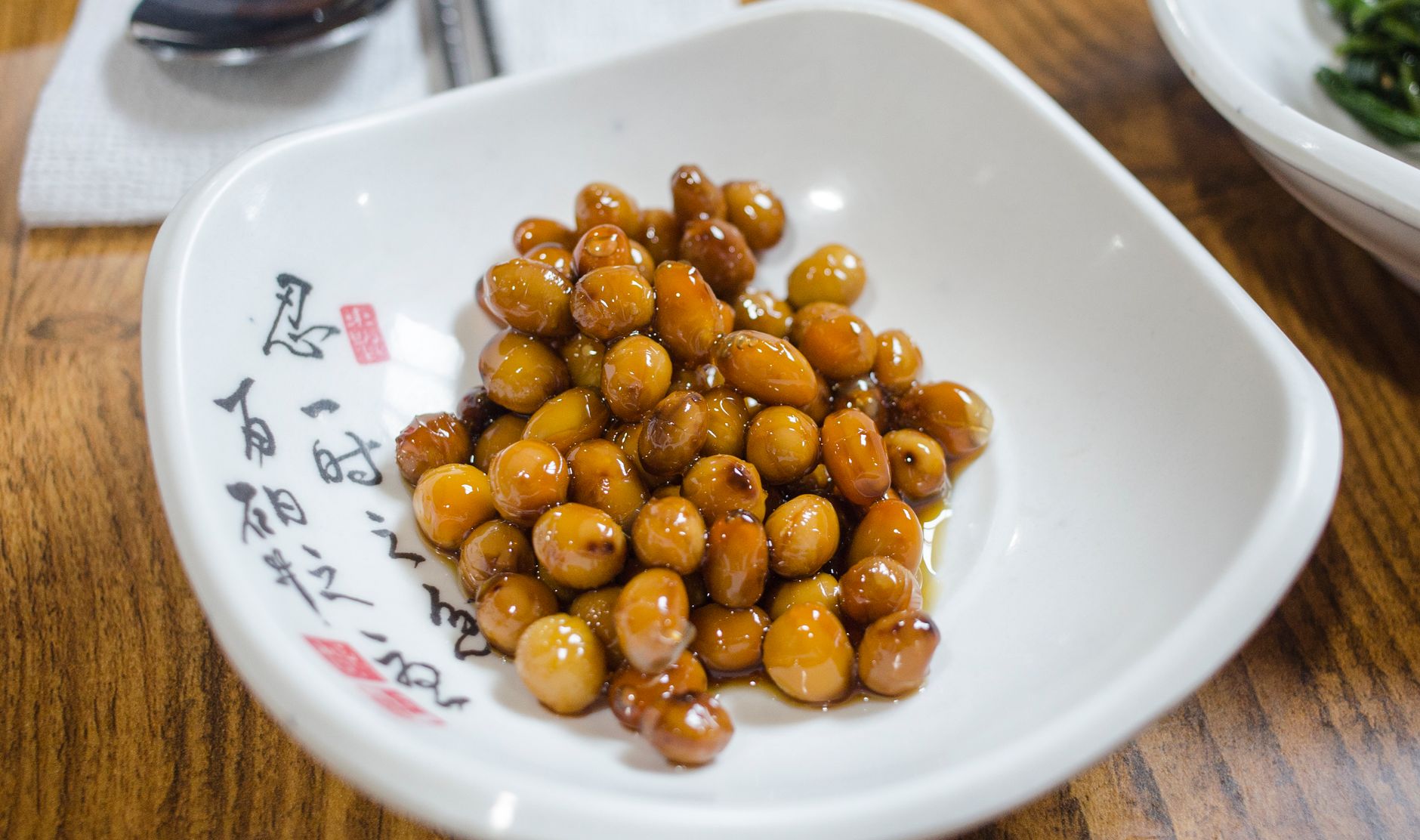
Fermentation. Bacteria build the molecule enzymatically and deliver it in the all-trans configuration from the outset — enzymes work stereospecifically, they do not confuse the geometry. The classic producer is Bacillus subtilis natto, the bacterium behind Japanese natto. Commission Decision 2009/345/EC authorised vitamin K2 (menaquinone) from Bacillus subtilis natto as a novel food ingredient in the EU; today the entry is kept in the Union list of novel foods (Implementing Regulation (EU) 2017/2470).
Chemical synthesis. When the side chain is built in a reactor, a mixture of cis and trans forms arises at the double bonds to begin with. The cis fraction has to be separated off, and that is the real effort of the process. If it succeeds, synthetic MK-7 is chemically indistinguishable from fermented MK-7 — synthetic all-trans MK-7 may also be marketed in the EU. If it does not fully succeed, a remainder stays in the product.
From this follows a distinction that is often drawn incorrectly: the decisive point is not natural versus synthetic, but specified versus unspecified. A fermented product without an isomer statement is no better information than a synthetic one with it.
What measurements on supplements have found
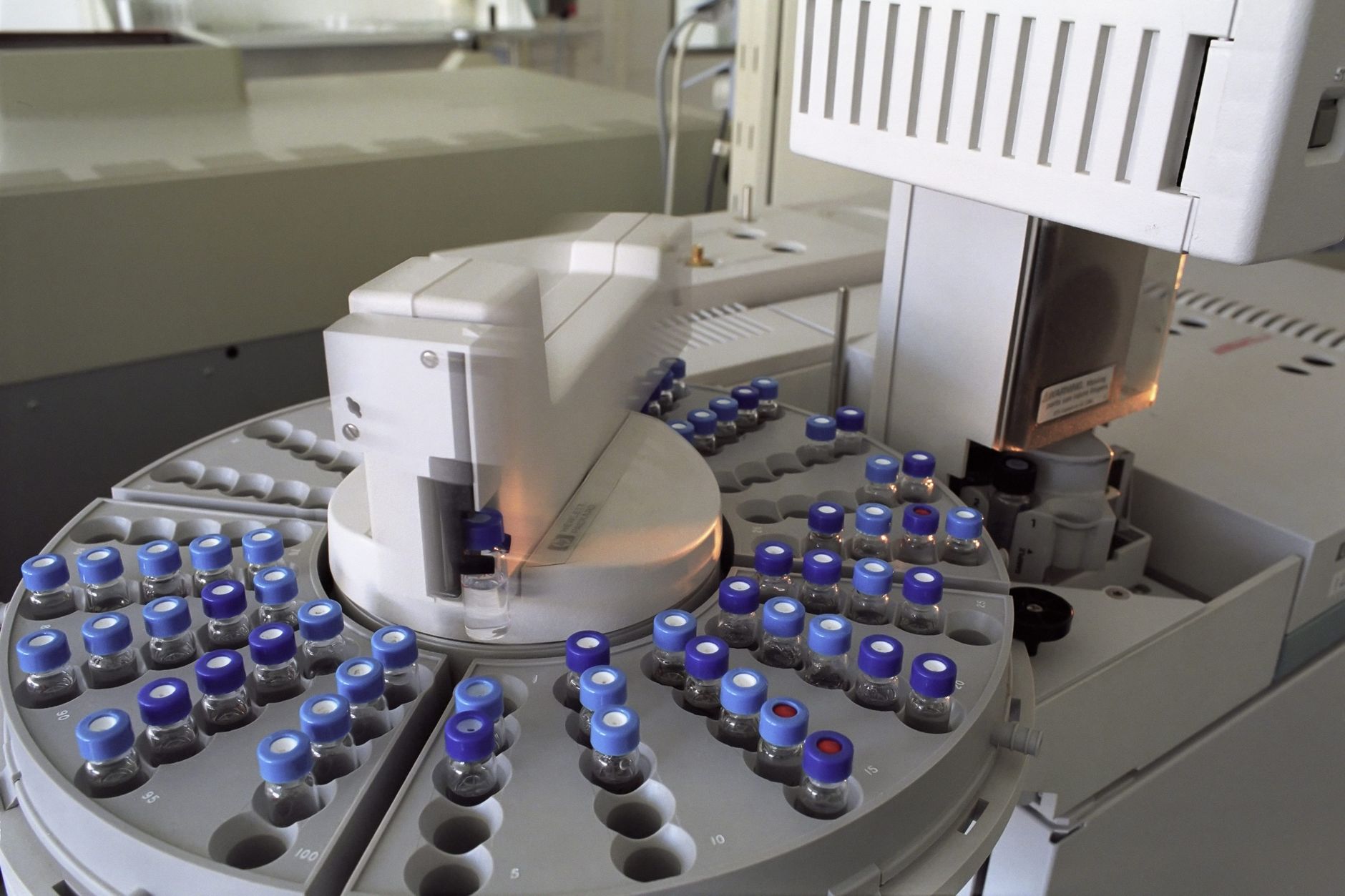
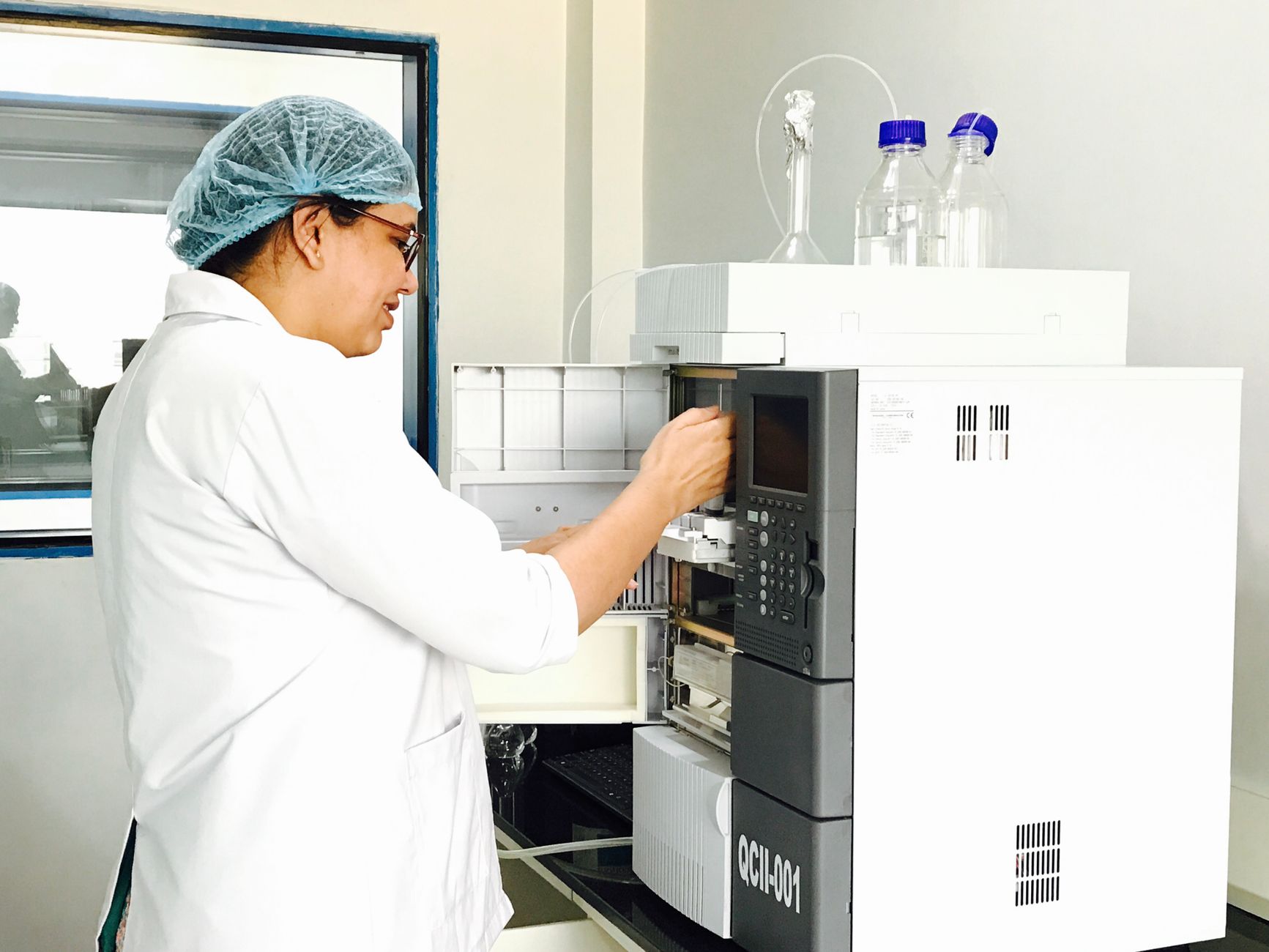
That the question is a practical one and not an academic one is shown by a study by Szterk, Zmysłowski and Bus (Food Chemistry 2018;243:403–409). The authors developed a method for determining the isomers of MK-7 in food supplements separately, and found:
| Finding | Result |
|---|---|
| Number of distinguishable cis/trans isomers of MK-7 | 5 |
| Content of all-trans MK-7 per tablet | 5.5 to 49 µg |
| Supplements with less all-trans MK-7 than declared | the majority |
| Supplements with no detectable MK-7 despite the claim | 1 |
| Highest cis/trans excess found relative to all-trans | 3.7-fold |
The last row is the most telling: individual products contained several times as much inactive isomer as active. An analysis measuring only total vitamin K2 would have found such goods unremarkable. That is exactly why separation by isomer is the test step that matters — and the all-trans statement on the label the sign that it took place.
What a usable label says
| Statement on the pack | What it tells you |
|---|---|
| Vitamin K2 200 µg | the amount only, neither form nor geometry |
| Vitamin K2 as MK-7, 200 µg | chain length settled, geometry open |
| MK-7 all-trans, 200 µg | amount and active form named |
| MK-7, ≥ 99 % all-trans | plus the tested degree of purity |
| from natto fermentation | the production route that yields all-trans |
In our own range the combination products carry the statement in the name — for instance vitamin D3 20,000 IU + K2 MK-7 all-trans and vitamin D3 10,000 IU + K2 200 µg all-trans depot; in a daily dosage the equivalent is vitamin D3 4,000 IU + K2 200 µg MK-7.

How much K2 the reference values provide for
The isomer question settles what is in the capsule — not how much makes sense. For that, the figures that exist:
| Reference | Value | Source |
|---|---|---|
| Nutrient reference value (NRV) for vitamin K, for the % figure on the label | 75 µg/day | Annex XIII, Regulation (EU) No 1169/2011 |
| Adequate intake for adults | 70 µg/day | EFSA Journal 2017;15(5):4780 |
| Tolerable upper intake level (UL) | not derived | EFSA 2017; previously SCF 2003 |
| BfR proposal for food supplements, vitamin K1 | 80 µg per daily dose | BfR, maximum level proposals for vitamin K |
| BfR proposal for food supplements, vitamin K2 | 25 µg per daily dose | BfR, ibid. |
Two points here need explaining. First, EFSA derived the value of 70 µg expressly for phylloquinone (vitamin K1) only, because the data on the uptake and fate of the menaquinones were not sufficient for that — the NRV on the label, by contrast, applies to vitamin K as a whole, which is why 200 µg of MK-7 appears there as around 267 %.
Second, the BfR proposal of 25 µg is well below what is common on the market. It is a recommendation, not a legal requirement, and it does not come from a toxicity assessment — for lack of data, there is no upper limit for vitamin K at all. It comes from the interaction with coumarin anticoagulants: in the studies drawn on, a statistically measurable drop in INR was seen from 150 µg/day of vitamin K1 but already from 45 µg/day of vitamin K2, so K2 acted about 3.5 times more strongly. Alongside this the BfR expressly recommends a note that people taking anticoagulant medication should seek medical advice before use. What else is to be expected at these amounts is covered in Vitamin K2 overdose; why K2 is usually mentioned together with calcium and D3, in Vitamin K2 and calcium.
What may be said about vitamin K
Two health claims are authorised for vitamin K in the EU (Regulation (EU) No 432/2012). They apply to vitamin K as a nutrient, not to a particular form or a particular isomer:
- Vitamin K contributes to the maintenance of normal bones.
- Vitamin K contributes to normal blood clotting.
Food supplements are not a substitute for a balanced and varied diet and a healthy lifestyle.
Frequently asked questions
If all-trans is not on the pack — is the product then poor? Not necessarily. The statement is voluntary, and there is cleanly produced stock without it. It is, however, the only piece of information that allows the question to be answered at all from in front of the shelf. If it is missing, you simply do not know.
Is fermented MK-7 superior to synthetic MK-7? On geometry, fermentation has a systematic advantage, because enzymes only build trans. In the finished product, though, what counts is the specification: synthetic MK-7 that is specified and tested as all-trans is the same molecule. The production route does not replace the statement, and the statement does not replace the production route.
What about MK-4 — does that have cis isomers too? In principle yes; the side chain is merely shorter, so there are fewer places where it can happen. In practice the question matters less with MK-4, because MK-4 is rarer in supplements and, owing to its short residence time in the blood, is dosed differently.
Does the ratio change over the shelf life? MK-7 is light-sensitive, and light can flip double bonds over. That is why amber glass or opaque tubs and a cool, dark storage place are no ornament with K2 but the reason why the declared amount stays plausible until the best-before date.