Daily biotin requirement: 40, 50 or 10,000 µg?
Futures Nutrition Editorial Team · 12 August 2026
The short answer: 40 µg per day is the estimated value for adults that the German Nutrition Society (DGE) and EFSA arrive at independently of one another. The 50 µg to which the percentage on the pack refers is a labelling value from the food information regulation — not a recommendation. And the 10,000 µg found on some products are not there because anyone assumed a requirement of that size, but because there is no legal maximum amount for biotin. Between the first and the last figure lies a factor of 250, and none of them is wrong. They simply answer three different questions.
What is special about biotin is that the supply question is largely settled in Germany: measured intake already meets the estimated value. Anyone standing in front of the shelf is therefore not choosing between “enough” and “too little”, but between an amount that covers the requirement and a multiple of it.
Why it is an estimated value and not a recommendation
For most vitamins the German Nutrition Society (DGE) gives a “recommended intake”. For biotin it says estimated value for an adequate intake — a different term with a different procedure behind it.
A recommendation is derived from a measured average requirement: you know how much the body needs and add a safety margin. For biotin that basis is missing. There are no robust dose-response data in humans — the EU Scientific Committee on Food (SCF) pointed this out back in 2001. That is why both the D-A-CH societies (2020 derivation) and the European Food Safety Authority (EFSA, 2014) take the reverse route: they look at how much biotin the population actually takes in, establish that no signs of undersupply appear at that level, and declare this observed amount to be an adequate intake.
That is not a flaw, but it changes what the number means. 40 µg is the amount at which the population demonstrably does well — not the amount below which something is lacking. A value below it is therefore not a deficiency either.
| Age group | D-A-CH 2020 (µg/day) | EFSA 2014 (µg/day) |
|---|---|---|
| 4 to under 7 years | 25 | 25 (4 to under 11 years) |
| 7 to under 10 years | 25 | 25 (4 to under 11 years) |
| 10 to under 13 years | 35 | 35 (10 to under 18 years) |
| 13 to under 15 years | 35 | 35 (10 to under 18 years) |
| 15 to under 19 years | 40 | 35 (10 to under 18 years) |
| Adults | 40 | 40 |
| Pregnant women | 40 | 40 |
| Breastfeeding women | 45 | 45 |
Compiled from the BfR opinion "Höchstmengenvorschläge für Biotin in Lebensmitteln inklusive Nahrungsergänzungsmitteln" (2021), table 1. The age brackets used by the two bodies do not match exactly; the values themselves do, almost entirely.
The row for pregnant women stands out: unlike with folate or iron, the value remains unchanged at 40 µg. Only for breastfeeding does 5 µg come on top — the amount released with breast milk.
The 50 µg on the pack is something else
The nutrient reference value (NRV) for biotin is 50 µg per day and appears in Annex XIII of Regulation (EU) No 1169/2011 on the provision of food information to consumers. It has exactly one job: to make the percentage on the pack calculable.
From this come the figures that cause confusion on the shelf. 50 µg is 100 %, 2,500 µg is 5,000 % and 10,000 µg is 20,000 % NRV. The percentage is mandatory, so it appears there — but it only says how the amount relates to the labelling value, not how it relates to the requirement.
A second reference point hangs on those 50 µg as well: authorised claims such as “Biotin contributes to the maintenance of normal hair” may only be used from 15 % of the nutrient reference value, that is from 7.5 µg per daily dose (Regulation (EC) No 1924/2006, Annex). This threshold is the reason why the advertising sentence on a 10,000 µg tub is the same as on a multivitamin — it is set out in detail in Biotin for hair: what the claim actually says.
What an ordinary diet supplies
Here lies the real difference from vitamins such as folate or B12: for biotin the consumption data confirm the reference value instead of falling short of it.
The German National Nutrition Survey II found median intakes of between 43 and 48 µg per day in adult men and between 39 and 42 µg per day in women. Among 15- to 18-year-olds the values are 45 µg (male) and 36 µg (female). The EsKiMo study arrived at medians of between 33.5 and 39.4 µg per day for children aged 6 to 11; among 12- to 17-year-olds between 49 and 67 µg. In the upper percentiles of these age groups, 200 to 288 µg per day is reached without any supplement at all — from food alone.
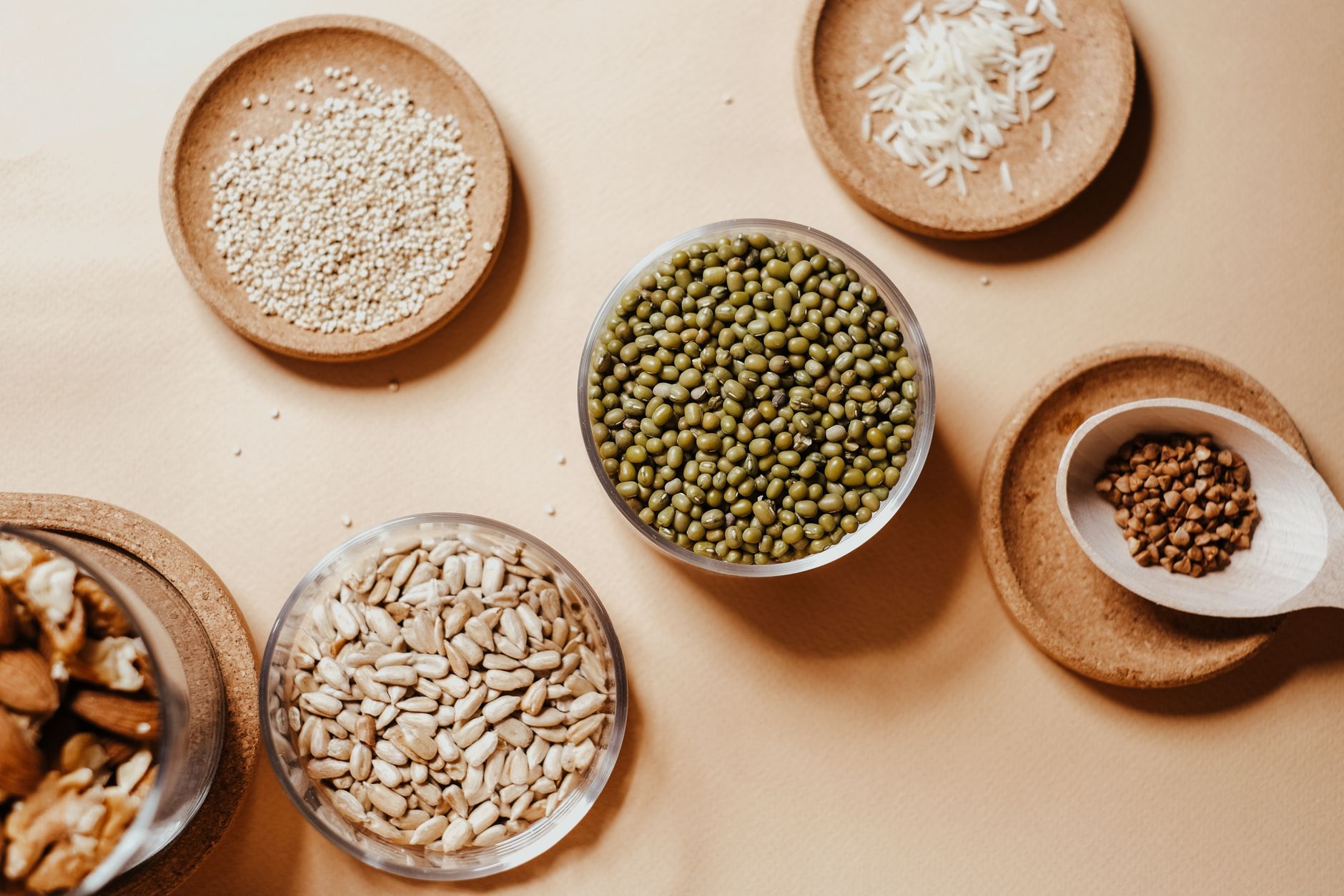
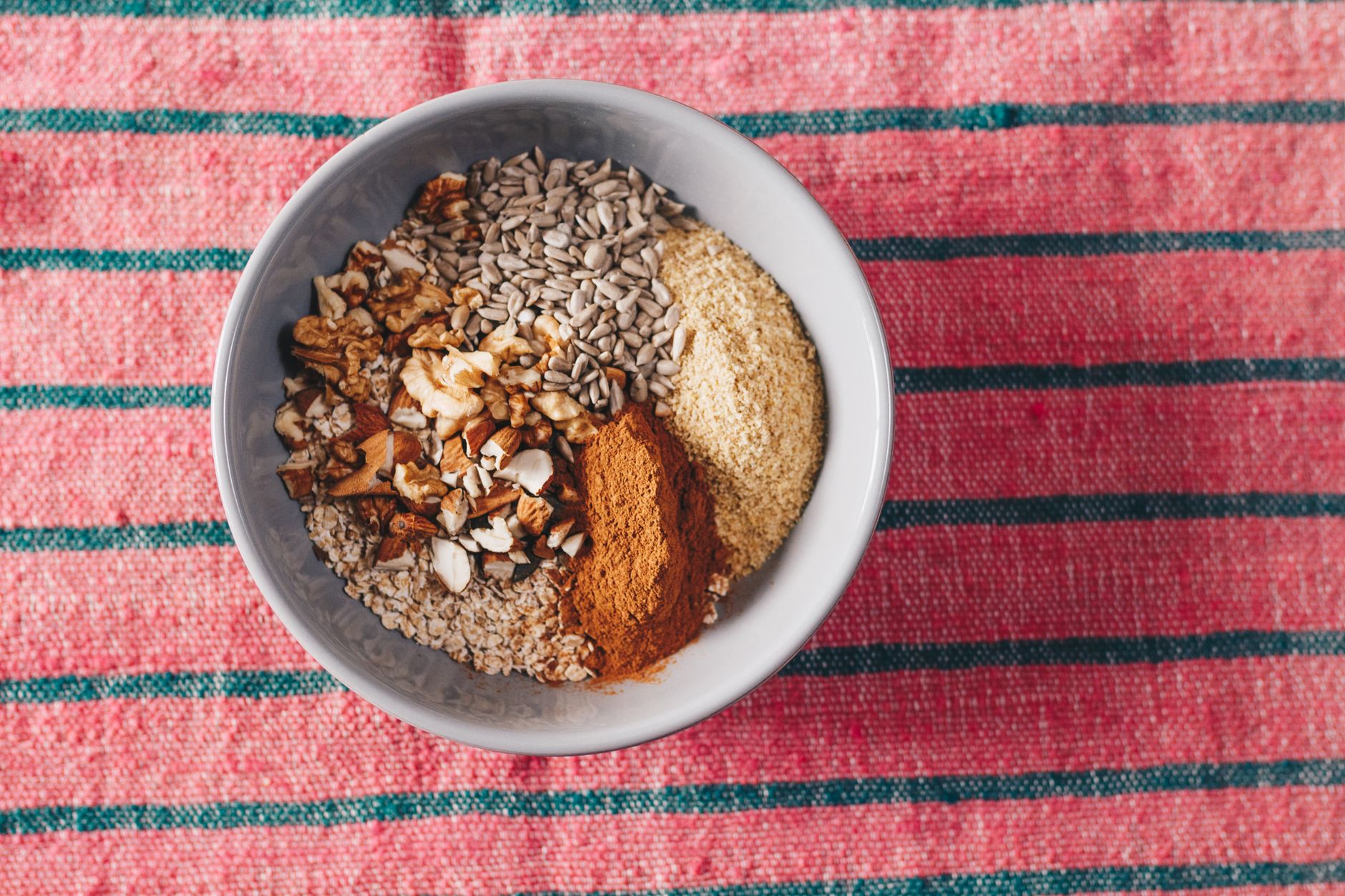
Biotin is widely distributed, which explains this stability. Good sources are offal, soybeans, egg yolk from cooked eggs, nuts, sunflower seeds, oat flakes, mushrooms as well as milk and dairy products. On top of that, part of the biotin is produced by the gut flora — how much of it is actually absorbed cannot be reliably quantified, however, and therefore does not enter any reference value.
A clinically apparent biotin deficiency is correspondingly rare and then usually has a specific cause — regularly larger amounts of raw egg white, an inherited enzyme defect or certain medicines. For the general population the question “does my diet suffice?” is simply answered yes for biotin.
So why 10,000 µg?
The answer has three parts, and none of them is “because the requirement is that high”.
First: there is no upper limit. A tolerable upper intake level (UL) has never been derived for biotin because the data for a quantitative risk assessment are missing — the same data gap that forces the estimated value. Even at amounts far above the reference value, no adverse health effects have been observed. The German Federal Institute for Risk Assessment (BfR) therefore explicitly considers it justifiable to do without a maximum amount for biotin in food supplements. Where no limit is drawn, every amount is permitted.
Second: biotin is water-soluble. What the body does not use is largely excreted in the urine. A storage problem of the kind seen with fat-soluble vitamins does not arise.
Third: the number sells. 20,000 % on the front reads like more effect than 100 %. Legally nothing changes — the authorised claim is unlocked from 7.5 µg and does not become stronger at a thousand times that.
| Biotin per daily dose | % nutrient reference value | Multiple of the estimated value (40 µg) | above the lab-test threshold (150 µg)? |
|---|---|---|---|
| 7.5 µg | 15 % | 0.2 | no |
| 50 µg | 100 % | 1.3 | no |
| 150 µg | 300 % | 3.8 | threshold reached |
| 2,500 µg | 5,000 % | 63 | yes |
| 5,000 µg | 10,000 % | 125 | yes |
| 10,000 µg | 20,000 % | 250 | yes |
The last column is the only one that changes anything in practice — and it has nothing to do with tolerability.
The one point where the amount really counts
Biotin interferes with laboratory tests. Many immunoassays rely on a streptavidin-biotin binding; free biotin in the blood competes with the reagents, and depending on the assay design results come out falsely high or falsely low. Affected are, among others, thyroid and sex hormones as well as cardiac markers such as troponin.
The Pharmacovigilance Risk Assessment Committee (PRAC) of the European Medicines Agency saw sufficient evidence of such interactions in 2019 from 150 µg biotin per day taken orally. Below that amount the risk could not be conclusively assessed for lack of data. Warnings were consequently required for medicines containing 150 µg or more per dose unit; for food supplements this obligation does not apply automatically, which is why the BfR recommends a corresponding voluntary note.
In practice this means: it is not tolerability that limits the sensible dose, but the blood-draw appointment. Anyone taking a high-dose product tells the doctor or the laboratory staff — all the more so with reduced kidney function, because biotin then stays in the blood for longer.
What this means for choosing
Anyone who simply wants to secure the estimated value does not need a three-digit microgram figure: a daily dose in the region of the nutrient reference value covers it fully and stays below the lab-test threshold. Anyone who deliberately doses high — because that is exactly what they are looking for — should treat the 150 µg as what they are: not a safety limit, but a matter of scheduling.

Our own product Biotin 10,000 µg sits per tablet at the upper end of this range — a deliberately high single dose, not a way of covering the requirement. Further strengths and combinations are in the biotin category. Food supplements are not a substitute for a balanced and varied diet and a healthy lifestyle.
The authorised claims for biotin appear word for word in Regulation (EU) No 432/2012; they apply unchanged to every amount from 7.5 µg per daily dose:
Biotin contributes to normal energy-yielding metabolism.
Biotin contributes to normal macronutrient metabolism.
Biotin contributes to normal functioning of the nervous system.
Frequently asked questions
I take 50 µg — is that enough? Yes. 50 µg corresponds to 100 % of the nutrient reference value and lies above the estimated value of 40 µg for adults. On top of that comes the amount from food, which in Germany already averages 39 to 48 µg per day.
Why does biotin have no upper limit when other vitamins do? Because an upper limit has to be derived from studies that show an undesirable effect and the dose belonging to it. For biotin such dose-response studies in humans do not exist — so what is missing is not proof of safety, but the data basis for a figure. The BfR concludes from this that a maximum amount can be dispensed with.
Does pregnancy increase the biotin requirement? Not according to the D-A-CH values: for pregnant women the same estimated value of 40 µg per day applies as for other adults. Only during breastfeeding does it rise to 45 µg.
Can I cover the daily requirement through food? For the vast majority of people it is already covered without them paying any attention to it. Offal, soybeans, cooked eggs, nuts, sunflower seeds, oat flakes, mushrooms and dairy products together contribute enough — the consumption surveys show exactly that.
Sources: BfR, "Höchstmengenvorschläge für Biotin in Lebensmitteln inklusive Nahrungsergänzungsmitteln", 2021 (reference values D-A-CH 2020 and EFSA 2014, intake data NVS II and EsKiMo, the UL question, laboratory note) · SCF, Opinion on the Tolerable Upper Intake Level of Biotin, 2001 · EMA/PRAC, Recommendations on signals, January 2019 · Regulation (EU) No 1169/2011, Annex XIII · Regulation (EC) No 1924/2006, Annex · Regulation (EU) No 432/2012, Annex.