Biotin for hair: what the claim actually says
Futures Nutrition Editorial Team · 12 August 2026

On the subject of hair there is exactly one authorised claim for biotin, and it appears word for word in Regulation (EU) No 432/2012:
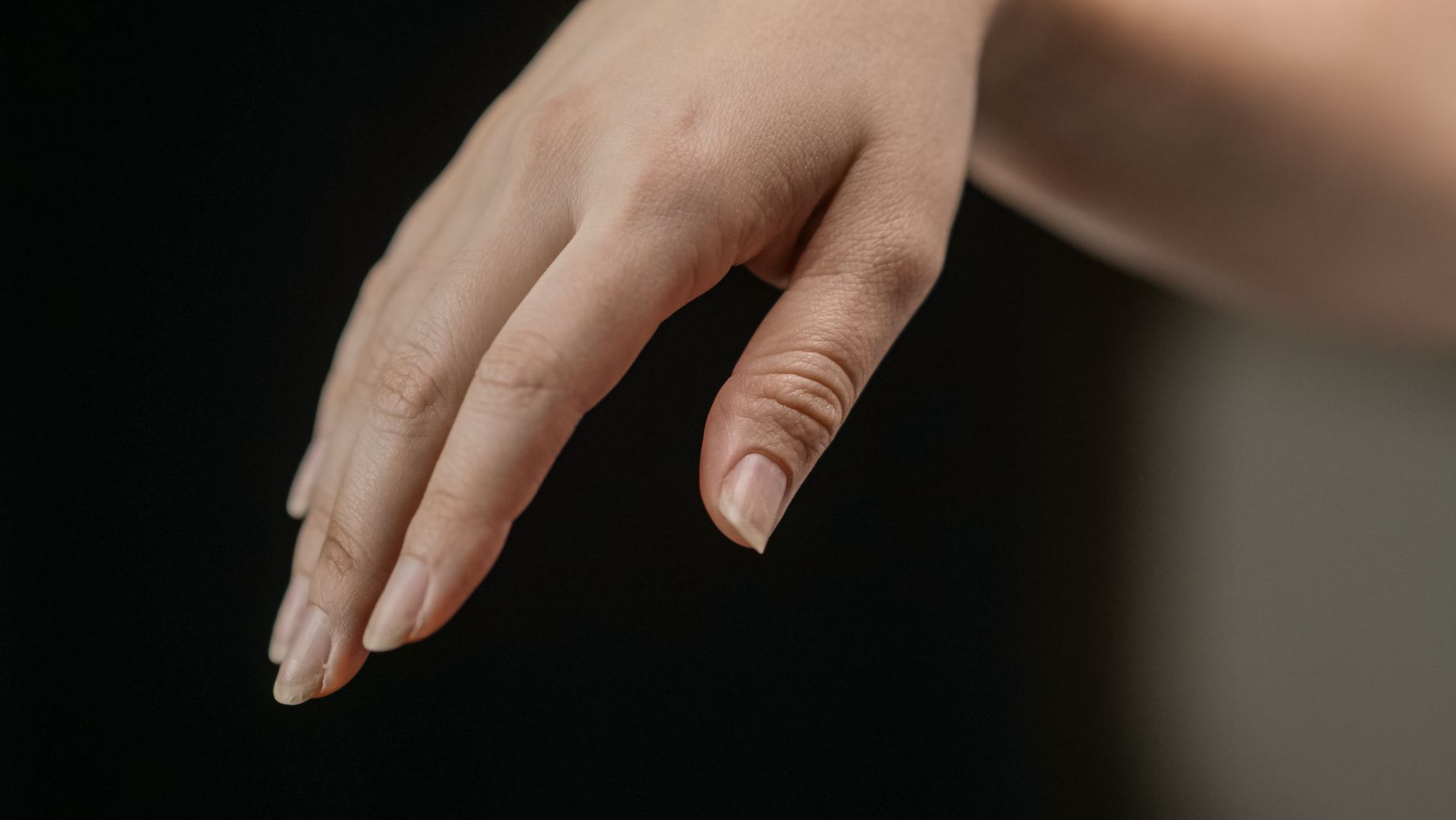
Biotin contributes to the maintenance of normal hair.
Two things about it are regularly overlooked. First, maintenance does not mean improvement: the sentence says that biotin is needed for normal hair — not that more of it produces denser, faster-growing or stronger hair. Second, it is already permitted from 7.5 µg per daily dose. A tablet with 10,000 µg may carry exactly the same sentence as a multivitamin with a thousandth of that. Anyone standing at the shelf who takes the pack with the bigger number to be the one with the stronger claim is comparing something that does not differ at all.
The seven claims that exist for biotin
Authorised health claims are not advertising copy but a list: EFSA assesses the evidence, the European Commission adopts the result, and the permitted wording then appears in the Annex to the regulation. For biotin there are seven entries.
| Authorised wording | EFSA opinion | ID |
|---|---|---|
| Biotin contributes to the maintenance of normal hair | EFSA Journal 2009;7(9):1209 · 2010;8(10):1728 | 118, 121, 2876 |
| Biotin contributes to the maintenance of normal skin | EFSA Journal 2009;7(9):1209 · 2010;8(10):1728 | 115, 121 |
| Biotin contributes to the maintenance of normal mucous membranes | EFSA Journal 2009;7(9):1209 | 115 |
| Biotin contributes to normal energy-yielding metabolism | EFSA Journal 2009;7(9):1209 | 114, 117 |
| Biotin contributes to normal macronutrient metabolism | EFSA Journal 2009;7(9):1209 · 2010;8(10):1728 | 113, 114, 117, 4661 |
| Biotin contributes to normal functioning of the nervous system | EFSA Journal 2009;7(9):1209 | 116 |
| Biotin contributes to normal psychological function | EFSA Journal 2010;8(10):1728 | 120 |
What is striking is what is not on the list: the nails. There is no authorised claim for biotin on that point, because the data submitted were not sufficient for EFSA. That is why hair-skin-nails products are almost always combination preparations — the nail claim there is carried by zinc or selenium, not by biotin. What that looks like in detail is set out in Zinc for skin, hair and nails: what is permitted; the matching products are in the zinc category.
The amount from which the claim is permitted
The condition is the same for all seven claims: the food must meet the minimum requirement for a source of biotin — that is, supply at least 15 % of the nutrient reference value (Regulation (EC) No 1924/2006, Annex). The nutrient reference value for biotin is 50 µg per day (Regulation (EU) No 1169/2011, Annex XIII). 15 % of that is 7.5 µg.
| Biotin per daily dose | Share of the nutrient reference value | “contributes to the maintenance of normal hair” permitted? |
|---|---|---|
| 5 µg | 10 % | no |
| 7.5 µg | 15 % | yes |
| 50 µg | 100 % | yes |
| 2,500 µg | 5,000 % | yes |
| 10,000 µg | 20,000 % | yes |
That is the practical core of it: the permitted sentence is a threshold, not a scale. It is unlocked at 7.5 µg and does not become any stronger after that. So what decides between two packs is not the advertising sentence — that one is identical — but the amount, the declaration and the price per daily dose.
What “maintenance” means in practice
With claims of this kind, EFSA assesses whether a nutrient is necessary for a normal function. It does not assess whether an additional intake still achieves anything in people who are already adequately supplied. For biotin it pointed precisely to that: intake in the population is considered to cover requirements, and no additional effect on skin and hair can be derived from this.
The figures are unambiguous. The German Nutrition Society (DGE) gives an estimated value for an adequate intake of 40 µg per day for adults (derivation 2020; pregnant women 40 µg, breastfeeding women 45 µg). The German National Nutrition Survey II found median intakes of between 43 and 48 µg per day for adult men and between 39 and 42 µg per day for women. Put differently: the usual German diet already meets the estimated value.
The evidence specifically on hair is thinner, too, than the shelf space suggests. A 2017 systematic review (Patel, Swink, Castelo-Soccio, Skin Appendage Disorders, PubMed 28879195) found 18 documented cases in which hair or nails improved on biotin — in all of them an underlying disorder was present, such as a proven biotin deficiency or an inherited enzyme defect. For healthy people without a deficiency there is no sound evidence. That is not a statement against biotin, but one about how far the evidence reaches.
When biotin actually does become scarce

According to the DGE, a biotin deficiency with clinical signs practically does not occur. Where it does, there is usually a concrete reason:
- Raw egg white in larger amounts. It contains avidin, a protein that binds biotin and makes it unusable. Heating destroys avidin — cooked eggs are therefore a good source of biotin, raw ones a brake.
- Inherited enzyme defects such as biotinidase deficiency. Rare, but then in need of treatment and a matter for a doctor.
- High alcohol consumption, smoking and certain antiepileptic drugs impair absorption or accelerate breakdown, according to the DGE.
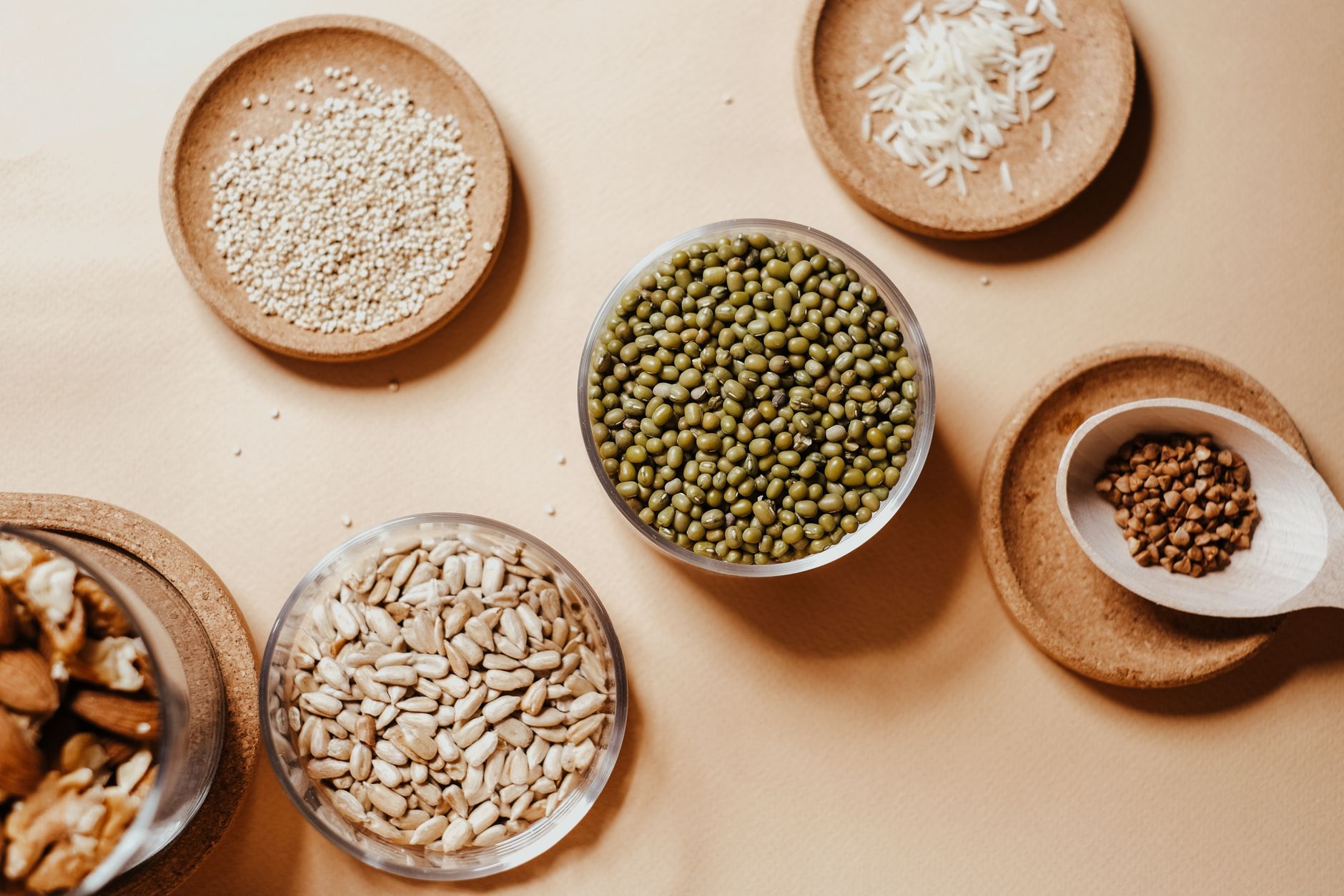
Good suppliers are offal such as liver and kidney, soybeans, cooked eggs, nuts, sunflower seeds, oats, mushrooms as well as milk and dairy products. Anyone eating some of these regularly reaches the estimated value without a supplement.
High doses: upper level, lab values, label
No Tolerable Upper Intake Level has been derived for biotin; the EU Scientific Committee on Food noted in 2001 that the dose-response data for this are simply lacking. Even at amounts far above the intake reference value, no adverse health effects were observed. The German Federal Institute for Risk Assessment (BfR) therefore considers it justifiable to forgo a maximum level for biotin in food supplements (opinion 2021). Surplus biotin is largely excreted in the urine.
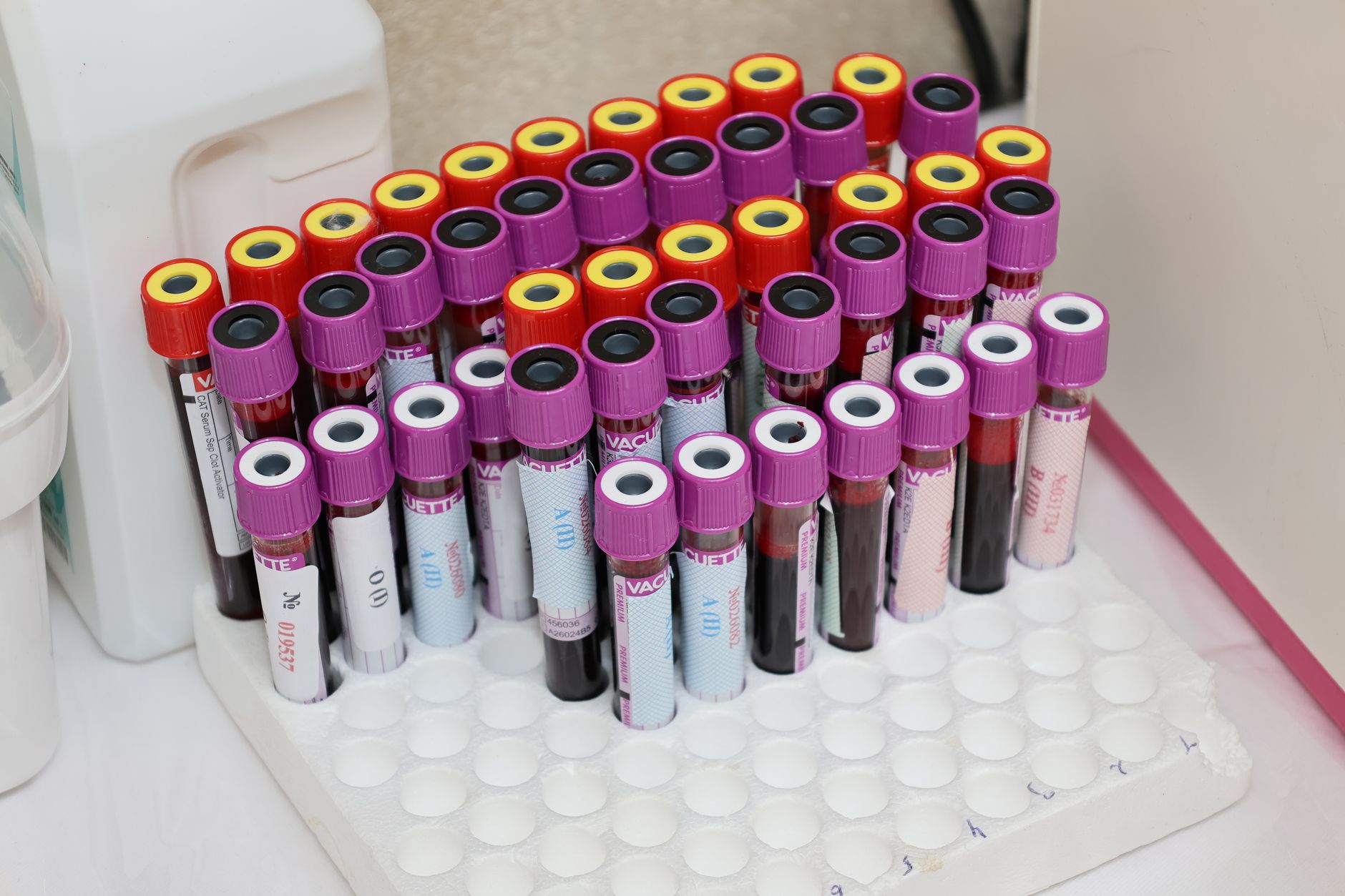
One point remains, however, and it is the most important one in this section: biotin distorts laboratory tests. Many immunoassays work with a streptavidin-biotin bond; free biotin in the blood competes with the reagents. Depending on the test design, values come out falsely high or falsely low — those affected include thyroid and sex hormones as well as cardiac markers such as troponin. In 2019 the EMA saw sufficient evidence of such interactions from 150 µg of biotin per day; the BfR has since recommended putting a corresponding note on biotin-containing food supplements. With impaired kidney function the risk is higher, because biotin remains in the blood longer.
In practice this means: anyone taking a high-dose preparation says so before the blood draw. How long a gap makes sense is set out in Taking biotin: timing, duration and effect. How badly individual values can tip is described in Vitamin B12 deficiency and in Iron deficiency.
Our own preparation, at 10,000 µg per tablet, lies well above this threshold — it is a deliberately high single dose for those looking for exactly that, and not an amount to keep quiet about before a laboratory appointment.

Further strengths and combinations are in the biotin category. Food supplements are not a substitute for a balanced and varied diet and a healthy lifestyle.
Frequently asked questions
Will biotin give me more hair? No authorised claim says so. What is permitted is “Biotin contributes to the maintenance of normal hair” — a statement about maintaining the normal state, not about density or growth rate. The 2017 review found improvements exclusively in people with an underlying disorder.
Why does the tin say 10,000 µg when 40 µg is enough? Because there is no maximum level and biotin is water-soluble: the surplus goes out in the urine. For the advertising sentence on the pack, the 10,000 µg change nothing — it is the same one from 7.5 µg. What they do change is the laboratory test problem from 150 µg per day.
How long does it take before you see something in the hair? Scalp hair grows on average about one centimetre a month, and every hair goes through a growth phase lasting several years. Whatever changes in the hair will therefore show over months, not weeks — that applies to dietary changes as much as to preparations. What that means for the length of a course is set out in Taking biotin.
May a biotin product advertise “firm nails”? No. There is no authorised claim for biotin relating to nails. If it appears on a combination pack anyway, it refers to a different ingredient — usually zinc or selenium — and must be clearly attributed to that ingredient.
Sources: Regulation (EU) No 432/2012, Annex (authorised claims for biotin) · Regulation (EC) No 1924/2006, Annex (minimum requirement “source of”) · Regulation (EU) No 1169/2011, Annex XIII (nutrient reference values) · BfR, “Höchstmengenvorschläge für Biotin in Lebensmitteln inklusive Nahrungsergänzungsmitteln”, 2021 · SCF, Opinion on the Tolerable Upper Intake Level of Biotin, 2001 · EMA/PRAC, Recommendations on signals, 2019 · DGE, reference value for biotin (derivation 2020) · DGE, 12th Nutrition Report 2012 (German National Nutrition Survey II) · Patel DP, Swink SM, Castelo-Soccio L, “A Review of the Use of Biotin for Hair Loss”, Skin Appendage Disorders 2017;3(3):166–169.