Spotting iron deficiency: ferritin, TSAT or Hb?
Futures Nutrition Editorial Team · 12 August 2026

An iron deficiency does not arise in a day, and it does not show up in a single value. First the stores empty — that is visible in ferritin. Then blood formation gets too little supply — that is shown by transferrin saturation and the soluble transferrin receptor. Only right at the end does haemoglobin drop below its cut-off. Anyone who looks only at the Hb value from the full blood count therefore sees nothing as long as the deficiency is still in the first two stages.
The second, more common error of reasoning concerns ferritin itself: it is an acute-phase protein and rises with every inflammation. A ferritin value without an inflammation marker measured at the same time cannot be interpreted — it can look normal and still conceal an empty store.
The three stages — and which value makes them visible
The guideline of the German Society for Haematology and Medical Oncology distinguishes three stages:
| Stage | What happens | Ferritin | Functional values (TSAT, sTfR) | Haemoglobin |
|---|---|---|---|---|
| I — storage iron deficiency | stores empty, blood formation still supplied | low | normal | normal |
| II — iron-deficient erythropoiesis | supply no longer sufficient for blood formation | low | abnormal | still normal |
| III — iron deficiency anaemia | haemoglobin cut-off undercut | low | abnormal | low |
In practice this means: a normal blood count does not rule out an iron deficiency. It only rules out the third stage.
Ferritin — the storage value and its trap
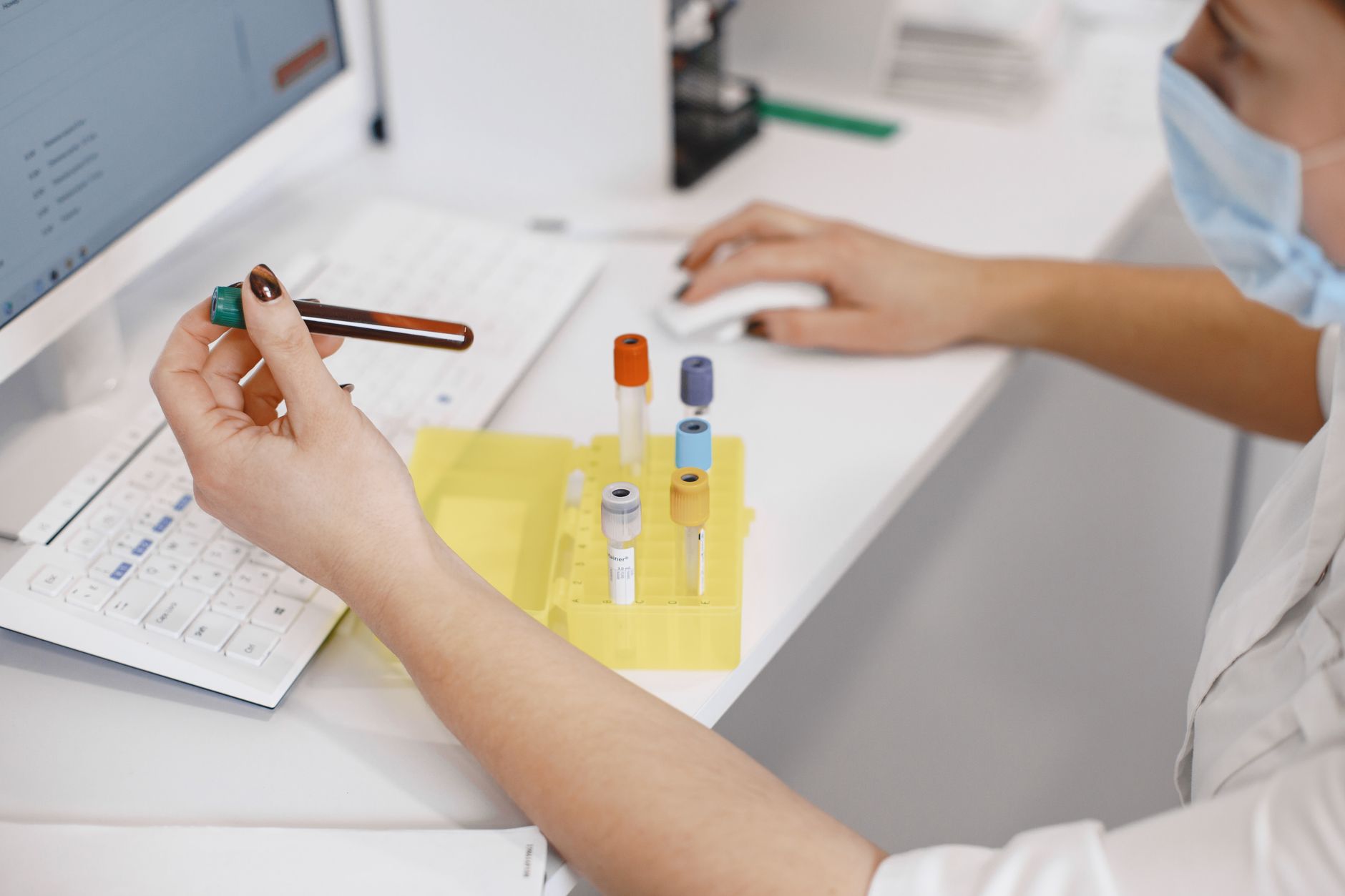
Ferritin is the storage form of iron; its level in serum reflects the amount stored in the body. In 2020 the WHO published cut-offs of its own for it for the first time:
| Group | Iron deficiency (without inflammation) | Iron deficiency (with infection/inflammation) |
|---|---|---|
| Children under 5 years | < 12 µg/l | < 30 µg/l |
| From 5 years, adolescents, adults | < 15 µg/l | < 70 µg/l |
| Pregnant women (1st trimester) | < 15 µg/l | — |
The second column is the actual point. Because ferritin rises during inflammation, a markedly higher cut-off applies when inflammation values are raised: in adults, not 15 but 70 µg/l is then used as the threshold. That is why in practice ferritin is determined together with CRP or the erythrocyte sedimentation rate. The Onkopedia guideline considers a serum ferritin below 15 µg/l as proof and recommends a cut-off of 30 µg/l irrespective of sex, precisely in order to catch this blurriness.
Upwards the WHO has set markers as well: values above 150 µg/l in women and above 200 µg/l in men count as an indication of a risk of iron overload, and in people with concomitant conditions only above 500 µg/l. This too is a reason not to supplement iron on suspicion — the body has no way of getting rid of a surplus in a targeted manner. What the numbers on the package mean for the daily amount is in Buying iron: price per day, not price per mg.
The functional values: TSAT, sTfR and reticulocyte haemoglobin
Between a full store and altered blood formation lies the stage that only these values show:
| Value | Normal range | Abnormal from | What it reflects |
|---|---|---|---|
| Transferrin saturation (TSAT) | 16–45 % | ≤ 15 % | how much iron is currently being transported |
| Soluble transferrin receptor (sTfR) | assay-dependent, e.g. 1.9–4.4 mg/l (women) | raised | iron demand of the precursors in the bone marrow |
| Reticulocyte haemoglobin (CHr) | ≥ 28 pg | < 26 pg | iron content of the youngest red blood cells |
The sTfR has one advantage over ferritin: it does not rise along with an inflammation. In anaemia in the context of a chronic disease it stays normal, whereas it is raised in a true iron deficiency — exactly this distinction is beyond ferritin alone. Reticulocyte haemoglobin in turn reacts quickly: it reflects how well the most recently formed blood cells were loaded with iron, not the state of the past months.
Serum iron as a single value, by contrast, is of little use. It fluctuates considerably over the course of the day and is influenced by the last meal and by a tablet that has been taken — which is why it is used only as a building block of transferrin saturation, not as a judgement in its own right.
Haemoglobin — the value that gives way last
The WHO revised the cut-offs for anaemia in 2024. For adults they remained unchanged; for children aged 6 to 23 months they were lowered:
| Group | Anaemia from |
|---|---|
| Children, 6–23 months | < 105 g/l |
| Children, 24–59 months | < 110 g/l |
| Children, 5–11 years | < 115 g/l |
| Children and adolescents, 12–14 years | < 120 g/l |
| Women from 15 years, not pregnant | < 120 g/l |
| Men from 15 years | < 130 g/l |
| Pregnant, 1st trimester | < 110 g/l |
| Pregnant, 2nd trimester | < 105 g/l |
| Pregnant, 3rd trimester | < 110 g/l |
Two corrections from the same guideline are readily overlooked in everyday life because they have nothing to do with diet. Altitude: anyone living above sea level has systematically higher haemoglobin values — from 500 metres, 4 g/l are added on top of the cut-off, from 1,000 metres 8 g/l, from 1,500 metres 11 g/l. Smoking: here too the value lies higher, which is why the cut-off is raised by 3 g/l (under 10 cigarettes a day) to 6 g/l (over 20). A haemoglobin just above the limit can therefore already be in the abnormal range for a smoker living in Munich (519 m above sea level).
If haemoglobin falls because of iron deficiency, the red blood cells change with it: they become smaller (MCV below 80 fl) and paler (MCH below 28 pg). This combination — microcytic, hypochromic — is the classic pointer in the full blood count.
What can distort the value: biotin

Ferritin, transferrin receptor and many further parameters are measured with immunoassays, and part of these tests works with the binding between biotin and streptavidin. If someone takes high-dose biotin, free biotin is present in the sample and competes with the test's biotinylated reagents for the binding sites. Depending on the assay design, the result then comes out too low or too high (BfR, communication No 044/2019 of 14 November 2019). The problem became known through false-negative troponin values; the German Federal Institute for Drugs and Medical Devices sent out a Dear Healthcare Professional letter about it in 2019.
The BfR points out expressly that food supplements are affected as well — manufacturers are under no obligation to give a note here. The amount from which the effect occurs is not laid down in general terms; it depends on the particular test system. So anyone taking Biotin 10,000 µg or another high-dose preparation had better say so before the blood is drawn. The letter names as ways out a test system without biotin binding or a repeat measurement after stopping; it does not prescribe a fixed waiting time, because excretion varies.
Symptoms are not proof
Tiredness, pallor, hair loss, cold hands, trouble concentrating: the complaints associated with iron deficiency are all unspecific. They can have many causes, and conversely a deficiency in the stores often goes unnoticed for a long time. A self-test or a symptom list therefore does not replace a laboratory value — and the reverse conclusion, "no complaints, so no deficiency", carries just as little.
The German Nutrition Society (DGE) puts the practical consequence unambiguously: iron supplementation should take place only after an undersupply has been established and with medical or nutritional guidance. The groups at increased risk include, according to the DGE, infants, children and adolescents, premenopausal women, pregnant women, competitive athletes, frequent blood donors and people on a vegetarian or vegan diet — why availability rather than quantity is the sticking point in the last group is explained by Iron-rich foods: the table by portion.
If a preparation comes into question

Once the status is established and a supplement has been discussed, two figures on the package decide: the amount of elemental iron and the compound it is present in. Our Iron 30 mg + inulin delivers 30 mg of iron per tablet (214 % of the nutrient reference value of 14 mg under Regulation (EU) No 1169/2011, Annex XIII) in the form of iron fumarate; the recommended intake is one tablet daily with a glass of water 15 to 30 minutes before a meal. How well each compound is tolerated is compared by Iron forms: bisglycinate, fumarate or sulphate?; all variants stand side by side in the Iron category.
Among the claims authorised for iron are these (Regulation (EU) No 432/2012): Iron contributes to normal formation of red blood cells and haemoglobin. Iron contributes to normal oxygen transport in the body. Iron contributes to the reduction of tiredness and fatigue. Iron contributes to the normal function of the immune system. Food supplements are not a substitute for a balanced and varied diet and a healthy lifestyle.
Frequently asked questions
My Hb is fine — can I still have an iron deficiency? Yes. Haemoglobin only gives way in the third stage. Storage iron deficiency and iron-deficient erythropoiesis run their course beforehand and show up only in ferritin, transferrin saturation, soluble transferrin receptor or reticulocyte haemoglobin.
Why is the ferritin value alone not enough? Because ferritin rises during inflammation. A value of 40 µg/l can be unremarkable with an unremarkable CRP and still speak for a deficiency with a raised CRP — in that case the WHO sets the threshold at 70 µg/l. That is why inflammation markers belong to the assessment.
Do I have to fast for the blood draw? For the iron values, fasting matters less than the time of day: serum iron fluctuates strongly and is raised by a tablet taken shortly before. Ferritin is far less affected by this. Which preparations you take — especially high-dose biotin — belongs in the conversation before the draw.
How quickly do the values change again? At different speeds, depending on what is measured. Reticulocyte haemoglobin reflects the supply of the last few days, ferritin the fill level of the stores over months. A follow-up check after a few days therefore says little about the stores.
Sources: WHO, WHO guideline on use of ferritin concentrations to assess iron status in individuals and populations, 2020 · WHO, Guideline on haemoglobin cutoffs to define anaemia in individuals and populations, 2024 · DGHO/Onkopedia, guideline "Eisenmangel und Eisenmangelanämie" · DGE, selected questions and answers on iron · BfR, communication No 044/2019 of 14 November 2019, "Biotin in Nahrungsergänzungsmitteln kann Labortestergebnisse beeinflussen" · BfArM, Dear Healthcare Professional letter on biotin-containing medicinal products, 2019 · Regulation (EU) No 1169/2011, Annex XIII · Regulation (EU) No 432/2012.