Iron on a vegan diet: more on the plate, less in store
Futures Nutrition Editorial Team · 12 August 2026
Anyone eating purely plant-based takes in no less iron on average than someone with meat on the plate — rather more. And yet iron stores are lower on average in studies. The reason is not the amount but the uptake: from a mixed diet, 14 to 18 per cent of the iron it contains reaches the body; from a vegetarian diet, only 5 to 12 per cent.
For everyday life this means: the lever is not the milligram figure but the composition of the meal — and when a gap is suspected, a laboratory value rather than an estimate.
The finding: higher intake, lower status
The German Nutrition Society (DGE) reassessed its position on vegan nutrition in 2024 (Ernährungs Umschau 7/2024). Two results appear to contradict each other:
- In the review that was evaluated, a vegan diet was associated with a higher average iron intake than a vegetarian or omnivorous one.
- Status — measured as ferritin in serum or plasma — was by contrast lower on a vegan diet than on an omnivorous one, and insufficient status was observed more often. Lower ferritin values were likewise found in vegan-fed children and adolescents.
The DGE quotes the authors' conclusion verbatim: the finding indicates “that the lower bioavailability of iron from plant foods is not fully compensated by the often higher intake on a vegan diet”. In this position iron is one of the potentially critical nutrients — alongside protein, long-chain omega-3 fatty acids, vitamin D, riboflavin, calcium, zinc, selenium, iodine and, as the only nutrient that must be supplemented, vitamin B12.
As thresholds, the same work names a ferritin deficiency below 15 µg/l and anaemia from a haemoglobin value below 120 g/l in women and 130 g/l in men.
Why plant iron arrives less well
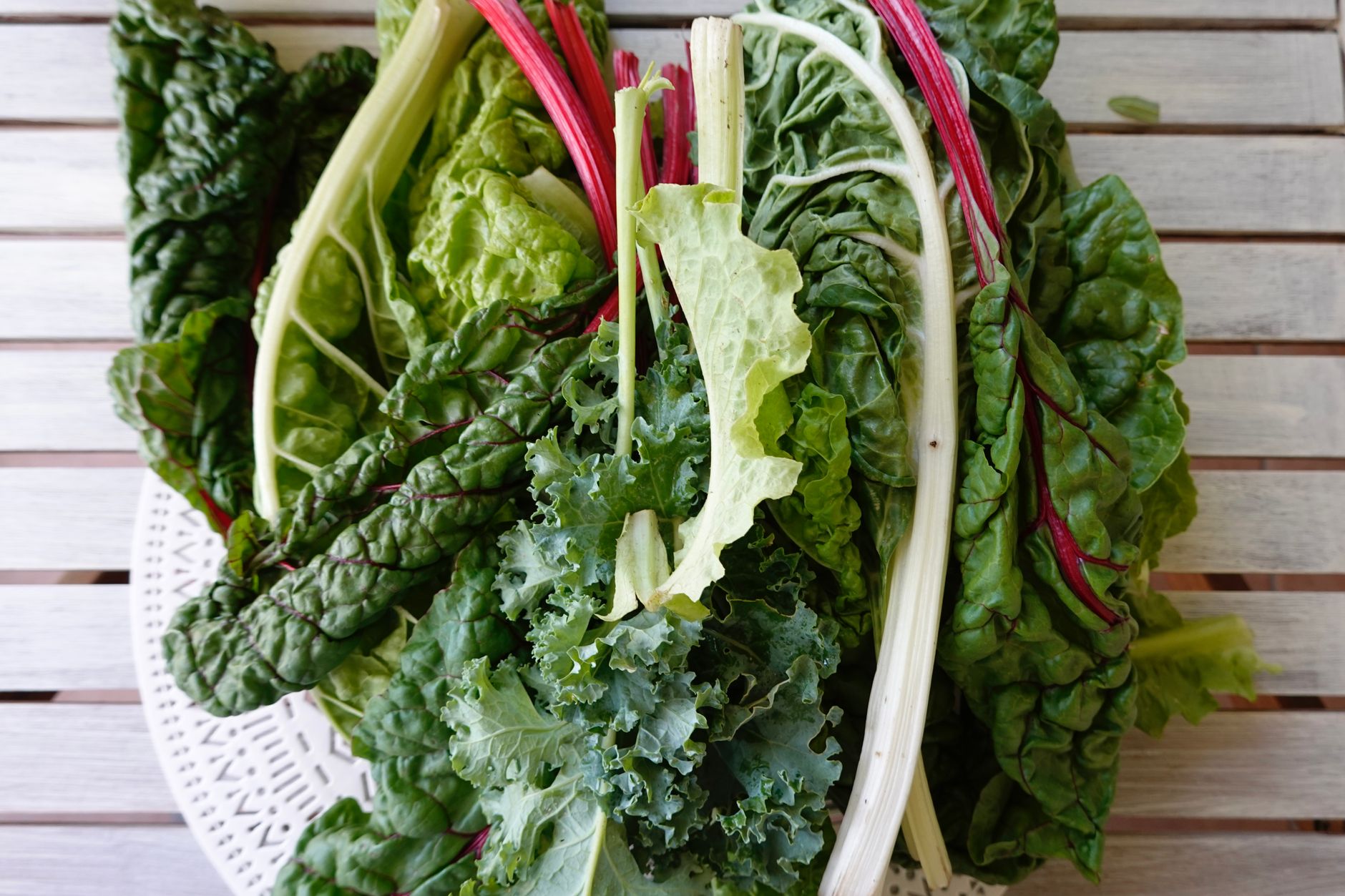
Iron occurs in food in two forms. Haem iron from meat and fish is taken up via a transport route of its own and is barely influenced by the rest of the meal. Non-haem iron — everything plant-based, plus egg and dairy — has to be dissolved first, and that is exactly where the inhibitors act: phytates from wholegrain and pulses, polyphenols from coffee and black tea, calcium.
On a purely plant-based diet it is not only the haem iron that falls away. The effect meat has on non-haem iron within the same meal is missing as well. And the foods that supply most of the plant iron bring the brakes along with them: wholegrain and pulses are rich in iron and rich in phytate at the same time.
How strongly this comes through is shown by the comparison of diets. Hurrell and Egli summarised the isotope studies in 2010 in the American Journal of Clinical Nutrition like this:
| Diet | assumed iron absorption |
|---|---|
| mixed diet | 14–18 % |
| vegetarian diet | 5–12 % |
The US Institute of Medicine calculates in the same logic with 18 per cent for the mixed Western diet, 10 per cent for a restricted vegetarian diet and 5 per cent for a strictly restricted vegetarian one. The much-quoted factor of 1.8 comes from the ratio 18 to 10 — the arithmetical mark-up on the iron requirement of a meat-free diet.
What the factor of 1.8 means for the amount
Applied to the DGE reference values, it yields amounts that can hardly be put together on a plate any more:
| Group | DGE reference value | × 1.8 |
|---|---|---|
| men from 19 years | 11 mg | around 20 mg |
| menstruating women | 16 mg | around 29 mg |
| women after the menopause | 14 mg | around 25 mg |
| pregnant women | 27 mg | around 49 mg |
Two qualifications belong with this. First, the factor is not a German reference value: for vegan nutrition the DGE gives no figures of its own but lists iron as a potentially critical nutrient. The right-hand column is a calculation aid, not an official recommendation; where the left-hand column comes from is in Iron daily requirement. Second, it is precisely the size of these numbers that shows the route via the amount does not carry: eating 29 mg of iron purely plant-based is a full-time project. The lever lies with the percentages, not with the milligrams.
The body adjusts — but only halfway
This is the conciliatory part of the subject. Absorption in the gut is not fixed, it depends on how full the stores are. Hunt and Roughead had men eat a diet of high or of low iron availability for twelve weeks (AJCN 2000;71(1):94). After ten weeks absorption had adjusted: on the well-available diet it fell from 0.96 to 0.69 mg a day, on the poorly available one it rose from 0.12 to 0.17 mg. The gap between the two diets thus shrank from eightfold to fourfold.
Two lessons are contained in that. The adjustment is real — anyone who has eaten plant-based for a long time absorbs more from the same meal than someone who switched yesterday. And it is not enough: of the eightfold difference, the fourfold remains. For haem iron, incidentally, no comparable adjustment was found — which is why the question only arises this sharply on a plant-based diet.
What actually helps in practice
Four approaches have measurable effects in absorption studies, and all four cost nothing:
- Put vitamin C into the same meal. Around 50 mg — half a raw pepper, a firm squeeze of lemon — is enough. The timing is what matters: in the meal, not at some point during the day.
- Move coffee and black tea back. Coffee an hour before eating is unproblematic; coffee immediately afterwards brakes as strongly as coffee with the meal. The figures are in Iron absorption: vitamin C, coffee and tea.
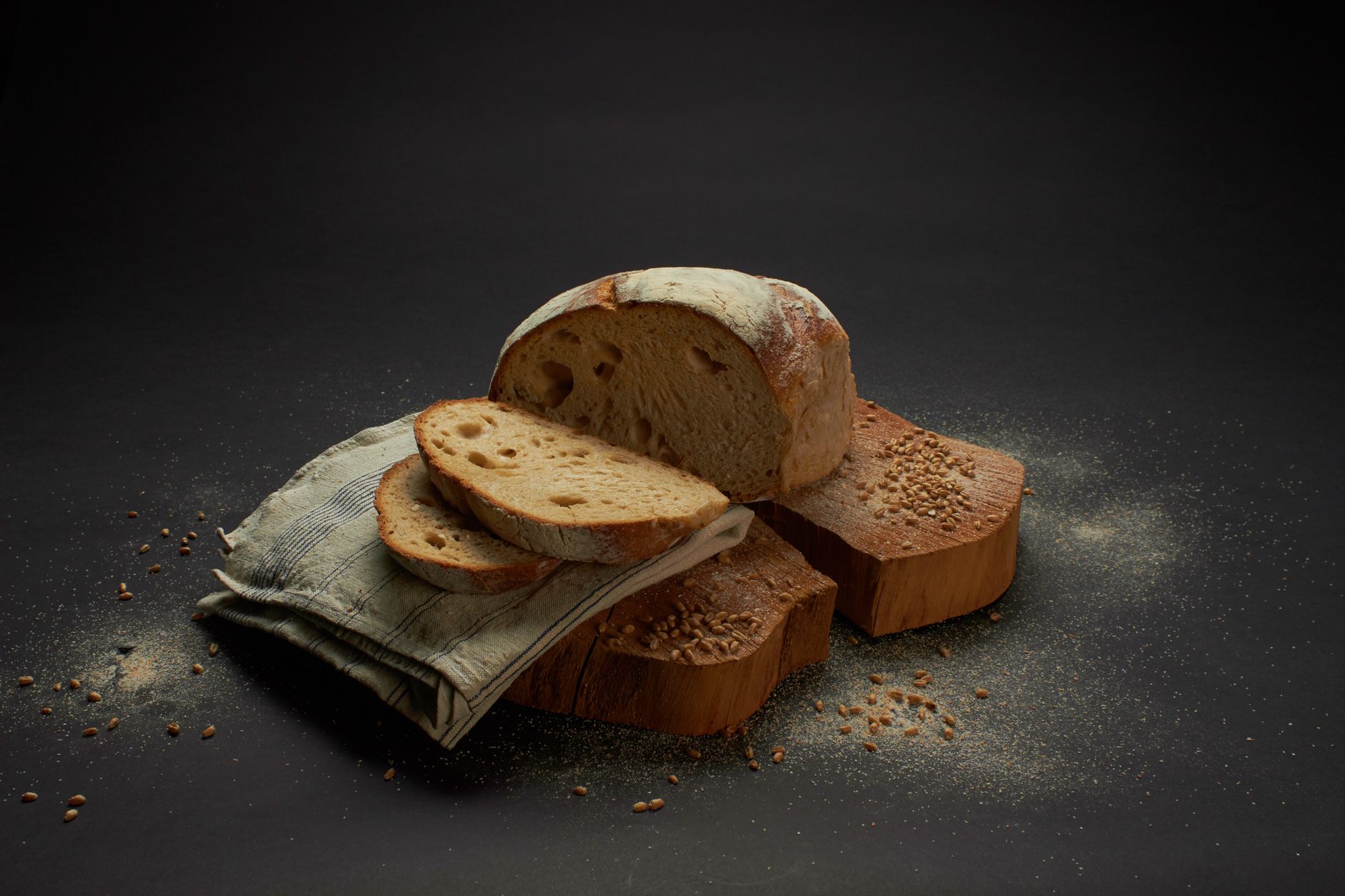
- Break down phytates. Soaking, sprouting, sourdough fermentation and long cooking lower the phytate content of grain and pulses. Sourdough bread instead of yeast bread is the simplest move, because it does not change the menu.
- Separate calcium. A calcium-rich drink or a calcium supplement does not belong in the iron-rich meal.
Fortified foods are of little help in Germany: in Europe, the United Kingdom is the only country where wheat flour must be fortified with iron (at least 1.65 mg per 100 g). Here fortification is voluntary, and plant drinks more often carry calcium and vitamin B12 than iron. Anyone relying on them has to read the nutrition table of the individual product.
The same phytate brake is met again with zinc, where it even enters the requirement calculation — to be read in Zinc on a vegan diet.
Measure first, supplement second
The DGE is clear at this point: iron supplementation should only follow an established undersupply and take place under medical or nutritional guidance. The reason is the flip side of this trace element — surplus iron cannot be excreted by the body in a targeted way. “Vegan” on its own is therefore no reason for a tablet; a low ferritin is.
A single blood value is not sufficient for that: ferritin rises with inflammation and can conceal empty stores, which is why several markers are usually assessed together — transferrin saturation, soluble transferrin receptor, haemoglobin.
What is written on an iron supplement

Our Iron 30 mg + inulin delivers 30 mg of iron per tablet (214 % of the nutrient reference value of 14 mg under Regulation (EU) No 1169/2011). The ingredients list is short: ferrous fumarate, bulking agent cellulose, anti-caking agent magnesium salts of fatty acids, inulin from chicory root. For the check “is this suitable for me”, three points are relevant with an iron supplement: the dosage form — here a tablet, not a capsule shell made of gelatine —, the iron compound, which is produced synthetically and does not come from animal material, and the excipients. Magnesium salts of fatty acids can be obtained from plant or animal fats; the ingredients list does not say which, and the product carries no vegan seal. Anyone buying strictly vegan asks before ordering. All strengths stand side by side in the Iron category.
Among the claims authorised for iron are these (Regulation (EU) No 432/2012): Iron contributes to normal formation of red blood cells and haemoglobin. Iron contributes to normal oxygen transport in the body. Iron contributes to the reduction of tiredness and fatigue. Iron contributes to the normal function of the immune system. Food supplements are not a substitute for a balanced and varied diet and a healthy lifestyle.
Frequently asked questions
Do I have to supplement iron as a vegan? Not across the board. According to the DGE position, only vitamin B12 is mandatory. Iron counts as potentially critical, which means: look more closely, do not supplement automatically. The decision is made on status, not on the type of diet.
Why is my ferritin low even though I eat plenty of iron? That is the normal case of this article, not a contradiction. What is eaten is non-haem iron, and 5 to 12 per cent of it is absorbed depending on the meal. Two portions of lentils with coffee afterwards can deliver less than one with pepper alongside.
Is the iron in a supplement plant-based or animal-based? Neither: iron salts such as fumarate, bisglycinate or sulphate are produced synthetically. What has to be checked in a supplement is the capsule shell and the excipients, not the iron compound itself.
Does the high iron content of parsley or wheat bran count? Only to a limited extent. Rankings per 100 grams are led by foods of which nobody eats 100 grams, and the phytate content of the front-runners is usually high. The calculation per portion is the useful one — and with an eye on what else is on the table in the same meal.
Sources: DGE position “Vegan nutrition”, Ernährungs Umschau international 7/2024, pp. 60–84 · DGE, Reference values for nutrient intake — iron (derivation status 2023) · Hurrell R, Egli I, Iron bioavailability and dietary reference values, American Journal of Clinical Nutrition 2010;91(5):1461S (PubMed 20200263) · Hunt JR, Roughead ZK, Adaptation of iron absorption in men consuming diets with high or low iron bioavailability, AJCN 2000;71(1):94 (PubMed 10617952) · Institute of Medicine, Dietary Reference Intakes for … Iron …, 2001 · Regulation (EU) No 1169/2011, Annex XIII · Regulation (EU) No 432/2012.