Iron daily requirement: 11, 14, 16 or 27 mg?
Futures Nutrition Editorial Team · 12 August 2026
With iron there is no single daily amount but a different one for every stage of life — and the number that appears most often on the pack is none of them. The German Nutrition Society (DGE) recommends 11 mg a day for men, 16 mg for menstruating girls and women from the age of 13, 14 mg for women after the menopause and 27 mg during pregnancy. The 14 mg printed on labels as a reference figure, by contrast, is the nutrient reference value from labelling law: a single value for everyone, so that percentages can be compared — not a recommendation for anybody.
Confusing the two is the most common miscalculation with iron. Anyone who needs 16 mg and reads "100 % NRV" on the pack has 14 mg in front of them, not their requirement.
The DGE reference values at a glance
The values come from the reference values for nutrient intake, derivation status 2023, published in March 2024:
| Age / group | male | female |
|---|---|---|
| 4 to under 12 months | 11 mg | 11 mg |
| 1 to under 7 years | 7 mg | 7 mg |
| 7 to under 10 years | 10 mg | 10 mg |
| 10 to under 13 years | 14 mg | 14 mg |
| 13 to under 19 years | 11 mg | 16 mg |
| 19 to under 51 years | 11 mg | 16 mg (premenopausal) |
| 51 to under 65 years | 11 mg | 16 mg premenopausal / 14 mg postmenopausal |
| 65 years and older | 11 mg | 14 mg |
| pregnant women | — | 27 mg |
| after giving birth (breastfeeding or not) | — | 16 mg |
Two DGE footnotes matter more in practice than they look. For adolescents and women who do not menstruate — for instance on continuously taken oral contraceptives — the male value of 11 mg applies. And for girls between 10 and 13 whose periods are already heavy and regular, the adult value of 16 mg applies.
Why women after the menopause need more than men
At first glance this looks wrong: the monthly losses fall away, yet the reference value stays above the male one. Until the 2023 revision, postmenopausal women were indeed given the same value as men. Newer studies on bioavailability show a lower absorption rate for this group — at the same physiological requirement, more therefore has to be on the plate for the same amount to arrive in the body. That turned 11 mg into 14 mg.
The same revision contains the opposite movement for women after giving birth: down from 20 to 16 mg a day. The iron lost during birth is now accounted for in the value for pregnancy and no longer added again for breastfeeding women. The value has since applied regardless of breastfeeding status.
Why the recommendation is a multiple of the loss
An adult loses only about one to two milligrams of iron a day through skin, gut and — where menstruation applies — through blood loss. The recommendation is nonetheless 11 to 16 mg, because only a small part of dietary iron is absorbed; in its derivation the DGE works with absorption rates in the order of ten per cent, depending on the group. How high it actually turns out depends on your own iron status and on the meal:
| Factor | Effect on absorption |
|---|---|
| Haem iron (meat, fish) | better available than non-haem iron |
| Non-haem iron (plants, egg, milk) | less well available, yet makes up most of the intake |
| Vitamin C and other organic acids | promote the absorption of non-haem iron |
| Polyphenols from coffee, black tea, red wine | inhibit absorption |
| Phytates from wholegrain and pulses | inhibit absorption |
The DGE therefore advises drinking no coffee and no black tea during the meal or shortly before and after it, and putting something rich in vitamin C beside it instead — peppers, broccoli, citrus fruit, blackcurrants. The phytate content can be lowered by milling, soaking or fermenting. The same brake turns up again with zinc, where it even enters the requirement calculation: see Zinc-rich foods: table and the phytate brake.
What 16 mg look like on the plate
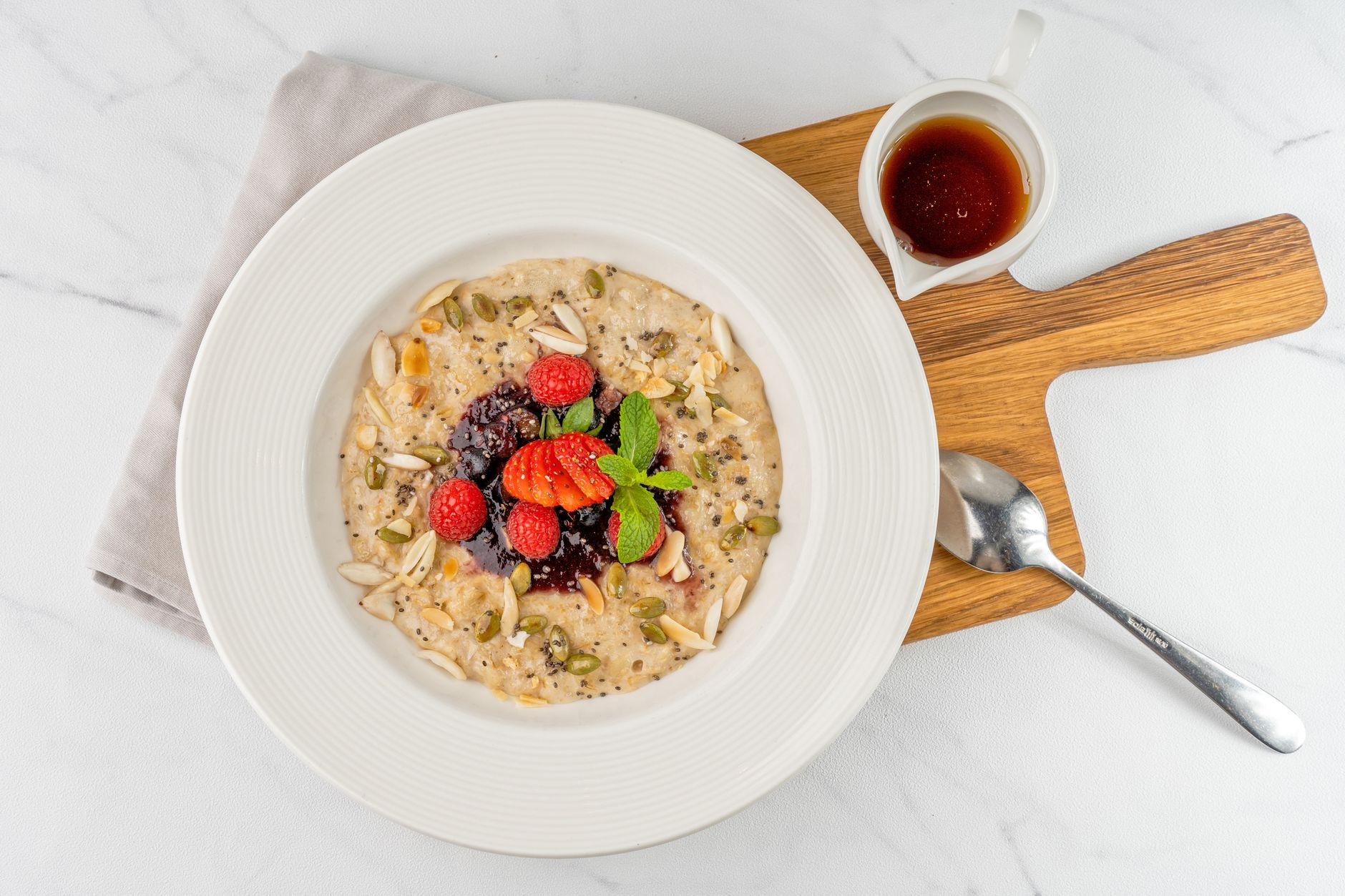
In its FAQ the DGE works through an example of how the highest value for adults outside pregnancy comes together on a purely plant-based diet — not a complete day's plan, but a selection:
| Portion | Food | Iron |
|---|---|---|
| 65 g | oat flakes | 2.9 mg |
| 125 g | lentils (cooked) | 3.3 mg |
| 60 g | leaf spinach (cooked) | 2.2 mg |
| 50 g | wholemeal flour | 1.7 mg |
| 125 g | wholemeal pasta (cooked) | 1.6 mg |
| 200 ml | soy drink | 1.2 mg |
| 50 g | lamb's lettuce | 1.0 mg |
| 100 g | currants | 0.9 mg |
| 25 g | almonds | 0.8 mg |
| 20 g | parsley | 0.7 mg |
| total | 16.2 mg |
Two things are visible in this. The amount is reachable, but it is spread over many small contributions. A single "iron-rich" food does not carry the day. Which portion adds how much — from animal as well as plant sources — is set out in Iron-rich foods: the table by portion.
What is actually eaten in Germany
According to the second National Nutrition Survey, mean intake is 9.6 mg a day among women and 11.8 mg among men. Men thus reach their reference value on average, girls and women do not — nor do infants from six months and children between 7 and 13.
An intake below the reference value is, however, not a deficiency. The reference value is set so that it covers the requirement of nearly everyone in a group; someone below it can still be adequately supplied. What rises over the long run is only the probability of an inadequate supply. As risk groups the DGE names infants, children and adolescents, premenopausal women, pregnant women, competitive athletes, frequent blood donors and people on a vegetarian or vegan diet. On a purely plant-based diet iron counts as a potentially critical nutrient — alongside vitamin B12, which practically does not occur in plant foods, and alongside zinc, which the same phytates slow down: see Zinc on a vegan diet: which column applies.
Know your status first, then supplement
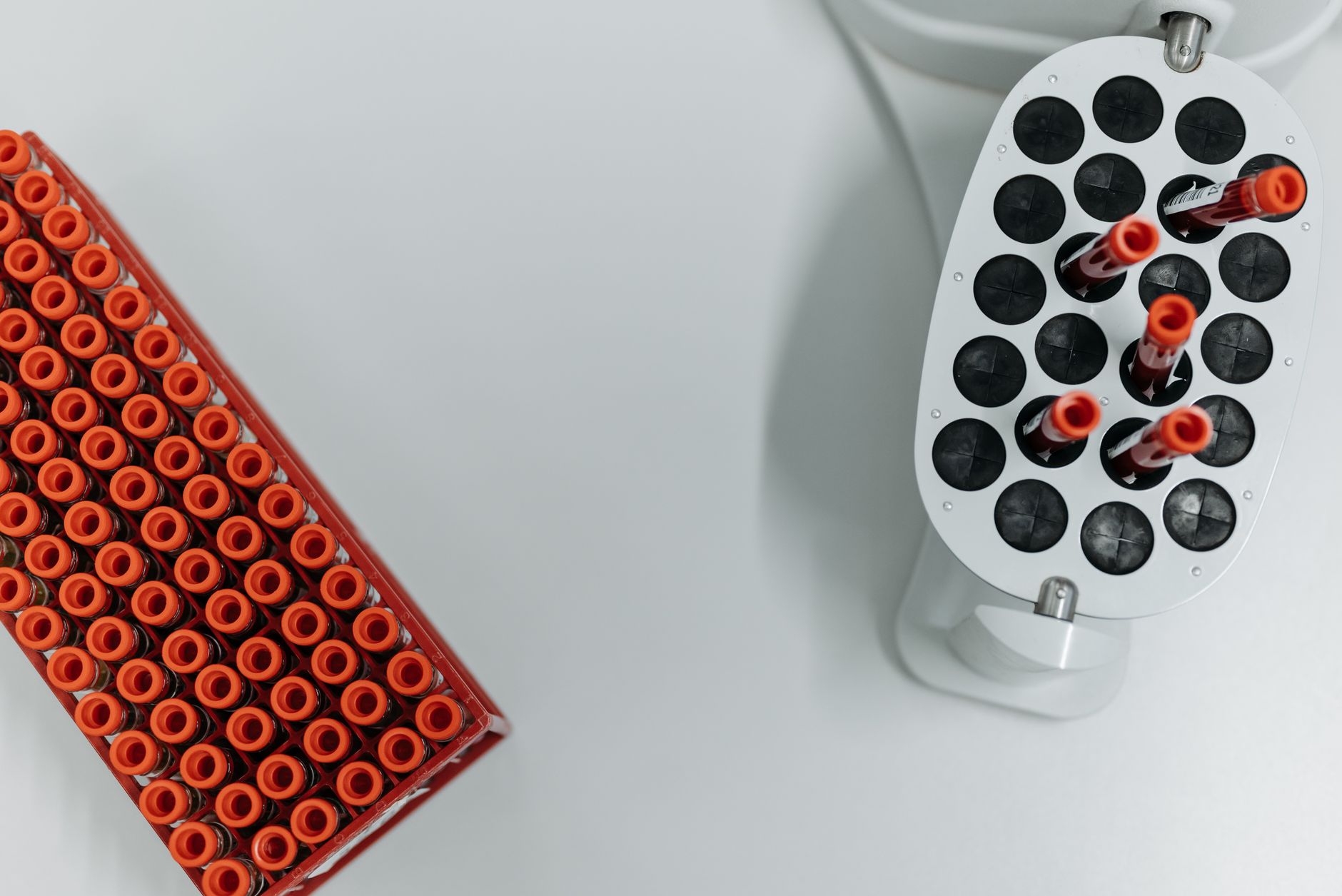
The DGE is clear on this point: iron supplementation should only follow once an inadequate supply has been established, and under medical or nutritional guidance. The reason is the other side of this trace element — surplus iron cannot be excreted at will.
Several markers are available for assessing status: serum ferritin for the stores, transferrin saturation and soluble transferrin receptor for transport, serum iron, and haemoglobin as an indicator of iron deficiency anaemia. Every single one has its limits — day-to-day and time-of-day variation, moderate sensitivity, influence from inflammation. A combination of several values is therefore recommended and no single blood value taken as proof. Which marker reacts in which order, and what a finding can still miss, is set out in Spotting iron deficiency: ferritin, TSAT or Hb?.
What is written on an iron supplement

The nutrient reference value for iron is 14 mg (Regulation (EU) No 1169/2011, Annex XIII). Every percentage on a pack is calculated against these 14 mg, regardless of who takes the product. Our Iron 30 mg + inulin delivers 30 mg of iron per tablet and thus 214 % NRV; the iron compound declared is ferrous fumarate, and the usage advice is one tablet daily with a glass of water 15 to 30 minutes before a meal. All strengths stand side by side in the Iron category.
Among the claims authorised for iron are these (Regulation (EU) No 432/2012): Iron contributes to normal formation of red blood cells and haemoglobin, Iron contributes to normal oxygen transport in the body, Iron contributes to the reduction of tiredness and fatigue and Iron contributes to the normal function of the immune system. Food supplements are not a substitute for a balanced and varied diet and a healthy lifestyle.
The upper frame is wide — and inconsistent
There is no tolerable upper intake level (UL) for iron: in 2024 EFSA was unable to derive one. Instead a "safe level of intake" of 40 mg a day for adults was set, including pregnant and breastfeeding women, 35 mg for 15- to 17-year-olds and 10 mg for children aged 1 to 3 (EFSA Journal 2024;22(6):8819). The endpoint behind it is black colouring of the stool — it indicates large amounts of unabsorbed iron in the gut and is not in itself harm, but it was the only effect for which a dose-response relationship could be established.
The German Federal Institute for Risk Assessment (BfR), by contrast, proposes a maximum level of 6 mg per daily portion for food supplements, on the grounds that supplementation makes sense above all for girls and women of childbearing age, while men, postmenopausal women and people with haemochromatosis should take iron only after a deficiency has been established and after consulting a doctor. That proposal is not a maximum level in force — EU-wide, maximum levels for minerals in food supplements have to this day not been set. The whole range in which the strengths on offer move therefore lies between 6 and 40 mg. Higher dosed products can cause gastrointestinal complaints: nausea, abdominal pain, vomiting, diarrhoea.
Frequently asked questions
Why does the pack say 14 mg when I need 16 mg? Because the 14 mg are the nutrient reference value under Regulation (EU) No 1169/2011 — a figure for labelling, so that "% NRV" stays comparable between products. The reference value for your own group is not on the pack but in the DGE table.
I donate blood regularly or train a lot — do I need more? Both groups count among the DGE's risk groups for an inadequate supply. There is no separate, higher reference value for them, though. Whether too little is actually arriving is shown only by status from several laboratory values — not by belonging to a group.
Is a vegan diet enough for 16 mg? Arithmetically yes, as the DGE's example table shows. The amount is not the real problem, bioavailability is: non-haem iron is absorbed less well, and studies have in part observed lower ferritin values on vegetarian and vegan diets. Combining with vitamin C and handling phytates matter more here than the milligram figure on the plate.
Can you take in too much iron through ordinary food? In healthy people with intact gut function the risk is low, because absorption is regulated in the gut. It is different with haemochromatosis, haemolytic anaemias and alcohol use disorder — here iron can accumulate in the liver, heart and pancreas. Fortified foods and supplements come on top as additional sources and are easily overlooked in one's own arithmetic.
Sources: DGE, reference values for nutrient intake — iron (derivation status 2023, published March 2024) · DGE, selected questions and answers on iron (as of 10.09.2025) · second National Nutrition Survey · EFSA, Scientific opinion on the tolerable upper intake level for iron, EFSA Journal 2024;22(6):8819 · BfR, proposed maximum levels for iron in foods including food supplements · Regulation (EU) No 1169/2011, Annex XIII · Regulation (EU) No 432/2012.