Zinc on a vegan diet: which column applies
Futures Nutrition Editorial Team · 12 August 2026
Since 2019 there has no longer been one reference value for zinc, but three — depending on how much phytate the diet contains. Anyone eating vegan therefore starts with the question of which of the three columns applies to them. The common assumption is: the highest one. It is wrong.
The German Nutrition Society explicitly assigns a vegetarian or vegan diet to the middle phytate level — provided the cereal products consist "predominantly of sourdough or refined flour (e.g. white flour) or germinated grain". The high level is where you end up if you eat a lot of ungerminated or unfermented wholegrain, such as fresh-grain porridge, plus pulses like soya or kidney beans — and hardly any animal protein (German Nutrition Society, Selected Questions and Answers on Zinc, July 2019). So it is not the absence of animal foods that decides the column, but the preparation of the grain.
The difference is no detail: between the middle and the high level lie 2 mg per day — for women that is 8 instead of 10 mg, for men 14 instead of 16 mg. A quarter or an eighth of the daily requirement therefore depends not on the menu but on how the grain on it has been prepared.
The three reference values
| Phytate intake | Women 19 years and over | Men 19 years and over |
|---|---|---|
| low | 7 mg/day | 11 mg/day |
| medium | 8 mg/day | 14 mg/day |
| high | 10 mg/day | 16 mg/day |
For pregnant and breastfeeding women the values are somewhat higher; for children they continue to be given independently of phytate intake, because no appreciable influence on absorption was established in them (DGE 2019).
The low level is out of reach for a vegan diet — it presupposes protein sources "predominantly of animal origin" and little wholegrain and pulses. The DGE itself notes that such diets often contain little cereal fibre and that this is nutritionally unfavourable. Realistically, then, the question for vegans is: middle or high level.
Why phytate makes such a difference
Phytate is the storage form of phosphorus in plants. It sits above all in what also works as seed — pulses, wholegrain cereals, oilseeds — and binds zinc in the digestive tract so that it can no longer be absorbed. At very high phytate contents, absorption can be reduced by up to 45 per cent compared with average contents (DGE 2019). How this affects requirements has been calculated in steps by EFSA:
| Phytate intake per day | Reference value women | Reference value men |
|---|---|---|
| 300 mg | 7.5 mg | 9.4 mg |
| 600 mg | 9.3 mg | 11.7 mg |
| 900 mg | 11.0 mg | 14.0 mg |
| 1,200 mg | 12.7 mg | 16.3 mg |
Source: EFSA, Scientific Opinion on Dietary Reference Values for zinc (2014), Population Reference Intakes for adults at reference body weights of 58.5 kg (women) and 68.1 kg (men).
Requirements therefore rise by almost half when phytate intake climbs from 300 to 1,200 mg. And this is exactly where things get tight for a plant-based diet: according to the data compiled by EFSA, adults on a mixed diet take in around 300 to 800 mg of phytate per day, with a lot of unprocessed wholegrain and pulses 700 to 1,400 mg — and for vegetarian diets values of 1,600 to 2,500 mg per day have been reported. That is above anything EFSA modelled at all.
The WHO classification, which answers the same question via the phytate-to-zinc molar ratio, arrives at the same result and is remarkably concrete about it. Counted as moderately available are "(lacto-)ovo-vegetarian or vegan diets that are not based predominantly on unrefined cereal grains or high-extraction flours" — molar ratio 5 to 15. Only above that, with predominantly unrefined, unfermented and ungerminated grain, is availability considered low.
What preparation changes
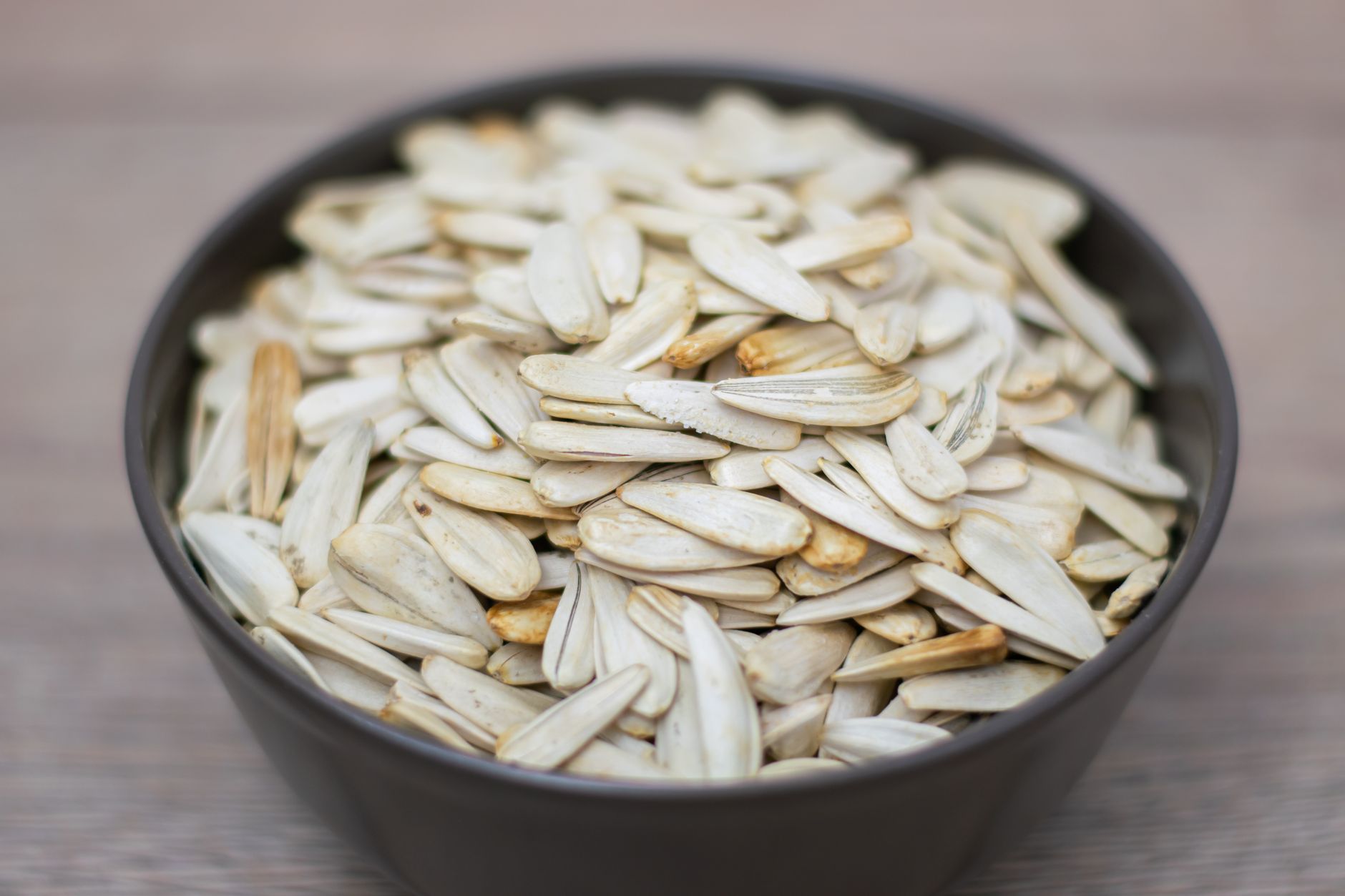
The DGE names three ways to break down phytate before eating, and a fourth that falls away on a vegan diet:
- Soaking — pulses overnight, then pour the soaking water away.
- Germination — germinated grain, sprouts, seedlings. The DGE explicitly names wheat and rye seedlings as plant zinc suppliers.
- Sourdough fermentation — the reason sourdough bread stands differently in this question than quickly proved yeasted wholegrain bread.
- Animal protein in the same meal additionally raises availability — this lever is not available on a vegan diet.
Because the fourth point drops out, the first three carry more weight. In practice that means: sourdough instead of yeast dough, soaked instead of directly cooked pulses, germinated grain instead of fresh-grain porridge. Anyone who keeps that up reckons with 8 instead of 10 mg (women) or 14 instead of 16 mg (men).
One misunderstanding is worth clearing up here: avoiding wholegrain is not the solution. At 1.5 mg of zinc per 100 g, wholemeal bread contains more than twice as much as white bread with 0.7 mg; the phytate binds part of it, but does not reverse the ratio. Which foods supply how much is set out in Zinc-rich foods.
A purely plant-based day with 16 mg
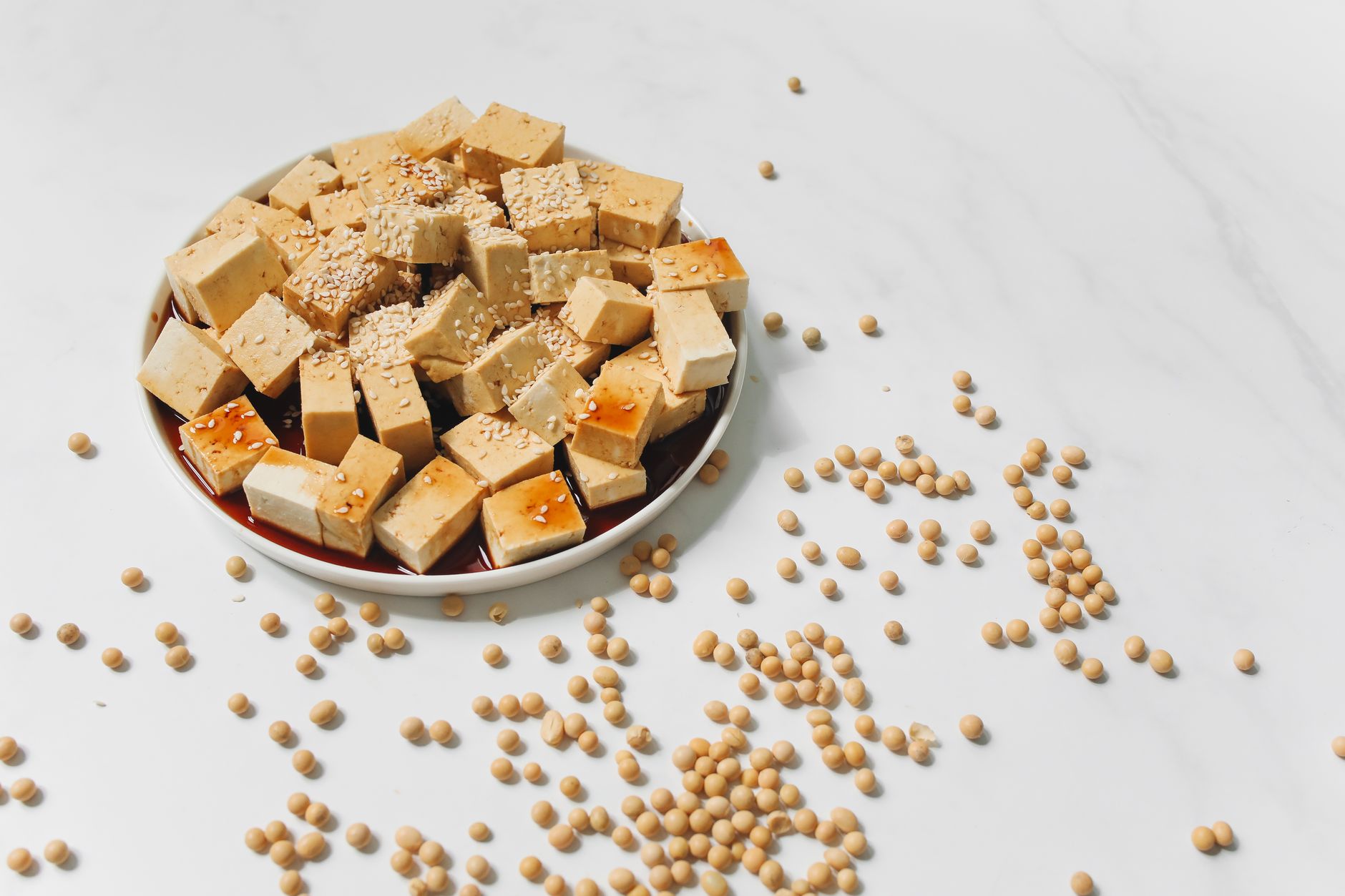
For the high phytate level the DGE has calculated a sample day that manages without a single animal food and still reaches 16 mg:
| Portion | Food | Zinc |
|---|---|---|
| 60 g | rolled oats | 2.19 mg |
| 25 g | figs, dried | 0.23 mg |
| 25 g | almonds | 0.79 mg |
| 150 g | pomegranate | 0.86 mg |
| 200 g | wholemeal pasta | 2.63 mg |
| 100 g | tofu, firm, cooked | 1.45 mg |
| 150 g | sweetcorn, cooked | 0.80 mg |
| 100 g | kidney beans, dried and boiled | 1.20 mg |
| 150 g | redcurrants | 0.38 mg |
| 25 g | sunflower seeds | 1.44 mg |
| 50 g | lamb's lettuce | 0.16 mg |
| 100 g | wholemeal wheat mixed bread | 2.10 mg |
| 100 g | chickpea hummus | 1.84 mg |
| Total | 16.07 mg |
Source: DGE 2019, sample calculation on the DGExpert data basis. The DGE points out that these are not complete daily meal plans.
What is notable is less that it works than what it takes: thirteen items, including nuts, seeds, tofu, pulses and wholegrain twice — and not one item contributes more than 2.63 mg. For comparison: two slices of mountain cheese (60 g) alone bring 3.06 mg in the sample day for the low level. Anyone eating a plant-based diet builds their zinc intake out of many small contributions, not out of two large ones.
It is rarely measured that cleanly: according to the second German National Nutrition Survey, women take in a mean of 8 mg and men 11 mg of zinc per day — across all forms of diet. Some men therefore do not reach the 14 mg of the middle level. The DGE adds a sentence that is rarely quoted along with it: an intake below the reference value is not the same as a deficiency — it merely raises the probability of an inadequate supply.
Where a supplement comes in

In the DGE position on vegan diets (2024), zinc is among the potentially critical nutrients — alongside vitamin B12, iodine, iron, calcium, selenium and others. Critical does not automatically mean deficient, but: this intake should be kept an eye on, because it does not come together by itself.
Only one item on that list holds a special position: vitamin B12. It practically does not occur in purely plant-based food, and the DGE therefore considers permanent supplementation necessary on a vegan diet. For zinc that explicitly does not apply — here the menu decides, and the sample day above shows that it can yield the amount.
Our Zinc 25 mg + vitamin B3 declares per tablet:
| Per tablet (recommended daily dose) | Amount | % NRV* |
|---|---|---|
| Zinc (from zinc gluconate) | 25 mg | 250 % |
| Niacin (as nicotinamide) | 25 mg | 156 % |
* Nutrient reference values in accordance with Regulation (EU) No 1169/2011, Annex XIII.
Two figures belong side by side: the tolerable upper intake level for adults is 25 mg of zinc per day (EFSA) and means the sum of everything — food, supplement and, as is easily forgotten, toothpaste, mouthwash and denture adhesive. Between 16 mg from a plant-based day and that upper level there is less room than the percentage on the pack suggests. The reason for the limit is moreover one worth bearing in mind on a plant-based diet: a high zinc intake combined with a low copper intake impairs copper absorption.
The next question comes from the same list: anyone supplementing iron alongside zinc — the other nutrient that comes together less easily without meat — soon runs into the rule not to take the two at the same time. How much of that is measured and how much comes from trials with minerals in water is set out in How to take zinc. What else the range holds is shown by the Zinc category.
Authorised for zinc are, among others: Zinc contributes to the normal function of the immune system. Zinc contributes to normal cognitive function. Zinc contributes to normal fertility and reproduction. For niacin: Niacin contributes to normal energy-yielding metabolism. (Regulation (EU) No 432/2012). Food supplements are not a substitute for a balanced and varied diet and a healthy lifestyle.
Frequently asked questions
Do vegans automatically need a zinc supplement? No. The DGE lists zinc as a potentially critical nutrient, not as one that has to be supplemented as a matter of principle — unlike vitamin B12. The sample day above shows that 16 mg come together on a purely plant basis; it also shows how many items that takes. Anyone who eats nuts, seeds, pulses and wholegrain daily anyway is closer than someone whose plant-based food consists of white flour and vegetables.
Which column applies to me? If your cereal products are predominantly sourdough, light flour or germinated grain, it is the middle level: 8 mg for women, 14 mg for men. If they consist predominantly of unfermented, ungerminated wholegrain and a lot of pulses come on top, the high level applies with 10 and 16 mg respectively.
Are pulses a problem or a solution, given the phytate? Both, and that is not an evasion: they supply zinc and slow it down at the same time. Kidney beans stand in the DGE sample day at 1.20 mg per 100 g, hummus at 1.84 mg — so they contribute measurably. Soaked and boiled without the soaking water, the brake is smaller.
Is 25 mg of zinc per tablet too much for vegans? The amount sits at the tolerable upper intake level of 25 mg per day (EFSA), which sums up all sources. It is not a danger threshold but the value that should not be exceeded permanently. Anyone supplementing daily and additionally taking in a lot of zinc from nuts, seeds and pulses should count that in rather than ignore it.
Sources: German Nutrition Society, Selected Questions and Answers on Zinc, July 2019 (D-A-CH reference values; sample calculations on the DGExpert data basis; data from the second German National Nutrition Survey) · DGE, Reassessment of the DGE position on vegan diets, 2024 · EFSA NDA Panel, Scientific Opinion on Dietary Reference Values for zinc, EFSA Journal 2014 (reference values by phytate level; figures on phytate intake; WHO classification of zinc availability) · Regulation (EU) No 1169/2011, Annex XIII · Regulation (EU) No 432/2012.