Zinc daily requirement: 7 to 16 mg — who needs what?
Futures Nutrition Editorial Team · 12 August 2026
There is no single daily amount for zinc — there are six. The nutrition societies of the German-speaking countries revised their reference values in 2019 and have since recommended 7 to 16 mg of zinc per day for adults, depending on sex and on how much phytate the diet contains. Phytate occurs in wholegrain cereals and pulses and binds zinc in the gut; anyone eating a lot of it needs more.
The figure printed on packs is a different one: 10 mg is the nutrient reference value used for labelling (Regulation (EU) No 1169/2011, Annex XIII). It applies to everybody alike and is therefore not a personal requirement. Anyone who wants to know where they stand needs two pieces of information — their own line in the reference table, and an estimate of what the daily menu already supplies.
The reference values for adults
The recommended intake comes in three columns side by side. All figures refer to elemental zinc — not to the weight of the zinc compound it comes from. What that difference does to a label is explained in Zinc forms compared.
| Group | low phytate intake | moderate phytate intake | high phytate intake |
|---|---|---|---|
| Men aged 19 and over | 11 mg | 14 mg | 16 mg |
| Women aged 19 and over | 7 mg | 8 mg | 10 mg |
| Pregnancy, 1st trimester | 7 mg | 9 mg | 11 mg |
| Pregnancy, 2nd and 3rd trimester | 9 mg | 11 mg | 13 mg |
| Breastfeeding | 11 mg | 13 mg | 14 mg |
Before 2019 there was one figure for women (7 mg) and one for men (10 mg), regardless of diet. Today's grading is the real gain in knowledge: two people with the same body and the same daily routine can have requirements differing by half, if one has soaked raw grain for breakfast and the other scrambled eggs.
The phytate grading does not apply to children and adolescents — in small children no appreciable influence of phytate intake on zinc absorption was found:
| Age | male | female |
|---|---|---|
| 0 to under 4 months (estimated value) | 1.5 mg | 1.5 mg |
| 4 to under 12 months | 2.5 mg | 2.5 mg |
| 1 to under 4 years | 3 mg | 3 mg |
| 4 to under 7 years | 4 mg | 4 mg |
| 7 to under 10 years | 6 mg | 6 mg |
| 10 to under 13 years | 9 mg | 8 mg |
| 13 to under 15 years | 12 mg | 10 mg |
| 15 to under 19 years | 14 mg | 11 mg |
Which column applies to me?
Phytate cannot be read off a label — nutrition tables do not list it. The German Nutrition Society (DGE) therefore describes the three levels via the way of eating and puts an estimated daily amount behind each:
| Level | estimated phytate intake | typical way of eating |
|---|---|---|
| low | 330 mg/day | little wholegrain and few pulses, protein predominantly from animal sources |
| moderate | 660 mg/day | wholefood diet with meat or fish, wholegrain and pulses — equally vegetarian or vegan, provided the cereal comes from sourdough, sifted flour or sprouted grain |
| high | 990 mg/day | plenty of unsprouted or unfermented wholegrain (raw grain porridge, for instance) and pulses such as soya or kidney beans, hardly any animal protein |
The middle row is the remarkable one: a vegetarian or vegan diet does not automatically land in the highest column. What decides it is the preparation. Soaking, sprouting and sourdough fermentation break phytate down and raise the availability of the zinc; animal protein eaten at the same time does the same. Conversely, at very high phytate levels absorption can be reduced by up to 45 per cent compared with average levels.
Phytate does not only slow down zinc. The same foods also bind iron, which is why with a strongly plant-based diet both nutrients are usually considered together — the range offers Iron + inulin for that. The countermeasures are the same for both: sourdough bread instead of raw grain porridge, soaking pulses, combining with vitamin C or animal protein.
What food actually delivers
The second German National Nutrition Survey measured what arrives on the plate: on average 8 mg of zinc per day in women and 11 mg in men. The survey contains no data on phytate intake; since wholegrain cereals and pulses are on the whole rather rare on German tables, the DGE assumes a low to moderate phytate intake. It follows that:
- Women reach the reference value of 7 or 8 mg on average with their 8 mg.
- Some of the men do not reach the 14 mg for the moderate phytate level.
One sentence belongs with this, and the DGE adds it expressly: an intake below the reference value is not the same thing as a deficiency — it merely raises the probability of an inadequate supply. The reference value is set so that it covers the requirement of practically all healthy people, not so that everyone below it notices something.
How 11 mg add up is shown by a worked example from the DGE — not a complete daily plan, but a yardstick for which portions contribute how much:
| Portion | Food | Zinc |
|---|---|---|
| 2 slices (100 g) | grey rye-wheat bread | 1.15 mg |
| 2 slices (60 g) | mountain cheese (min. 45 % fat in dry matter) | 3.06 mg |
| 150 g | pork, lean, cooked | 3.51 mg |
| 200 g | potatoes, cooked | 0.81 mg |
| 200 g | broccoli, cooked | 0.86 mg |
| 150 g | yoghurt, 1.5 % fat | 0.54 mg |
| 150 g | red pepper | 0.39 mg |
| 20 g | butter | 0.05 mg |
| 150 g | banana | 0.24 mg |
| 150 g | strawberries | 0.15 mg |
| 75 g | rocket | 0.30 mg |
| Total | 11.06 mg |
Two items — cheese and meat — contribute more than half. That is precisely why the columns exist at all: animal foods supply zinc not only in larger amounts but also in a better available form. Good zinc sources according to the DGE are beef and pork, cheese, milk and eggs; on the plant side nuts such as cashews and pecans as well as wheat and rye germ.
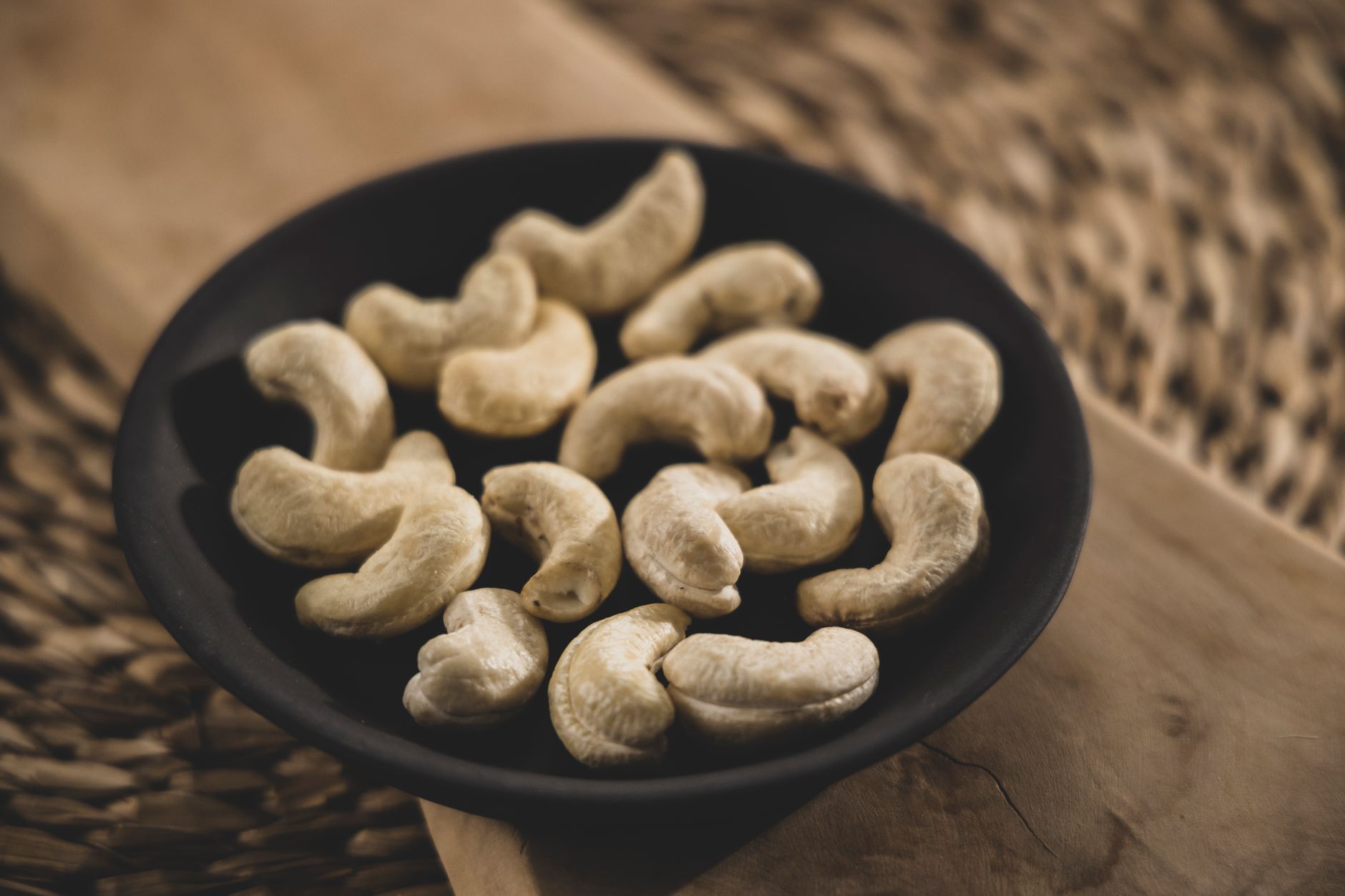
One stubborn misunderstanding concerns wholemeal bread. It contains phytate — but it also contains more zinc: 1.5 mg per 100 g against 0.7 mg in white bread. Intake therefore rises along with it, and in the DGE's assessment wholemeal bread does not lead to a zinc deficiency. Anyone wanting to ease the phytate brake reaches for sourdough, not for white flour.
Who is more often poorly supplied
A poor supply status has been observed more often in older people and in patients with chronic inflammatory bowel disease. Vegetarian diets, too, can contain higher amounts of phytate and thereby raise the risk of a zinc deficiency. Severe forms of deficiency hardly occur in this part of the world. One further group asks regularly: anyone who sweats a lot also loses zinc through the skin — how much that amounts to in training is covered in Zinc and exercise.
The symptoms described for a deficiency — impaired growth in height, skin eczema, diarrhoea, disturbed wound healing, problems with perception and memory, greater susceptibility to infection — are none of them specific. They can have many other causes. Proof is only considered given once they recede after zinc is administered. A single symptom therefore tells you nothing about your own zinc status.
What a supplement adds — and where the limit lies

Our Zinc 25 mg + vitamin B3 declares 25 mg of zinc from zinc gluconate per tablet, plus 25 mg of niacin:
| Per tablet (recommended daily dose) | Amount | % NRV* |
|---|---|---|
| Zinc (from zinc gluconate) | 25 mg | 250 % |
| Niacin (as nicotinamide) | 25 mg | 156 % |
* Nutrient reference values according to Regulation (EU) No 1169/2011, Annex XIII.
The percentage refers to the 10 mg of the labelling value, not to the personal reference value — and it says nothing about what the day's meals have already contributed. Three figures are needed to place an amount:
| Value | Amount | Source |
|---|---|---|
| Nutrient reference value (labelling) | 10 mg/day | Regulation (EU) No 1169/2011 |
| Recommended intake, adults | 7–16 mg/day | D-A-CH 2019 |
| Tolerable upper intake level (UL) | 25 mg/day (adults), 22 mg (15–17 years), 7 mg (1–3 years) | EFSA |
The tolerable upper intake level applies to all sources together — food, supplements and, easily overlooked, oral hygiene products: toothpaste, mouthwash and denture adhesives can contribute as well. Through food alone the amount is as a rule not reached; mean intake is 8 to 11 mg. A supplement providing 25 mg does, however, exhaust the upper level together with the food, and in 2021 the German Federal Institute for Risk Assessment (BfR) proposed a maximum level of 6.5 mg per daily dose for food supplements — it is not binding, and EU-wide maximum levels for minerals do not exist to this day. The recommended intake on the tin is one tablet daily; it should not be exceeded, and other zinc-containing preparations count towards it.
The reason for the upper level is copper: a high zinc intake combined with a low copper intake impairs copper absorption, and since copper is needed in iron metabolism, anaemia can result. Why zinc preparations so often state a copper ratio is therefore a question of its own.
Among the statements authorised for zinc are these: Zinc contributes to the normal function of the immune system. Zinc contributes to normal cognitive function. Zinc contributes to normal fertility and reproduction. For niacin: Niacin contributes to normal energy-yielding metabolism. and Niacin contributes to normal functioning of the nervous system. (Regulation (EU) No 432/2012). Food supplements are not a substitute for a balanced and varied diet and a healthy lifestyle. What else is in the range is shown by the Zinc category.
Frequently asked questions
I am a woman, I eat a lot of wholegrain and lentils — which value applies to me? If bread and cereal products come predominantly from sourdough or sifted flour and pulses are soaked, that is the moderate level: 8 mg per day. Only with a lot of unsprouted, unfermented wholegrain and hardly any animal protein does the high level of 10 mg apply.
Is 250 % NRV too much? The percentage is a labelling figure, not a warning signal — it refers to 10 mg. The figure against which an amount can be measured is the tolerable upper intake level of 25 mg per day from all sources. 25 mg from a supplement plus 8 to 11 mg from food is above that; the upper level is not meant to be exceeded on a permanent basis.
Do I need more zinc in winter? The reference values know no season. Unlike vitamin D, whose formation in the skin depends on the position of the sun, with zinc only the menu changes over the year — and with it, possibly, the phytate column.
How do I notice that I am getting too little zinc? Reliably, not at all. None of the deficiency symptoms described is specific to zinc, and there is no store whose filling level could simply be measured. Anyone with a suspicion clarifies it medically rather than through the dosage of a supplement.
What about zinc from zinc gluconate, zinc oxide or zinc bisglycinate — does it count the same? Yes, provided the nutrition table says "zinc": there, the element is always meant. Differences exist in absorption, not in the declaration; the measured values are in Zinc forms compared.
Sources: German Nutrition Society (DGE), "Selected questions and answers on zinc", July 2019 · D-A-CH reference values for nutrient intake, zinc (revised 2019) · German National Nutrition Survey II · EFSA, Tolerable Upper Intake Level of Zinc · Regulation (EU) No 1169/2011, Annex XIII · Regulation (EU) No 432/2012 · BfR, "Maximum level proposals for zinc in foods including food supplements", 2021.