Zinc and exercise: what is proven — and what is not
Futures Nutrition Editorial Team · 12 August 2026

Training raises zinc turnover — that is measured and undisputed. The order of magnitude, however, is a different one from what the marketing suggests: at a moderate sweat rate, roughly 0.4 mg of zinc is lost in a 45-minute session, a good 0.5 mg in a full hour. Set against that is a daily requirement of 7 to 16 mg. An hour of training therefore costs about as much zinc as sits in half a slice of cheese.
And the second point up front: among the statements authorised for zinc there is none that deals with muscle building, strength or endurance. Anyone buying zinc because it stands between the sports products on the shelf is buying it for the wrong reason. The two points at which it does become interesting for people who train are less spectacular: covered intake — and a blood value that gets measured at the wrong moment.
What is authorised for zinc
The statements that may be used for a food supplement are laid down in Regulation (EU) No 432/2012 and are fixed word for word. For zinc we carry these three:
- Zinc contributes to the normal function of the immune system.
- Zinc contributes to normal cognitive function.
- Zinc contributes to normal fertility and reproduction.
What appears in none of them: muscle building, strength, endurance, recovery, training performance. That is not a formality. For muscle function an authorised statement does exist — only for a different mineral: Magnesium contributes to normal muscle function. So if a label mentions the muscle and puts zinc in the leading role, the statement is either borrowed from another substance or not covered at all. What is proven for the electrolyte balance during training is set out in Magnesium and exercise.
What is really lost through sweat

The most usable figures for the German-speaking region are found in the position paper of the DGE sports nutrition working group (Minerals and vitamins in sport, Ernährungs Umschau 12/2019). It compiles sweat concentrations under roughly 60 minutes of exertion and converts them into an estimated loss — for a 45-minute session at a sweat rate of 0.8 litres per hour, that is 0.6 litres of sweat:
| Mineral | Concentration in sweat (mg/l) | Loss in 45 minutes (mg) |
|---|---|---|
| Sodium | 874 (175–1512) | 524 |
| Potassium | 196 (167–236) | 117 |
| Calcium | 18 (11–36) | 11 |
| Magnesium | 1.43 (0.84–2.36) | 0.86 |
| Zinc | 0.65 (0.29–1.23) | 0.39 |
| Iron | 0.56 (0–1.12) | 0.34 |
| Copper | 0.11 (0.04–0.22) | 0.07 |
The authors count sodium, copper and zinc among the minerals for which relevant losses through sweat can occur — “relevant” here meaning: measurable in relation to the respective daily requirement, not dramatic. For zinc, 0.39 mg is about 3 to 6 per cent of the daily requirement. An independent measurement arrives at the same result: in nine women and nine men who cycled for two hours at about 50 per cent of maximal oxygen uptake, zinc losses through sweat corresponded to 9 per cent (men) and 8 per cent (women) of the recommended daily intake (International Journal of Sport Nutrition and Exercise Metabolism 2002, PubMed 12500986).
What stands out is the spread in the middle column: from 0.29 to 1.23 mg per litre is more than a factor of four. Anyone who sweats a great deal and very salty loses considerably more than average — only nobody knows that about themselves without having it measured.
Via urine the picture is inconsistent. Older work found increased zinc excretion after exertion; in more recent investigations this could not be confirmed, for instance in male cyclists during a high-intensity training phase, in whom no increased renal excretion was measurable for magnesium, iron, zinc or copper. The only mineral for which sweat loss actually contributes to the development of a deficiency, according to the position paper, is iron — not zinc. Anyone considering a supplement for sporting reasons ends up, going by the data, sooner at Iron 30 mg + inulin than at zinc, provided a laboratory finding supports it.
The blood value after training is misleading
This is where the actual misunderstanding lies. After exertion, zinc in the blood falls — and does so reliably. A meta-analysis that screened 45 studies, from which twelve usable comparisons were drawn, found a decrease of 1.31 µmol/l against the baseline value up to four hours after the end of exertion, across all training states and forms of exertion (Chu, Petocz, Samman, Sports Medicine 2017, PubMed 27260681).
That is not a loss but a redistribution. As part of the acute exercise response, zinc moves out of the plasma into the liver and tissues, where it is needed among other things for acute-phase proteins. The value in the tube falls; the body’s zinc stock does not.
That probably also explains a second, frequently cited finding: athletes have on average a lower serum zinc concentration than inactive people (−0.93 µmol/l) — and at the same time a higher dietary zinc intake (+2.57 mg per day). The authors from the same working group conclude that requirements are higher; it can be argued just as well that what is being measured here is the training adaptation itself (Sports Medicine 2018, PubMed 29164533). Both are plausible, neither is settled.
In practice only one thing follows from this, and it is useful: anyone having their zinc status determined should do so rested and with at least a day’s distance from the last hard session, in the morning and fasting. A value taken on the evening after a competition says little about supply — and regularly leads to a supplement nobody would have needed.
Does a higher dose bring more performance?
The honest answer: there is no sound basis for it. A systematic review on minerals and trace elements in sport found nine publications on zinc with a total of 229 participants, four of them randomised controlled trials — none with competitive athletes. The authors’ conclusion: despite the popularity of zinc supplements among athletes, there is hardly any high-quality evidence that zinc improves athletic performance (Heffernan et al., Nutrients 2019).
That does not mean zinc plays no role in sport — it means the role is that of a covered requirement and not that of an amplifier. A deficiency slows you down; correcting it restores the normal state. More than the normal state nobody has yet been able to demonstrate.
Where zinc becomes a topic in a hard training block
At high training volume and high intensity, the risk of upper respiratory tract infections rises — the position paper describes a J-shaped relationship: at very little as well as at very heavy loads, the risk is higher than in between. That is the point at which the authorised statement Zinc contributes to the normal function of the immune system does thematically fit.
Only: it describes a normal function, not an upgrade. The studies that show a shorter duration and a lower frequency of common colds work with pharmacological amounts from 75 mg of zinc per day — far above the tolerable upper intake level. In those investigations, undesirable effects occurred markedly more often than under placebo, and the quality of the evidence was rated by the authors as low to very low. As a template for daily intake, that is of no use: the tolerable upper intake level for adults is 25 mg per day from all sources combined (EFSA), and supplement, diet and oral hygiene products count towards it together.
How much, and from where
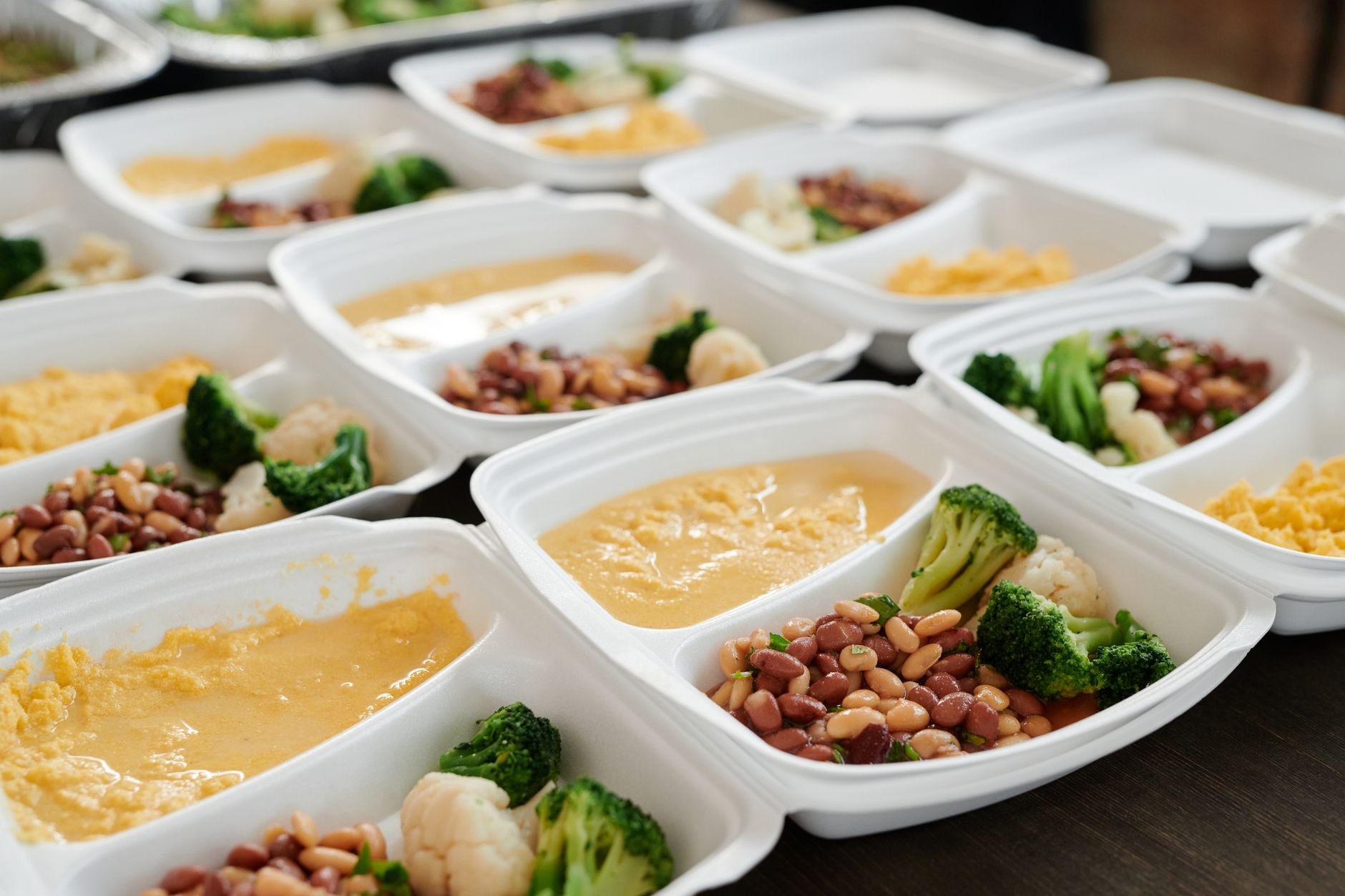
The D-A-CH reference values give 7 to 16 mg of zinc per day for adults, depending on phytate intake (cited after BfR, Maximum level proposals for zinc, 2021). This range — more than double between the lower and the upper step — covers over any effect training has on requirements. Anyone eating a lot of wholegrain, pulses and nuts sits at the top; anyone regularly eating meat, cheese or seafood sits at the bottom. Which foods supply how much and how the phytate brake can be released is set out in Zinc-rich foods.
The second point speaks for most people who train: whoever turns over more energy eats more — and thereby automatically takes in more zinc. The position paper puts it this way: athletes can as a rule cover their possibly increased micronutrient requirement without problems on an energy-adequate, balanced diet. By way of illustration the authors cite two slices of wholegrain bread with cheese and a large portion of broccoli: around 9 mg of zinc together.
Two constellations fall outside this picture, and in both a second look is worthwhile:
- A purely plant-based diet. Not because of the sport but because of the phytate — absorption from such a diet is lower, and the requirement slides towards the upper 16 mg.
- Weight classes and aesthetic sports. Anyone limiting energy intake over weeks lowers every nutrient intake with it — precisely then the diet no longer carries the load automatically.
On timing, one small thing is worth noting: protein in the meal makes zinc absorption easier, wholegrain and pulses brake it. A protein-containing meal after training is therefore not a bad anchor for the tablet — more on intervals and tolerance in How to take zinc.
What this means for our supplement

Our Zinc 25 mg + vitamin B3 supplies 25 mg of zinc from zinc gluconate and 25 mg of niacin per tablet. That is a high strength — it is intended as a daily supplement, not as an answer to an hour of training, and the sum of food and supplement should stay in view. Among the authorised statements for zinc are: Zinc contributes to the normal function of the immune system. Zinc contributes to normal cognitive function. Zinc contributes to normal fertility and reproduction. For niacin: Niacin contributes to normal energy-yielding metabolism. (Regulation (EU) No 432/2012). Food supplements are not a substitute for a balanced and varied diet and a healthy lifestyle. What else is in the range is shown by the category Zinc.
Frequently asked questions
Do I need more zinc as a recreational athlete than other people? Arithmetically, hardly. Three training sessions of 45 minutes per week cost around 1.2 mg of zinc through sweat together — over the week, less than a fifth of one daily requirement. Anyone who also eats more has balanced that automatically. The question only becomes interesting with daily training in the heat or with simultaneously restricted energy intake.
My zinc blood value was low — is that from training? Possibly. Up to four hours after exertion the serum value lies measurably below the baseline, and on average over time athletes also lie lower than inactive people, although they eat more zinc. Before any conclusion, the measurement belongs repeated: rested, in the morning, fasting, with distance from the last hard session. Plasma zinc is a coarse marker anyway — it reacts to inflammation, infection and food intake.
Is zinc sensible for staying healthy during hard training phases? The authorised statement is that zinc contributes to the normal function of the immune system — that presupposes a covered intake and describes the normal state. The common cold studies with clear effects, by contrast, work with at least 75 mg per day, far above the tolerable upper intake level of 25 mg, at low evidence quality and with more frequent undesirable effects. Those amounts are no model for everyday use.
What should I make of ZMA combinations? ZMA combines zinc, magnesium and vitamin B6. For the combination as such there is no authorised statement of its own — each substance brings only its own, for instance Magnesium contributes to normal muscle function. Anyone specifically looking for magnesium is more clearly served by a single-substance product such as Magnesium bisglycinate: there the pack states how much elemental magnesium is inside, instead of a mixture with three reference values.
Sources: DGE sports nutrition working group (Carlsohn, Braun, Großhauser et al.), Minerals and vitamins in sport, Ernährungs Umschau 12/2019, M712–M719 · DeRuisseau, Cheuvront, Haymes, Sharp, Sweat iron and zinc losses during prolonged exercise, International Journal of Sport Nutrition and Exercise Metabolism 2002 · Chu, Petocz, Samman, Plasma/Serum Zinc Status During Aerobic Exercise Recovery: A Systematic Review and Meta-Analysis, Sports Medicine 2017 · Chu, Holdaway, Varma, Petocz, Samman, Lower Serum Zinc Concentration Despite Higher Dietary Zinc Intake in Athletes: A Systematic Review and Meta-analysis, Sports Medicine 2018 · Heffernan, Horner, De Vito, Conway, The Role of Mineral and Trace Element Supplementation in Exercise and Athletic Performance: A Systematic Review, Nutrients 2019 · BfR, Maximum level proposals for zinc in foods including food supplements, 2021 (with D-A-CH 2019) · Regulation (EU) No 432/2012.