Iron and inulin: why the fibre is in the tablet
Futures Nutrition Editorial Team · 12 August 2026

Inulin is a dietary fibre from the chicory root, and it appears in iron supplements because there is a plausible idea behind it: prebiotics are fermented in the colon, that lowers the pH there, and iron stays in solution. In animal experiments this worked. In humans, exactly this effect has been investigated three times for inulin and three times not confirmed.
On top of that comes a second figure that settles the point: the studies worked with 15 to 40 grams of inulin a day. A tablet contains 30 milligrams. That is a factor of 500 to 1,300. Anyone choosing an iron supplement because of the inulin is choosing by an ingredient that at this amount does nothing measurable — and is overlooking the figures that actually count.
What inulin is
Inulin belongs to the fructans: chains of fructose units linked β-(2→1), usually with a glucose molecule at the start of the chain. Chain length ranges from 3 to about 60 building blocks. Short-chain fractions with fewer than ten units are called oligofructose or fructooligosaccharides (FOS), the long-chain ones are called inulin — both come from the same plant and are separated from one another by hydrolysis or fractionation.
The decisive point: human digestive enzymes cannot split the β-(2→1) bond. Inulin passes through the small intestine unchanged and is fermented by bacteria only in the colon — which is why it counts as a dietary fibre. That is what the statement of the Food Chemistry Society within the GDCh sets out (Lebensmittelchemie 57, 2003, pp. 74–75), and the legal definition rests on it too: "native chicory inulin" is, under Regulation (EU) 2015/2314, a non-fractionated mixture with less than 10 % monosaccharides and a mean degree of polymerisation of at least 9.
The chicory in the title picture — Cichorium intybus, the blue-flowering common chicory — is the same plant from whose root the inulin is obtained.
Where the idea comes from
The detour runs via calcium. Fructans are rapidly fermented in the colon to short-chain fatty acids, above all to acetic and lactic acid. As these are taken up, mineral ions enter the gut cells in exchange for hydrogen ions — a route that works in addition to normal absorption in the small intestine. For calcium this effect has been measured several times: clearly in adolescents and young adults, but not in women in the first years after the menopause (GDCh 2003, with an overview of the intervention studies).
Even so, it was not robust enough for an authorised claim: in 2014 EFSA rejected a corresponding application because the substance group applied for was "not sufficiently characterised" (EFSA Journal 2014;12(11):3889). Anyone supplementing calcium is therefore not deciding about the fibre but about the compound and the amount — with a product such as Calcium + vitamin D3 both are on the tin.
The step from calcium to iron was an obvious one: same section of the gut, same mechanism, and in animal experiments it could be shown. In humans it did not pass the test.
What was measured for iron
| Study | Amount and duration | Participants | Result for iron absorption |
|---|---|---|---|
| Coudray et al., Eur J Clin Nutr 1997 | 40 g inulin/day, 28 days | 9 healthy young men | no significant difference |
| van den Heuvel et al., Am J Clin Nutr 1998 | 15 g inulin/day, 21 days | 12 healthy young men | no effect ("do not interfere") |
| Petry et al., Am J Clin Nutr 2012 | ~20 g inulin/day, 4 weeks | 32 women, ferritin < 25 µg/l | 15.2 % versus 13.3 %, p = 0.10 |
The third row is the most informative, because it studied precisely the group for whom an iron supplement comes into question at all: women with low iron stores, measured with stable iron isotopes in a cross-over design (PubMed 22743314).
What is remarkable is what did happen in the same study. Inulin clearly lowered faecal pH (p < 0.001), increased bifidobacteria (p < 0.001) and lactate (p < 0.001). So the prebiotic effect was there and measurable — it simply did not translate into more iron being absorbed. The authors' conclusion is correspondingly sober: although inulin showed prebiotic activity, no increase in iron absorption could be demonstrated in women with low iron status.
What did work
That does not dispose of the whole substance group — only of long-chain inulin. In 2022 a Zurich research group gave thirty women with low iron stores 100 mg of iron as ferrous fumarate, each time with a single dose of 15 g of a prebiotic (PubMed 35015879):
| Addition to the iron dose | iron absorbed (median) | difference |
|---|---|---|
| control (lactose/sucrose) | 23.9 mg | — |
| 15 g gum arabic | unchanged | not significant |
| 15 g galactooligosaccharides (GOS) | 34.6 mg | + 45 % |
| 15 g fructooligosaccharides (FOS) | 36.1 mg | + 51 % |
FOS are the short-chain fraction of the same chicory fructan. So it is chain length that decides, not origin. Two further restrictions belong with this: the gain showed up only with ferrous fumarate, not with ferrous sulphate or ferric pyrophosphate — and the explanation is evidently not the colon but that the prebiotic keeps the iron in solution for longer in the upper small intestine, where the transporter DMT-1 sits. Which compound is in which supplement, and why that counts for tolerability more than for absorption, is in Iron forms: bisglycinate, fumarate or sulphate?.
Above all, though: this was about 15 grams at once.
The amount decides — 30 mg against 12 g
Our supplement contains 30 mg of inulin from chicory root per tablet, that is 0.03 g. What that means is shown by the comparison with the amounts at which anything becomes measurable at all:
| Reference point | Amount | Ratio to the tablet |
|---|---|---|
| one tablet of iron + inulin | 0.03 g | — |
| labelling as "prebiotic fibre" per portion (GDCh 2003) | 1.5 g | 50-fold |
| prebiotic effect, daily on top of the diet (GDCh 2003) | 5 g | 170-fold |
| fructans from a normal everyday diet (GDCh 2003) | 3–11 g/day | 100- to 370-fold |
| condition of the authorised claim (Regulation (EU) 2015/2314) | 12 g/day | 400-fold |
| single FOS dose in the 2022 iron study | 15 g | 500-fold |
The fourth row is the one worth remembering: anyone who eats wheat bread, onions, leeks, asparagus or Jerusalem artichoke is already taking in 3 to 11 grams of fructans a day. The tablet contributes one three-hundredth of that — and only in the most favourable case.
In the EU there is exactly one authorised health claim for inulin, and it concerns not iron but digestion: Chicory inulin contributes to normal bowel function by increasing stool frequency (Regulation (EU) 2015/2314). It may only be used by anyone supplying at least 12 g of native chicory inulin a day. An iron supplement with 30 mg lies a factor of 400 below that and consequently may not carry it — which is also the reason you will not find it on the tin.
What the label reveals
Our tin says: "ferrous fumarate (iron), bulking agent cellulose, anti-caking agent magnesium salts of fatty acids, inulin (from chicory root)". Under Regulation (EU) No 1169/2011, ingredients have to be listed in descending order of their weight — inulin stands at the end of the list, and the declared 30 mg fit with that. The bulking agent named is expressly cellulose, not inulin.
That is not a hidden detail but the most useful line on the whole pack. It tells you without any table what order of magnitude an ingredient appears in. With iron supplements the same glance is worth taking for the figure that really decides: how many milligrams of elemental iron are contained — not how many milligrams of iron compound. How that converts and which daily amounts lie behind it is in Iron daily requirement: 11, 14, 16 or 27 mg?.
What works instead
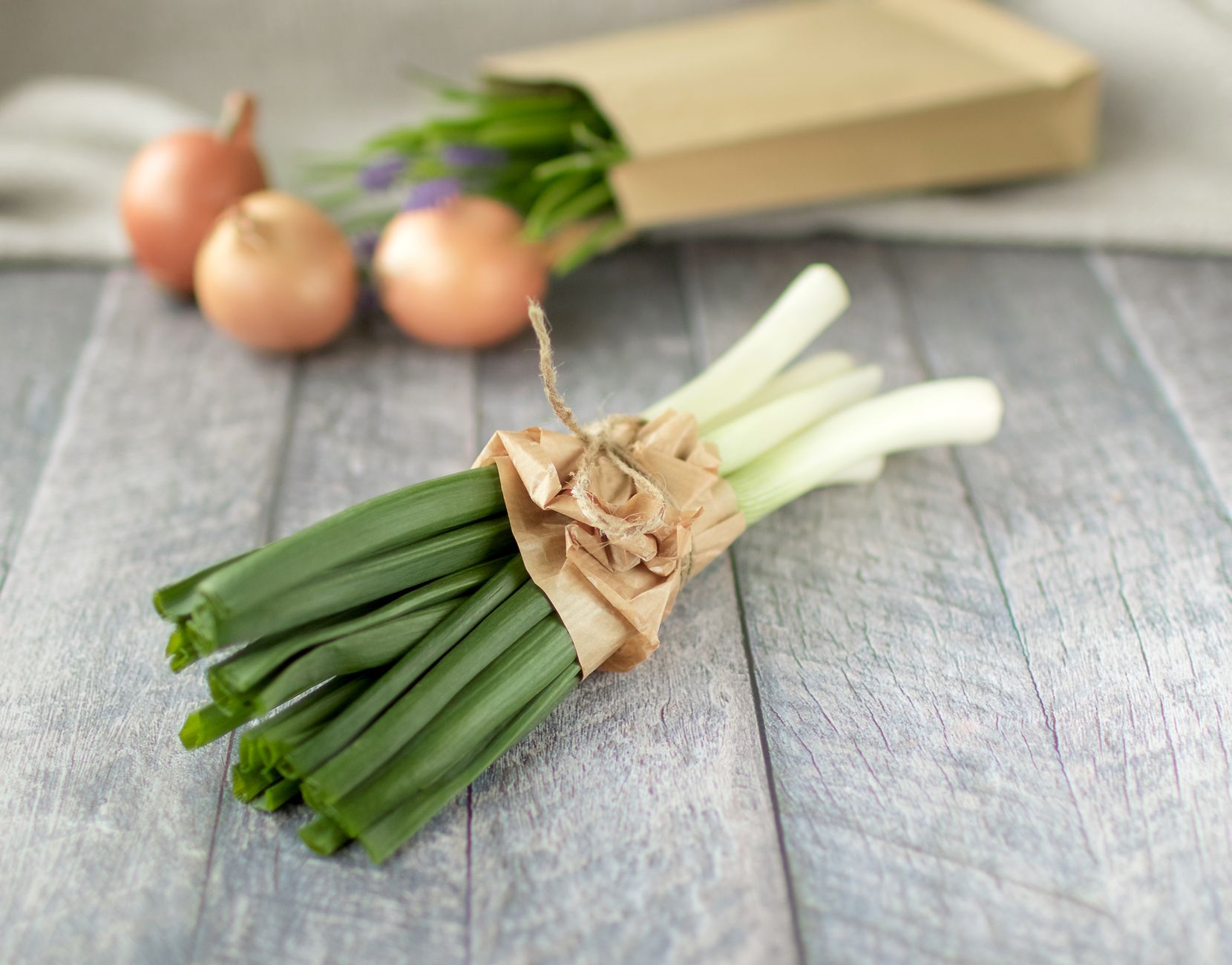
The levers that actually move something in iron absorption are well surveyed — and none of them is a fibre inside the supplement: vitamin C at the same time, distance from coffee, tea and milk, the time of day and the interval between two doses. The orders of magnitude there run from plus 30 to minus 66 per cent, as set out in Iron absorption: vitamin C, coffee and tea and Taking iron: fasting, in the morning, every other day.
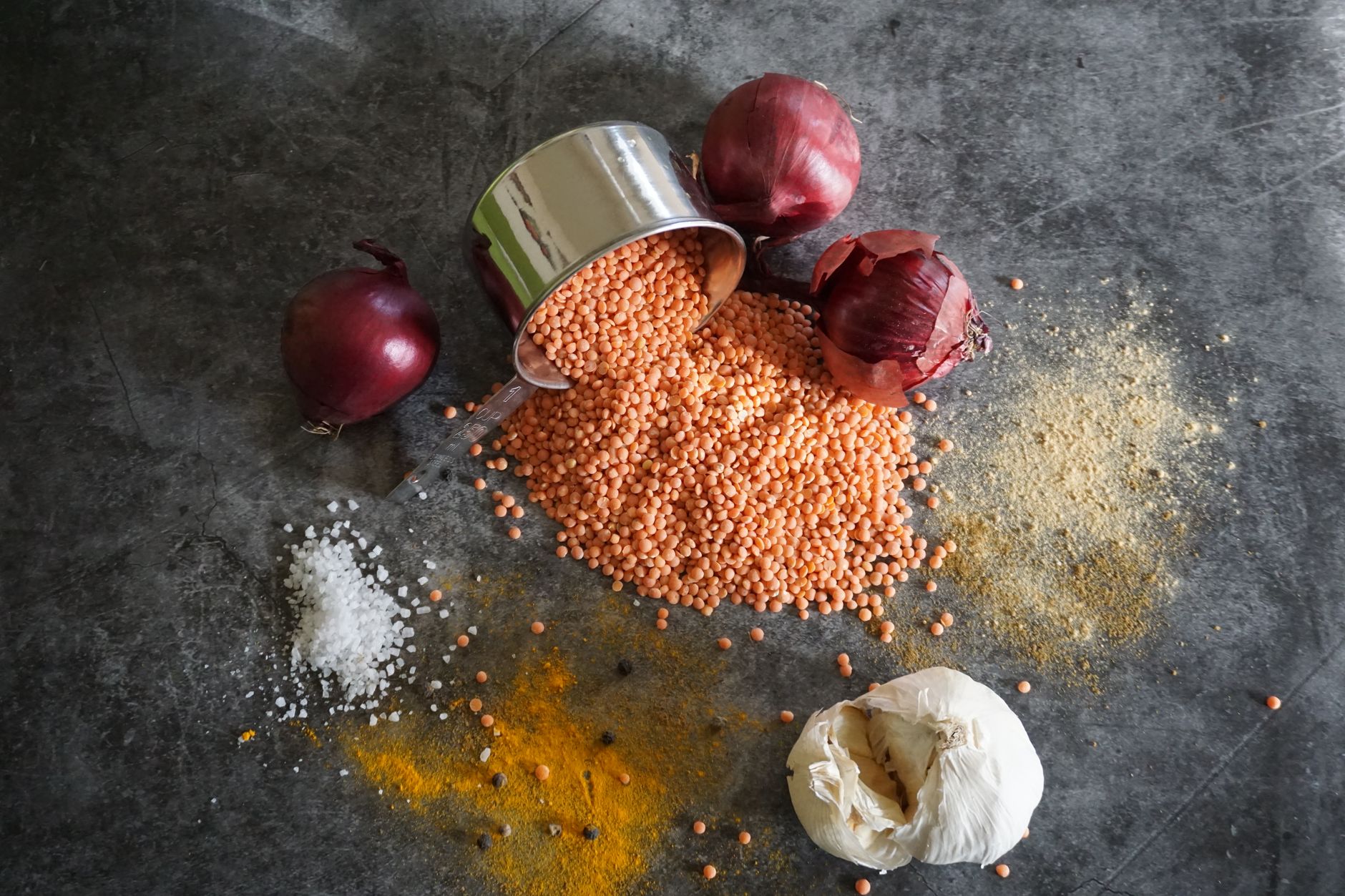
The onions in the picture are a nice coincidence here: according to the surveys of fructan intake they supply around a quarter of the inulin in an everyday diet — and at the same time they stand for the kind of side dish an iron supplement should not be combined with when it lands in a large meal.
What is in our supplement

Iron 30 mg + inulin delivers 30 mg of iron as ferrous fumarate per tablet — 214 % of the nutrient reference value of 14 mg under Regulation (EU) No 1169/2011 — plus 30 mg of inulin from chicory root. The usage advice is one tablet with a glass of water 15 to 30 minutes before a meal. The reason to choose this supplement is the iron and its compound; the inulin is a declared ingredient, not an argument. What else is on the shelf is shown by the Iron category.
Among the claims authorised for iron are these (Regulation (EU) No 432/2012): Iron contributes to normal oxygen transport in the body, Iron contributes to the reduction of tiredness and fatigue and Iron contributes to normal formation of red blood cells and haemoglobin. Food supplements are not a substitute for a balanced and varied diet and a healthy lifestyle.
Frequently asked questions
Does inulin improve iron absorption? In the three available human studies, no — neither in healthy young men nor in women with low iron stores, and that at daily amounts of 15 to 40 g over three to four weeks. For its short-chain relative FOS there is one positive single finding with 15 g at once, but only together with ferrous fumarate. Both lie far above what is in a tablet.
Should I then buy inulin on top? For iron absorption, the data give no reason to. Anyone wanting to use the authorised claim about stool frequency needs 12 g of chicory inulin a day — that is a separate product and a separate decision, not a question about the iron supplement. The prebiotic effect also lasts only as long as the inulin is taken, and according to the GDCh it needs at least seven days before it sets in.
I tolerate inulin badly — is the tablet a problem? Fructans are among the carbohydrates that can trigger bloating and cramps in a sensitive gut; the GDCh names this risk expressly for the daily doses of the intervention studies, that is, for the gram range. 30 mg are one five-hundredth of that and lie below what a slice of wheat bread brings with it. Anyone avoiding fructans consistently should still know about the ingredient — which is why it is declared on the tin.
Why is inulin on there at all, then? Because it is contained and has to be declared. What technological role 30 mg play in a tablet, the pack does not say; the bulking agent given is cellulose. The plain reading is the factually correct one: the product is an iron supplement, and the inulin changes nothing about that, for better or worse. Whether supplementing makes sense at all is decided by the findings and not by the ingredient list — which laboratory values are used for that is in Spotting iron deficiency: ferritin, TSAT or Hb?.