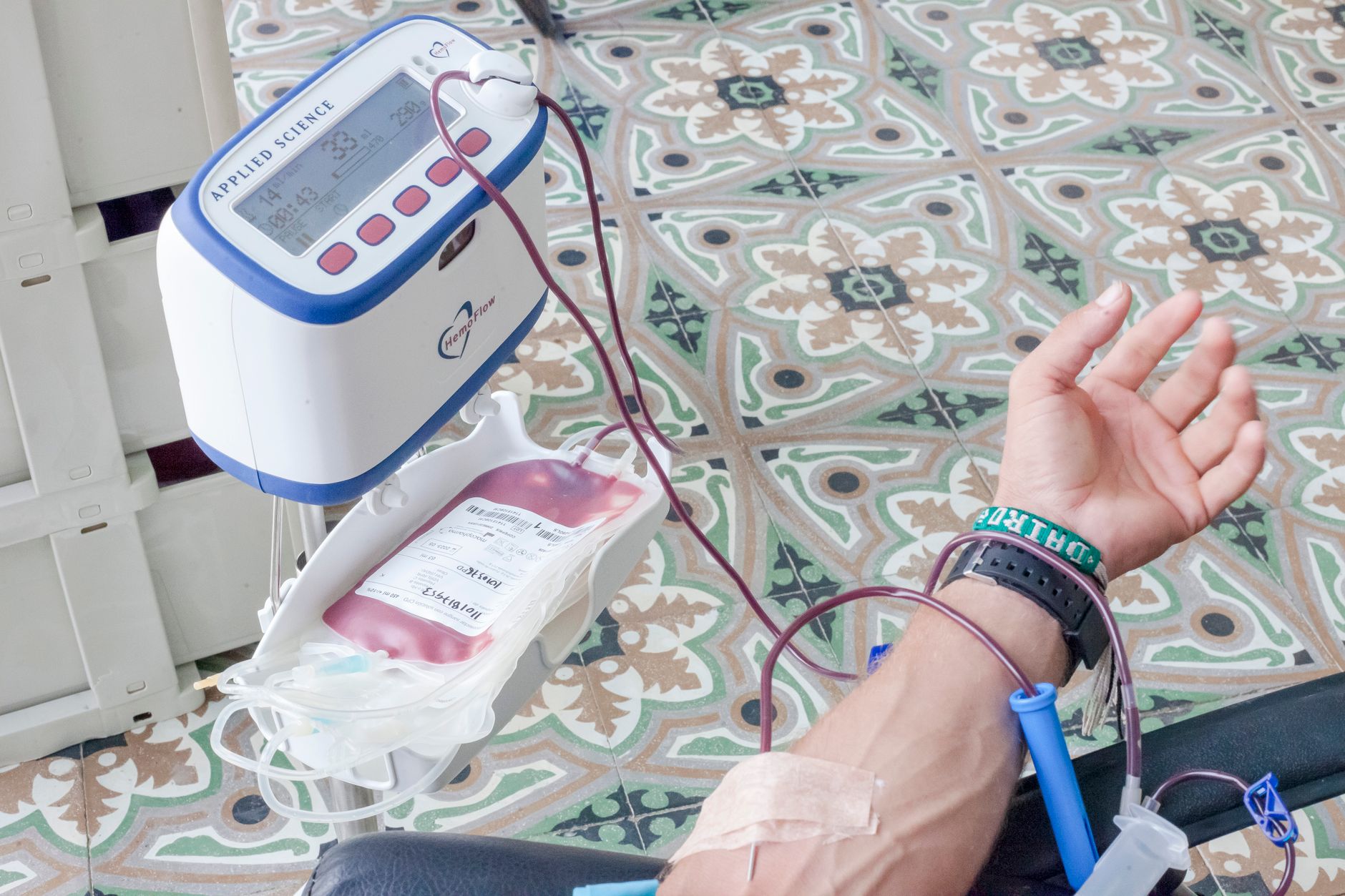
Taking iron: fasting, in the morning, every other day
Futures Nutrition Editorial Team · 12 August 2026
An iron supplement has three adjustment screws, and all three have been measured: the stomach (on an empty stomach more arrives than with a meal), the time of day (morning beats afternoon) and the interval between two doses (every other day beats every day). The third is the most surprising, because it contradicts the widespread assumption that two smaller portions spread over the day are better than a single one.
The reason behind all three is the same: a hormone called hepcidin, which throttles iron uptake in the gut. It follows a daily rhythm and it rises after every sizeable iron dose — and for longer than the tablet spends in the stomach.
On an empty stomach or with food
Everything a meal brings along in the way of phytate, polyphenols and calcium binds iron in the gut before it can be absorbed. How large the difference is was measured in 2023 by a study in 34 women with low iron stores, published in the American Journal of Hematology and carried out with labelled 100 mg doses (PubMed 37357807):
| Condition | Effect on iron absorption |
|---|---|
| 80 mg vitamin C alongside | + 30 % |
| 500 mg vitamin C alongside | no further gain |
| with coffee | − 54 % |
| with coffee and breakfast | − 66 % |
| in the afternoon instead of the morning | − 37 % |
Iron taken with orange juice rather than with coffee or breakfast produced roughly four times the absorption in this series. The authors' recommendation is correspondingly terse: in the morning, away from meals and coffee, together with some vitamin C. Which foods qualify for that, and why coffee after the meal is worse than coffee before it, is set out in Iron absorption: vitamin C, coffee and tea.
Against this stands an argument that deserves to be taken just as seriously: iron salts irritate an empty stomach. In an evaluation of controlled trials, gastrointestinal complaints under oral iron occurred more than twice as often as under placebo (odds ratio 2.32), with differences between the individual compounds. Anyone who cannot tolerate the tablet on an empty stomach takes it with a light meal. A tablet with some loss of absorption is worth more than one that stays in the cupboard.
Why the morning
Hepcidin fluctuates over the course of the day: it is low in the morning and rises towards the afternoon. That is exactly the explanation for the last row of the table — the same dose was absorbed 37 per cent less well in the afternoon than in the morning, and in parallel the hepcidin level was higher.
In practice this means: the first half of the day is the more favourable time, and the gap to breakfast is the second lever. The intake recommendation for our supplement — one tablet with a glass of water 15 to 30 minutes before a meal — covers both, if it is placed before breakfast.
Why twice a day achieves nothing
The second effect of hepcidin is the more important one. A paper in the journal Blood examined single doses of 40, 60, 80, 160 and 240 mg of iron in 2015 (PubMed 26289639). The result: from 60 mg upwards the hepcidin level was still elevated 24 hours later, and iron absorption from the next dose fell by 35 to 45 per cent. Doubling the amount only pays off in part — the sixfold dose (from 40 to 240 mg) delivered merely three times the absorbed iron, 6.7 against 18.1 mg.
From this follows directly what a second study confirmed in 2017 in Lancet Haematology (PubMed 29032957): 120 mg of iron in one go at 8 a.m. was absorbed just as well as twice 60 mg at 8 a.m. and 5 p.m. — 11.8 against 13.1 per cent, statistically no difference. The split dose did, however, produce the higher hepcidin level. Splitting into two portions therefore achieves nothing with iron; it only makes sense if a smaller single dose is better tolerated.
Every other day instead of every day
The same 2017 paper also compared 60 mg of iron on 14 consecutive days with the same dose on 28 alternating days:
| Schedule | absorbed share | absorbed in total |
|---|---|---|
| daily, 14 days | 16.3 % | 131.0 mg |
| every other day, 28 days | 21.8 % | 175.3 mg |
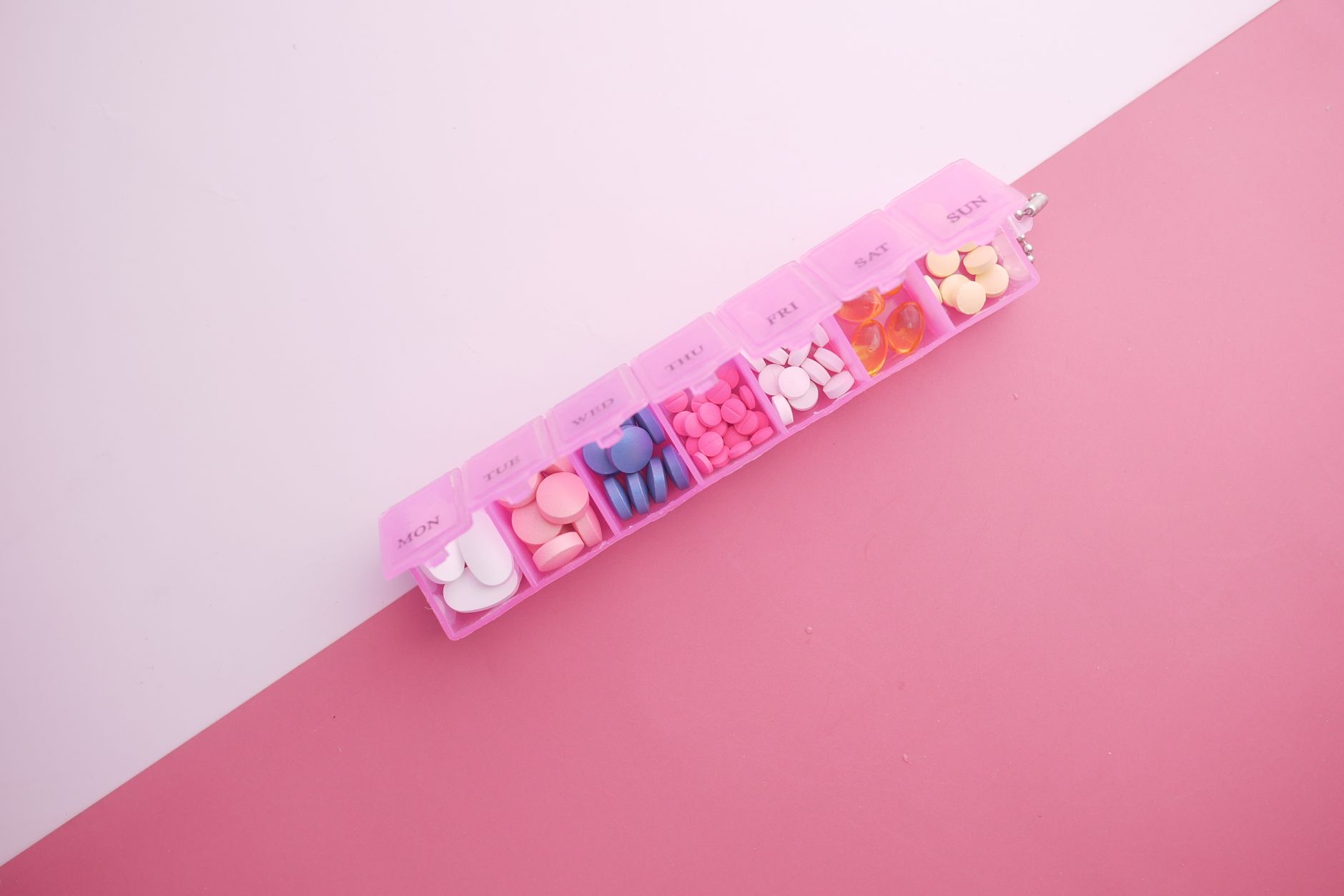
With the same number of tablets, a good third more iron therefore arrived when a day lay between the doses — enough time for hepcidin to drop again. The weekly pill organiser is not fussiness here but the tool: with an every-other-day schedule the weekday keeps shifting, and without a note it is easy to lose track.
Two limitations belong with this. First, the women studied had low iron stores; with full stores absorption is throttled anyway. Second, the amounts tested were above what a food supplement provides. Whether to supplement at all is not a question of the schedule but of the test result: the German Nutrition Society (DGE) advises targeted iron supplementation only after a medically diagnosed deficiency, because surplus iron cannot be excreted in a targeted way.
Spacing from zinc
The rule "don't take zinc and iron together" comes from experiments with both minerals in water. A Chilean research group gave 14 fasting women 0.5 mg of iron in 50 ml of water, once on its own and once together with 11.71 mg of zinc — a molar ratio of 20 to 1 (Olivares et al., Nutrition Research 27, 2007, pp. 279–282):
| Zinc given | Iron absorption |
|---|---|
| not at all | 41.9 % |
| at the same time | 25.0 % |
| 30 minutes beforehand | 35.0 % |
| 60 minutes beforehand | 40.0 % |
The practically most important finding is the third row: the inhibition lasts less than 30 minutes. A short gap is therefore enough; half a day is not needed.
How much zinc it takes for anything to happen at all was compiled by the same group in 2012 in BioMetals (PubMed 22297381) — and the result is more differentiated than the rule of thumb suggests. At 0.5 mg of iron, inhibition was only measurable from a weight ratio of 5.9 to 1 zinc to iron; at 10 mg of iron, by contrast, already from 1 to 1. The larger the iron dose, the less zinc suffices. And: in a hamburger meal, in breast milk, cow's milk and infant formula, nothing of the interaction could be measured any more — it is a phenomenon of the aqueous solution in an empty stomach.
In practice this means: 30 mg of iron from a tablet and 25 mg of zinc from our Zinc + vitamin B3 come to a weight ratio of about 0.8 to 1 — just below the threshold measured at 10 mg of iron, but only just. Both tablets at the same time with water on an empty stomach is thus the one constellation worth avoiding. The intake recommendations separate them anyway: iron before, zinc after a meal. The opposite direction — what iron does to zinc absorption — is covered in Taking zinc: timing, meals and spacing.
Spacing from calcium
With calcium the evidence is less consistent than guidebooks make it appear. In single-meal experiments, 165 mg of calcium — the amount in a small glass of milk — already lowered iron absorption by 50 to 60 per cent. In studies over several days with a complete diet, the same effect could not be confirmed.
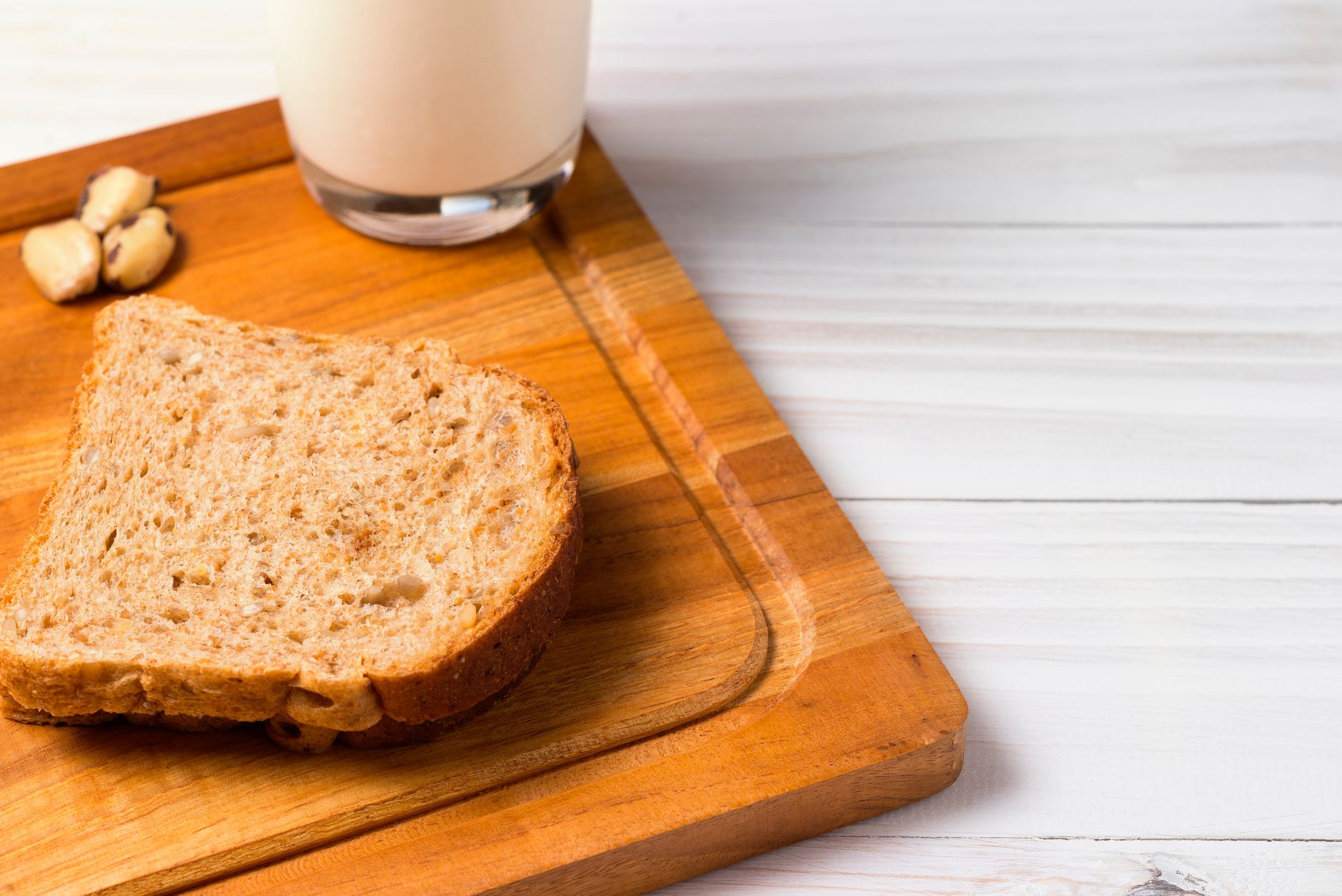
Practically: the glass of milk with muesli is no cause for concern, whereas a high-dose supplement such as Calcium + vitamin D3 can be moved to another time of day than the iron without any effort. The breakfast in the picture is, incidentally, the least favourable environment for an iron tablet: phytate from the wholegrain bread and calcium from the milk meet the same iron at the same moment.
Spacing from medicines
Here it is no longer about percentage points but about whether a medicine works — this is the only gap in this article that is genuinely binding:
| Medicine | what is at stake | Gap |
|---|---|---|
| Levothyroxine (thyroid) | iron binds the active substance in the gut | levothyroxine at least 2 hours beforehand |
| Tetracyclines, quinolones | poorly soluble complexes with iron | as per the package leaflet, usually several hours |
| Acid blockers, antacids | less stomach acid, less iron absorption | clarify with a doctor |
Anyone taking medicines regularly discusses an iron supplement beforehand at the doctor's surgery or the pharmacy. With known haemochromatosis, supplementation without medical supervision is not advisable.
What this means for our supplement

Our Iron 30 mg + inulin provides 30 mg of iron as ferrous fumarate per tablet (214 % of the nutrient reference value of 14 mg under Regulation (EU) No 1169/2011). The intake recommendation is one tablet with a glass of water 15 to 30 minutes before a meal — place it in the morning and put a glass of orange juice or a kiwi next to it, and timing, stomach contents and vitamin C are settled in one move. Further products stand side by side in the category Iron.
Among the claims authorised for iron are these (Regulation (EU) No 432/2012): Iron contributes to normal oxygen transport in the body. Iron contributes to the reduction of tiredness and fatigue. Iron contributes to normal formation of red blood cells and haemoglobin. Food supplements are not a substitute for a balanced and varied diet and a healthy lifestyle.
Frequently asked questions
Morning or evening? Morning. Hepcidin is at its lowest then; in the afternoon the same dose was absorbed 37 per cent less well. There is only one argument for the evening, and it is a practical one: a genuinely empty stomach. Anyone who cannot fit the tablet in on an empty stomach in the morning takes it two hours after dinner.
Should I really only take it every other day? The difference was measured with 60 mg of iron per dose, and there it is clear. The hepcidin rise across 24 hours only appeared from 60 mg upwards — below that amount the effect is correspondingly smaller. Anyone supplementing because a deficiency was diagnosed discusses the schedule with their doctor; that is also where the laboratory value sits from which success can be read.
What if I have forgotten a dose? Simply take the next one at the usual time. Two tablets at once make up for nothing: the double amount is proportionally less well absorbed, and tolerability drops.
Zinc and iron on the same day — is that all right? Yes. The measured inhibition occurs at ratios that do not arise in supplements, and it lasts less than 30 minutes. Anyone taking both places the iron before one meal and the zinc after another — that makes the gap larger than any that has ever been studied.