Iron-rich foods: the table by portion
Futures Nutrition Editorial Team · 12 August 2026
Almost every ranking of iron-rich foods sorts by milligrams per 100 grams. At the top there are then liver, sesame, pumpkin seeds and parsley — and that is exactly where the error of reasoning starts: nobody eats 100 grams of parsley, and most people eat liver three times a year. What counts is the portion that actually ends up on the plate, and the kind of iron it is.
In short: the most reliable everyday sources are red meat (well available haem iron, but a moderate content), pulses, rolled oats and wholemeal bread (high content, poorly available) as well as seeds and nuts in small amounts. No single food carries the day on its own.
Haem or non-haem — the question that comes before the table
The German Nutrition Society (DGE) puts the difference like this: the body can utilise iron from foods of animal origin (divalent iron) better than iron from plant foods. What is meant is the haem iron from meat, offal and fish, which is taken up by a route of its own and is barely influenced by the rest of the meal.
Everything else is non-haem iron — including the iron from eggs and dairy, even though both are animal. It makes up the bulk of the intake and reacts strongly to what stands next to it: vitamin C raises absorption, coffee, tea and phytates lower it. Which combination makes how much difference is in Iron absorption: vitamin C, coffee and tea.
How much arrives at all is the actual quantity to reckon with. EFSA derived its reference values in 2015 with an assumed absorption of 16 per cent in men and 18 per cent in women (at a serum ferritin of 30 µg/l); the DGE reckons, by group, in the order of ten per cent. Of 14 mg on the plate, then, roughly one to two milligrams remain — which is why the recommendations lie so far above the daily loss.
Foods of animal origin
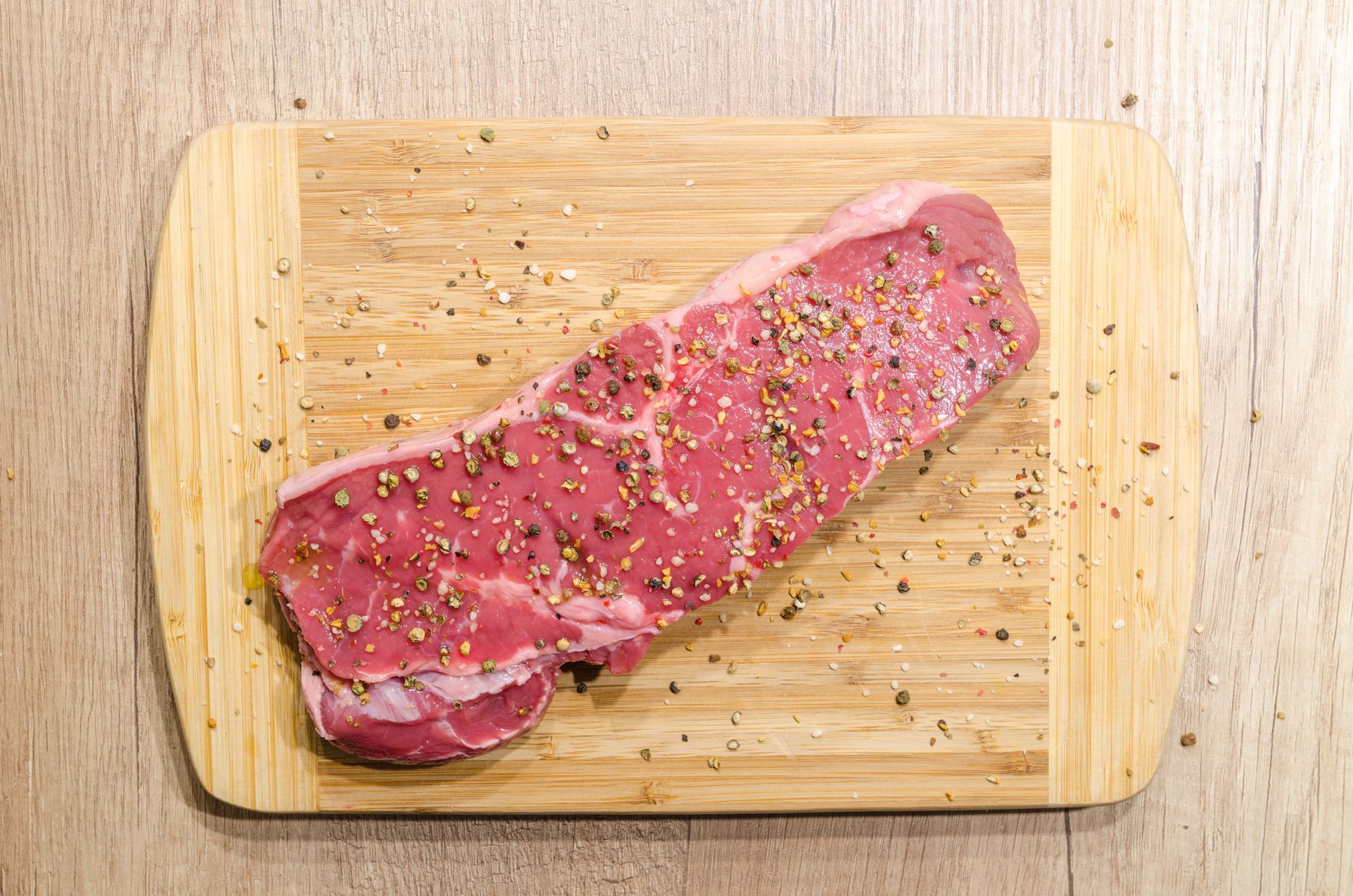
Values per 100 grams from the Kleine Nährwert-Tabelle, the DGE's food composition table:
| Food | Iron per 100 g | usual portion | Iron per portion |
|---|---|---|---|
| Pig liver | 22.1 mg | 125 g | 27.6 mg |
| Egg yolk | 7.2 mg | 1 yolk (18 g) | 1.3 mg |
| Beef liver | 7.1 mg | 125 g | 8.9 mg |
| Black pudding | 6.1 mg | 30 g | 1.8 mg |
| Liver sausage | 5.2 mg | 30 g | 1.6 mg |
| Turkey | 3.0 mg | 150 g | 4.5 mg |
| Beef | 2.9 mg | 150 g | 4.4 mg |
| Pork | 2.5 mg | 150 g | 3.8 mg |
| Veal | 2.2 mg | 150 g | 3.3 mg |
| Chicken leg | 1.4 mg | 150 g | 2.1 mg |
| Tuna | 1.2 mg | 100 g | 1.2 mg |
| Salmon | 0.7 mg | 100 g | 0.7 mg |
Two things stand out. First: between the best and the worst meat there is less difference than the ranking suggests — a portion almost always lies between 2 and 4.5 mg. Second: liver really is in a league of its own, but it is not an everyday food. For pregnant women there is the added point that the DGE advises doing without the regular and excessive consumption of foods with a high vitamin A content (above all liver), particularly in the first trimester. The iron content changes nothing about that.
Plant foods
| Food | Iron per 100 g | usual portion | Iron per portion |
|---|---|---|---|
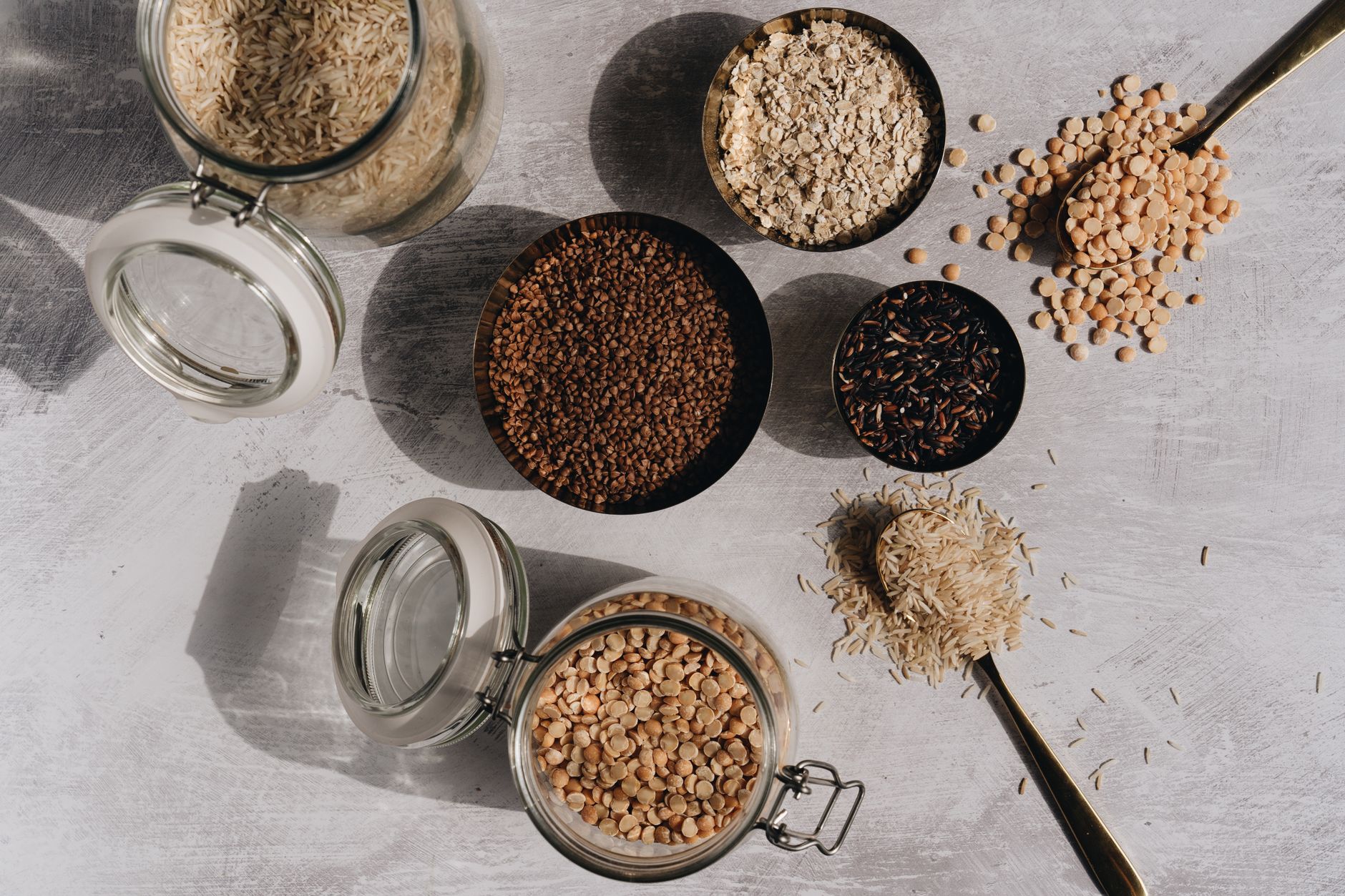
| Lentils, dry | 6.9 mg | 60 g (≈ 150 g cooked) | 4.1 mg |
| Chanterelles | 6.5 mg | 150 g | 9.8 mg |
| White beans, dry | 6.0 mg | 60 g | 3.6 mg |
| Sunflower seeds | 6.0 mg | 15 g | 0.9 mg |
| Millet | 5.9 mg | 60 g | 3.5 mg |
| Peas, dry | 5.0 mg | 60 g | 3.0 mg |
| Rolled oats | 4.6 mg | 60 g | 2.8 mg |
| Apricots, dried | 4.4 mg | 30 g | 1.3 mg |
| Hazelnuts | 4.0 mg | 25 g | 1.0 mg |
| Spinach | 3.5 mg (raw) | 60 g cooked | 2.2 mg |
| Parsley | 3.3 mg | 5 g | 0.2 mg |
| Wholemeal rye bread | 3.3 mg | 100 g (2 slices) | 3.3 mg |
| Wholegrain rice | 2.6 mg | 60 g | 1.6 mg |
| Lamb's lettuce | 1.9 mg | 50 g | 1.0 mg |
The most important footnote belongs to the pulses: the high values apply to the dry goods. Lentils take up about two and a half times their weight in water while cooking; the DGE therefore reckons 3.3 mg for 125 g of cooked lentils, not 8.6 mg. Anyone reading a table without checking for “dry” or “cooked” miscalculates by a factor of three here — in both directions.
Why the 100-gram ranking misleads
Placed side by side, the problem becomes clear. Parsley has more iron per 100 g at 3.3 mg than beef at 2.9 mg. On the plate, though, the steak delivers twenty times as much, because 150 g of it are eaten and five grams of the parsley. The same goes for sesame, pumpkin seeds and wheat bran: high content, small amount, small contribution.
Conversely, foods that contribute a great deal in real terms end up far down the ranking — wholemeal bread, for instance, because several slices of it are eaten every day. Anyone who really wants to raise their intake therefore sensibly changes what often lies on the plate, and not what stands at the top of the table.
The spinach error — and what is really true about it
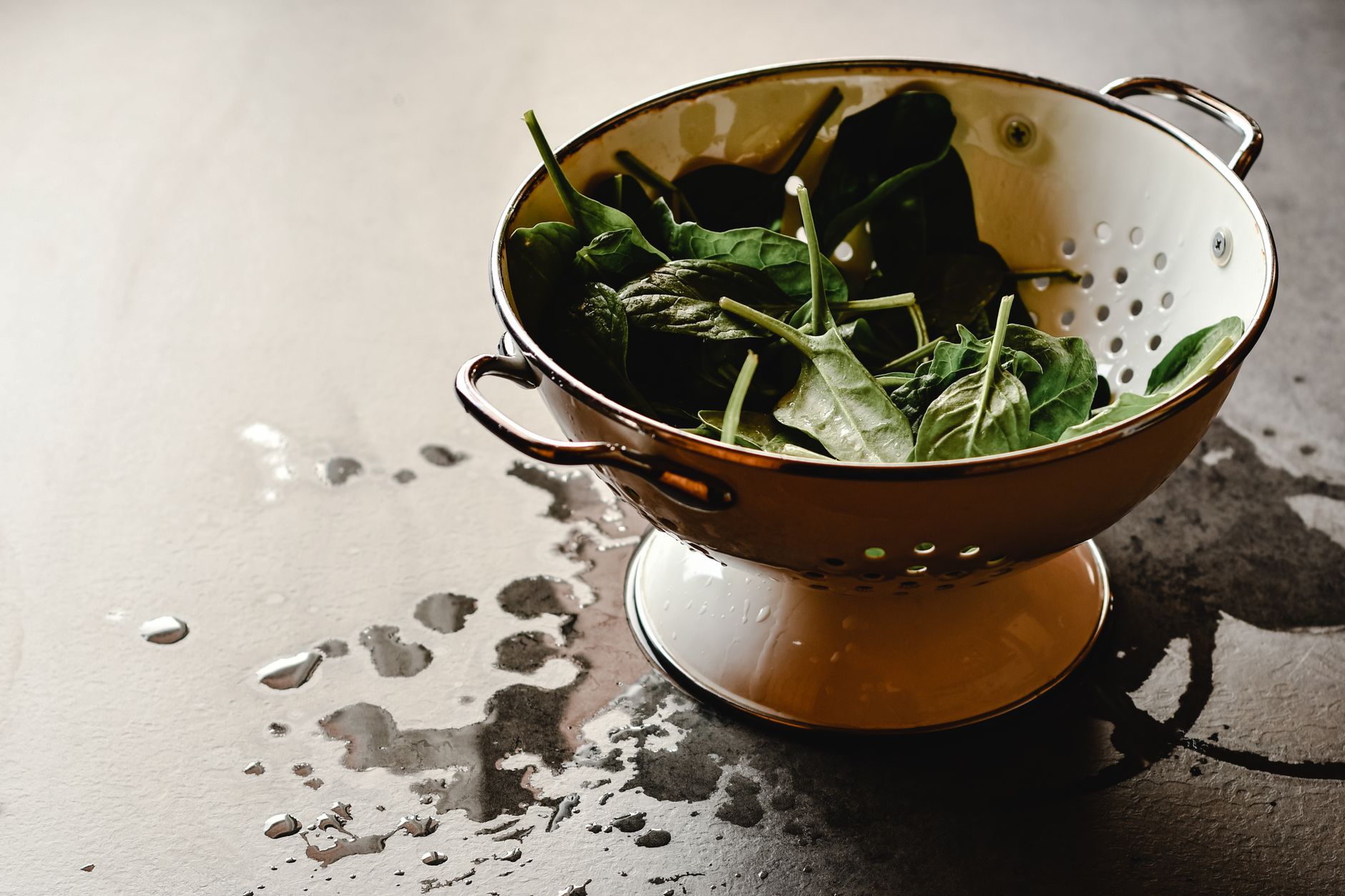
Hardly any nutrition myth is as popular as the story of the slipped decimal point: a researcher is said to have noted 35 instead of 3.5 mg in the 19th century, and Popeye did the rest. The figure is right — spinach contains around 3.5 mg of iron per 100 g, not 35 — but the story behind it is itself poorly documented. The historian of science Mike Sutton searched in 2010 for the alleged original paper with the decimal error and found none; measurements on dried spinach and iron carried over from the cookware are more plausible. The decimal-error version was spread above all by a piece in the British Medical Journal in 1981.
The second half is more relevant in practice anyway: spinach contains oxalic acid, which binds iron in the gut. The content is therefore average and the availability below average. As a side dish spinach remains sensible — the DGE lists 60 g of cooked leaf spinach at 2.2 mg in its example of a plant-based daily ration — but as the “number one iron supplier” it was never a good candidate.
Why two tables give different figures
Anyone looking things up will find different values for the same food: for pig liver, depending on the source, 15.8 or 22.1 mg per 100 g. Neither is wrong. Iron contents vary with breed and feeding, with variety and soil, with preparation and analytical method; the tables rest on samples of differing age. For practice this means: decimal places do not matter, orders of magnitude do.
When food does not close the gap

On a purely plant-based diet iron counts as a potentially critical nutrient — not because of the amount, but because of the availability. In the same changeover the only reliable source of vitamin B12 usually disappears as well, since it practically does not occur in plant foods; with iron, by contrast, a lot can be evened out with vitamin C at the meal and a gap to coffee and tea.
Whether to supplement at all is not a question of the menu but of the established status: the DGE advises iron supplementation only after a medically diagnosed deficiency and under professional guidance, because excess iron cannot be excreted in a targeted way. Our Iron 30 mg + inulin delivers 30 mg per tablet, to be taken 15 to 30 minutes before a meal; why that timing and what an every-other-day rhythm changes is in Taking iron: fasting, in the morning, every other day. All strengths stand side by side in the Iron category.
Among the claims authorised for iron are these (Regulation (EU) No 432/2012): Iron contributes to normal formation of red blood cells and haemoglobin. Iron contributes to normal oxygen transport in the body. Iron contributes to the reduction of tiredness and fatigue. Food supplements are not a substitute for a balanced and varied diet and a healthy lifestyle.
Frequently asked questions
Does a cast-iron pan really put iron into the food? Measurably yes, reliably no. A systematic review from 2021 (Sharma and colleagues, Nepal Journal of Epidemiology) summarised 13 investigations: in laboratory trials the iron content rose markedly — for a pea purée to 3.3 times the value from the clay pot, for pulses to about one and a half times. In the participants' blood values the picture was mixed, from 1.7 g/dl more haemoglobin over twelve months to 0.03 g/dl after 16 weeks. Most iron passes into acidic, moist, long-cooked dishes.
Does it have to be meat? No. The DGE states that with a suitable choice of foods a comparable or even higher iron intake can be achieved on a plant basis as well. The difference lies in the absorption, not in the supply — which is why on a plant-based diet the combinations count for more than the milligram figure.
Does cooking change the iron content? Iron is heat-stable, but it passes into the cooking water. At the same time the values concentrate when water evaporates — cooked leaf spinach has more iron per 100 g than raw, because there is less water in it. That is why every table has to say whether raw or cooked is meant.
Is a glass of orange juice at breakfast enough to compensate? For that one meal it helps, because vitamin C increases the absorption of non-haem iron. Seen over weeks the effect is smaller than assumed, and it evaporates if coffee is drunk straight afterwards.
Sources: Kleine Nährwert-Tabelle of the German Nutrition Society (DGE) · DGE, selected questions and answers on iron · DGE, reference values for nutrient intake — iron and vitamin A · EFSA, Scientific Opinion on Dietary Reference Values for iron, EFSA Journal 2015;13(10):4254 · Sutton M., “Spinach, Iron and Popeye”, Internet Journal of Criminology 2010 · Hamblin T. J., “Fake!”, British Medical Journal 1981;283:1671 · Sharma S. et al., Effect of cooking food in iron-containing cookware …, Nepal Journal of Epidemiology 2021 (PubMed 34290890) · Regulation (EU) No 432/2012.