Zinc for skin, hair and nails: what may be said
Futures Nutrition Editorial Team · 12 August 2026
For zinc, exactly three sentences are approved on this subject, and they appear word for word in Regulation (EU) No 432/2012:
Zinc contributes to the maintenance of normal skin. Zinc contributes to the maintenance of normal hair. Zinc contributes to the maintenance of normal nails.
That is the entire range of what a supplier may say in the EU. And the sentences say something different from what many packs suggest: they are about the maintenance of something normal, not about improvement. "Maintenance of normal hair" does not mean "more hair", "maintenance of normal nails" does not mean "firmer nails", and "maintenance of normal skin" is not a statement about complexion, pores or blemishes. Anyone who reads the sentences exactly as they stand has understood the difference between an approved nutrient statement and a cosmetic promise — and that is the same difference on which most purchasing decisions in this aisle go wrong.
The three sentences and where they come from
Approved health claims are not advertising copy but a list. It comes about like this: EFSA assesses the evidence for a nutrient and an effect, the European Commission adopts the result as a regulation, and the permitted wording is then set out in the annex. Anyone who departs from it — even merely by strengthening it — is legally using a non-approved claim.
| Approved wording | EFSA opinion | ID |
|---|---|---|
| Zinc contributes to the maintenance of normal skin | EFSA Journal 2010;8(10):1819 | 293 |
| Zinc contributes to the maintenance of normal hair | EFSA Journal 2010;8(10):1819 | 412 |
| Zinc contributes to the maintenance of normal nails | EFSA Journal 2010;8(10):1819 | 412 |
Hair and nails share the same ID because they were assessed together in the original application. All three sentences go back to the same reasoning: zinc is involved in the formation of structural proteins and in cell division, and skin, hair follicles and the nail matrix are among the tissues with the highest rate of cell division in the body. That is precisely why a pronounced zinc deficiency shows up there first.
What "maintenance" means in practice
The wording is chosen deliberately. It describes that a nutrient is needed for a normal function — not that more of it lifts that function beyond normal. The difference can be read off the signs of deficiency: in severe zinc deficiency, skin changes and diffuse hair loss are described, in the extreme case in the rare inherited zinc absorption disorder acrodermatitis enteropathica (EFSA Journal 2014;12(10):3844). That is the evidence that zinc is necessary for these tissues. It is not evidence that someone with an adequate intake grows thicker hair by taking more zinc.
Advertising likes to fill that gap with insinuation. What it may not do: assert a connection with acne, atopic dermatitis, brittle nails or hair loss. Those are references to a disease or a condition, and for those there is no permissible claim on food supplements — regardless of what individual studies have measured.
Why the sentence sounds the same on every pack
This is the point that matters most in practice when shopping. The condition under which the three sentences may be used reads, in the regulation: the food must meet "the minimum requirements for a source of zinc". A source is a product containing at least 15 % of the nutrient reference value (Regulation (EU) No 1169/2011, Annex XIII). The reference value for zinc is 10 mg per day; 15 % of that is 1.5 mg. For food supplements, the amount that counts is the daily portion recommended on the label (Directive 2002/46/EC, Article 8(2)).
1.5 mg. No more is needed for the three sentences to go on the pack.
| Zinc per daily dose | % NRV | May carry the three sentences? |
|---|---|---|
| 1 mg | 10 % | no |
| 1.5 mg | 15 % | yes |
| 5 mg | 50 % | yes |
| 10 mg | 100 % | yes |
| 25 mg | 250 % | yes |
A pack with 1.5 mg and one with 25 mg therefore carry the same sentence, in the same wording, in the same type size. The claim on the front says nothing about the amount in the product. Anyone wanting to compare has to read the nutrition table on the back — that is where the milligram figure is. And even that is only comparable if you distinguish the compound from its zinc content; which number on a zinc pack means what is set out in Zinc forms compared.
Zinc is not the only nutrient with a sentence like this
Turn over a typical "skin, hair and nails" combination and you will usually find six to ten substances. The reason is rarely pharmacology but the list: for several nutrients there are approved claims for exactly these tissues, and every further ingredient present in source amounts adds one more permitted sentence.
| Nutrient | Approved wording (extract) |
|---|---|
| Zinc | contributes to the maintenance of normal skin / hair / nails |
| Biotin | contributes to the maintenance of normal skin; contributes to the maintenance of normal hair |
| Selenium | contributes to the maintenance of normal hair; contributes to the maintenance of normal nails |
| Niacin | contributes to the maintenance of normal skin |
| Riboflavin | contributes to the maintenance of normal skin |
| Vitamin A | contributes to the maintenance of normal skin |
| Copper | contributes to normal skin pigmentation |
| Vitamin C | contributes to normal collagen formation for the normal function of skin |
All wordings come from the annex to Regulation (EU) No 432/2012. It is worth noting that nails appear there only for zinc and selenium — the ubiquitous biotin formally carries no nail claim, although it is marketed as a nail nutrient.
With us, the vitamin A sentence is found for example in Vitamin A + E + Lutein with 400 µg vitamin A per tablet (50 % NRV) — as beta-carotene, which the body converts according to need.
What our zinc supplement contains

Our Zinc 25 mg + vitamin B3 carries the three zinc sentences far above the source threshold — 25 mg of zinc is 250 % of the reference value. The niacin it contains (25 mg per tablet) brings its own approved sentence on skin. Further zinc products are in the Zinc category.
Why nothing can show in two weeks
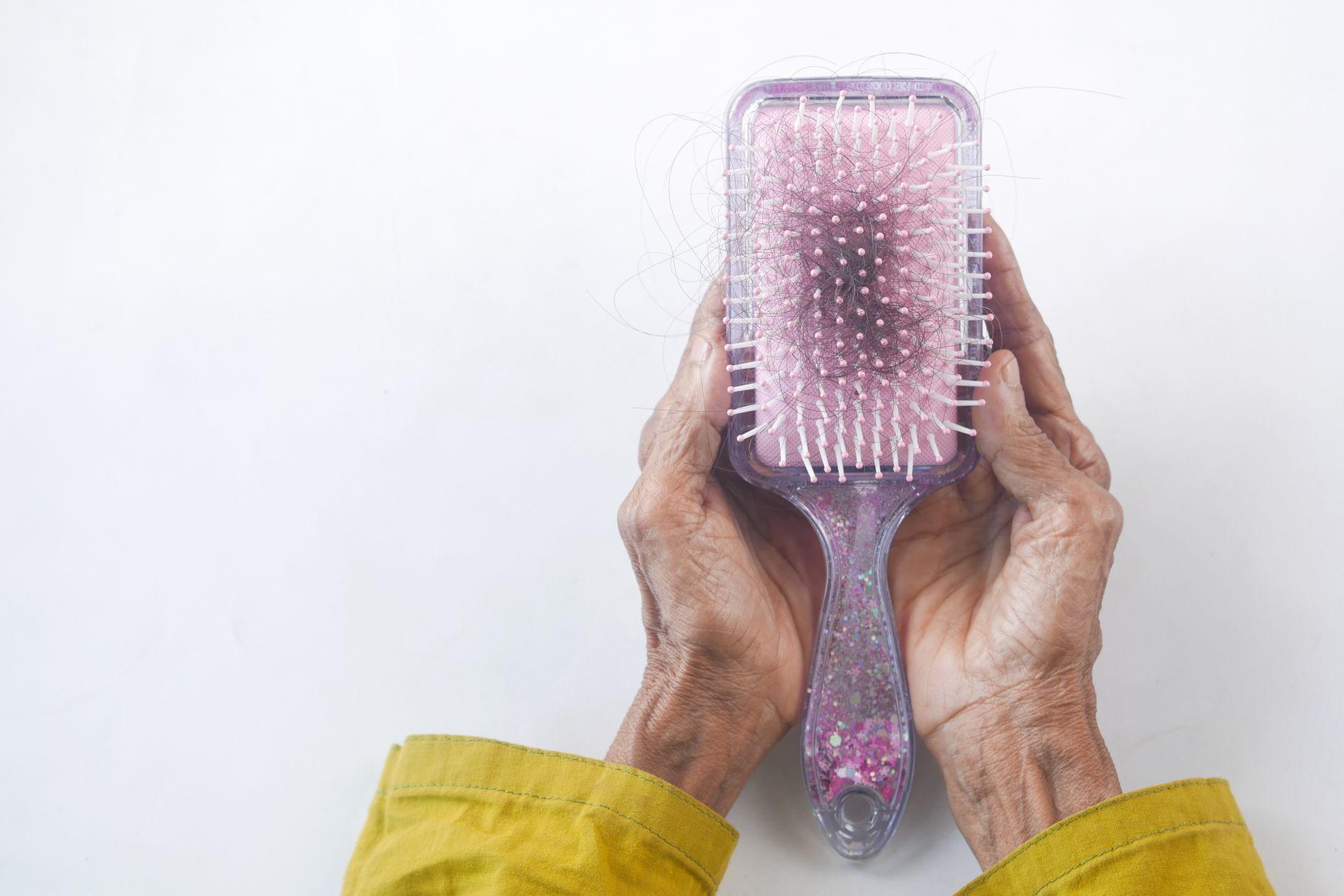
Quite apart from the question of what a nutrient achieves, there is a biological lower limit to the period in which anything could show on hair and nails at all. It is regularly underestimated at the point of purchase.
Measured in 22 healthy young adults, fingernails grew on average 3.47 mm per month and toenails 1.62 mm (Yaemsiri et al., J Eur Acad Dermatol Venereol 2010). A fingernail is around 12 to 15 mm long — so it renews itself completely in about four to six months, a big toenail rather in a year. What is formed at the nail root today reaches the tip next quarter at the earliest.
With hair it is similar: scalp hair grows around one centimetre a month, and each hair goes through a growth phase lasting several years before it moves into a resting phase of about two to three months and falls out. A hair lying in the brush today ended its growth phase months ago.
Nothing about efficacy follows from this — but it does follow that an assessment after two or three weeks is not an assessment. Anyone wanting to test should think in quarters and keep an eye on total intake: the tolerable upper intake level for zinc is 25 mg a day from all sources combined.
Frequently asked questions
Are white spots on nails a sign of zinc deficiency? That is the most widespread assumption on the subject and it is not supported dermatologically. White spots (leukonychia punctata) arise overwhelmingly from small knocks to the nail matrix — the place where the nail is formed. Because the nail takes months to grow out, the triggering event lies far back and is no longer remembered. There is no reliable evidence of a connection with zinc or calcium intake.
How much zinc do I need for the three claims? For the statements on the pack, 1.5 mg per daily dose is enough. For intake itself, the German Nutrition Society (DGE 2019) gives 7 to 10 mg a day for women and 11 to 16 mg for men, staggered by phytate intake. Why wholegrains and pulses slow absorption is set out in Taking zinc: timing, meals and spacing.
Does zinc help with hair loss? This statement is not approved for food supplements, and the reason is not merely legal: hair loss has many causes, of which a zinc deficiency is only a rare one. With persistent hair loss, investigation by a doctor is the more sensible step than a supplement taken on suspicion.
Does zinc work differently applied externally than taken internally? Zinc oxide and zinc pyrithione in ointments, pastes or shampoos are cosmetic or medicinal applications and have nothing to do with zinc intake through food. The three approved claims relate exclusively to uptake via the gastrointestinal tract.
Food supplements are not a substitute for a balanced and varied diet and a healthy lifestyle.