Biotin and zinc: why they always appear together
Futures Nutrition Editorial Team · 12 August 2026

The short answer: the combination does not come from a laboratory but from the list of approved claims. Biotin may say something about skin and hair — about nails it may not. Zinc may say something about all three. Anyone who wants to print "skin, hair and nails" on a pack therefore needs a second nutrient, and zinc is the obvious one. An interplay between the two in the body that could be measured is not part of the reasoning. That does not make the combination pointless — but the reason is a different one from what the pack suggests, and it changes what is worth looking at when comparing two products.
What each of the two may carry on the pack
Approved health claims are set out in the annex to Regulation (EU) No 432/2012. For biotin there are seven entries, for zinc eighteen. On the subject of skin, hair and nails they almost overlap — but only almost:
| Approved wording | Biotin | Zinc |
|---|---|---|
| … contributes to the maintenance of normal skin | yes | yes |
| … contributes to the maintenance of normal hair | yes | yes |
| … contributes to the maintenance of normal nails | no | yes |
| … contributes to the maintenance of normal mucous membranes | yes | no |
| … contributes to normal energy-yielding metabolism | yes | no |
| … has a role in the process of cell division | no | yes |
| … contributes to the protection of cells from oxidative stress | no | yes |
The gap in the third row is the entire reason for the pairing. For biotin and nails the data submitted were not sufficient for EFSA; a nail sentence was never approved. Zinc has one (EFSA Journal 2010;8(10):1819). A product containing only biotin may therefore not say a word about nails — no matter how much of it is inside. What the individual sentences cover in substance, and where "maintenance" ends, is set out in Zinc for skin, hair and nails.
The threshold at which the sentences apply at all
Both nutrients need the same condition: the product must supply at least 15 % of the nutrient reference value per daily dose (Regulation (EC) No 1924/2006, Annex). The reference values are in Regulation (EU) No 1169/2011, Annex XIII — 50 µg for biotin, 10 mg for zinc.
| Nutrient | Nutrient reference value | 15 % of it | from this amount the sentences are permitted |
|---|---|---|---|
| Biotin | 50 µg | 7.5 µg | skin, hair, mucous membranes, energy metabolism … |
| Zinc | 10 mg | 1.5 mg | skin, hair, nails, cell division, immune system … |
A combination product with 7.5 µg of biotin and 1.5 mg of zinc may thus carry half a dozen sentences — more, that is, than a tub with 10,000 µg of biotin and nothing else. The number of advertising sentences on a pack says something about the number of ingredients, nothing about the amount. The sentence is a threshold, not a scale; why this is regularly misread with biotin in particular is explained in Biotin for hair.
Which of the two actually runs short
This is where the two substances part company clearly, and it is the practically most important difference.
Biotin is regarded in Germany as being supplied in adequate amounts. The estimated value of the German Nutrition Society (DGE) is 40 µg per day, and the second National Nutrition Survey (NVS II) found median intakes for adults in exactly this order of magnitude. A deficiency arises practically only through particular triggers — several raw egg whites a day, artificial nutrition without added biotin, certain medicines, rare enzyme defects. The details are in Biotin deficiency.
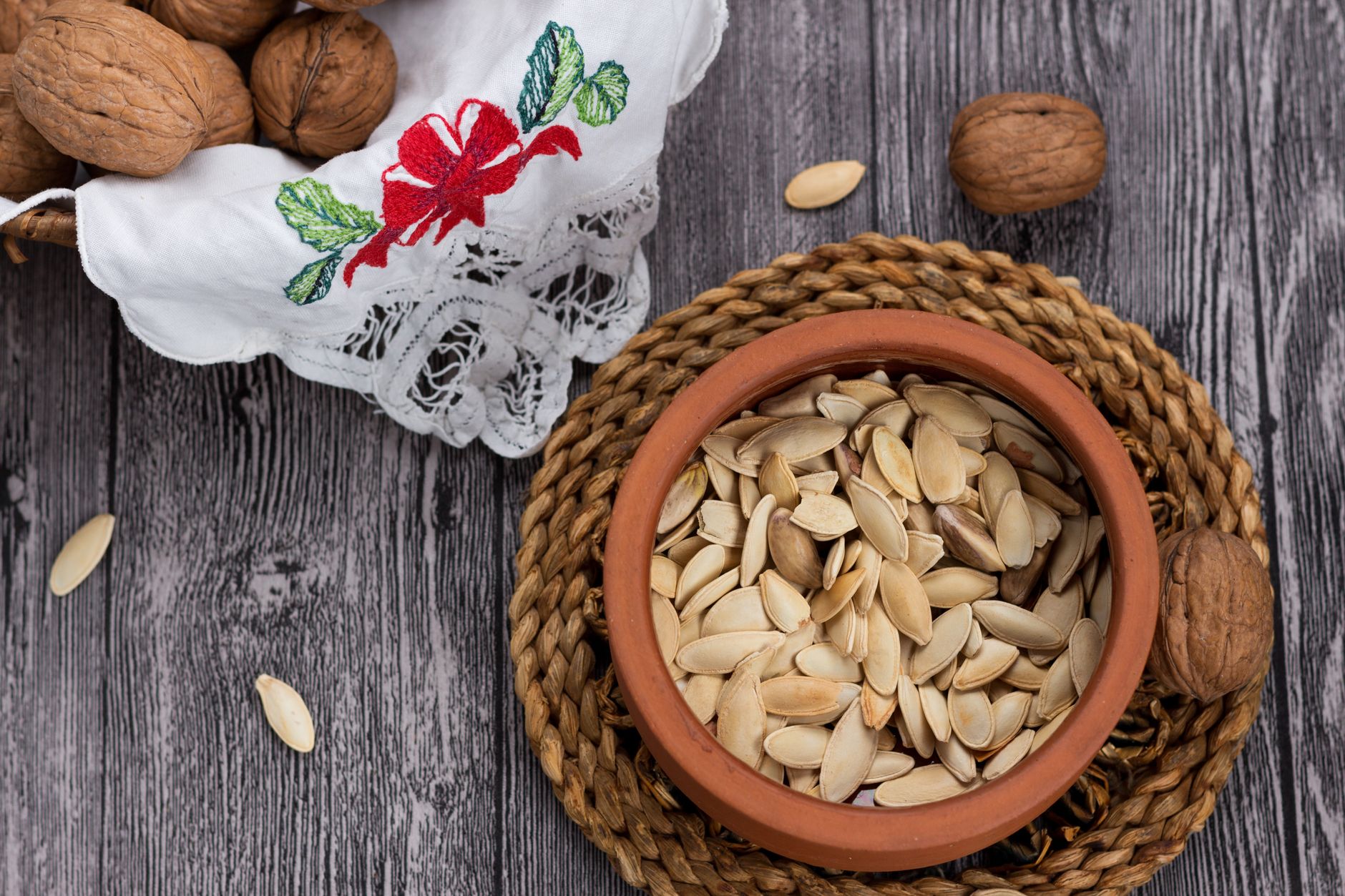
Zinc is the shakier of the two. The D-A-CH reference values were graded in 2019 according to phytate intake: women 7 to 10 mg, men 11 to 16 mg per day, depending on how much wholegrain and how many pulses are on the plate. A poor supply status has been observed more often in older people and in patients with chronic inflammatory bowel disease; vegetarian diets can also raise the risk through higher phytate amounts. Severe deficiency is rare in this country. The grading, and what the menu contributes, is in Zinc daily requirement.
For the purchasing decision that means: of the two substances in a hair complex, zinc is the one that can actually close a gap. Biotin mainly supplies the sentence on the pack.
Why the two amounts cannot be raised together
Biotin and zinc behave in opposite ways at the upper limits, and that has consequences for every combination product.
| Biotin | Zinc | |
|---|---|---|
| Tolerable upper intake level (UL) | none derived (SCF 2001: data insufficient) | 25 mg/day (SCF 2003) |
| Maximum amount for food supplements | not laid down in law | 6.5 mg per daily dose proposed (BfR 2021) |
| Usual amounts on the market | 5,000 to 10,000 µg | 5 to 25 mg |
Biotin can therefore be set almost arbitrarily high in a product, zinc cannot. In a fixed combination it is consequently the zinc share that determines how many tablets a day make sense — anyone who wants to double the biotin amount inevitably doubles the zinc as well. And anyone taking a zinc product alongside the hair complex adds the two together: the 25 mg apply to the total from food and supplements, not per tub. How that figure comes about and what exceeding it means in practice is in Too much zinc; the background on copper, on which the limit hangs, is in Zinc and copper.
Do biotin and zinc interfere with each other?
For absorption: no. There is no documented interaction between biotin and zinc — they do not compete for the same transport route. The known competitors of zinc are iron and calcium in high single doses; what there is to that, and what spacing the data actually support, is in Taking zinc. The only documented brake on biotin is avidin from raw egg white, which is covered in Taking biotin.
There is a practical collision all the same, and it concerns not the stomach but the laboratory: from 150 µg of biotin per daily dose the German Federal Institute for Risk Assessment (BfR) reckons with interference in blood tests based on biotin-streptavidin binding — thyroid values, troponin, vitamin D. Every hair complex with 2,500 or 5,000 µg lies far above that. Before a blood draw this matters; the pause times are in Biotin and blood tests.
Combination product or two separate ones
A fixed combination takes the decision away and is convenient — but it also fixes the ratio. Two single products can be dosed independently: anyone who wants to cover their zinc requirement while keeping biotin low (or the other way round) can only do it that way.

Our Biotin 10,000 µg is a pure single-nutrient product in the upper amount class — where these figures come from and what underpins them is in High-dose biotin.

The Zinc 25 mg + vitamin B3 supplies zinc as gluconate; the 25 mg per tablet correspond to the tolerable upper intake level, which is why the classification in Too much zinc belongs with it. Further strengths and forms are in the biotin and zinc categories.
Food supplements are not a substitute for a balanced and varied diet and a healthy lifestyle.
Frequently asked questions
Does a combination product do more than biotin alone? It may say more — the nail sentence, for example. Whether it does more depends on whether there really is a gap for one of the nutrients it contains. With biotin that is the exception in Germany; with zinc it is possible depending on the diet.
Can I take biotin and zinc at the same time? Yes, an interaction between the two is not documented. Zinc is absorbed better on an empty stomach but tolerated less well — the usual compromise is a gap of around two hours from a meal.
Why do many hair products also contain selenium? Because selenium may carry the same two sentences about hair and nails as zinc. For the manufacturer that is two more lines on the pack; for the buyer it is a third nutrient whose amount has to be checked separately — and with selenium the distance between requirement and upper limit is particularly narrow.
How quickly does anything show on the hair? Scalp hair grows about one centimetre a month, and what grows today was laid down in the follicle weeks ago. Every change therefore takes months, not days — the timeline is in Taking biotin.