Biotin and blood tests: how long to pause beforehand
Futures Nutrition Editorial Team · 12 August 2026
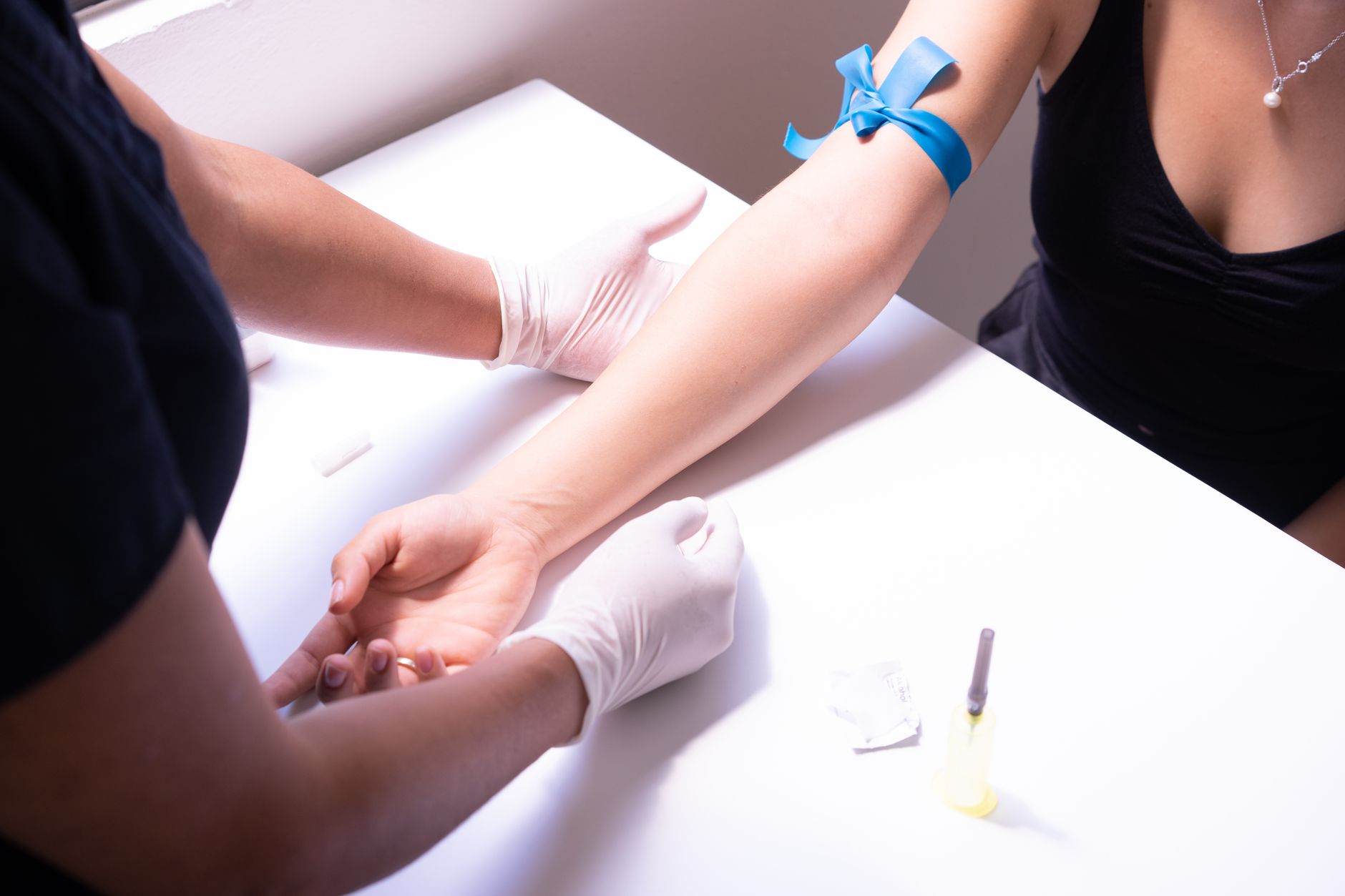
The short answer: biotin does not change the body, it changes the measurement. Many laboratory tests rely on the binding between biotin and the protein streptavidin — if there is a lot of free biotin in the blood, it competes with the test reagent, and depending on how the test is built the result comes out falsely high or falsely low. The German Federal Institute for Risk Assessment (BfR) expects this from 150 µg per daily dose upwards. The most important step is therefore not stopping the supplement but the sentence before the blood draw: "I take biotin." Where a pause is made, professional bodies give as rules of thumb at least 8 hours after 5–10 mg and at least 72 hours after amounts in the three-digit milligram range — the actual interval is set by the laboratory, because it depends on the assay system.
This is the practically most important point in the whole biotin topic. It has nothing to do with tolerability: no tolerable upper intake level has ever been derived for biotin, because even at intakes far above the reference value no adverse effects were observed. What high amounts can do, they do in diagnostics.
Why a vitamin can disturb a blood test
Immunoassays detect biomarkers by binding them to antibodies and holding the whole thing on a surface. A great many assay systems use the strongest pair biology and chemistry know for this: biotin and streptavidin. That works reliably — as long as the only biotin in the tube is the one the manufacturer put there.
If biotin from a tablet is added, it occupies binding sites on the streptavidin that are needed for detection. The Direct Healthcare Professional Communication ("Rote-Hand-Brief") on biotin-containing medicines from May 2019 describes the consequence plainly: laboratory values can come out "falsely elevated/positive (competitive assay principle) or falsely lowered/negative (sandwich principle)". Affected are hormones, cardiac, tumour and infection markers, in part also point-of-care rapid tests such as troponin and screening tests such as HIV.
Two details make this relevant. First, the interference does not depend on which value is measured but on how — the same hormone can be disturbed on one analyser and not on the next. Second, before such a test neither is the biotin concentration of the sample routinely determined, nor does sample preparation include a step that removes biotin. So there is no automatic alarm; without a heads-up, nothing stands out.
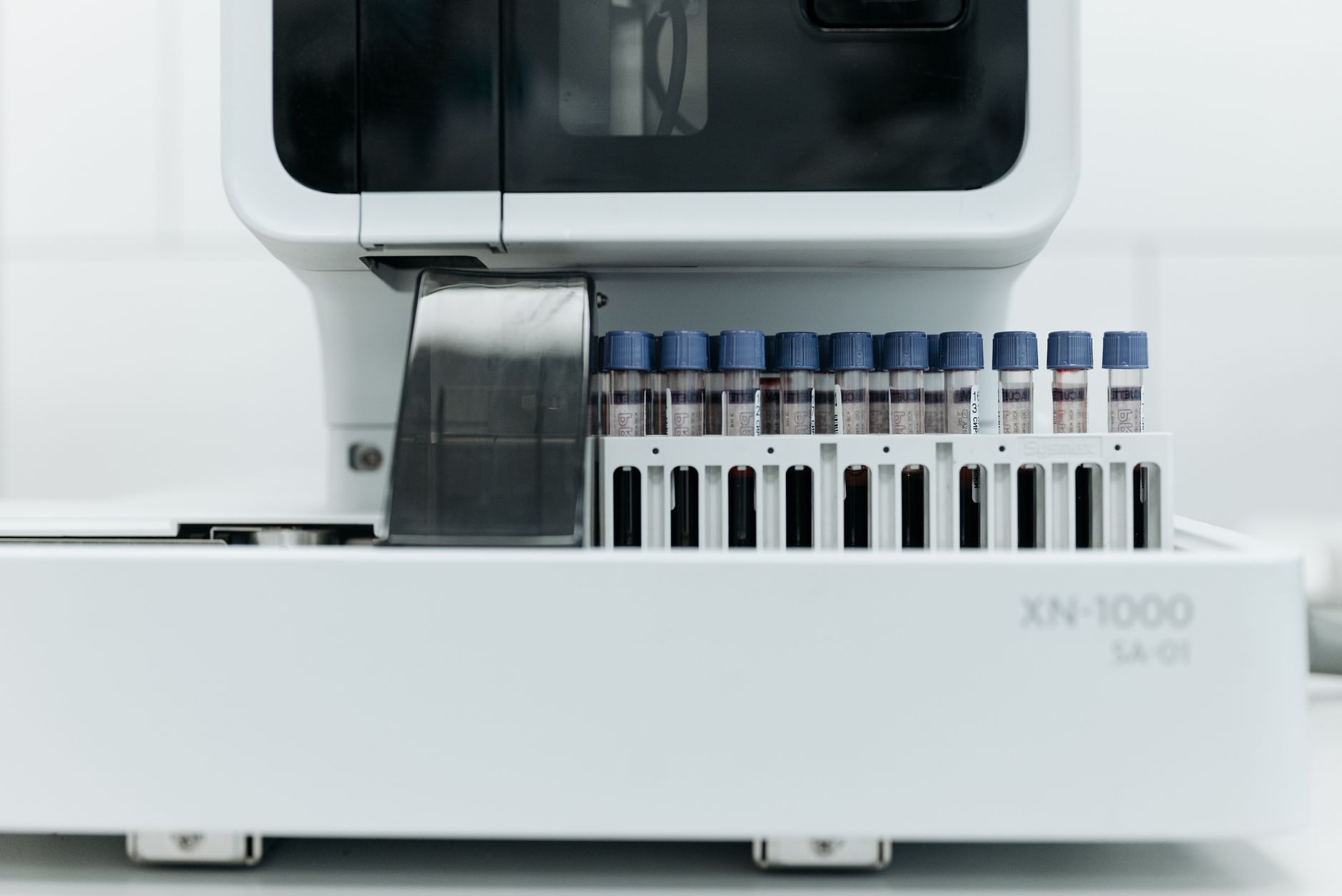
Falsely high or falsely low — depending on the assay design
| Assay principle | Direction of the error | Typical values |
|---|---|---|
| Competitive (small molecules) | falsely elevated | free T3, free T4, cortisol, testosterone, estradiol |
| Sandwich (larger molecules) | falsely lowered | TSH, troponin, PTH, 25-OH vitamin D, tumour markers |
Out of this combination comes the pattern that appears most often in the case reports: T3 and T4 too high, TSH too low — biochemically the picture of an overactive thyroid, in a person with nothing wrong. The Rote-Hand-Brief cites cases in newborns, children and adults in which Graves' disease was simulated this way. The second documented case runs in the other direction: a falsely negative troponin value under high-dose biotin led to a heart attack being missed.
How big the effect is in figures was measured by a study in JAMA in 2017. Six healthy adults took 10 mg of biotin daily for seven days — an amount that exists just like that on the shelf. Of 23 biotinylated assay methods, 9 were significantly disturbed afterwards: 5 of 8 competitive assays upwards, 4 of 15 sandwich assays downwards. Of the 14 control assays without biotin technology, none was affected. That is the cleanest evidence that what derails here is not the metabolism but the measuring method.
From what amount it becomes an issue at all
The threshold both German authorities orient themselves by is 150 µg per day. The Pharmacovigilance Risk Assessment Committee PRAC of the European Medicines Agency could not conclusively assess the risk below this amount (oral; parenteral 60 µg) for lack of data — which is why medicines from 150 µg per dose unit have carried a corresponding warning since 2019, and the BfR recommends a statement to the same effect on the pack for food supplements.
| Daily amount | Where it occurs | Meaning for laboratory tests |
|---|---|---|
| 40 µg | estimated value for an adequate intake (DGE) | no role |
| 36–48 µg | actual intake from the diet (NVS II) | no role |
| 50 µg | 100 % of the labelling reference value, many multivitamins | below the threshold |
| from 150 µg | skin-hair-nail products, B complexes, single-nutrient products | interference documented |
| 2.5–10 mg | biotin single-nutrient products, pharmacy medicines | marked levels, pause sensible |
| 300 mg | study dose in multiple sclerosis research | strong interference, 72 h pause |
One difference the BfR names explicitly matters here: from foods biotin is absorbed at about 50 %, from preparations in which it is present in free form at almost 100 %. A tablet therefore affects the blood level more strongly than the same figure on the plate. And the amount often sits where you do not look for it — in combination products for skin, hair and nails or in B complexes. Where the high strengths come from is set out in High-dose biotin: where the milligrams come from.
How long to pause beforehand?
There is no official figure, and there is a reason for that. The Rote-Hand-Brief points to the "variable pharmacokinetics of biotin and the specific interference thresholds of the respective immunoassays" — depending on the analyser the limit lies at 20, 30 or more ng/ml, and depending on the dose the blood level is far above that or just below it.
The guidance document of the American professional body for clinical chemistry (AACC/ADLM) gives the most concrete rules of thumb: after 5–10 mg of biotin at least 8 hours should pass before the blood draw; with assay systems that have a low interference threshold, up to 72 hours may be needed. Anyone on high-dose therapy from 100 mg daily should pause for at least 72 hours. To put the orders of magnitude in perspective: after 10 mg, peak concentrations of 55–140 ng/ml are reached, after 100 mg 375–450 ng/ml. The half-life is around two hours at low intakes and up to 18.8 hours after high doses — which is why "I did not take it this morning" is not enough at high strengths.
With impaired kidney function all of this lengthens: biotin is excreted mainly via the urine, and levels and half-life are correspondingly higher. According to the BfArM the same applies to newborns, children and pregnant women, where particular attention is warranted anyway.
What you do in practice

Say it, do not quietly stop. The Rote-Hand-Brief is addressed first of all to doctors: they should routinely ask about biotin before ordering laboratory tests. In practice that question does not always come — then you ask it yourself. The laboratory can then choose a non-biotinylated method, pass the sample to a laboratory with a different assay system, or repeat the measurement after an individually set interval.
Do not pause a prescribed medicine on your own initiative. Anyone taking biotin for an inborn defect of biotin metabolism needs it without gaps; the pause before the laboratory appointment is then decided by the treating practice.
With a food supplement the pause is uncritical. Leaving a hair preparation aside for two or three days costs nothing — there is no effect that would be lost in that time.
With an unexpected finding, think of biotin. If a laboratory value does not fit how you feel — conspicuous thyroid values without any symptom, for example — the biotin question is the cheapest explanation you can check. That is exactly what the warning in the product information aims at.
What this means for choosing
The laboratory question is not an argument against high strengths but a piece of information that belongs to them. Anyone who deliberately doses high should know it — and anyone who has their thyroid values checked regularly anyway simply plans the interval in.

Our Biotin 10,000 µg lies clearly above the 150 µg threshold — so at a blood draw it belongs in the conversation. Anyone who would rather avoid that will find lower strengths and combinations in the biotin category. Food supplements are not a substitute for a balanced and varied diet and a healthy lifestyle.
Regardless of the amount, the authorised claims from Regulation (EU) No 432/2012 apply unchanged:
Biotin contributes to normal energy-yielding metabolism.
Biotin contributes to the maintenance of normal hair.
Frequently asked questions
Do I have to stop biotin before every blood draw? Not necessarily. What matters is that the practice and the laboratory know about the intake — then they can choose an insensitive method or set the pause. Below 150 µg per day, that is with most multivitamins, interference is not to be expected on current data.
Is it enough to skip the tablet on the morning of the blood draw? At 5–10 mg, at least 8 hours counts as the rule of thumb, which a fasting blood draw often already satisfies. At very high amounts and with assay systems that have a low interference threshold that is not enough: there, up to 72 hours are recommended.
Which values are affected most often? In the case reports it is thyroid values (TSH falsely low, T3 and T4 falsely high) and troponin (falsely low). Also described are parathyroid hormone, 25-OH vitamin D, cortisol, sex hormones and tumour markers. A French laboratory was able to show in 2017 that conspicuous hormone profiles under high-dose biotin normalised as soon as the biotin was removed from the sample before the measurement — the hormones themselves had been fine the whole time.
Is such a note on every pack? For medicines it is mandatory in the package leaflet as soon as 150 µg per dose unit are reached. For food supplements it is a recommendation of the BfR, not a requirement — so it can be missing even though the product lies far above the threshold. What is on the pack and what is not is a question of its own for the hair claim as well: Biotin for hair.
Sources: BfR, FAQ "Biotin: Supplemente können Laboruntersuchungen verfälschen", 21 May 2026 (150 µg threshold, recommendation of a statement, absorption rates, NVS II intake, risk groups) · Rote-Hand-Brief "Risiko falscher Ergebnisse von Laboruntersuchungen durch Biotininterferenzen", BfArM, May 2019 (mechanism, assay principles, case reports, recommended actions, PRAC assessment) · AACC/ADLM, Guidance Document on Biotin Interference in Laboratory Tests (waiting times, plasma levels, half-life) · Li D, Radulescu A et al., "Association of Biotin Ingestion With Performance of Hormone and Nonhormone Assays in Healthy Adults", JAMA 2017 · Piketty ML et al., "High-dose biotin therapy leading to false biochemical endocrine profiles", Clinical Chemistry and Laboratory Medicine 2017 · DGE, reference values for biotin · Regulation (EU) No 432/2012, Annex.