Biotin for nails: what the data actually shows
Futures Nutrition Editorial Team · 12 August 2026
Biotin is regarded as the nail vitamin — and nails are precisely the one thing that may not be claimed for biotin in the EU. Of the seven approved statements for biotin, not a single one mentions nails; the sentence “contributes to the maintenance of normal nails” belongs to zinc and selenium. The reputation goes back to three small studies between 1989 and 1993, all of them using 2.5 mg per day, none of them with a control group. Anyone picking up a pack of biotin because of their nails should know both: what was actually investigated, and in what amount.
Why no pack carries a biotin nail sentence
Approved health claims are a list, not an advertising text: EFSA assesses the evidence, the European Commission adopts the result, and the permitted wording is set out in the annex to Regulation (EU) No 432/2012. For biotin there are seven entries — skin, mucous membranes, hair, energy-yielding metabolism, macronutrient metabolism, the nervous system and psychological function. The full table is in Biotin for hair: what the claim really says.
Nails are not missing there by accident. They were applied for and assessed along with the rest: the 2010 EFSA opinion carries “maintenance of normal nails (ID 121, 2877)” in its title (EFSA Journal 2010;8(10):1728). What was subsequently written into the regulation was skin, mucous membranes and hair — not nails.
| Nutrient | Approved wording on nails | Permitted from (15 % NRV) |
|---|---|---|
| Zinc | Zinc contributes to the maintenance of normal nails | 1.5 mg (NRV 10 mg) |
| Selenium | Selenium contributes to the maintenance of normal nails | 8.25 µg (NRV 55 µg) |
| Biotin | — no approved claim | — |
That explains how typical “skin, hair and nails” products are built: they are combination products, because each nutrient present in source amounts brings along exactly those sentences that are cleared for it. If such a pack says anything about nails, the sentence comes from zinc or selenium — even when biotin is the word printed large on the front. What the zinc claims cover in detail is in Zinc for skin, hair and nails; the products are in the zinc and selenium categories.

Where the reputation does come from: three studies with 2.5 mg
The starting point was veterinary medicine. In horses and pigs, hooves and claws improve under biotin supplementation — both are keratin structures like the human nail. On the strength of that observation, biotin was tested in people with brittle fingernails from the late 1980s onwards.
| Study | Participants | Dose | Result | Control group |
|---|---|---|---|---|
| Floersheim 1989 (Z Hautkr) | 71, of whom 45 evaluable | 2.5 mg/day | 41 of 45 (91 %) with clear improvement after a mean of 5.5 months | none |
| Colombo 1990 (J Am Acad Dermatol) | 32, of whom 8 with before-and-after measurement | 2.5 mg/day | nail thickness under the electron microscope +25 % | 10 people with normal nails for comparison, without biotin |
| Hochman 1993 (Cutis) | 35 from a nail clinic | 2.5 mg/day | 22 (63 %) with clinical improvement, 13 (37 %) unchanged | none, retrospective |
These are decently documented observations — and at the same time the reason why no approved claim came out of them. In none of the three investigations was there a placebo group against which the improvement could have been measured; the assessment was in part carried out by the affected people themselves; the numbers of participants are in the double digits; and the 1990 investigation came from the laboratory of a vitamin manufacturer. A 2018 review (Lipner and Scher, Journal of Dermatological Treatment 29(4):411–414) sums up the state of things by saying that larger controlled trials would be needed to determine efficacy and dosing at all. They have not been delivered to this day.
The 2017 systematic review fits with this (Patel, Swink, Castelo-Soccio, Skin Appendage Disorders, PubMed 28879195): 18 documented cases with improvement in hair or nails — in every single one there was an underlying disorder, a proven biotin deficiency, an enzyme defect or a diagnosed brittle nail syndrome. For people without such a background there are no robust indications.
What brittle nails actually are
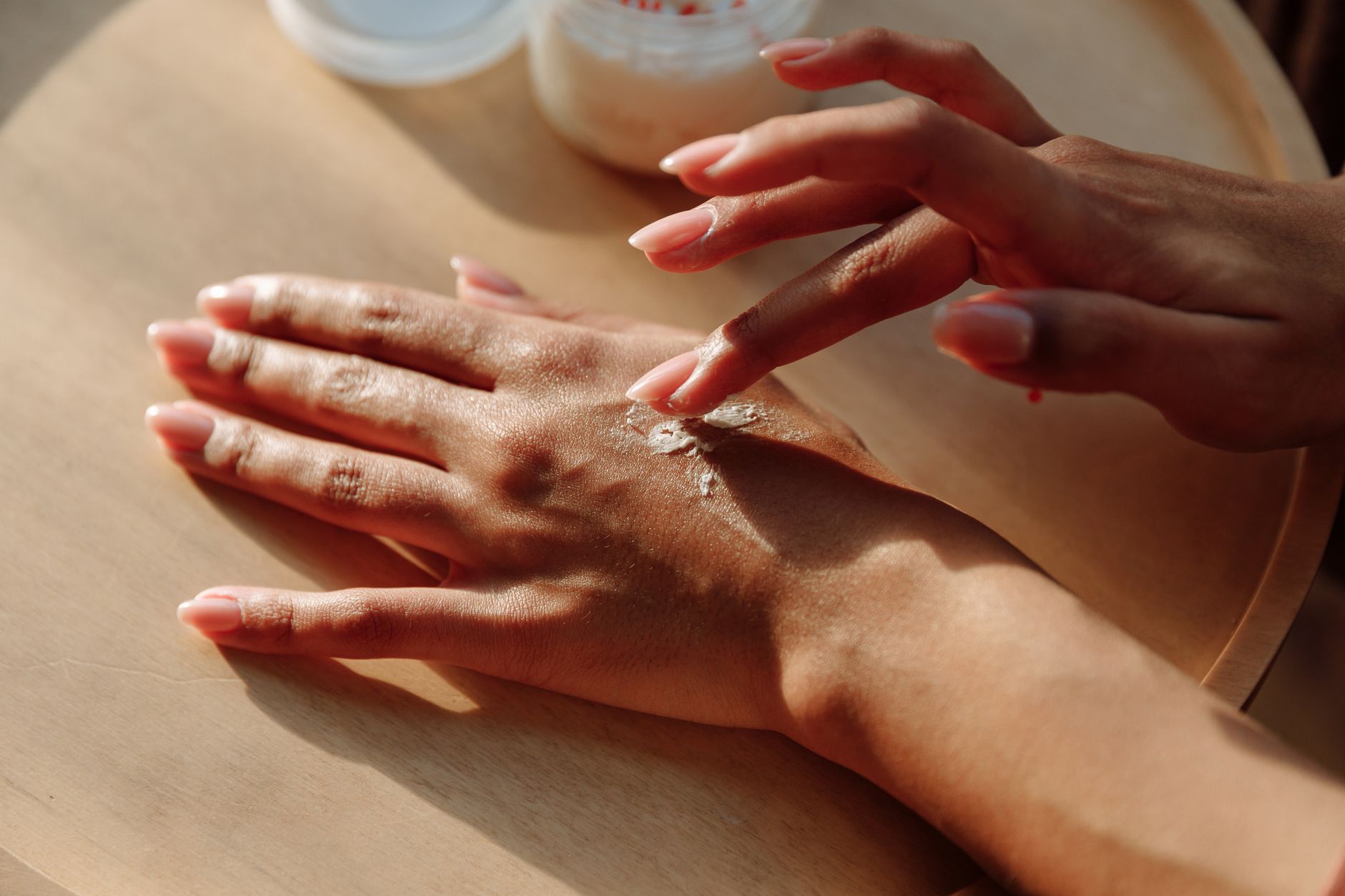
According to a 2020 review (Chessa et al., Dermatologic Therapy 10(1):15–27), nail brittleness affects up to 20 % of the population, women over 50 in particular, and fingernails more often than toenails. Two presentations are typical: the nail plate splitting into layers (onychoschizia) and lengthwise splits (onychorrhexis).
The review distinguishes a primary, idiopathic form from a secondary one that has an identifiable cause. And that cause often lies outside nutrition:
- Repeated wet-and-dry. Frequent hand washing, washing up, cleaning: the constant swelling and drying loosens the bond between the horny cells of the nail plate.
- Solvents. Nail polish remover, cleaning agents and workplace chemicals dissolve the lipids between the cells and with them the cohesion.
- Iron status. With a ferritin value below 10 ng/ml, iron can be the decisive point — measurable, unlike much else. How to read such values is explained in Recognising iron deficiency.
- Thyroid function. In an underactive thyroid, thin, slow-growing, brittle nails are common — that is a matter for medical assessment, not a question of the dose on the shelf.
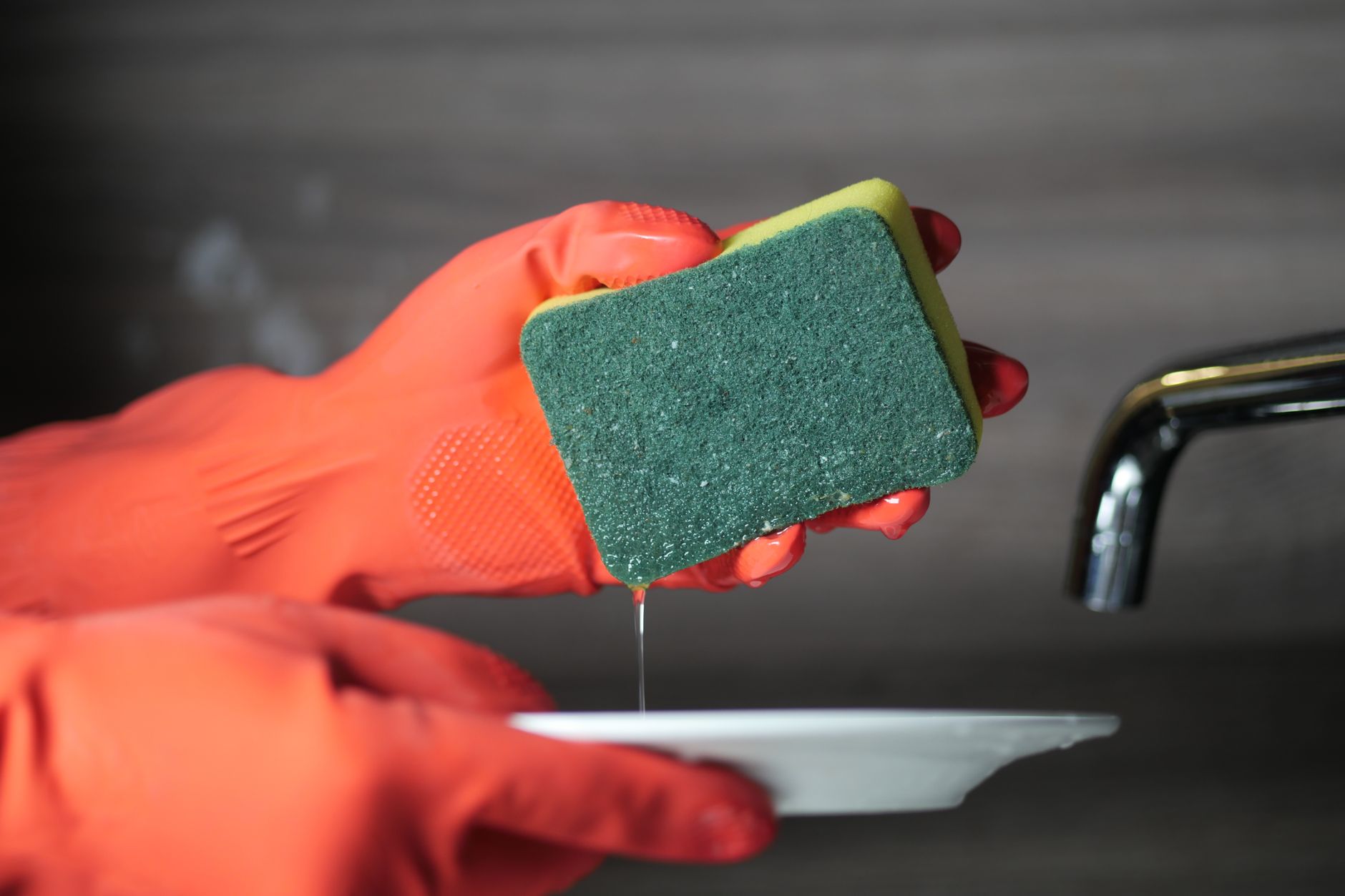
In practice this means: gloves for wet work and a hand cream with re-fatting and moisture-binding components act on the same mechanism as any supplement — only directly. The 2020 review names both explicitly alongside supplementation, not instead of it.
The amount in question — and its price
2.5 mg corresponds to 2,500 µg, that is 50 times the nutrient reference value of 50 µg. For the attempt with brittle nails, the 2020 review names 5 to 10 mg a day over three to six months — and in the same paragraph the catch: from about 10 mg a day onwards, falsely high or falsely low laboratory values are to be expected.
That is exactly where the practical price of high amounts lies. In 2019 the European Medicines Agency considered the evidence for interference with immunoassays sufficient from 150 µg of biotin per day; depending on the test design, thyroid values and the cardiac marker troponin are among those affected. Which values tip which way, and how long to pause before a blood draw, is in Biotin and blood tests. An upper limit in the sense of a Tolerable Upper Intake Level, by contrast, does not exist for biotin — according to the BfR the dose-response data for one are missing, and adverse effects were not observed even far above the reference value (opinion 2021).

At 10 mg per tablet, our Biotin 10,000 µg sits at the upper end of what that review states — and at 66 times the laboratory threshold. Further strengths and combinations are in the biotin category. Food supplements are not a substitute for a balanced and varied diet and a healthy lifestyle.
Why you see nothing in four weeks
The nail grows out of the matrix beneath the cuticle; what is visible today was formed months ago. Fingernails gain an average of 3.47 mm per month, toenails 1.62 mm (Yaemsiri et al., Journal of the European Academy of Dermatology and Venereology). It therefore takes around four to six months for a fingernail plate to be completely replaced once, and up to a year and a half for toenails.
That is why all three of the old studies work with periods of half a year and more — and why an assessment after four weeks is technically impossible, however high the dose. Anyone giving it a try should plan for that period from the outset and also tackle the mechanical causes during that time; otherwise you will not know at the end what it was down to.
Frequently asked questions
Does biotin make nails harder? Nobody is allowed to claim that, and the evidence does not support it either: there is no approved claim for biotin on nails. The three studies with 2.5 mg report improvements in people who already had brittle nails, all of them without a control group.
Why does my skin-hair-nails capsule still say something about nails? Because the sentence belongs to a different ingredient — as a rule to zinc or selenium, both of which have an approved nail claim. It has to be clearly assigned to the nutrient in question and must not appear to come from biotin.
Is an ordinary biotin product with 50 µg enough? For supply, yes: the DGE estimated value is 40 µg per day, and the usual diet reaches it. The nail studies worked with 50 times that — that is a deliberate decision in favour of a high amount, not a matter of covering requirements.
Should I pause before a blood test? If you take high-dose biotin: say so before the blood draw in any case. Interference with immunoassays starts at 150 µg per day, and nail amounts are many times above that.
Sources: Regulation (EU) No 432/2012, annex (approved claims for biotin, zinc, selenium) · Regulation (EU) No 1169/2011, Annex XIII (nutrient reference values) · EFSA Journal 2010;8(10):1728 (biotin, among others “maintenance of normal nails”, ID 121, 2877) · BfR, “Höchstmengenvorschläge für Biotin in Lebensmitteln inklusive Nahrungsergänzungsmitteln”, 2021 · EMA/PRAC, Recommendations on signals, 2019 · DGE, reference value for biotin (derivation 2020) · Floersheim GL, “Behandlung brüchiger Fingernägel mit Biotin”, Z Hautkr 1989;64(1):41–48 · Colombo VE et al., “Treatment of brittle fingernails and onychoschizia with biotin”, J Am Acad Dermatol 1990;23(6 Pt 1):1127–1132 · Hochman LG et al., “Brittle nails: response to daily biotin supplementation”, Cutis 1993;51(4):303–305 · Lipner SR, Scher RK, “Biotin for the treatment of nail disease: what is the evidence?”, J Dermatolog Treat 2018;29(4):411–414 · Patel DP et al., “A Review of the Use of Biotin for Hair Loss”, Skin Appendage Disorders 2017;3(3):166–169 · Chessa MA et al., “Pathogenesis, Clinical Signs and Treatment Recommendations in Brittle Nails: A Review”, Dermatol Ther (Heidelb) 2020;10(1):15–27.