Griffonia simplicifolia: the plant behind 5-HTP
Futures Nutrition Editorial Team · 11 August 2026
The 5-HTP in European food supplements almost always comes from the seeds of a single plant: Griffonia simplicifolia, a climbing shrub from the forests of West and Central Africa. The seeds contain 5-HTP naturally in an unusually high amount — 156 mg per gram, that is around 16 percent of the seed weight, has been measured, and figures in the literature range between 10 and 20 percent (Vigliante, Mannino, Maffei, Molecules 2019). Everything else is processing: drying, milling, extracting with water or a water-alcohol mixture, concentrating, drying.
One point matters in practice above all others: "Griffonia extract" and "5-HTP" are not the same number. How much 5-HTP a tablet contains is stated neither by the amount of extract nor by the extract ratio — only by the standardisation figure. This article follows the path from the plant to that one line on the label.
The plant: a climbing shrub, not a tree and not a bean
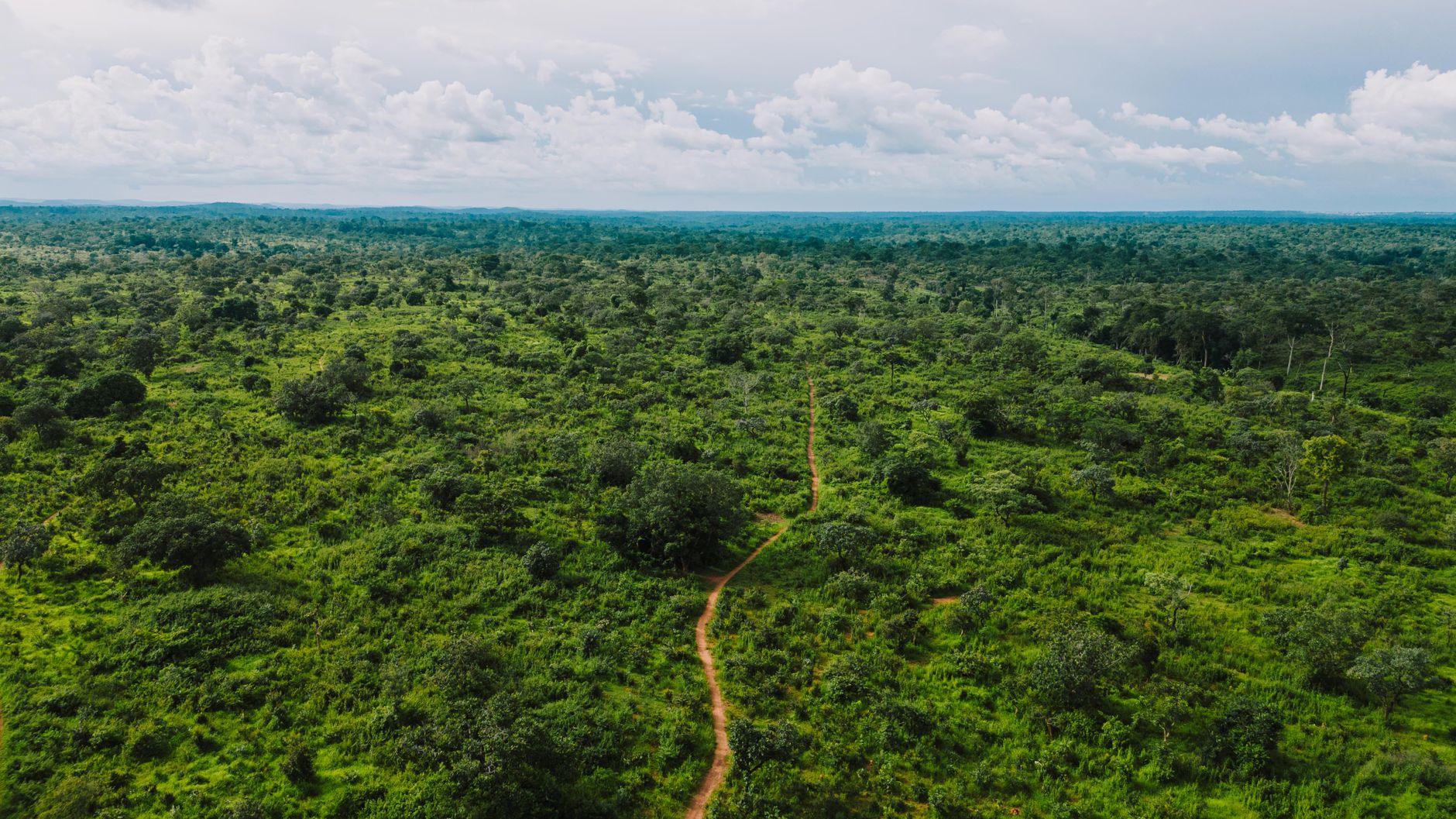
Griffonia simplicifolia belongs to the legume family (Fabaceae; in older literature listed as Caesalpiniaceae) and is occasionally traded under the incorrect name Bandeiraea simplicifolia. The database Useful Tropical Plants describes it, following PROTA and Burkill, as an evergreen, hard-wooded shrub or large climber with short, stout, woody tendrils, reaching about three metres in height. It grows in grass savannah, on the termite mounds of the coastal plains, in thickets and as a climber in secondary and gallery forests — distributed from Liberia to Nigeria as well as in Gabon and Congo.
In German it is often called "African black bean", including by the German consumer advice centres. The name has taken hold, but it is misleading: this is not an edible bean but a wild plant whose seeds are collected as a raw material.
Two botanical peculiarities explain why supply is not a given: the species is pollinated by birds, and one pod holds only one to four seeds, which are dispersed ballistically, that is over a short distance (Cunningham, Brinckmann, Harter, Journal of Ethnopharmacology 2021;278:114202, PubMed 33991640).
Today's use is, incidentally, the more recent one. Traditionally, parts of the plant were used in West Africa for insecticides, as animal fodder, for dyes and mordants, and as chewing sticks — the same review lists these applications.
What is in the seeds
The seeds are chemically unusually well characterised. The following list comes from the 2019 characterisation and refers to one gram of seed (dry weight):
| Compound | Amount per g | Share of the nitrogen compounds recorded |
|---|---|---|
| 5-HTP (5-hydroxy-L-tryptophan) | 156.48 mg | 86.5 % |
| 4,5-tryptophan-dione | 11.87 mg | 6.6 % |
| Hyrtioerectin B | 6.75 mg | 3.7 % |
| 3-carboxy-6-hydroxy-β-carboline | 2.69 mg | 1.5 % |
| 5-hydroxytryptamine | 1.15 mg | 0.6 % |
| Griffonin | 0.75 mg | 0.4 % |
| Total | 181.10 mg | 100 % |
A widespread misunderstanding can be read off this table. 5-HTP accounts for 86.5 percent of the nitrogen compounds recorded, but only for around 16 percent of the seed. Put the first number on a pack and you arrive at claims such as "98 % 5-HTP" — the authors point out expressly that such percentages only come about if the identified compounds alone are taken as the reference. Overall, the share of nitrogen-containing compounds is about 18 percent of the dry weight; the rest is mainly fats, dominated by linoleic and oleic acid.
That the raw material comes from a seed does not, however, mean that the finished preparation is vegan — that is decided by the capsule shell, the anti-caking agents and the coating, not by the plant.
Harvest and trade: wild collection, not plantations
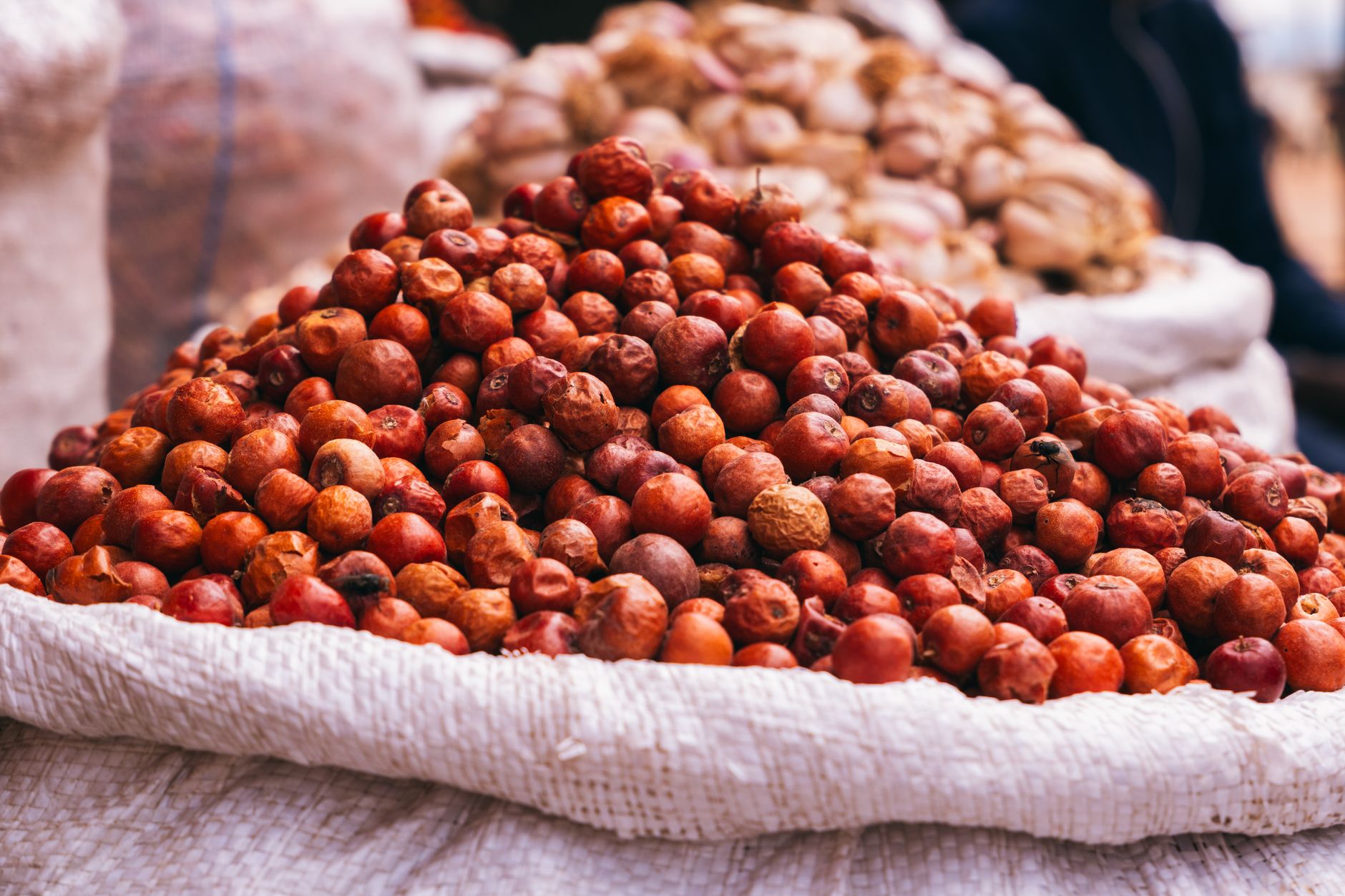
The raw material is gathered, not cultivated. The 2021 trade analysis records that wild stands in West Africa are the only commercial source of Griffonia seeds; individual cultivation trials in Ghana, Côte d'Ivoire and Togo are mentioned in the literature but play no role in the trade. Five countries export today: Côte d'Ivoire, Ghana, Liberia, Nigeria and Togo.
The scale is considerable. At the end of the 1980s Ghana exported 75 to 80 tonnes of seed to Europe — even then the species was Ghana's most important exported medicinal plant. Between 2005 and 2013 at least 5,550 tonnes left the country, corresponding to 9.1 to 13.5 billion seeds. The main buyer today is no longer Europe but China, where the seeds are processed into extracts and resold; around 48 percent of that goes to North America.
Whether this can be sustained is an open question. In the plant's favour are its low site fidelity, its vigorous regrowth after cutting and its occurrence in protected forest areas. Against it stand six points the authors name: the rapid loss of forest area, the decline of the pollinating understorey birds, introduced competing plants, grazing, the sheer scale of seed removal given only one to four seeds per pod — and destructive harvesting methods in which plants are cut down to reach the pods.
From seed to extract
The route to the finished raw material is quickly described: dry the seeds, mill, sieve, extract with a solvent, filter, concentrate, dry. How much 5-HTP arrives at the end, however, depends markedly on the method. A 2023 comparative study placed three procedures side by side (Mannino et al., Antioxidants 2023;12(9):1709, PubMed 37760012):
| Method | Conditions | Result for 5-HTP |
|---|---|---|
| Soxhlet extraction | 70 °C, 300 minutes, pure solvents | lowest yield: 0.65 to 2.41 mg per g |
| Maceration | 60 hours, room temperature, 50–95 % solvent in water | high yield, little degradation product |
| Microwave extraction | 10 minutes, 100 watts, water only | most effective for the nitrogen compounds |
The difference is not only a question of quantity. In the hot-extracted samples the degradation product 4,5-tryptophan-dione was about three times higher than the 5-HTP itself; in the cold-macerated and the microwave extracts it was the other way round — there, 25 to 90 times more 5-HTP than degradation product was present. Heat over a longer period is thus the enemy of the constituent, and that is precisely why the usual methods work with water or aqueous alcohol instead of heat.
This fits the legal framework. In the European Commission's Novel Food Catalogue, Griffonia seeds and seed extracts containing up to 30 percent 5-HTP are considered not novel and may be used in food supplements. Isolated 5-HTP, by contrast — whether produced chemically or specifically extracted from the seeds — is a novel food and cannot be marketed without its own authorisation. The consumer advice centres put it as follows: extracts with more than 30 percent 5-HTP are not permitted in the EU. A highly concentrated extract is therefore not a quality feature here but a legal problem.
Standardisation: which number on the label counts
Griffonia preparations carry up to four numbers side by side, and they mean different things:
| Statement | What it describes | What it says about the 5-HTP content |
|---|---|---|
| "Griffonia extract 100 mg" | amount of extract | nothing — not convertible without standardisation |
| "16:1" (drug-extract ratio) | how much raw material went into one unit of extract | nothing about the content, only about the manufacture |
| "standardised to 12.5 % 5-HTP" | content in the extract | the decisive statement |
| "5-HTP 12.5 mg per daily dose" | amount in the finished product | the number that can be compared |
This reading principle is not confined to Griffonia: with every standardised plant extract there is a marker substance with a percentage in the same place on the label. With the Ashwagandha extract it is "10 % withanolides", with Griffonia "12.5 % 5-HTP". The marker changes, the arithmetic stays the same — amount of extract times percentage gives the content, whereas the drug-extract ratio never does.
An example from our own range, because the calculation can be followed through on it: our preparation declares "dry extract from Griffonia seeds (Griffonia simplicifolia) 16:1 (contains 12.5 % 5-hydroxytryptophan)" and, in the nutrition table, 12.5 mg of 5-HTP per daily dose. From those two figures together an extract amount of around 100 mg per tablet follows arithmetically. The extract ratio of 16:1, by contrast, cannot be converted into milligrams of 5-HTP — it describes the quantity of raw material used, not the content.

The second component, vitamin B6, is stated at 1.6 mg per tablet, which is 114 % of the nutrient reference value under Regulation (EU) No 1169/2011. For it there are — unlike for 5-HTP — authorised claims, and in their official wording they read: Vitamin B6 contributes to normal functioning of the nervous system, Vitamin B6 contributes to normal psychological function and Vitamin B6 contributes to the reduction of tiredness and fatigue (Regulation (EU) No 432/2012). For 5-HTP itself no health claim is authorised in the EU. Food supplements are not a substitute for a balanced and varied diet and a healthy lifestyle. What can be measured about uptake in the body is set out in 5-HTP: what to know about taking it.
How to recognise a genuine seed extract
Because isolated 5-HTP is cheaper to produce than a cleanly standardised seed extract, there is an incentive to adulterate — and there are test parameters for it. According to the 2019 characterisation, a natural Griffonia extract has a ratio of 5-HTP to the remaining alkaloids of about 6:1 to 7:1. A higher ratio points to a different origin of the 5-HTP or to fractionation during extraction.
The authors worked this through on a commercial sample advertised as 95 percent 5-HTP: about 65 percent was measured, along with an alkaloid ratio of 14:1 and around 6 mg per gram of what is known as peak E. That compound — 1,1′-ethylidenebis(L-tryptophan) — arises during the production of 5-HTP by bacterial fermentation and does not occur in the plant itself; in both studies cited here it was undetectable in genuine seeds. To confirm the botanical identity the authors additionally used a DNA fingerprint of the ITS region.
For buyers this boils down to three points:
- A percentage above 30 % 5-HTP in the extract is not a mark of quality in the EU but an indication of a product that may not be marketed.
- Only milligrams of 5-HTP per daily dose are comparable, not milligrams of extract and not extract ratios — how far the numbers differ between preparations is set out in 5-HTP dosage: how much is actually in there?.
- In the EU rapid alert system RASFF there were four alerts on 5-HTP extracts from Griffonia seeds in the first five months of 2024 alone (German consumer advice centres) — these typically concern goods from abroad and from internet mail order.
Frequently asked questions
Is Griffonia extract the same as 5-HTP? No. Griffonia extract is the raw material, 5-HTP the constituent within it. Only the standardisation — the percentage or the milligram figure per daily dose — connects the two numbers. All the variants in our range are in the 5-HTP category.
Is Griffonia cultivated or collected in the wild? Commercially, virtually exclusively collected in the wild. According to the 2021 trade analysis, wild stands in five West African countries are the sole source of the international trade; cultivation trials exist but do not cover demand.
Why does "16:1" appear on the pack? That is the drug-extract ratio, and it describes how much raw material is reckoned per unit of finished extract. It is a manufacturing statement, not a content: without the percentage for the standardisation it cannot be used to work out how much 5-HTP is in the tablet.
Why do European preparations contain so much less 5-HTP than US products? Because in the EU only seeds and seed extracts up to 30 percent 5-HTP count as not novel. Isolated, highly concentrated 5-HTP would need its own authorisation as a novel food. The smaller number is a consequence of the legal framework.
Sources: Vigliante I, Mannino G, Maffei ME, Molecules 2019;24(6):1032 (PubMed 30875930) · Mannino G et al., Antioxidants 2023;12(9):1709 (PubMed 37760012) · Cunningham AB, Brinckmann JA, Harter DEV, Journal of Ethnopharmacology 2021;278:114202 (PubMed 33991640) · Novel Food Catalogue of the European Commission · Regulation (EU) No 432/2012 · Regulation (EU) No 1169/2011, Annex XIII · Verbraucherzentrale, "5-Hydroxytryptophan (5-HTP) aus der afrikanischen Schwarzbohne" · Useful Tropical Plants (after PROTA and Burkill, The Useful Plants of West Tropical Africa).