Is 5-HTP vegan? What matters on the label
Futures Nutrition Editorial Team · 12 August 2026
The active substance is the easiest question on the whole package: in the EU, the 5-HTP in food supplements comes without exception from the seeds of Griffonia simplicifolia — plant-derived, and not out of any conviction on the manufacturer's part, but because novel food law allows nothing else. Reading "from griffonia seeds" on a tub does not mean you have a choice in front of you; it means you have the only permitted variant.
Whether the product is vegan is decided elsewhere: at the capsule shell, the anti-caking agent, the glazing agent, the colour. "Plant-derived active substance" and "vegan product" are two different statements — the first concerns one line of the ingredients list, the second all of them.
Why the origin of the active substance is settled
The European Commission's Novel Food Catalogue draws a sharp line: griffonia seeds and seed extracts with a 5-HTP content of up to 30 per cent are not considered novel and may be used in food supplements. Isolated 5-HTP, by contrast — whether chemically synthesised or deliberately separated from the seeds and concentrated above 30 per cent — is a novel food and cannot be marketed without an authorisation of its own.
In practice that means: what stands legally on the shelf here is a seed extract. A synthetic active substance built in a laboratory — the case in which the question about the starting material would actually get interesting — is not authorised at all. What else the 30 per cent limit means, and why it is not a milligram ceiling, is explained in 5-HTP dosage: how much is actually in there?.
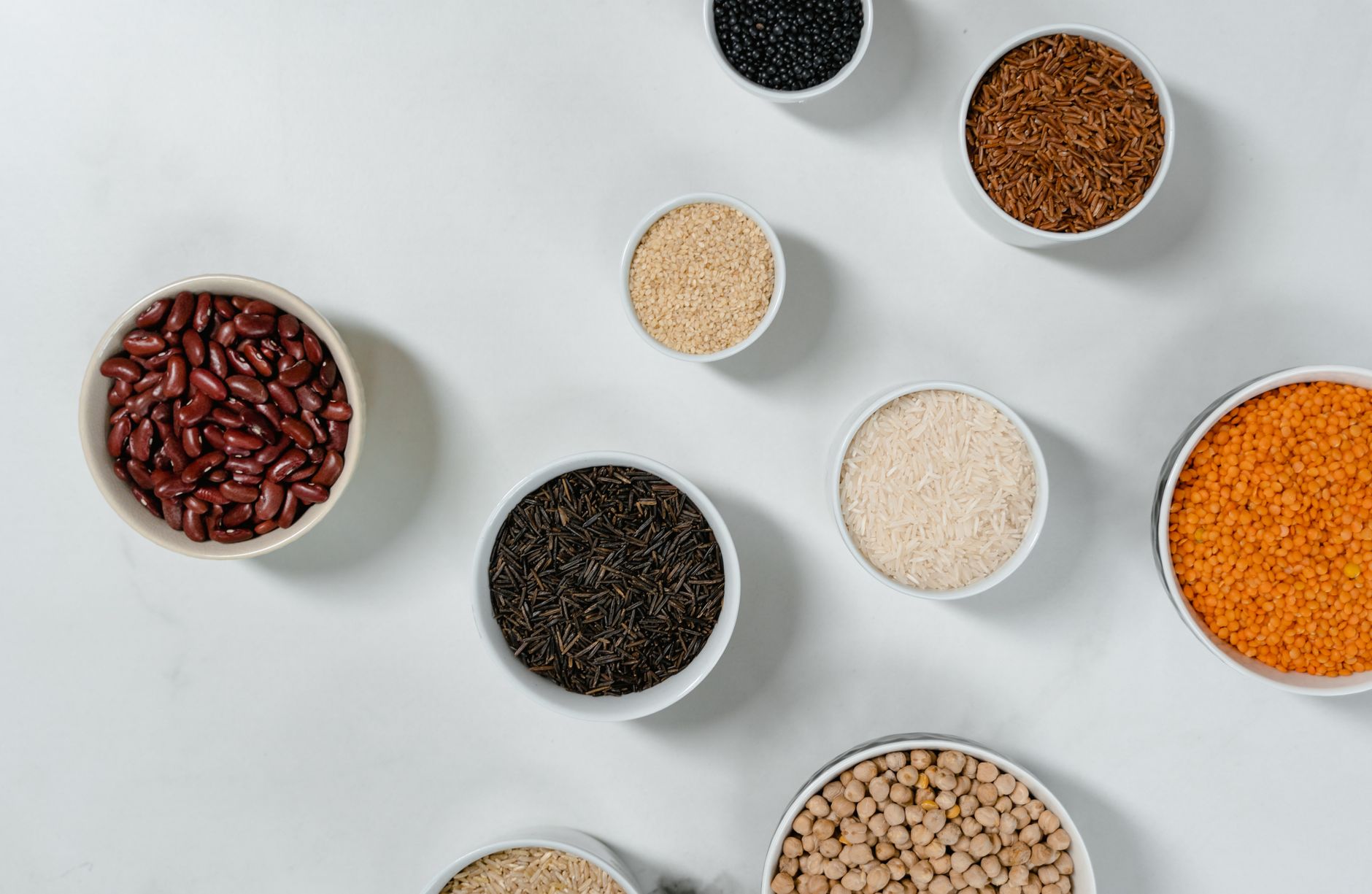
Processing does not bring in an animal raw material either: the dried seeds are milled and extracted with water or a water-alcohol mixture, and the extract is concentrated and dried. Griffonia simplicifolia is, incidentally, a legume, botanically related to the lentil and the bean — more on the plant and how the extract is obtained is in Griffonia simplicifolia: the plant behind 5-HTP.
What "vegan" means legally
There is still no EU-level definition. Article 36(3)(b) of Regulation (EU) No 1169/2011 on the provision of food information to consumers expressly instructs the Commission to adopt implementing rules for the terms "vegan" and "vegetarian" — which has not happened. In Germany, the guidelines for vegan and vegetarian foods of the German Food Book fill the gap (new version of 10 September 2024, BAnz AT 09.10.2024 B2); they adopt the definitions agreed on 22 April 2016 by the conference of consumer protection ministers.
Vegan, according to those definitions, are foods "which are not products of animal origin and to which, at no stage of production and processing, ingredients (including food additives, carriers, flavourings and enzymes) or processing aids … of animal origin have been added or used" (point 1.1.1). The yardstick is therefore expressly the entire product including processing aids — not the active substance.
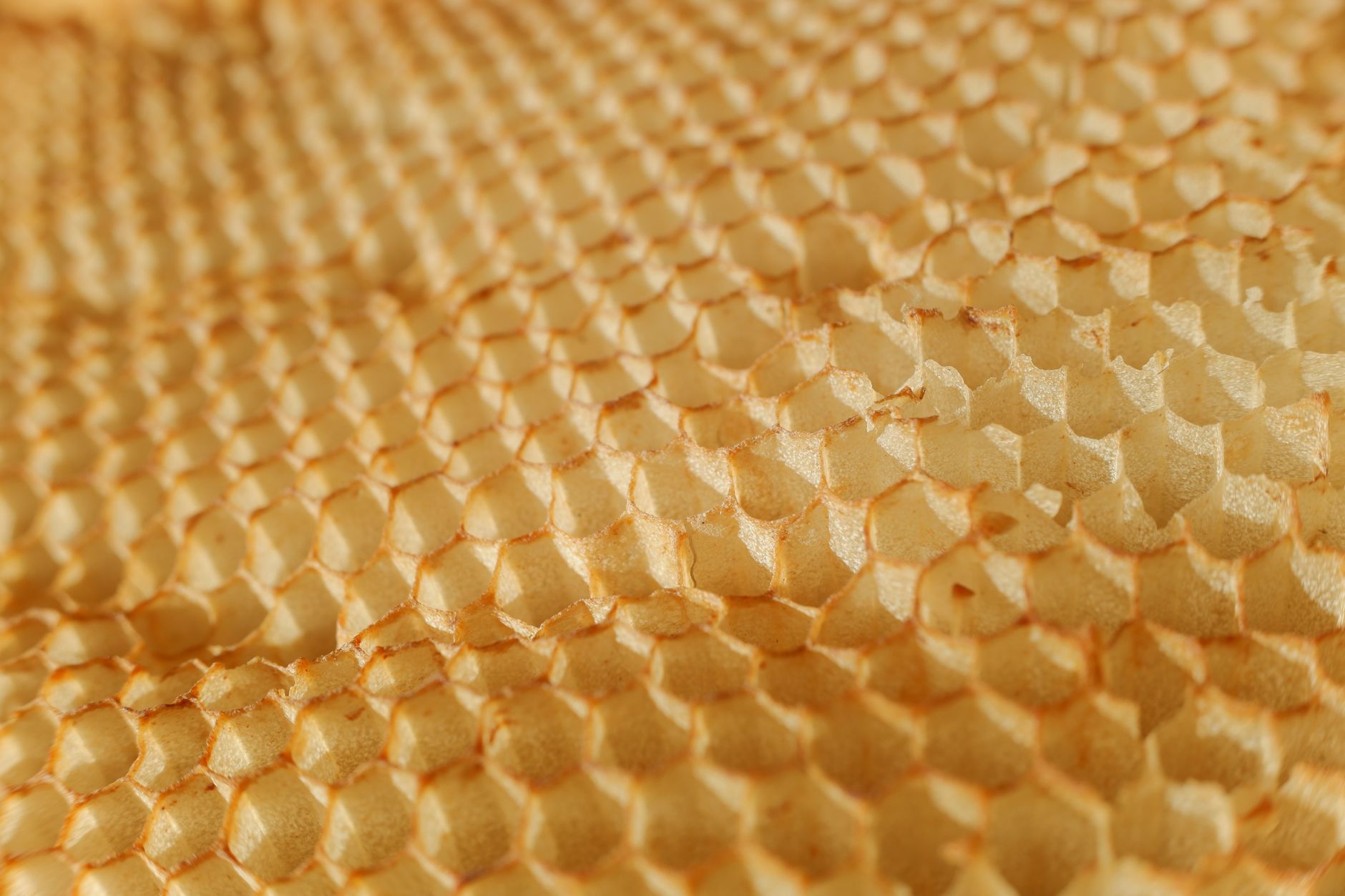
Vegetarian are foods that meet the same requirements but for which a short, exhaustively listed group of animal substances remains permitted: milk, colostrum, farmed poultry eggs, bees' honey, beeswax, propolis and wool grease/lanolin from the wool of living sheep (point 1.1.2). Beeswax is thus on the vegetarian list — not on the vegan one. Conversely, point 1.1.1 records that micro-organisms (bacteria, yeasts and fungi) are not of animal origin; raw materials obtained by fermentation are therefore unproblematic.
Two wordings, on the other hand, do not help: statements such as "meat-free" or "plant-based" are, under point 1.4 of the guidelines, not equivalent, unambiguous indications of the vegan character of a food. Unambiguous are only the word "vegan", a corresponding mark — or the ingredients list read in full.
The places where a 5-HTP product tips over
The German consumer association has compiled which components of food supplements may be of animal origin (as of 17 July 2026). Applied to a 5-HTP product, these are the ones:
| Component | How it appears in the ingredients list | Of animal origin? |
|---|---|---|
| Capsule shell | "gelatine" | yes — from cattle, pig or fish |
| Capsule shell | "hydroxypropyl methylcellulose (HPMC)", "vegetable cellulose", "pullulan" | no |
| Anti-caking agent | "magnesium salts of fatty acids" (E 470b), "stearic acid" (E 570) | open — the designation does not say |
| Glazing agent | "shellac" (E 904) | yes — secretion of the lac insect |
| Glazing agent | "beeswax" (E 901) | yes — vegetarian, not vegan |
| Glazing agent | "carnauba wax" (E 903) | no — from palm leaves |
| Colour | "cochineal, carminic acid, carmines" (E 120) | yes — from scale insects |
| Bulking agent | "lactose" / "milk sugar" | yes — vegetarian, not vegan |
| Emulsifier | "lecithins" (E 322) | usually soy or sunflower, egg possible |
Two points are worth a second look. First the dosage form: a tablet has no shell, which removes the most common place at which a product turns animal. In capsules, gelatine is still the cheapest solution; where HPMC or pullulan appears instead, the shell is plant-derived or obtained by fermentation.
Second the anti-caking agent. "Magnesium salts of fatty acids" can be made from plant as well as animal fatty acids, and the prescribed designation does not reveal the origin. That is why some manufacturers voluntarily add "(vegetable)" — and why with all the others only asking the manufacturer brings clarity.
What our product declares

Our 5-HTP + Vitamin B6 is a tablet, and the ingredients list has four entries:
| Ingredient | What it is |
|---|---|
| bulking agent cellulose | plant fibre, the scaffold of the tablet |
| dry extract of griffonia seeds 16:1 (contains 12.5 % 5-HTP) | the active substance, from the seeds |
| pyridoxine hydrochloride (vitamin B6) | synthetically produced vitamin compound, Annex II of Directive 2002/46/EC |
| anti-caking agent magnesium salts of fatty acids | prevents sticking during compression |
No capsule shell, no coating, no colour, no sweetener — the three places that have to be checked on most products do not exist here. For the fourth entry, what was said above applies: the designation leaves the origin of the fatty acids open, and that is the case for every product that lists this additive. The recommended intake is one tablet a day after a meal — why the meal matters more than the time of day is explained in 5-HTP: morning or evening, with or without food?.
For 5-HTP itself no health claim is authorised in the EU; for the vitamin B6 it contains, one is. In the official wording of Regulation (EU) No 432/2012: Vitamin B6 contributes to normal functioning of the nervous system. Vitamin B6 contributes to normal psychological function. Vitamin B6 contributes to the reduction of tiredness and fatigue. Food supplements are not a substitute for a balanced and varied diet and a healthy lifestyle. All product details are in the 5-HTP category.
Origin in the supplement is not origin in food
The sentence from point 1.1.1 — micro-organisms are not of animal origin — incidentally resolves a second misunderstanding that comes up more often on a plant-based diet than the 5-HTP question. Vitamin B12 occurs in foods practically only in products of animal origin; the vitamin in a supplement, by contrast, comes from bacterial fermentation and is therefore not an animal raw material. A Vitamin B12 1000 µg is thus no contradiction to a vegan diet, but the usual way to close the one gap that a purely plant-based diet reliably leaves. Authorised for it is, among others: Vitamin B12 contributes to normal red blood cell formation.
Mark or ingredients list?
The V-Label and the Vegan Trademark sunflower are private marks, not official ones. They are useful nonetheless, because behind them stands a check of the entire formulation — exactly what can only be reconstructed with effort from the tub itself. Conversely, a missing mark does not mean a product is not vegan: certification costs money, and many manufacturers simply write "vegan" on the label instead. That statement is not empty — it has to stand up to the definitions quoted above, otherwise it is misleading information within the meaning of Regulation (EU) No 1169/2011.
Frequently asked questions
Is 5-HTP from griffonia always plant-derived? Yes. Only the seed extract with at most 30 per cent 5-HTP is marketable in the EU; isolated or synthetic 5-HTP counts as a novel food and is not on sale without authorisation. No animal raw material appears anywhere in that chain.
How do I tell whether the capsule is made of gelatine? From the ingredients list: it either reads "capsule shell: gelatine" — often with the animal species — or names a plant alternative such as hydroxypropyl methylcellulose, sometimes only as "vegetable cellulose", more rarely pullulan. If no capsule shell appears in the list at all, it is a tablet.
Is magnesium stearate vegan? That cannot be read from the designation. "Magnesium salts of fatty acids" (E 470b) can be made from plant or animal fatty acids. Some manufacturers add "(vegetable)"; otherwise only asking the manufacturer, or a mark behind which there is a check of the formulation, helps.
Are tablets automatically vegan? No. The capsule shell falls away, but glazing agents such as shellac, colours such as carmine and carriers or bulking agents such as milk sugar can be in a tablet too. The check is short only when the ingredients list is short.
Sources: European Commission Novel Food Catalogue, entries for Griffonia simplicifolia and 5-hydroxytryptophan · Guidelines for vegan and vegetarian foods with similarity to foods of animal origin, new version of 10 September 2024 (BAnz AT 09.10.2024 B2, GMBl 39/2024, pp. 844–848), points 1.1.1, 1.1.2 and 1.4 · definitions of the conference of consumer protection ministers of 22 April 2016 · Regulation (EU) No 1169/2011, Articles 7 and 36 · Directive 2002/46/EC, Annex II · Regulation (EU) No 432/2012 · Verbraucherzentrale, "Vegan oder tierisch? Woraus bestehen Vitaminkapseln?", as of 17 July 2026 · Verbraucherzentrale, "5-Hydroxytryptophan (5-HTP) aus der afrikanischen Schwarzbohne".