5-HTP quality: what the label has to state
Futures Nutrition Editorial Team · 12 August 2026
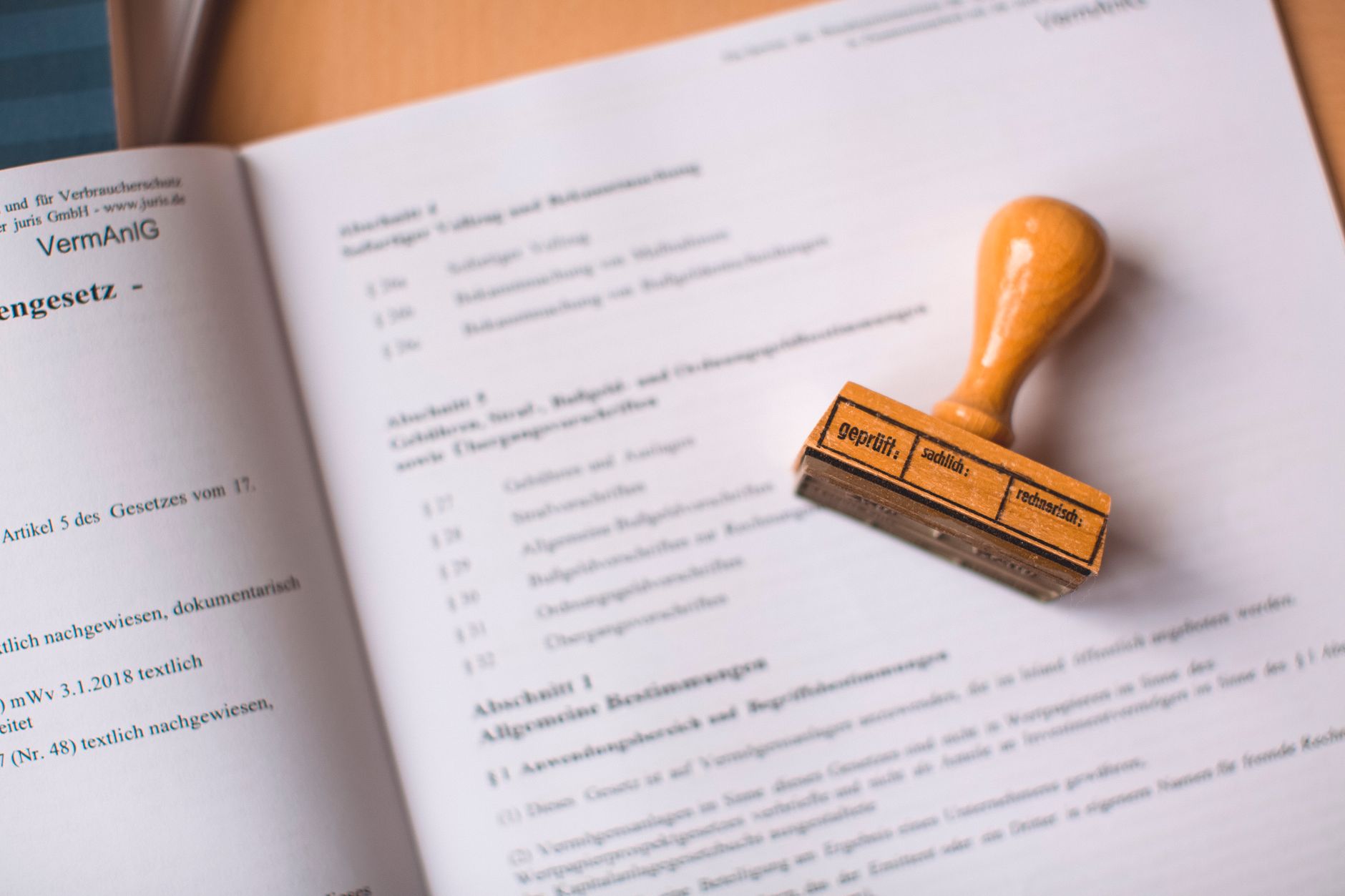
The uncomfortable starting point first: a food supplement is not examined by any authority before it is sold. The German Federal Office of Consumer Protection and Food Safety (BVL) puts it in exactly those words — "before food supplements are placed on the market for the first time, no examination or authorisation by an authority takes place." Anyone buying a 5-HTP preparation is therefore not buying an approved product, but a notified one.
That shifts the question of quality. It is not answered by a licensing body, but by the back of the pack and by the documents a supplier hands over on request. Both can be read, and both are regulated in surprisingly concrete terms.
What notification means — and what it does not
Article 10 of Directive 2002/46/EC allows Member States to require that anyone placing a food supplement on the market notify the competent national authority, by forwarding a model of the label. In Germany that is § 5 of the food supplement regulation (NemV): the notification is due "at the latest when the product is first placed on the market", together with a specimen label. It is a report, not a permit. The BVL states plainly that it carries out "no assessment, examination or authorisation of the notified food supplements", and that the acknowledgement of receipt merely documents that complete papers were submitted — not that the product may lawfully be sold.
Responsibility stays with the business operator, "including with regard to its safety". That is why wording such as "registered with the authorities" or "officially notified" says nothing about quality in advertising: it describes an obligation that everyone who is allowed to sell at all has already met.
The mandatory particulars, in one table
What has to appear on the pack is set out in Articles 6 and 8 of Directive 2002/46/EC together with Regulation (EU) No 1169/2011 on food information:
| Mandatory particular | What it is meant to do |
|---|---|
| the name "food supplement" | separates the product from a medicine |
| the categories of nutrients or other substances | says what the thing actually is |
| the portion recommended for daily consumption | the reference for every quantity given |
| a warning not to exceed the stated daily dose | rules out "more helps more" |
| a statement that it is no substitute for a varied diet | places the product |
| a statement to store it out of the reach of young children | safety information |
| the amount of the substances per recommended daily dose, in numerical form | the only comparable line |
| for vitamins and minerals, additionally the % of the reference intake | Annex XIII of Regulation (EU) No 1169/2011 |
| name and address of the food business operator | names who is liable |
The second-to-last line is the important one. Everything else reads the same on every pack; the figure in milligrams per daily dose is the point at which two preparations genuinely differ. And Article 8 of the Directive requires it expressly "in numerical form" — a list of ingredients without amounts does not satisfy it.
One detail that matters when buying online: the address is mandatory too. If it is missing, or sits outside the EU without a named importer, there is no one to address a query to.
The four lines that count with Griffonia
With a plant extract, a technical declaration is added to the legal minimum. Four statements belong together, and only together do they produce a picture:
- Species and plant part — Griffonia simplicifolia, seed. Not "Griffonia" on its own, and not "African black bean" without the botanical name.
- Drug-to-extract ratio — around 16:1. A manufacturing figure, not a content.
- Standardisation — the percentage of 5-HTP in the extract, around 12.5 %.
- 5-HTP per daily dose — the figure in milligrams.
If number 3 or number 4 is missing, the product cannot be placed at all; the arithmetic is set out in 5-HTP dosage: how much is really in there?. How extracts are produced, and why standardisation varies so much with Griffonia, is explained in Griffonia simplicifolia: the plant behind 5-HTP.
There is a legal limit to add here: in the European Commission's Novel Food catalogue, Griffonia seeds and seed extracts up to 30 per cent 5-HTP count as not novel. A higher percentage is therefore not a mark of quality, but a sign of goods that could not lawfully be sold here in that form.
What a certificate of analysis shows
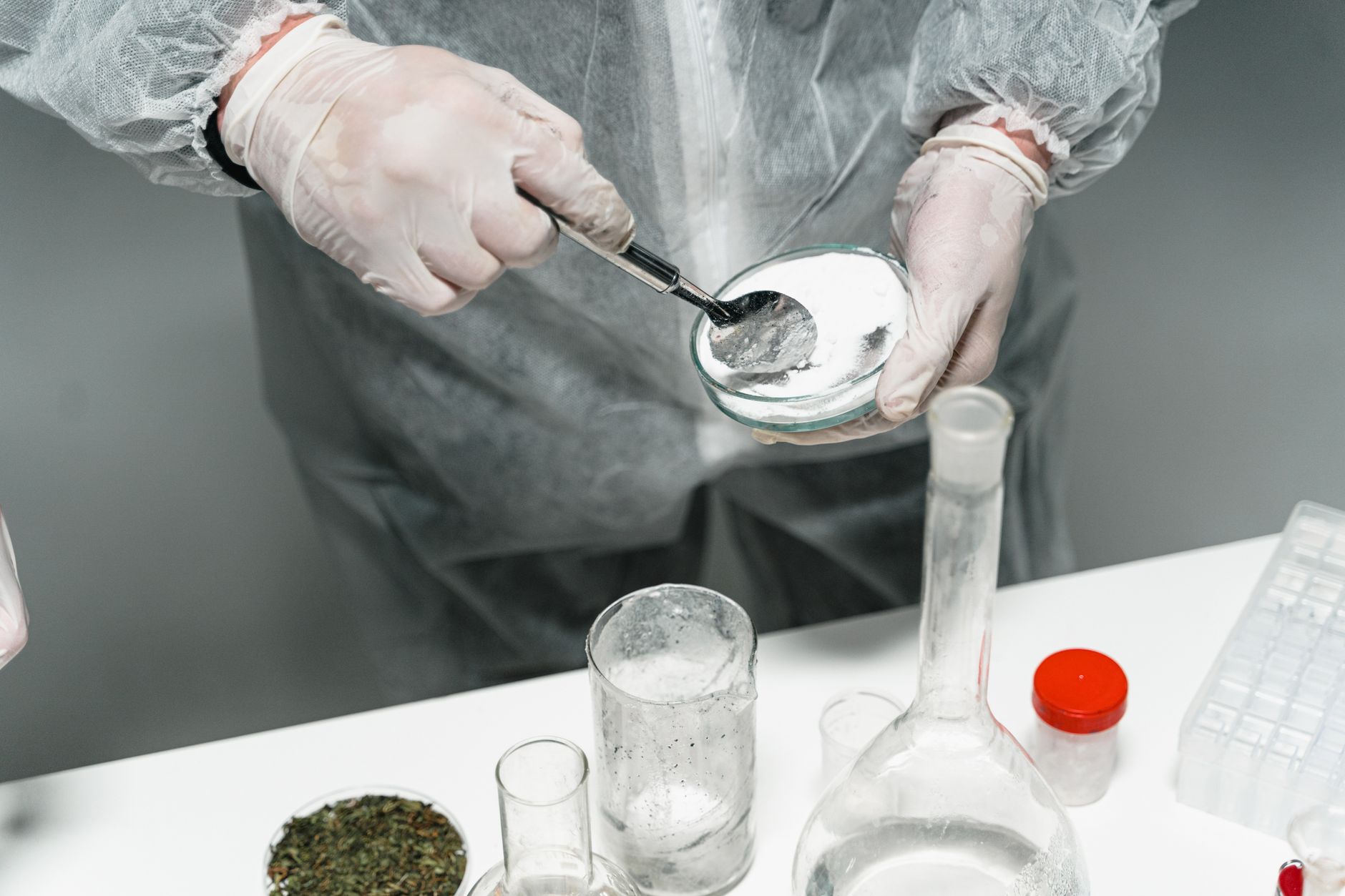
"Lab-tested" is not a protected term. The only meaningful document is a batch-specific certificate of analysis — a test report for exactly the production run your own tub came from. You can ask for it; reputable suppliers hand it over. It usually contains:
- Identity and content — the 5-HTP content, measured by a chromatographic method (HPLC), and the botanical identity of the starting material.
- Heavy metals — lead, cadmium, mercury. The maximum levels for food supplements are laid down in Regulation (EU) 2023/915.
- Microbiology, pesticide residues and solvent residues from the extraction.
| Heavy metal | Maximum level for food supplements |
|---|---|
| Lead | 3.0 mg/kg |
| Cadmium | 1.0 mg/kg (3.0 mg/kg where mainly seaweed) |
| Mercury | 0.1 mg/kg |
A second test point carries historical weight with 5-HTP: impurities from manufacture. In the 1990s, analyses of commercial samples found substances of the so-called peak X family; the argument about them has never been settled. How that history hangs together, and what follows from it for warnings, is set out in 5-HTP side effects: what is reported and how often.
How suspect goods make themselves known

Five features that can be checked in a few seconds:
- Percentages above 30 %. "95 % 5-HTP" or "98 % 5-HTP" does not describe a better product in the EU, but one that may not be marketed.
- No percentage and no milligram figure per daily dose. Then the pack is not comparable — however large the number on the front may be.
- Promises about diseases. Under Article 7 of Regulation (EU) No 1169/2011, a food may not be credited with properties of preventing, treating or curing a disease. Anyone who does it anyway is visibly not keeping to the rules that apply to everyone.
- Missing mandatory labelling in the local language, with goods from third countries or from online marketplaces. In the EU rapid alert system RASFF there were four alerts on 5-HTP extracts from Griffonia seeds in the first five months of 2024 alone (German consumer advice centre, as at 07/06/2024).
- No contact. No name, no address, no batch number — then there is also nobody to produce a certificate of analysis if it comes to that.
What our preparation declares
Which of these details actually decide the matter when two packs are held side by side is summed up in our 5-HTP buying guide.

Our 5-HTP + Vitamin B6 declares "dry extract from Griffonia seeds (Griffonia simplicifolia) 16:1 (contains 12.5 % 5-hydroxytryptophan)" and, in the nutrition table, 12.5 mg of 5-HTP plus 1.6 mg of vitamin B6 per tablet — which is 114 % of the nutrient reference value under Annex XIII of Regulation (EU) No 1169/2011. All four lines named above are therefore filled in: species, plant part, ratio, percentage and milligram amount.
The same reading scheme carries well beyond 5-HTP. With the ashwagandha extract the leading figure is "10 % withanolides" instead of "12.5 % 5-HTP" — there too, the percentage refers to the extract and not to the weight of the tablet.
For vitamin B6, unlike 5-HTP, claims are authorised, and in their official wording they read: Vitamin B6 contributes to normal functioning of the nervous system and vitamin B6 contributes to normal psychological function (Regulation (EU) No 432/2012). For 5-HTP itself, no health claim is authorised in the EU. Food supplements are not a substitute for a balanced and varied diet and a healthy lifestyle. The other articles and variants on the subject are in the 5-HTP category.
Common questions
Does "notified to the authorities" mean the product has been checked? No. Notification under Article 10 of Directive 2002/46/EC is a report with a specimen label. The authority does not assess, examine or approve anything; the confirmation only documents that complete papers were submitted. Responsibility stays with the business operator.
What does "lab-tested" on a tub tell me? On its own, nothing — the term is not defined. What is meaningful is a certificate of analysis for the batch the purchased product came from, with content, heavy metals and microbiological values. You can ask for it.
Is an extract with a higher share of 5-HTP the better one? Only up to 30 per cent. Above that the substance counts as a novel food and would need an authorisation of its own. For the amount in the finished product, the percentage is not what decides in any case, but the milligram figure per daily dose.
Does the pack have to be labelled in my language? The mandatory particulars have to be easy for consumers to understand in the country where the product is sold, which in practice means the local language (Article 15 of Regulation (EU) No 1169/2011). A label in English only, in a country where English is not the language of the market, is a sign that the goods were not intended for it.
Sources: Directive 2002/46/EC, Articles 6, 8 and 10 (German transposition: NemV §§ 4 and 5) · BVL, information on food supplements (notification under § 5 NemV) · Regulation (EU) No 1169/2011, Articles 7, 15 and Annex XIII · Regulation (EU) 2023/915 on maximum levels for certain contaminants in food · Regulation (EU) No 432/2012 · European Commission Novel Food catalogue · German consumer advice centre, "5-hydroxytryptophan (5-HTP) from the African black bean", as at 07/06/2024 · Klarskov et al., Advances in Experimental Medicine and Biology 1999;467:461 (PubMed 10721089).