Vitamin K1 vs K2: difference in origin and uptake
Futures Nutrition Editorial Team · 11 August 2026

The short version: K1 and K2 are not two vitamins but two groups of compounds belonging to the same vitamin. They share the same ring structure and differ in the side chain — and in where they come from: phylloquinone (K1) is made by plants for photosynthesis, menaquinones (K2) are made by bacteria. On the label they count exactly the same: 75 µg of K1 and 75 µg of K2 are each 100 % of the nutrient reference value. In the blood they behave very differently — half of a dose of K1 is gone after one to two hours, while MK-7 stays around for days.
That is where the practical difference lies. Anyone thinking about diet ends up at K1 almost automatically, because that is where the large amounts sit. Anyone buying a supplement almost always gets K2 as MK-7. Both make sense, but for different reasons.
One vitamin, two groups of compounds — and a third that has no place here
„Vitamin K" is a collective name for compounds sharing a naphthoquinone ring. What hangs off that ring is what tells the forms apart:
| Vitamin K1 | Vitamin K2 | Vitamin K3 | |
|---|---|---|---|
| Chemical name | phylloquinone (phytomenadione) | menaquinones, MK-4 to MK-13 | menadione |
| Side chain | one, partly saturated | 4 to 13 isoprene units | none |
| Origin | green plants, chloroplasts | bacteria, animal metabolism | purely synthetic |
| In foods | leafy greens, cabbage, plant oils | cheese, natto, meat, egg yolk | — |
| In EU supplements | permitted | permitted (mainly MK-7) | not permitted |
That last column is not a technicality: Annex II of Directive 2002/46/EC lists exactly two vitamin K sources for food supplements, „phylloquinone (phytomenadione)" and „menaquinone (occurring mainly as menaquinone-7 and, to a minor extent, as menaquinone-6)" — the latter was added by Regulation (EC) No 1170/2009. Menadione is not on that list and may only be used in animal feed. So if someone offers „vitamin K3" as a third purchase option, that is not a matter of taste.
Within the menaquinones, the number gives the length of the side chain: MK-7 has seven isoprene units. Why good labels also say „all-trans", and what separates a form from a production route, is taken apart in Vitamin K2 forms.
Origin: leafy green versus bacteria
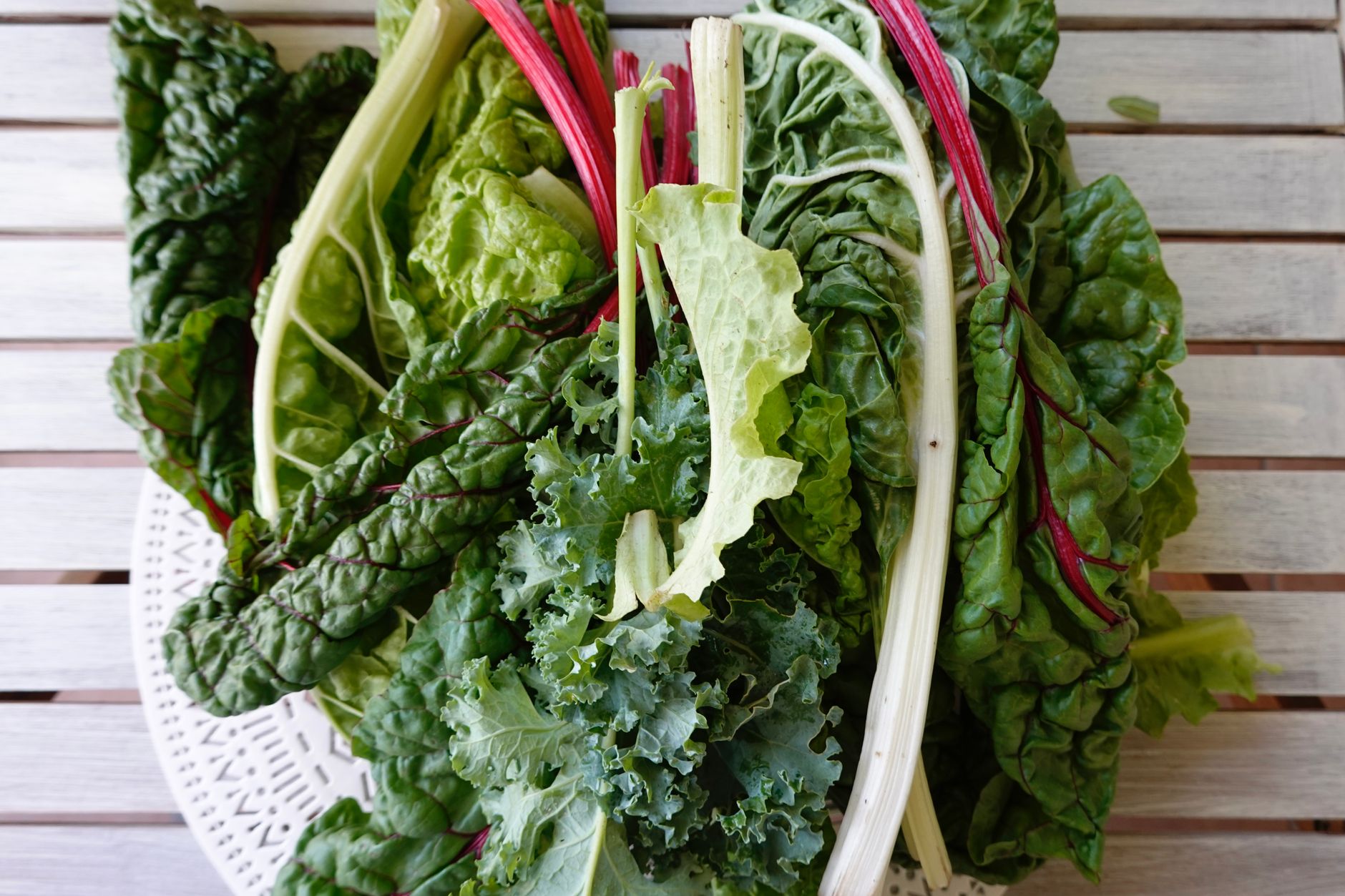
Plants build phylloquinone into the thylakoid membrane of their chloroplasts, where it takes part in the electron transport of photosynthesis. Hence the simple rule: the greener the leaf, the more K1. Kale, spinach, chard and broccoli sit between 60 and 585 µg per 100 g depending on the variety, rapeseed and soybean oil between 25 and 60 µg.
Menaquinones, by contrast, arise in bacterial metabolism — as part of the respiratory chain of bacteria that do not use oxygen. In foods they are therefore found wherever fermentation has happened: in ripened cheese, in quark, in sauerkraut and, by a wide margin at the top, in Japanese natto.
MK-4 is the exception to the rule
One menaquinone breaks the pattern: MK-4 does not primarily come from bacteria. It is formed in animal and human tissue from ingested vitamin K — the group around Nakagawa identified the enzyme UBIAD1 in 2010 as the step that attaches the side chain (Nature 2010;468:117–121). In animal experiments, menadione was found as an intermediate: phylloquinone is broken down in the gut, the fragment reaches the tissue and is built up into MK-4 there. That also explains why chicken meat of all things contains relatively much MK-4 — the feed contains menadione (EFSA Journal 2017;15(5):4780).
In practice this means: part of the K2 in the body is converted K1. The line between the two forms is more permeable than the split into „K1" and „K2" on the packaging suggests.
Where the K2 in the capsule comes from
The MK-7 in supplements comes from the same source as the MK-7 in food: it is produced by fermentation with Bacillus subtilis — the bacterium that also makes natto. Fermentation-derived K2 is therefore of plant origin, while MK-4 in supplements is synthetic, as is the K1 on the label in any case. For vegan buyers the question is settled less by the K2 than by the vitamin D3 blended with it, which can come from lanolin or from lichen — consistently plant-based is, for example, the Vitamin D3 20,000 IU + K2 (MK-7) vegan; the remaining ingredients are gone through in Vegan vitamin D3 with K2. The second production route, chemical synthesis, is the reason why „all-trans" appears on some labels and not on others.
Uptake: why so little arrives from spinach
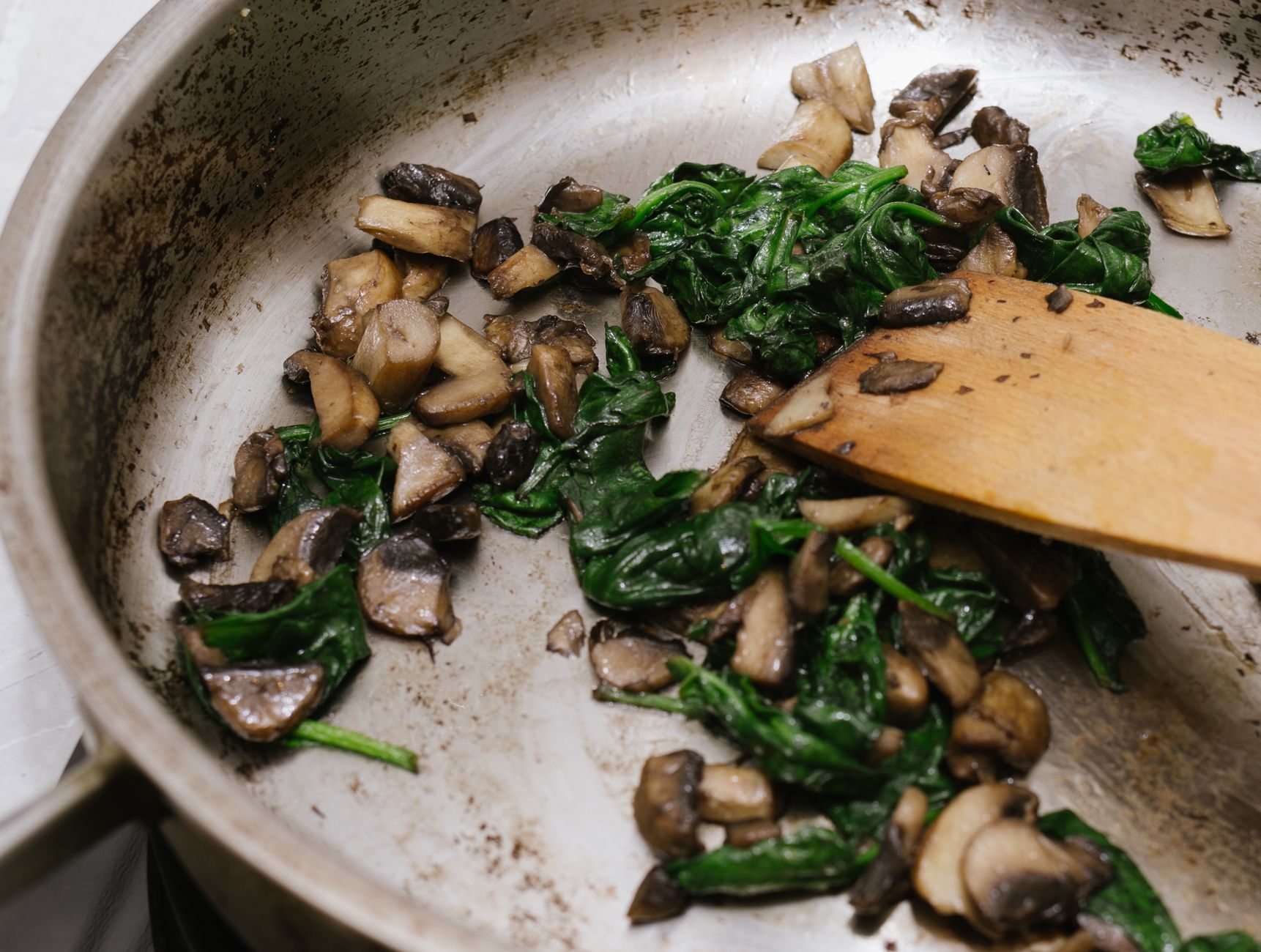
The most striking difference concerns not the content but what of it reaches the blood. Phylloquinone sits firmly bound in membranes inside the plant, and that is exactly what slows uptake. In a classic trial with healthy volunteers, 1 mg of phylloquinone was given three ways: as a pharmaceutical preparation, as cooked spinach, and as cooked spinach with butter. Measured against the preparation, about 4 % arrived from the spinach — with butter 13 % (Gijsbers, Jie and Vermeer, British Journal of Nutrition 1996;76:223–229).
Two things follow. First, the high K1 figures in food tables should be read with caution: 300 µg in kale is not 300 µg in the blood. Second, fat is not a side issue but triples the yield — vitamin K is fat-soluble, and that holds for both forms. What that means for the timing of a capsule is in How to take vitamin K2.
One caveat belongs here, because the 4 % figure is readily quoted as an argument for K2: what was compared was plant versus preparation, not K1 versus K2. In the Schurgers work described below, both forms were well absorbed as pure substances. The bottleneck therefore sits in the matrix, not in the side chain. In practice it still usually falls to the disadvantage of K1, because the typical K1 sources are eaten low in fat while the typical K2 sources — cheese, egg yolk, meat — bring their fat with them. Anyone covering K1 from salad should therefore not leave the oil out of the dressing.
Half-life: two hours versus several days
Take K1 and MK-7 in comparable amounts and the first hour looks similar while the second day looks entirely different. In the work by Schurgers and colleagues both forms were well absorbed and both reached their serum peak after four hours. After that K1 fell rapidly, while MK-7, thanks to its very long half-life, held stable levels and accumulated to seven to eight times the starting level with continued intake. In the same work MK-7 led to a more complete carboxylation of osteocalcin, a vitamin K-dependent protein of bone (Blood 2007;109:3279–3283).
| Phylloquinone (K1) | MK-4 | MK-7 | |
|---|---|---|---|
| Serum half-life | one to two hours | very short | several days |
| Peak after intake | 4 hours | — | 4 to 6 hours |
| Accumulation with daily intake | slight | none measurable | 7- to 8-fold |
| Usual amount in supplements | 80 to 200 µg | rare, then in mg | 100 to 200 µg |
The MK-4 column deserves a sentence of its own, because it is often overlooked: in a study in healthy women, MK-4 was detectable in serum in none of the participants after a single dose of 420 µg, and 60 µg daily over a week did not raise the level either. MK-7, by contrast, was measurable up to 48 hours after intake following the same procedure (Sato and colleagues, Nutrition Journal 2012;11:93). By this measurement MK-4 from food contributes nothing to vitamin K status in the blood — which does not mean it plays no role in tissue, but that it is not measured where measurements are usually taken.
Where the two forms end up
Vitamin K is the cofactor of a single enzymatic step: it makes certain proteins functional by attaching a carboxyl group. The best known of these proteins are the clotting factors in the liver and osteocalcin in bone.
The liver is the organ with the highest vitamin K concentration — and its store consists of roughly 90 % menaquinones and only about 10 % phylloquinone, with the phylloquinone fraction being labile and turned over faster (FAO/WHO, Vitamin and mineral requirements in human nutrition, chapter 10). A large part of these menaquinones are long-chain forms made by gut bacteria — not the MK-7 from a capsule. How much of that is actually absorbed is an open question; for exactly this reason EFSA derived no separate reference value for menaquinones.
What the label makes of the difference
Nothing. And this is the point where buyers regularly get stuck: the nutrient reference value of 75 µg applies to vitamin K as a whole (Regulation (EU) No 1169/2011, Annex XIII). Whether the amount is present as K1 or as K2 changes nothing about the percentage. The two health claims authorised in the EU (Regulation (EU) No 432/2012) likewise speak of „vitamin K", not of a form.
Why almost only K2 is sold has two sober reasons: the longer stay in the blood, and the combination with vitamin D in which K2 has been offered for years. The range covers both routes — pure K2 products in the Vitamin K2 category and the combinations in Vitamin D3 + K2, such as the Vitamin D3 4,000 IU + K2 200 µg MK-7.

In Germany the diet supplies predominantly K1 anyway: in the EPIC Heidelberg study with 25,540 participants, median K1 intake was 93.6 µg per day and K2 intake 34.7 µg. A K2 supplement therefore adds to the smaller of the two shares — not because the smaller share would be a deficiency, but because it is the part that Central European cooking barely delivers.
Where the difference really counts: anticoagulants
With coumarin drugs such as phenprocoumon or warfarin, vitamin K is the counterpart of the medication — and here K1 and K2 behave measurably differently. The German Federal Institute for Risk Assessment (BfR) bases its proposal for maximum levels in food supplements on studies in which a statistically measurable drop in INR occurred with vitamin K1 from 150 µg per day, but with vitamin K2 from as little as 45 µg. K2 was therefore about 3.5 times more potent; from this the proposals of 80 µg K1 and 25 µg K2 per daily portion were derived. The group around Schurgers put it just as plainly in 2007: supplements with 50 µg of MK-7 per day and above can influence oral anticoagulation to a clinically relevant extent.
Anyone taking such medication should therefore clarify intake with their doctor — regardless of which form is on the tin. What matters is less the amount than the consistency of intake. Which quantities are otherwise under discussion is collected in Vitamin K2 overdose.
What may be said about vitamin K
Two claims are authorised in the EU (Regulation (EU) No 432/2012), and they apply to vitamin K as a nutrient — to K1 as much as to K2:
- Vitamin K contributes to the maintenance of normal bones.
- Vitamin K contributes to normal blood clotting.
Food supplements are not a substitute for a balanced and varied diet and a healthy lifestyle.
Frequently asked questions
Is K2 better than K1? For vitamin K status in the blood, MK-7 is the more stable form because it circulates longer and accumulates. „Better" in the sense of more effective for every purpose does not follow from that: the authorised claims apply equally to both forms, and K1 intake from green vegetables generally covers the clotting function.
Can the body convert K1 into K2? To a limited extent yes — but only into MK-4, not into MK-7. The route runs via menadione as an intermediate and the enzyme UBIAD1. How much accumulates this way has not been cleanly quantified in humans.
Do I need both? Anyone eating green vegetables regularly takes in K1 in amounts above all reference values. An additional K1 supplement is therefore the rarer question. K2 is usually added because it is offered in combination with vitamin D, not because a measured gap is being closed.
Does the tin say which form it contains? With proper labelling, yes: „Vitamin K2 (menaquinone-7)" or „Vitamin K1 (phylloquinone)". If it only says „vitamin K" with no addition, the decisive information is missing — and with MK-7 also the statement „all-trans", which tells you how much of it is active at all.