Vitamin K2 forms: MK-4, MK-7 and the production route
Futures Nutrition Editorial Team · 11 August 2026
A K2 label usually carries three statements side by side that mean three different things: MK-4 or MK-7 describes the length of the side chain, all-trans its spatial arrangement, „fermented" or „from natto" the production route. Only the first is a form in the chemical sense — and that of all things is barely a decision when buying in the EU: the vitamin K source approved for food supplements is „menaquinone", and that term is legally defined as predominantly MK-7. What actually distinguishes products are the other two statements.
This article sorts out the terms: which menaquinones exist at all, where they come from, how the two production routes work — and at which point the production route becomes practical, for instance in the question of soy.
Three statements that regularly get mixed up
| Statement on the pack | What it describes | What follows from it |
|---|---|---|
| MK-4, MK-7, MK-9 | number of isoprene units in the side chain | determines how long the molecule stays in the blood |
| all-trans / cis | geometry of the double bonds in that chain | only all-trans is considered biologically active |
| fermented / synthetic | production route | decides on accompanying substances, not on the active form |
| „from natto" | starting material of the fermentation | a note on the raw material, not a quality measure |
The rows cannot be offset against each other. A fermented MK-7 without an isomer specification says less than a synthetic one with a verified all-trans content.
The menaquinone family: MK-4 to MK-13
Vitamin K2 is a collective name. All menaquinones carry the same naphthoquinone ring and differ only in chain length; in its reference values the EFSA lists forms from MK-4 to MK-13 (EFSA Journal 2017;15(5):4780). Where they occur follows a pattern:
| Form | Where it comes from | Where you meet it |
|---|---|---|
| MK-4 | conversion in animal and human tissue, not from bacteria | butter, egg yolk, liver, poultry |
| MK-6 | bacterial fermentation | accompanies MK-7 in natto extract |
| MK-7 | Bacillus subtilis natto | natto, supplements |
| MK-8, MK-9 | lactic acid and propionic acid bacteria | ripened cheese, quark |
| MK-10 to MK-13 | gut bacteria, individual cheese cultures | Emmental, large intestine |
Two points about this are more important than they look. First, MK-4 is the exception in the family: it is not produced by fermentation but formed in tissue from ingested vitamin K. Second, the EFSA explicitly states that it remains unclear how much of the medium- and long-chain menaquinones from the large intestine is absorbed at all — the gut flora is therefore not a reliable source you could count on.
MK-4 and MK-7: the two that matter when buying
Out of the whole family only two appear in supplements, and they behave completely differently. MK-7 has a serum half-life of around 68 hours; MK-4 disappears within hours and, in a comparative study, was not detectable in serum at any point even after a single 420 µg dose, while MK-7 in the same amount raised levels markedly. The detailed comparison with the study figures is in MK-7 or MK-4; what counts for this article is the consequence: anyone looking for MK-4 in a European product usually looks in vain — and there is a legal reason for that, further down.
Two routes into the capsule
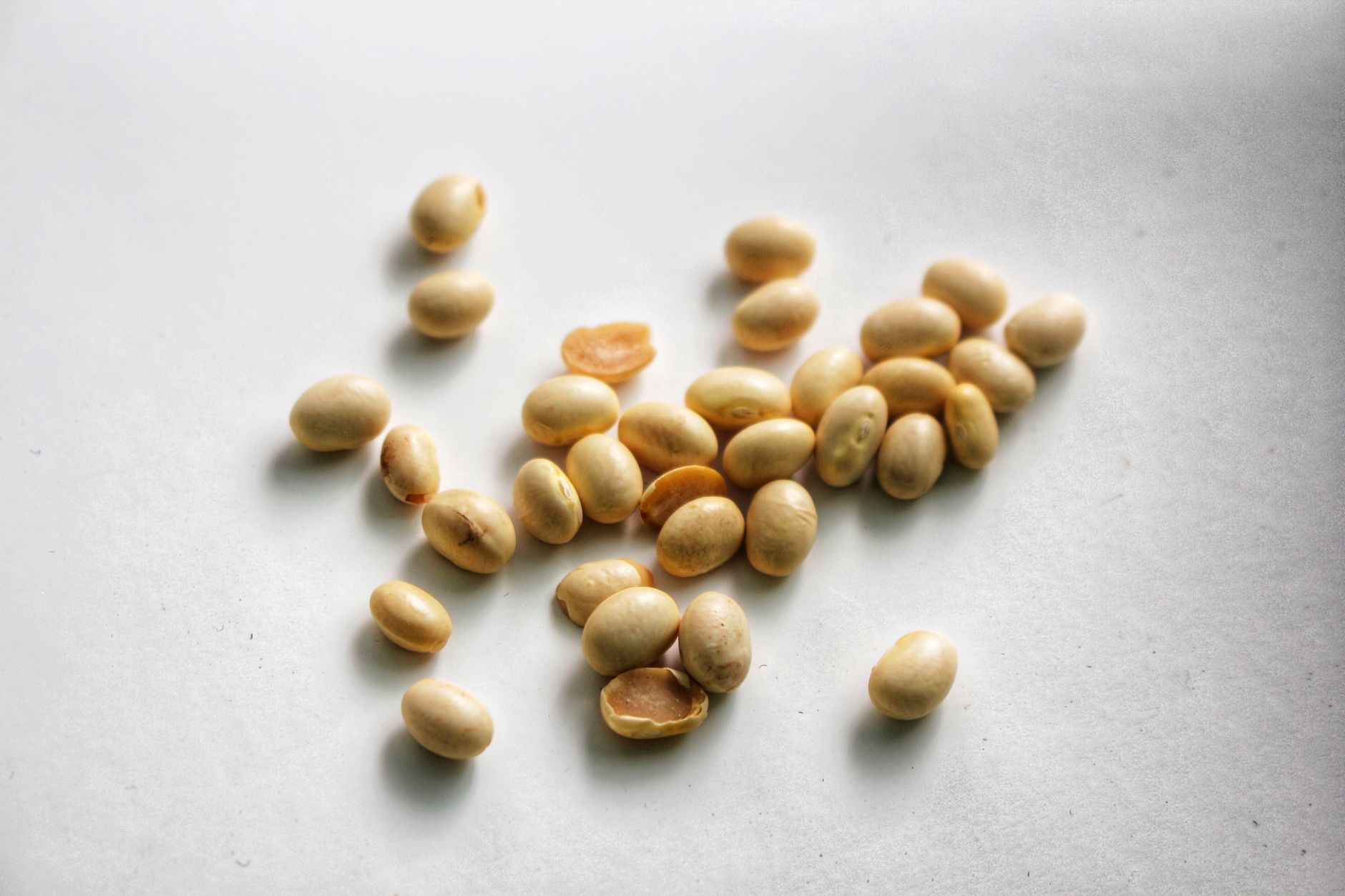
Fermentation. Bacteria build the molecule enzymatically. Enzymes work stereospecifically, they do not confuse the geometry — MK-7 obtained by fermentation is therefore all-trans from the outset. The classic producer is Bacillus subtilis natto, the same bacterium that turns soybeans into the Japanese food natto. This is exactly the route named in the EU authorisation: Decision 2009/345/EC approved vitamin K2 (menaquinone) from Bacillus subtilis natto as a novel food ingredient, in the shape of an oil suspension containing predominantly MK-7 and, to a lesser extent, MK-6.
That side note is the actual difference between the production routes: a fermented extract is not pure MK-7, it brings shorter-chain menaquinones with it. The legislator anticipated this — the approved source is called „menaquinone, occurring mainly as menaquinone-7 and to a lesser extent as menaquinone-6".
Chemical synthesis. Here the side chain is built up in the reactor and linked to the ring system. At the double bonds this initially produces a mixture of cis and trans forms; the cis fraction has to be separated off, and that is the effort of the process. If it succeeds, the result is chemically the same molecule — only as pure MK-7 without the MK-6 company.
| fermented | synthetic | |
|---|---|---|
| Starting material | bacterial culture on a nutrient medium | chemical building blocks |
| Isomerism | all-trans by nature | separation step needed, the specification counts |
| Accompanying menaquinones | MK-6 in small amounts | none |
| Relation to soy | possible via the nutrient medium | none |
| Usual declaration | „MK-7 from natto fermentation" | „MK-7 all-trans" |
Soy: where the production route becomes practical
For people with a soy allergy this is no marginal question. Soybeans and products made from them are listed in Annex II of Regulation (EU) No 1169/2011 and must be emphasised in the list of ingredients; only a few heavily processed soy products are explicitly exempted there, and menaquinone is not among them.
In practice the answer nevertheless differs. Manufacturers of fermented material point out that soy is at most present in the nutrient medium of the culture — as soy peptone — not as a raw material of the finished product, and that no soy proteins are detectable in the purified active substance; accordingly many of these packs say „allergens: none". Anyone who reacts sensitively should therefore not rely on the absence of the word but read the ingredient list of the specific product or ask the manufacturer. Synthetically produced MK-7 has nothing to do with soy in the first place.
Incidentally, both routes are vegan — bacteria are not animals, and synthesis certainly is not. In combination products the question is decided by the vitamin D3, which can come from lanolin or from lichen; that is taken apart in Vegan vitamin D3 + K2.
What is permitted as a source in the EU
Which compounds may be added to a food supplement as a vitamin source is set out in Annex II of Directive 2002/46/EC as amended by Regulation (EC) No 1170/2009. Under „vitamin K" there are exactly two entries: phylloquinone (phytomenadione) and menaquinone in the form quoted above. MK-4 is not listed — which is why, in the vitamin K2 category as in any European range, MK-7 is what you find, and MK-4 mainly in imported offers.
Food law does not, however, make the authorisation depend on the production route: the entry in the Union list of novel foods (Implementing Regulation (EU) 2017/2470) names both microbiological and synthetic processes for vitamin K2 (menaquinone), and „menaquinone" or „vitamin K2" is sufficient as the labelling designation. Anyone who wants to know the exact form therefore looks at the list of ingredients, not at the nutrition table.
What the label ultimately gives you
| Statement | What it tells you |
|---|---|
| „Vitamin K2 200 µg" | the amount, nothing else |
| „Vitamin K2 as MK-7" | chain length clarified |
| „MK-7 all-trans" | amount and active form named |
| „MK-7, ≥ 99 % all-trans" | plus the verified degree of purity |
| „from natto fermentation" | production route that delivers all-trans |
| „vegan" | a statement about the whole product, not about the K2 form |
How the capsule is best taken — with a meal, and why the interval between two portions matters — is in How to take vitamin K2.
In our own range the form is therefore part of the product name — for example in Vitamin D3 4,000 IU + K2 200 µg MK-7 or in the purely plant-based Vitamin D3 20,000 IU + K2 (MK-7) vegan.

What may be said about vitamin K
Authorised health claims are listed in Regulation (EU) No 432/2012. For vitamin K there are two, and they apply to the nutrient, not to a particular form or chain length:
- Vitamin K contributes to the maintenance of normal bones.
- Vitamin K contributes to normal blood clotting.
How vitamin K and calcium relate to each other is set out in Vitamin K2 and calcium; what to watch out for with anticoagulant medicines is in Vitamin K2 overdose.
Food supplements are not a substitute for a balanced and varied diet and a healthy lifestyle.
Frequently asked questions
Is fermented K2 better than synthetic K2? On geometry, fermentation has a systematic advantage, because enzymes only build trans. In the finished product, however, the specification is what counts: synthetic MK-7 verified as all-trans is the same molecule. The difference lies rather in the accompanying substances — fermented extracts bring a little MK-6 with them, synthetic ones do not.
Why do European shops offer almost only MK-7? Because Annex II of Directive 2002/46/EC describes the menaquinone source in the MK-7 form (with some MK-6), and MK-4 is not listed there. The choice between the forms has therefore been made before the buyer stands in front of the shelf.
Does a product contain natto if the pack says „from natto"? No. What is meant is the production route: the MK-7 comes from a fermentation with the same bacterium that also produces natto. The product contains a purified extract, usually dissolved in oil, not a food.
Does a K2 product always say „MK-7"? Not necessarily. Under the authorisation, „menaquinone" or „vitamin K2" is enough. If the form is missing, the isomer specification is almost always missing too — that is the reason to read the ingredient list before comparing amounts.
Sources: Directive 2002/46/EC, Annex II as amended by Regulation (EC) No 1170/2009; Commission Decision 2009/345/EC on the placing on the market of vitamin K2 (menaquinone) from Bacillus subtilis natto; Implementing Regulation (EU) 2017/2470 (Union list of novel foods); Regulation (EU) No 1169/2011, Annex II (allergens); Regulation (EU) No 432/2012; EFSA, Dietary Reference Values for vitamin K, EFSA Journal 2017;15(5):4780; Sato T, Schurgers LJ, Uenishi K, Nutrition Journal 11:93, 2012 (PubMed 23140417); Schurgers LJ et al., Blood 109(8), 2007 (PubMed 17158229).