Sort by
Buy vitamin D3: 4,000 to 50,000 IU, daily or as depot tablets
Every vitamin D3 product in our range, side by side: from 4,000 IU for daily intake to depot tablets with 10,000, 20,000 and 50,000 IU that are taken only every 10, 20 or 50 days. Plus combinations with vitamin K2, calcium or inulin, and packs from 90 tablets up to a year's supply.
Three things differ: the amount of vitamin D3 per tablet, the intake rhythm stated in the recommended intake, and whether vitamin K2 is included. The milligram or microgram figure alone therefore says little — one tablet of 10,000 IU every 10 days works out at an average of 1,000 IU per day, and that is how it is stated on the pack.
What lies behind the strengths and how IU convert to micrograms is set out in detail in the dosage guide.
Vitamin D3 dosage: 1000 IU to 10000 IU – what makes sense?The strengths compared
| Product | Vitamin D3 per tablet | Count | Price | Price per day |
|---|---|---|---|---|
| Vitamin D3 4,000 IU + K2 (MK-7, 200 µg) – Tablets | 4,000 IU (100 µg) + K2 200 µg | 180 | €3.00 | €0.02 |
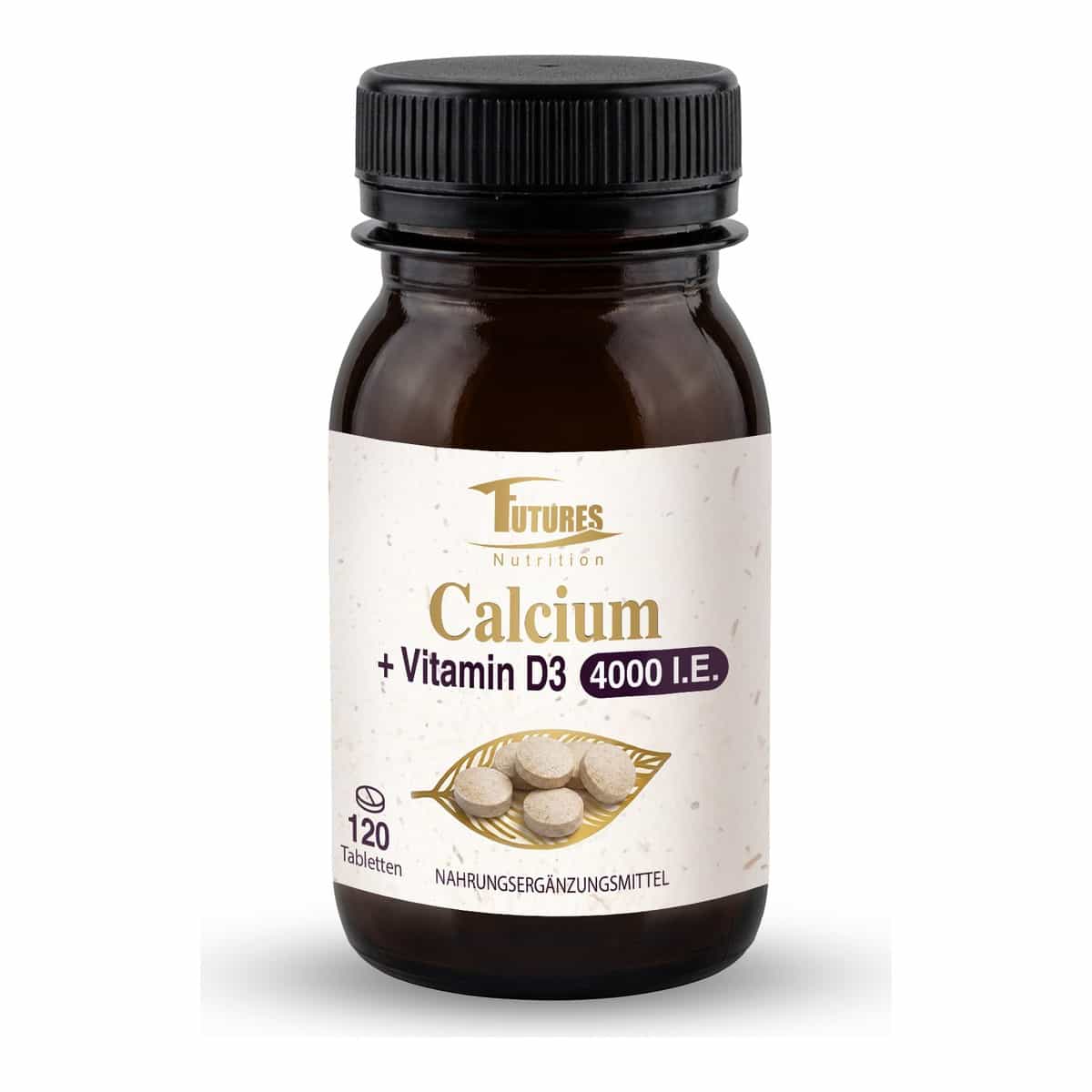
| Calcium + Vitamin D3 4000 IU – 120 Tablets | 4,000 IU (100 µg) + Calcium 200 mg | 120 | €14.90€177.38/kg | €0.12 |
| Vitamin D3 4,000 IU – 365 Tablets | 4,000 IU (100 µg) | 365 | €4.00€54.79/kg | €0.01 |
| Vitamin D3 4,000 IU + K2 (MK-7, 200 µg) – 365 Tablets | 4,000 IU (100 µg) + K2 200 µg | 365 | €4.00 | €0.01 |
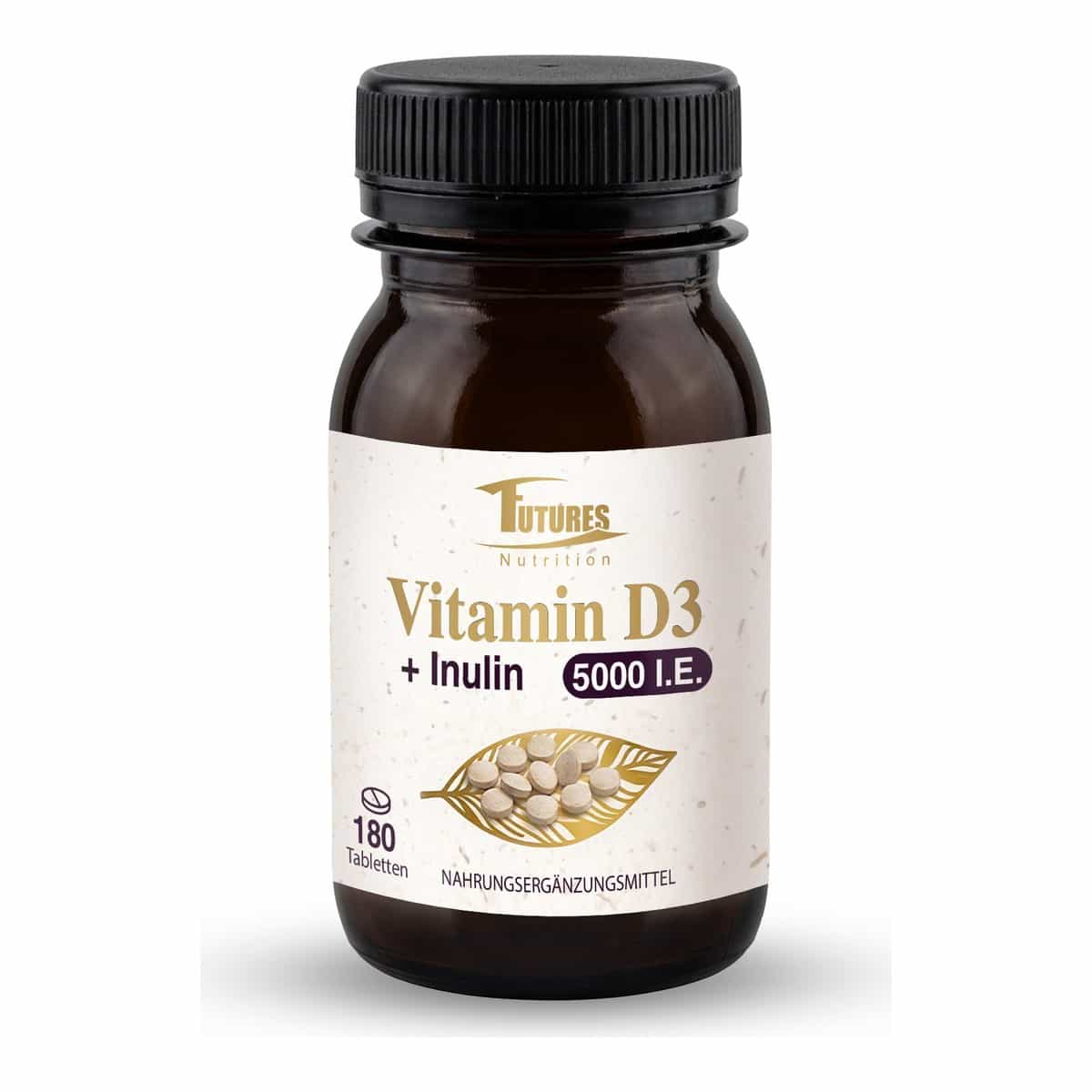
| Vitamin D3 High-Dose 5000 IU + Inulin – 180 Tablets | 5,000 IU (125 µg) + Inulin 20 mg | 180 | €14.90€413.89/kg | €0.04 |
| Liposomal Vitamin D3 + K2 5,000 IU – 180 Capsules | 5,000 IU (125 µg) liposomal + K2 100 µg | 180 | €24.99€925.56/kg | €0.03 |
| Vitamin D3 5,000 IU + K2 (MK-7) – 365 Tablets, Vegan | 5,000 IU (125 µg) + K2 200 µg | 365 | €15.00€205.48/kg | €0.01 |
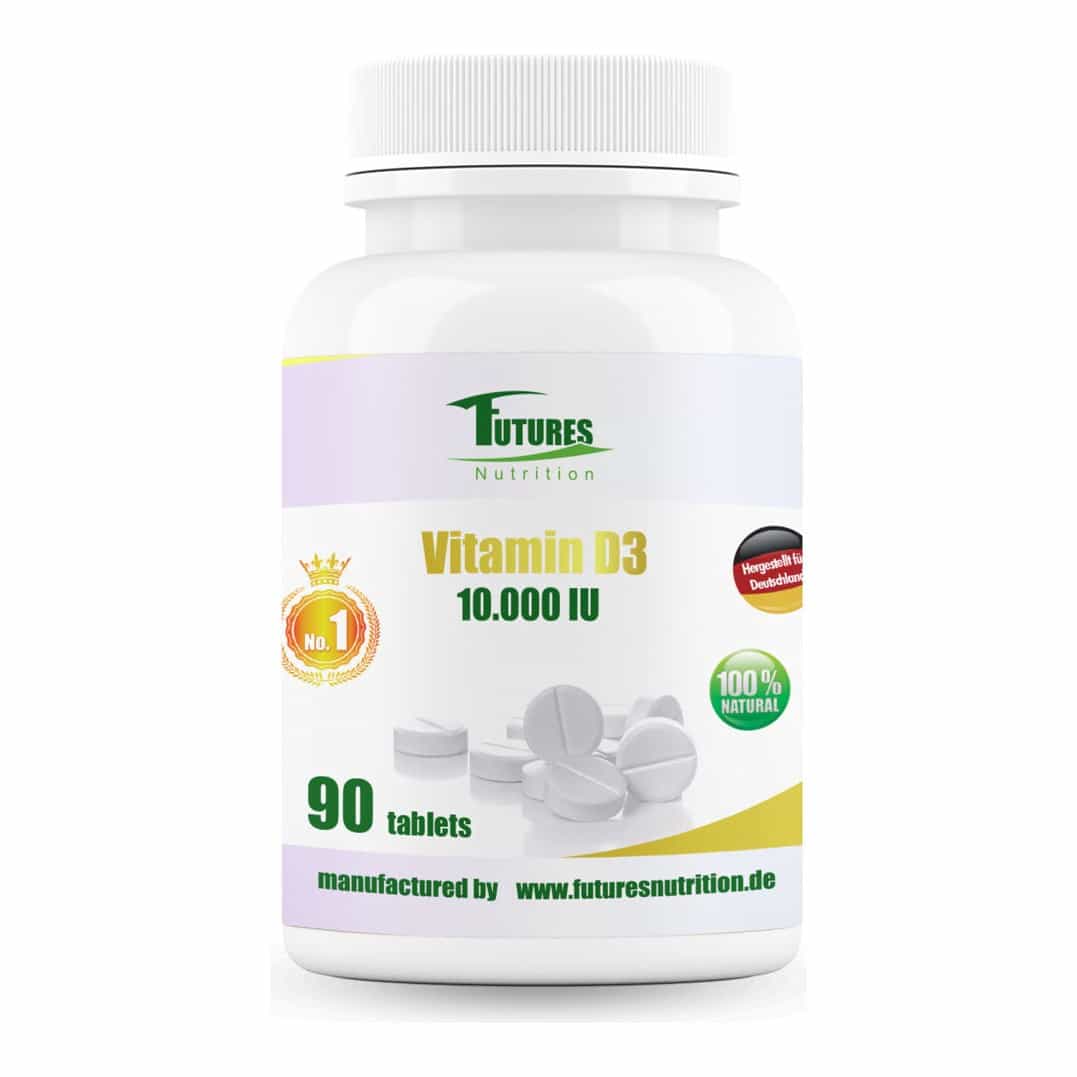
| Vitamin D3 10,000 IU – 90 Tablets | 10,000 IU (250 µg) | 90 | €11.14€618.89/kg | €0.01 |
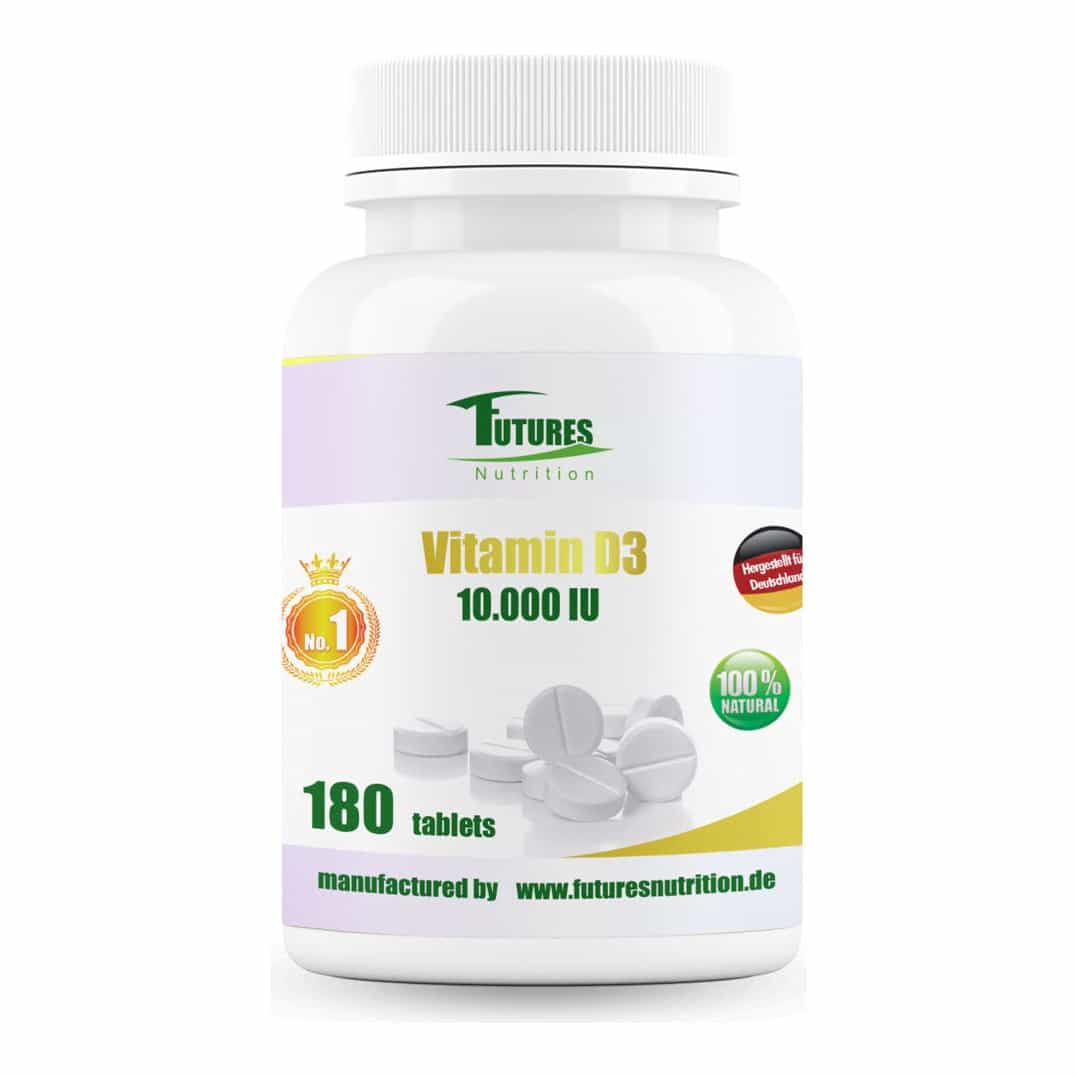
| Vitamin D3 10,000 IU – 180 Tablets | 10,000 IU (250 µg) | 180 | €13.80€383.33/kg | €0.01 |
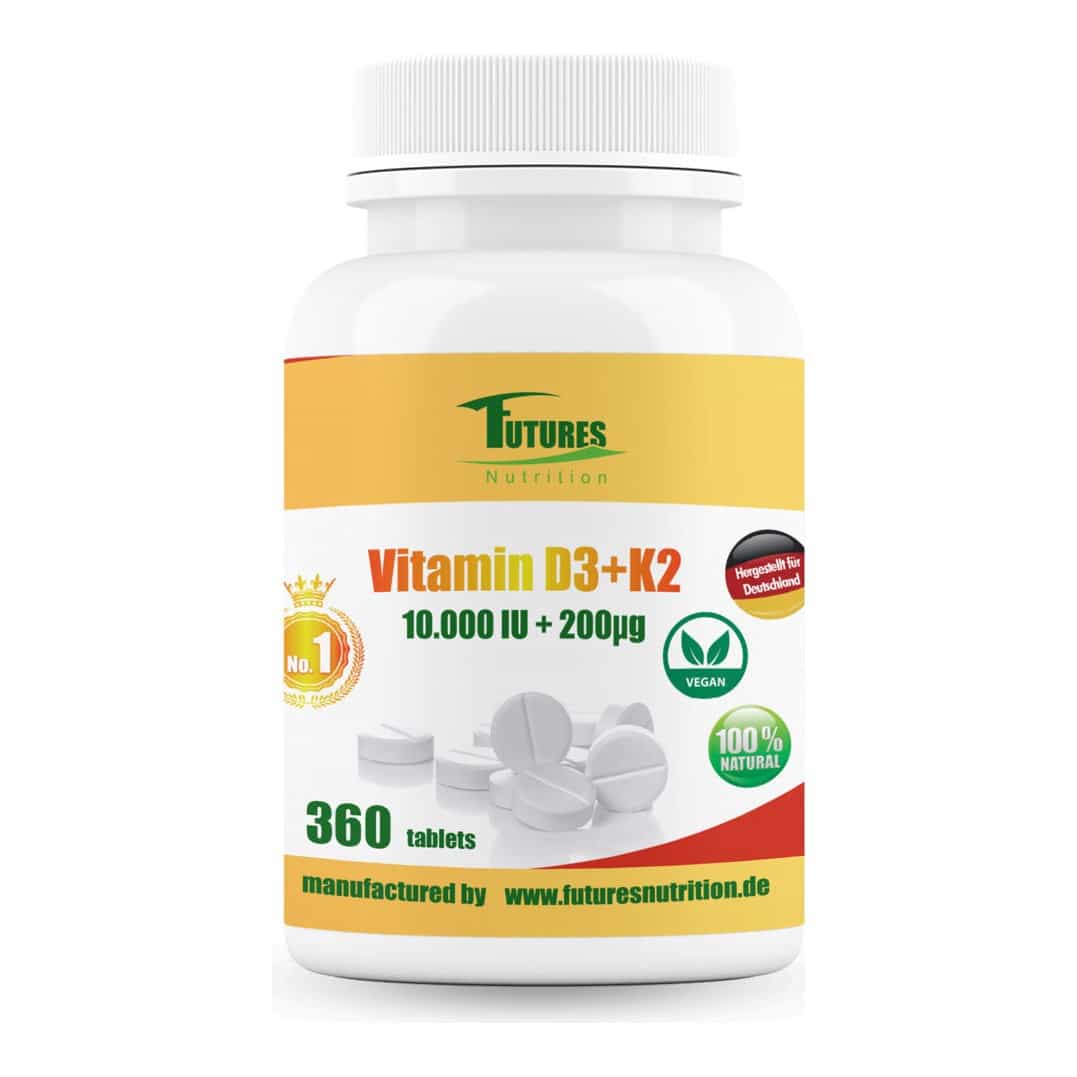
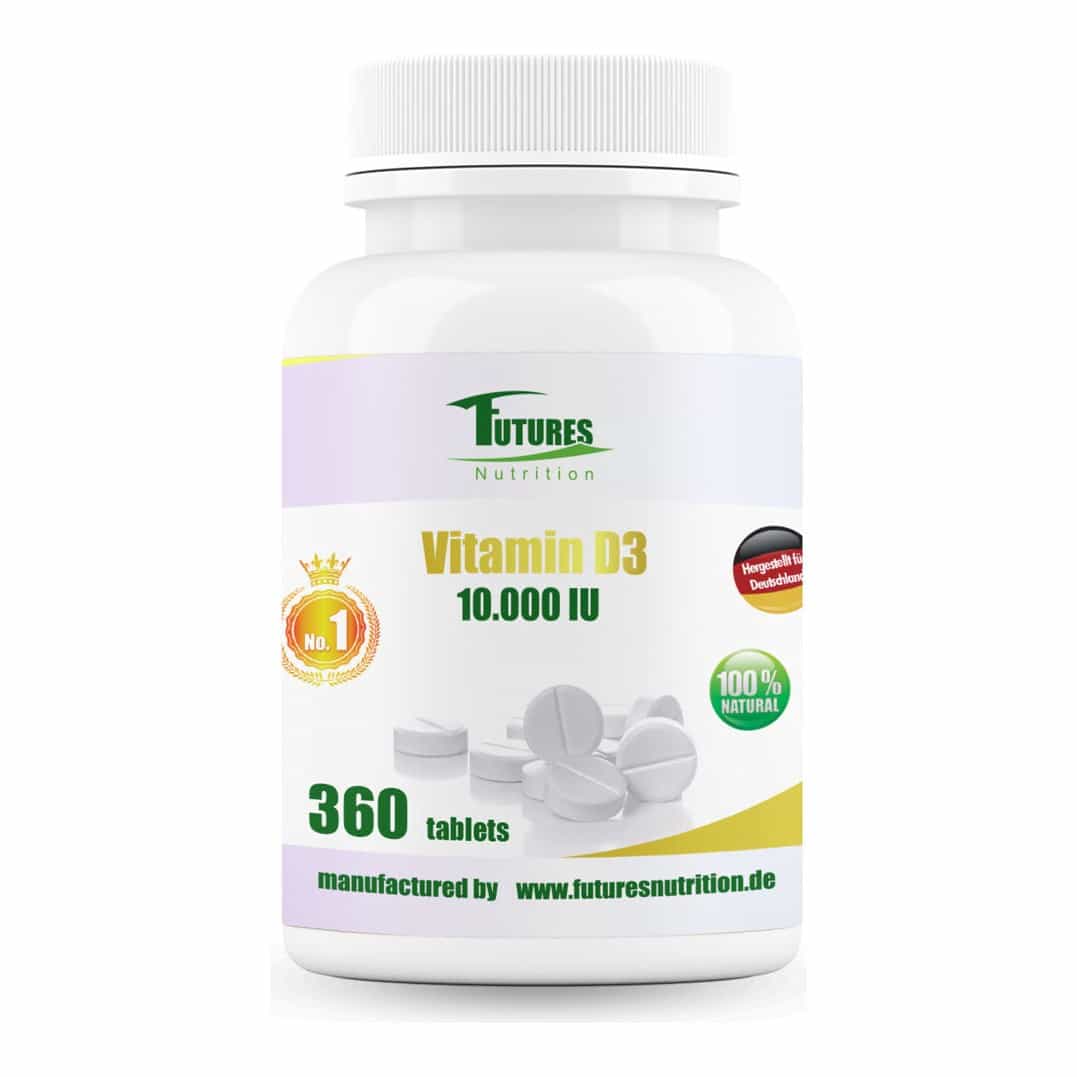
| Vitamin D3 10,000 IU – 360 Tablets, Vegan (from Lichen) | 10,000 IU (250 µg) | 360 | €16.50€229.17/kg | €0.00 |
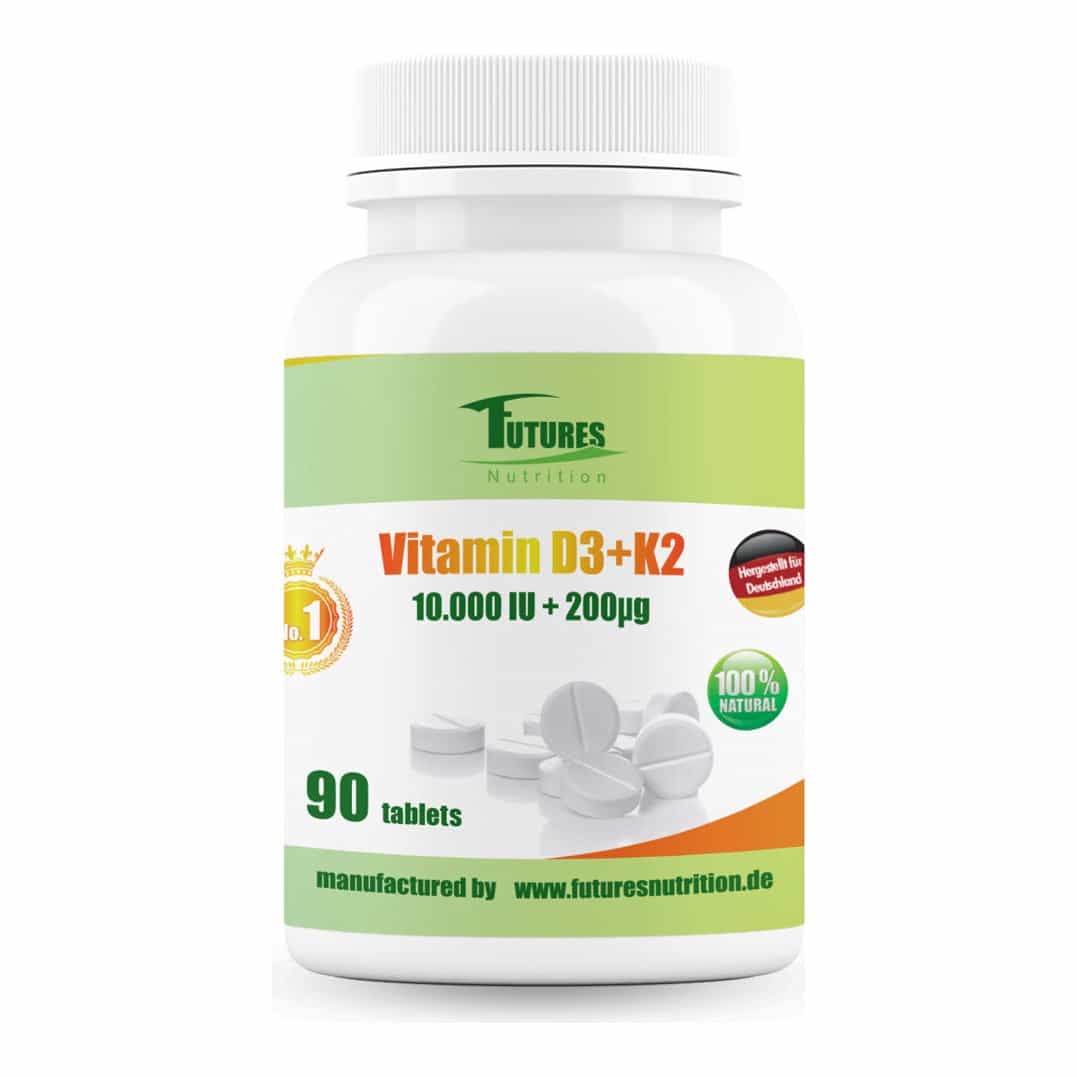
| Vitamin D3 10,000 IU + K2 (MK-7, 200 µg) – 90 Tablets | 10,000 IU (250 µg) + K2 200 µg | 90 | €12.25€680.56/kg | €0.01 |
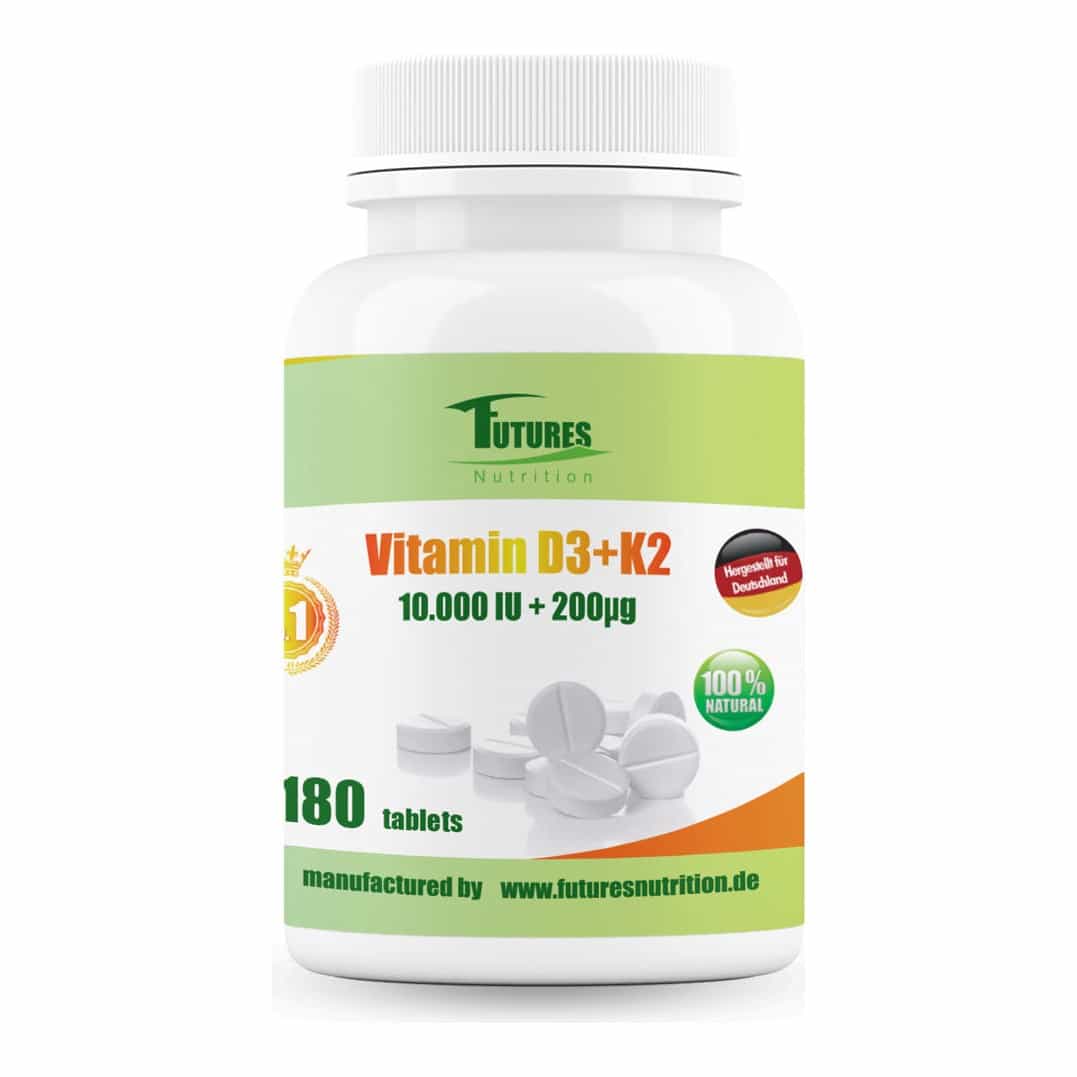
| Vitamin D3 10,000 IU + K2 (MK-7, 200 µg) – 180 Tablets | 10,000 IU (250 µg) + K2 200 µg | 180 | €14.98€416.11/kg | €0.01 |
| Vitamin D3 10,000 IU + K2 (MK-7, 200 µg) – 360 Tablets, Vegan | 10,000 IU (250 µg) + K2 200 µg | 360 | €17.25€239.58/kg | €0.00 |
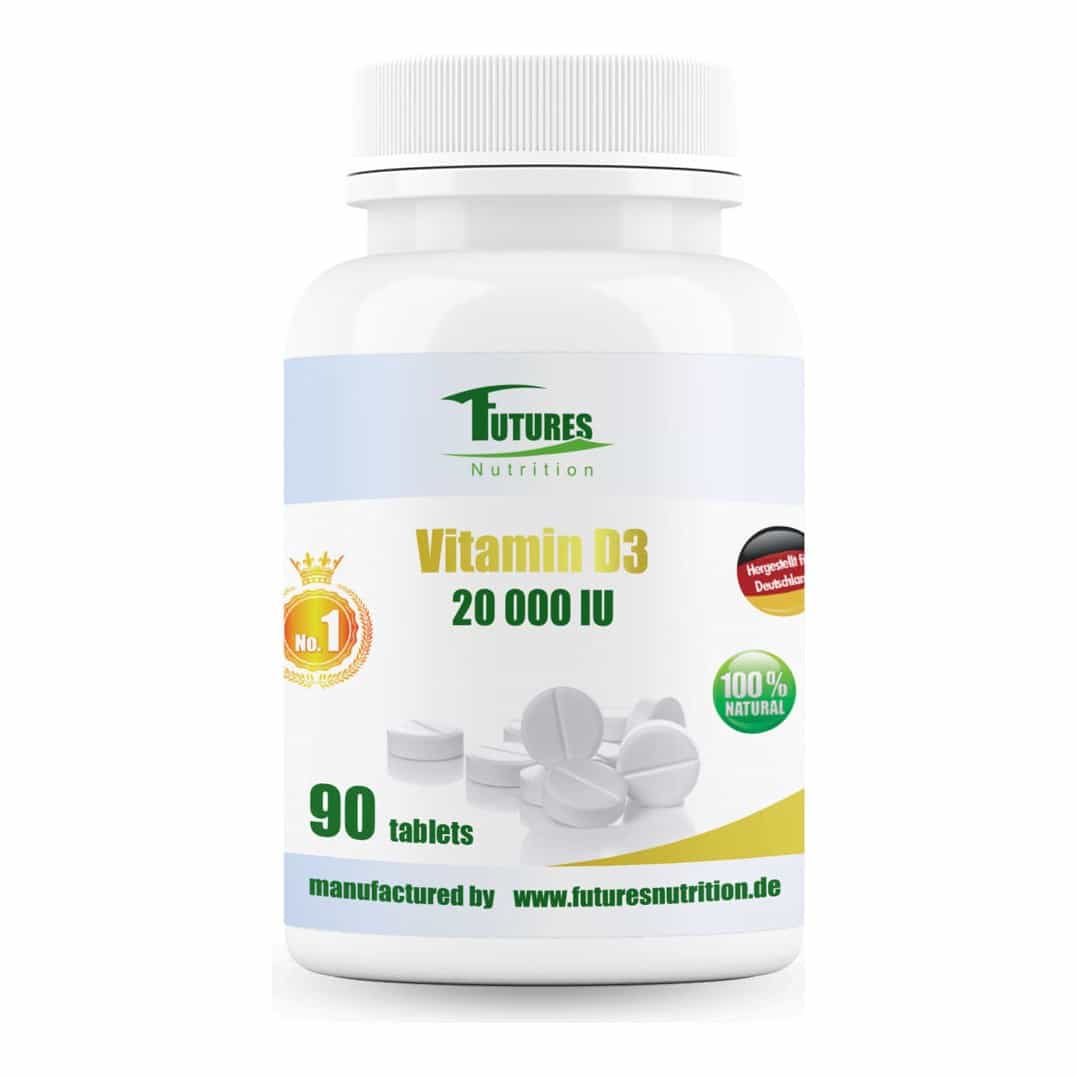
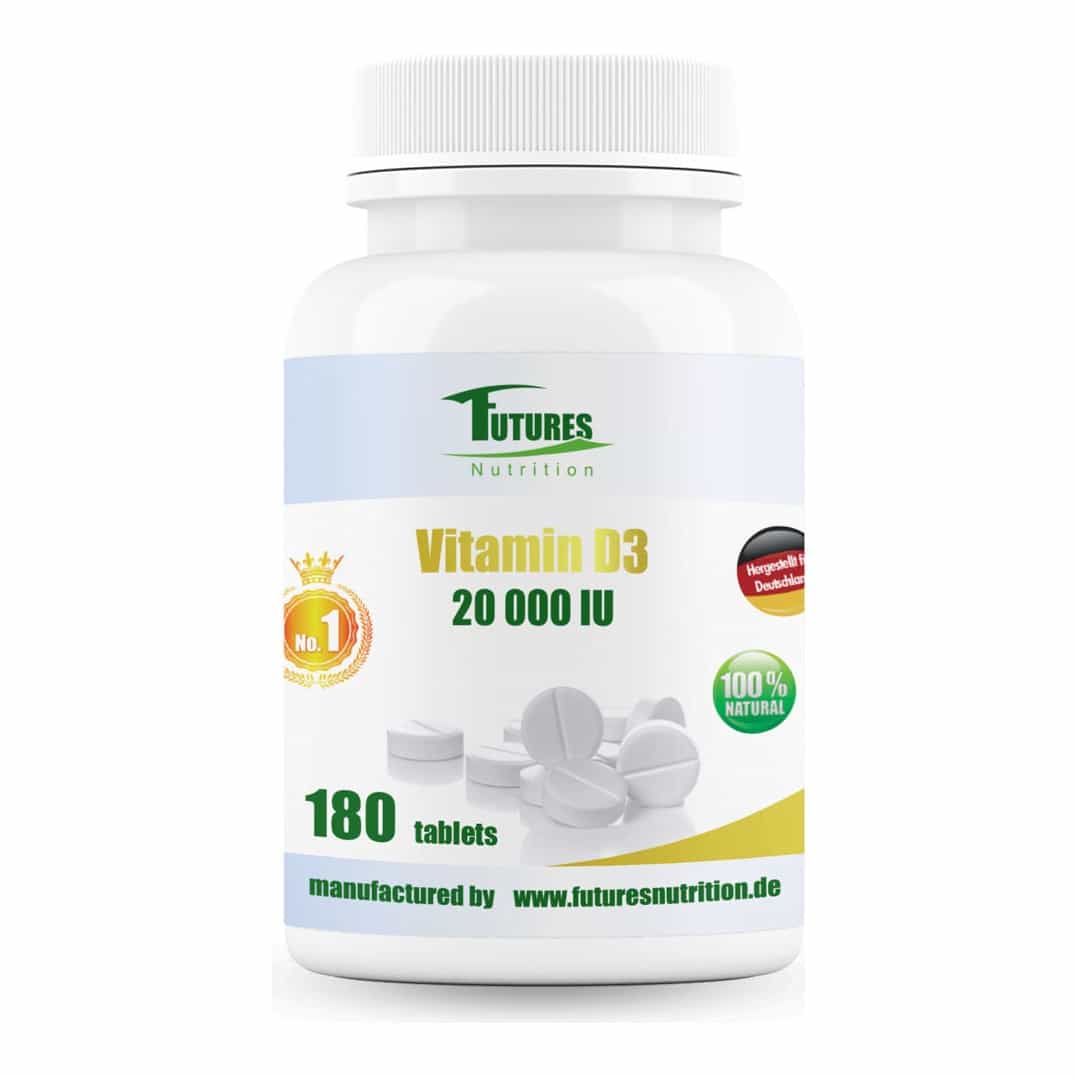
| Vitamin D3 20,000 IU – 90 Tablets | 20,000 IU (500 µg) | 90 | €12.68€704.44/kg | €0.01 |
| Vitamin D3 20,000 IU – 180 Tablets, Vegan | 20,000 IU (500 µg) | 180 | €16.20€450.00/kg | €0.00 |
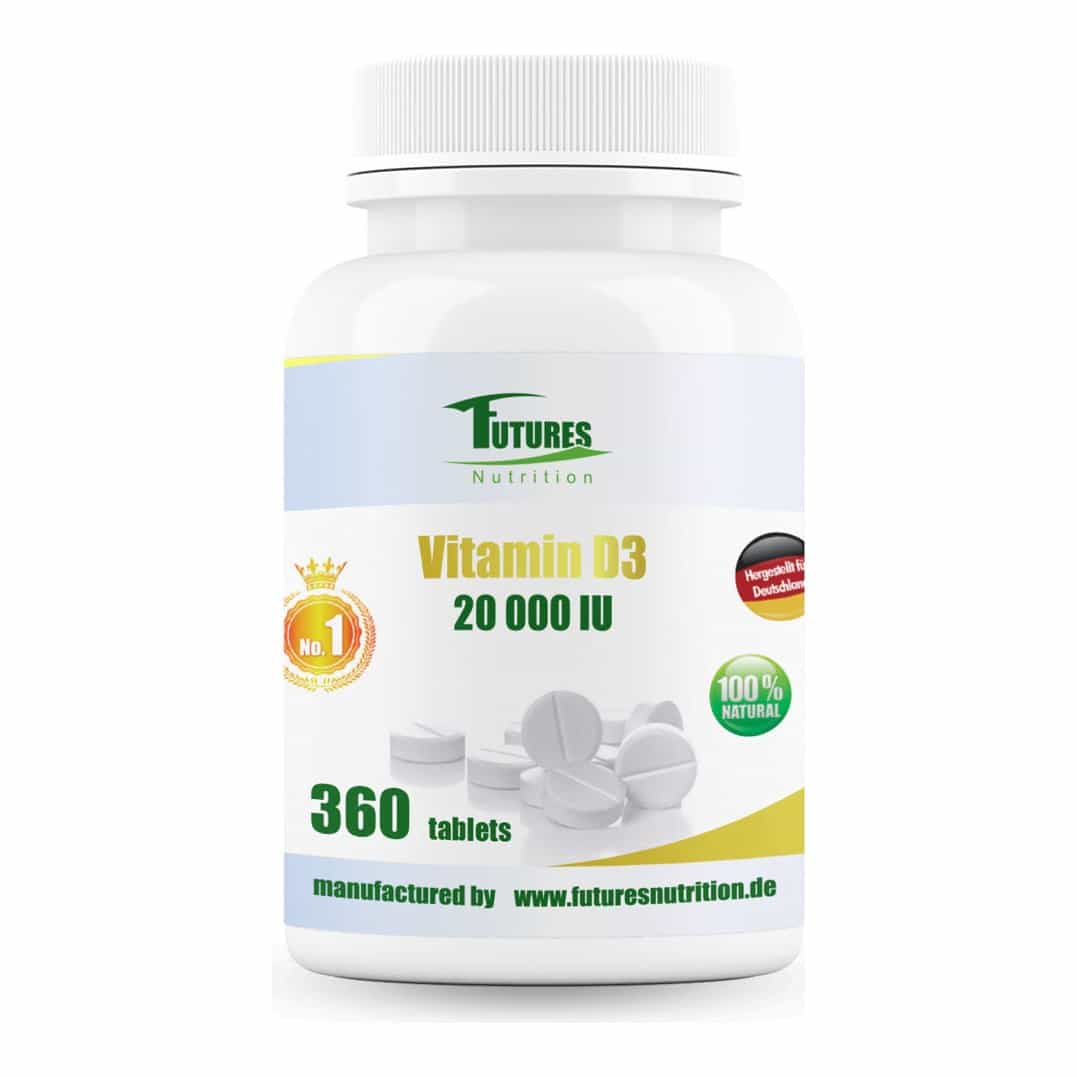
| Vitamin D3 20,000 IU – 360 Tablets, Vegan | 20,000 IU (500 µg) | 360 | €19.80€275.00/kg | €0.00 |
| Vitamin D3 20,000 IU + K2 (MK-7, 200 µg) – 90 Tablets, Vegan | 20,000 IU (500 µg) + K2 200 µg | 90 | €12.99€721.67/kg | €0.01 |
| Vitamin D3 20,000 IU + K2 (MK-7, 200 µg) – 180 Tablets, Vegan | 20,000 IU (500 µg) + K2 200 µg | 180 | €16.60€461.11/kg | €0.00 |
| Vitamin D3 20,000 IU + K2 (MK-7, 200 µg) – 360 Tablets | 20,000 IU (500 µg) + K2 200 µg | 360 | €21.89€304.03/kg | €0.00 |
| Vitamin D3 50,000 IU – 90 Tablets | 50,000 IU (1,250 µg) | 90 | €19.00€1,055.56/kg | €0.00 |
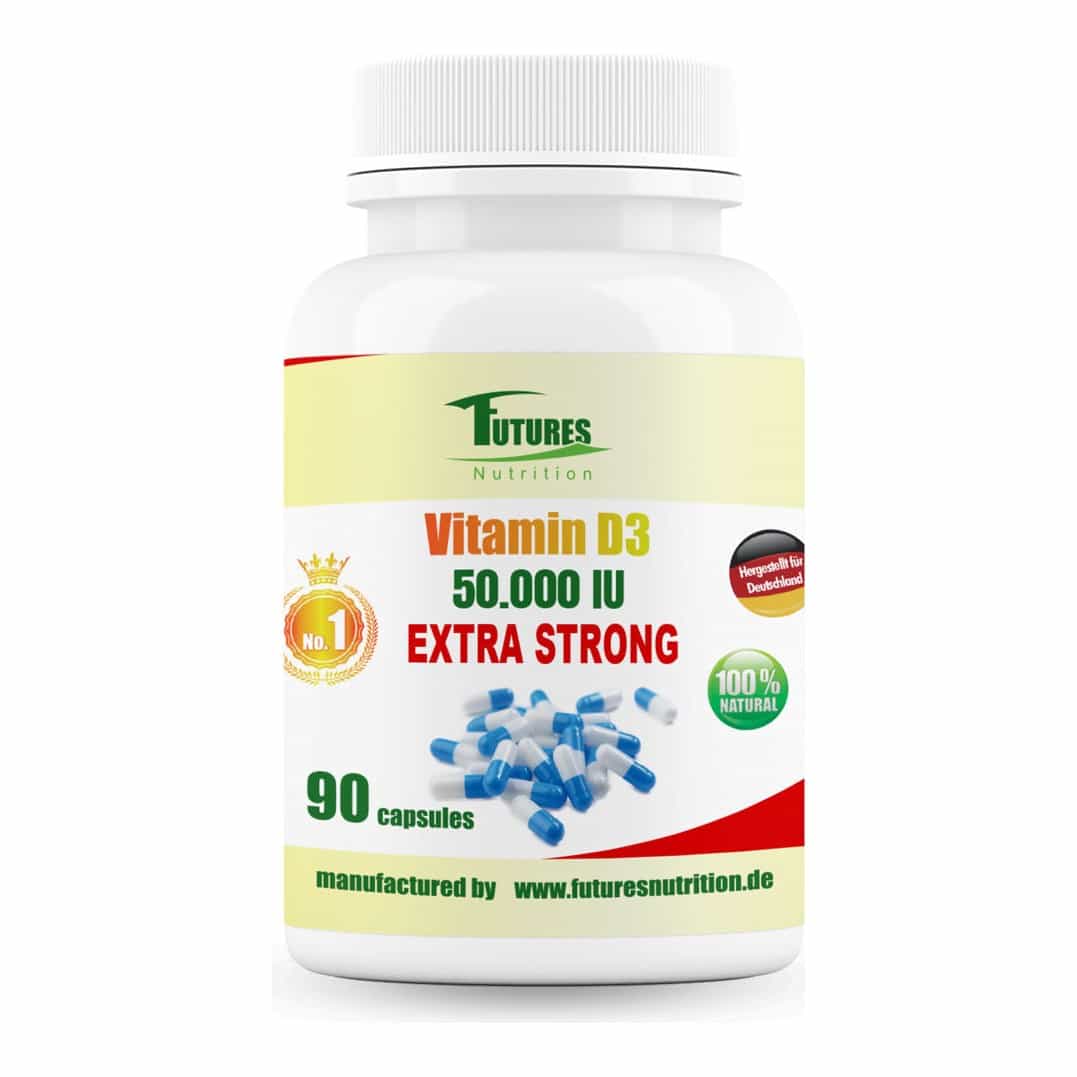
| Vitamin D3 50,000 IU – 90 Capsules | 50,000 IU (1,250 µg) | 90 | €21.00 | €0.00 |
Price per day as stated in the recommended intake on each product page: one tablet daily, every other day, or every 5, 10, 20 or 50 days. 1 µg of vitamin D3 equals 40 IU. Price per day is rounded. All prices incl. VAT, plus shipping.
How to take it: rhythm and amount
These are among the authorised claims for vitamin D — they apply to every product on this page, regardless of strength:
Vitamin D contributes to the normal function of the immune system.
Vitamin D contributes to the maintenance of normal bones.
Vitamin D contributes to the maintenance of normal muscle function.
Vitamin D contributes to normal absorption/utilisation of calcium and phosphorus.
Authorised claims pursuant to Regulation (EU) No 432/2012.
Depot tablets are not taken daily: 10,000 IU every 10 days, 20,000 IU every 20 days, 50,000 IU every 50 days — that is what the respective recommended intake says, and it yields the same average of 1,000 IU (25 µg) per day. Anyone who prefers a tablet daily or every other day chooses 4,000 IU or 5,000 IU with inulin; the 5,000 IU combinations with K2 are taken every 5 days. Whether daily or spaced-out intake makes more sense for you is worked through in the guide on intake rhythm.
Vitamin D3 is fat-soluble; the recommended intakes say to take it with a meal. The tolerable upper intake level for adults derived by EFSA is 100 µg (4,000 IU) per day — depot strengths do not reach this average, but because of the high single dose they are not meant for daily intake.
What counts is always the recommended intake on the pack itself. The stated recommended daily intake must not be exceeded. Food supplements are not a substitute for a balanced and varied diet and a healthy lifestyle.
Vitamin D3 daily or weekly — does it matter?Frequently asked questions about vitamin D3
Which strength is right: 4,000, 10,000 or 20,000 IU?
The figure on the pack is the amount per tablet, not per day. 4,000 IU is intended for daily or every-other-day intake, 5,000 IU for every second or every fifth day depending on the product; 10,000, 20,000 and 50,000 IU are depot strengths with intervals of 10, 20 and 50 days — on average they all come to roughly 1,000 IU per day. Which amount suits you depends on your starting blood level; this page cannot decide that.
Vitamin D3 dosage: 1000 IU to 10000 IU – what makes sense?Daily or every 10 days — which is better?
Vitamin D3 is stored in the body, so both rhythms work. The difference lies in everyday life: a depot tablet is forgotten less often, but the single dose is high. The recommended intake on the pack sets the rhythm.
Vitamin D3 daily or weekly — does it matter?Can you take vitamin D3 on an empty stomach?
The recommended intakes say to take it with a meal, because vitamin D3 is fat-soluble. Anyone who takes the tablet on an empty stomach is not breaking any rule — what the data say about absorption with and without fat is in the guide.
Can you take vitamin D3 on an empty stomach?Can you take too much vitamin D?
Yes. For adults, EFSA names 100 µg (4,000 IU) per day as the tolerable upper intake level over a longer period. Depot tablets are therefore to be taken only at the stated interval, not daily. Anyone dosing high over months should have their 25-OH-D blood level measured.
Can you take too much vitamin D?With or without vitamin K2?
Both are available here in every strength. Vitamin K2 carries its own authorised claims; evidence that vitamin D3 strictly requires K2 is lacking. What is actually proven and what is merely often claimed is in the guide.
Vitamin D3 with K2: what is proven and what isn'tVitamin D3 and blood thinners — is that possible?
Vitamin D3 on its own is not the critical point; vitamin K2 in combination products is: it contributes to normal blood clotting and can affect the action of vitamin K antagonists. Anyone taking anticoagulant medicines should clear combination products with K2 with their doctor or pharmacist beforehand.
Vitamin D3 + K2 and blood thinners: the interactionHow do I know whether I need vitamin D?
From the blood level, not from the season: what is measured is 25-hydroxyvitamin D. How to read the lab value and which ranges the professional societies name is explained in the guide on blood levels.
Vitamin D blood level: reading 25-OH-D correctlyMore on vitamin D3 in the magazine
Everything that goes beyond the authorised claims is where it belongs: in the guides, with sources named.
- Vitamin D3 in winter: why the season counts
- Vitamin D3 daily or weekly — does it matter?
- Vitamin D3: drops or tablets — what actually counts?
- Vitamin D in food: table and portion sizes
- Vitamin D forms: D2 or D3, lanolin or lichen
- Vitamin D blood level: reading 25-OH-D correctly
- Vitamin D3 dosage: 1000 IU to 10000 IU – what makes sense?
- The Impact of Vitamin D3 and Alcohol Interaction on Health
- Can you take too much vitamin D?
- Can you take vitamin D3 on an empty stomach?