Buying biotin: label, µg and price per month
Futures Nutrition Editorial Team · 12 August 2026

The short answer: with biotin, the question people get stuck on with zinc, magnesium or folate falls away — there is only one authorised compound, and the µg figure on the pack is always the amount of biotin itself. Three things are left to compare: the amount per daily portion, how many tablets that daily portion consists of, and what the month costs. Everything else on the front — percentages, advertising lines, "high-dose" — is either derived from those figures or says nothing about the product.
Standing at the shelf, most people compare the big number on the display side. With biotin that misleads less often than with other nutrients, but it misleads somewhere else: two tubs labelled "10,000 µg" can last for different lengths of time, cost different amounts and still carry the same sentence on the back.
The question of form does not arise
With zinc, the compound decides how much elemental zinc sits in the 25 mg on the label. With biotin that calculation does not exist.
Under § 3 of the German food supplements ordinance (Nahrungsergänzungsmittelverordnung, NemV), only the vitamins listed in Annex I of Directive 2002/46/EC may be used, and only in the forms of Annex II. For biotin there is exactly one entry under number 12: D-biotin. No other compound is authorised for food supplements in the EU.
Two things follow. First: a pack advertising a "particularly bioavailable form of biotin" is advertising a difference that does not exist in law. Second: the figure on the label is directly comparable — 5,000 µg is 5,000 µg of biotin from any manufacturer, not 5,000 µg of a compound from which a share still has to be calculated.
One difference does remain, and it lies between the tablet and the plate: from food, where biotin is largely bound to protein, roughly half is absorbed according to the German Federal Institute for Risk Assessment (BfR); from preparations, where it is present in free form, almost all of it. The µg in the tub and the µg in the breakfast egg therefore do not count equally. When and with what to take the tablet is set out in How to take biotin.
What has to be on the pack
That is not a matter of the manufacturer's goodwill. In addition to the general labelling requirements of Regulation (EU) No 1169/2011, § 4 NemV requires:
- the designation "food supplement"
- the names of the nutrient categories that characterise the product
- the recommended daily amount, expressed in portions of the product
- a warning that this amount must not be exceeded
- a statement that the product is not a substitute for a balanced diet
- a statement to store out of the reach of young children
- the amount of nutrient related to the daily portion
- the percentage of the reference value under Annex XIII of Regulation (EU) No 1169/2011
If one of these elements is missing, the product may not be marketed in Germany. In goods arriving from third countries via marketplaces, this is regularly exactly what is missing — and along with the labelling, the analysis the stated amount is supposed to rest on is usually missing too.
The second line matters more than the first
The figure that counts is the one per daily portion, not the one per tablet. Both are the same number as long as the daily portion consists of one tablet — and that is precisely what is not always stated on the front.
If the recommended daily amount consists of two capsules, a tub of 120 does not last four months but two. The pack price stays the same, the monthly price doubles. That is the most common arithmetic error when comparing two offers.
The percentage beside it is calculated against the nutrient reference value (NRV) for biotin from Annex XIII of Regulation (EU) No 1169/2011: 50 µg per day. Read backwards it yields the amount, even when the µg figure is printed small:
| Statement on the pack | Amount per daily portion |
|---|---|
| 15 % NRV | 7.5 µg |
| 100 % NRV | 50 µg |
| 300 % NRV | 150 µg |
| 5,000 % NRV | 2,500 µg |
| 20,000 % NRV | 10,000 µg |
Price per month, not price per tub
The sum is short: pack price divided by the number of daily portions gives the price per day, times 30 the price per month. The number of daily portions is the unit count divided by the units per daily portion.
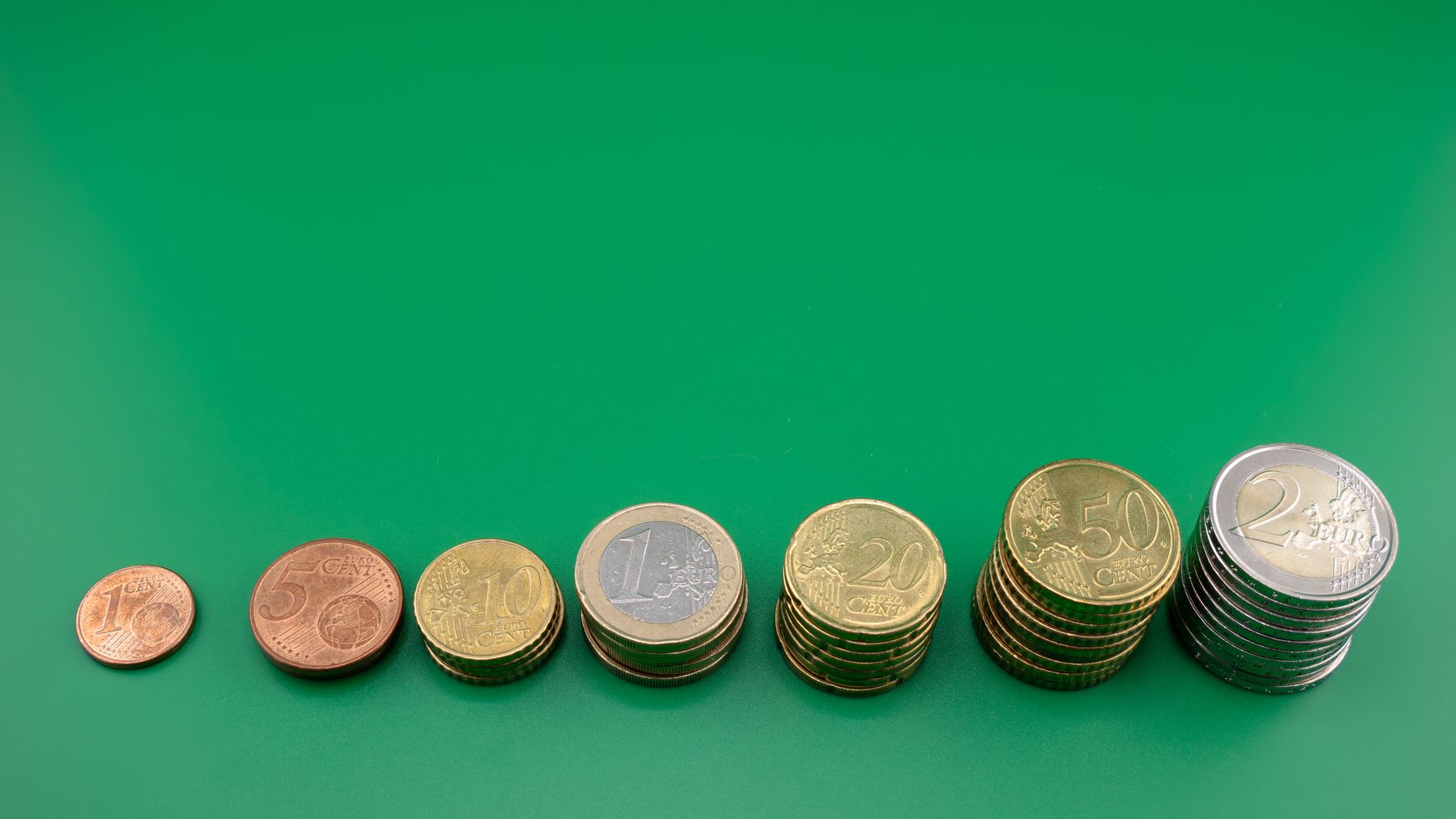
A worked example with freely chosen prices — the point is the method, not the amounts:
| Pack | Daily portion | Supply | Pack price | per month |
|---|---|---|---|---|
| 60 tablets of 10,000 µg | 1 tablet | 60 days | €12.00 | €6.00 |
| 90 tablets of 10,000 µg | 1 tablet | 90 days | €15.00 | €5.00 |
| 120 capsules of 5,000 µg | 2 capsules | 60 days | €18.00 | €9.00 |
| 100 tablets of 50 µg | 1 tablet | 100 days | €10.00 | €3.00 |
The third row is the most expensive, although the pack holds the most units. And the last one shows that the low-dose variant is not automatically the cheapest per month — as a raw material biotin is so inexpensive that the price of a preparation is determined mainly by pack size, sales channel and brand, not by the amount of vitamin inside. That is why 10,000 µg often does not cost much more than 50 µg.
Dosage form: what differs in practice
| Form | Dosing | what to look at |
|---|---|---|
| tablet | fixed per unit | How many units make one daily portion? |
| capsule | fixed per unit | shell of gelatine or of cellulose (HPMC) |
| drops | depends on the number of drops | carrier, shelf life after opening |
| gummies | fixed per unit | sugar or glucose syrup count too |
| powder | depends on the scoop | unusual for biotin on its own |
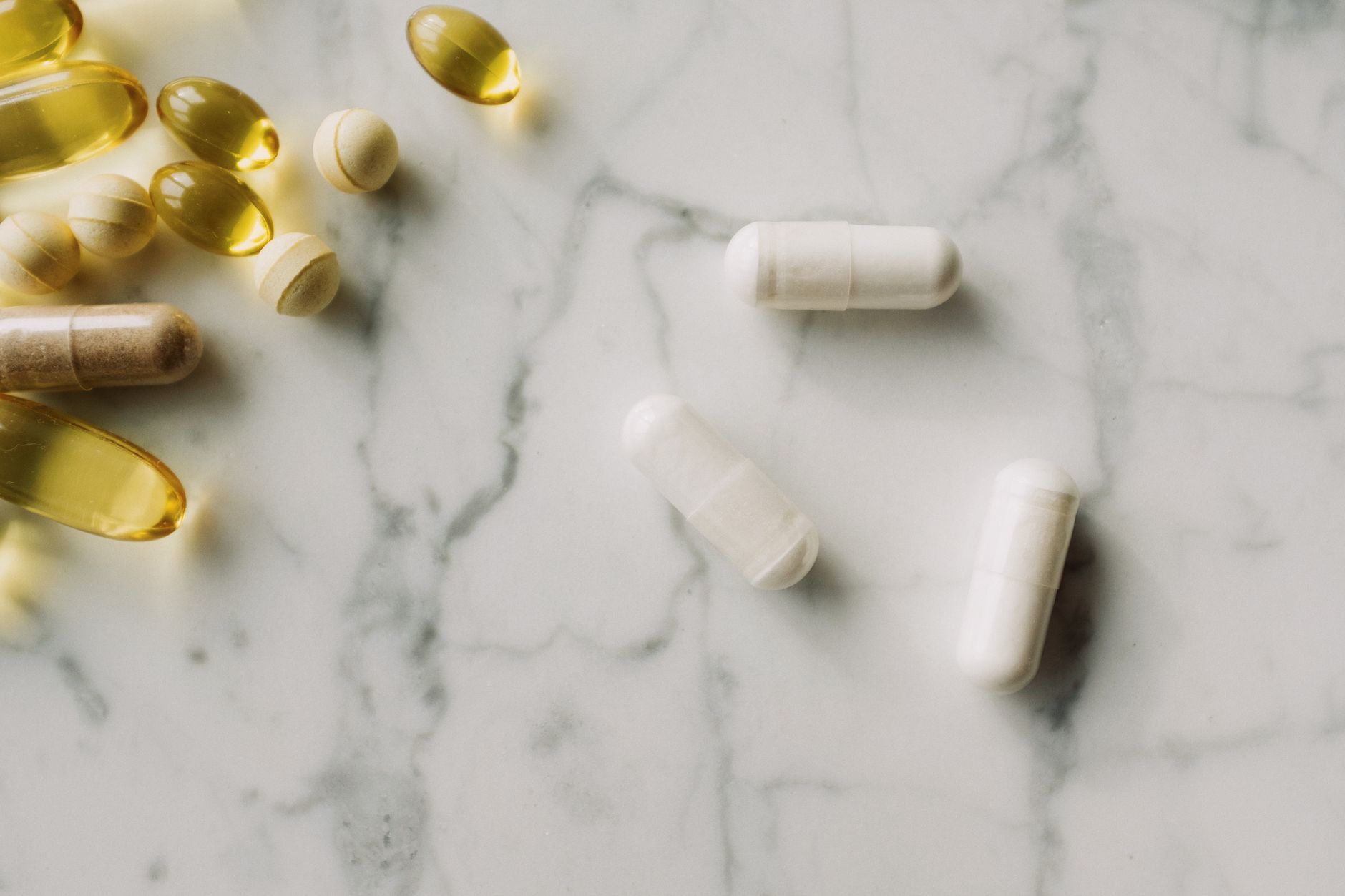
With biotin the form is above all a question of convenience: the amounts are so small that they fit into any presentation, and there is no absorption argument that speaks for one of them. Anyone avoiding animal-derived ingredients checks the shell on capsules; "vegan" is a voluntary statement, the ingredients list is the binding one.
Additives: what is normal in the ingredients list
A biotin tablet consists of well over 99 % of something other than biotin — at 10,000 µg that is 10 milligrams of active substance in a tablet typically weighing several hundred milligrams. The rest are excipients, and they have to be declared in full:
- bulking agents such as microcrystalline cellulose — they are what gives the tablet a compressible mass in the first place
- anti-caking agents such as magnesium salts of fatty acids or silicon dioxide
- glazing agents, usually hydroxypropyl methylcellulose
For a single vitamin this list is short. If it gets long, it is worth looking at what else is in there: colours and flavourings have no function in a tablet that is swallowed, and sweeteners only in chewable and effervescent variants.
Combination product or single vitamin
Biotin rarely sits in the tub on its own. Two designs are common: the B complex, in which biotin is one of eight positions, and the hair product, in which it is usually combined with zinc. For the buying decision that means:
Check whether the companions add up. Anyone already taking a multivitamin may be getting biotin twice — for biotin itself that is uncritical, for zinc or vitamin A it is not.
Judge the amounts individually. A combination product is cheaper than two products only if both amounts fit. Anyone wanting to dose zinc separately will find the strengths in the zinc category, for example as zinc with vitamin B3.
The note worth looking for
There is one sentence that ought to be on a biotin pack but does not have to be. In its FAQ of May 2026, the BfR expressly recommends that biotin-containing food supplements carry a note telling users to inform their doctor or the laboratory staff about the intake before laboratory tests.
The reason: from 150 µg per daily portion biotin can distort immunoassays — thyroid values and cardiac markers, for instance, then come out too high or too low depending on the test design. The BfR states this threshold regardless of whether it is a single-nutrient product, a B complex or another combination product. For medicines the German Federal Institute for Drugs and Medical Devices (BfArM) already pointed this out in 2019; for food supplements the note is voluntary. If it is on the pack, the manufacturer has thought it through.
The figure is not a safety limit: binding maximum amounts for biotin are laid down neither nationally nor at European level, and the BfR refrained from its own maximum-amount proposal because no adverse effects were observed even far above the reference value. The former Scientific Committee on Food of the European Commission (SCF), working from thin data, put a total intake of up to around 100 µg per day at low risk.
What may be on the pack
The authorised claims for biotin are set out in Regulation (EU) No 432/2012. They are permitted from 15 % of the nutrient reference value per daily portion, that is from 7.5 µg (Regulation (EC) No 1924/2006, Annex) — and on a 10,000 µg tub they read word for word as they do on a multivitamin:
Biotin contributes to normal energy-yielding metabolism.
Biotin contributes to normal functioning of the nervous system.
Biotin contributes to the maintenance of normal hair.
For comparing two products this text is therefore useless: it does not distinguish them. It only distinguishes permissible from impermissible advertising — if a pack carries something else and stronger, that is not a quality feature but a legal breach. What the last of those sentences, the one about hair, actually says and does not say is set out in Biotin for hair.
What this means for the choice
Three figures are enough: µg per daily portion, units per daily portion, price per month. Anyone who wants to cover the reference value is done with a daily portion of around 50 µg; anyone deliberately dosing high should treat the 150 µg as a scheduling question before the next blood draw, not as a tolerability limit.

Our Biotin 10,000 µg is an example of the second design: one tablet a day, 90 units per tub, so three months' supply — the sum works out without a detour. Further strengths and combinations are in the biotin category. Food supplements are not a substitute for a balanced and varied diet and a healthy lifestyle.
Frequently asked questions
Is expensive biotin better than cheap biotin? Not in the raw material: it is the same substance, D-biotin, in both tubs. The differences lie in pack size, excipients, the manufacturer's testing effort and the sales channel. A high monthly price for a single vitamin with three to five ingredients is rarely justified by the formulation.
Do I need 10,000 µg or is 50 µg enough? To cover the reference value, 50 µg is entirely sufficient — dietary intake in Germany already sits at a median of 36 to 48 µg per day according to the data of the second National Nutrition Survey (NVS II). High amounts are bought for other reasons; what speaks for them and what does not is set out in High-dose biotin.
How do I spot a dubious offer? By missing mandatory details under § 4 NemV, by efficacy promises that go beyond the authorised sentences, and by an amount stated without the percentage of the reference value. If German labelling is missing entirely, the product may not be marketed here.
Does the pack have to say that biotin interferes with laboratory tests? For food supplements it is not mandatory — the BfR merely recommends it. The note is therefore a usable way of telling two otherwise identical products apart, but its absence does not make a preparation unlawful.
Sources: Directive 2002/46/EC, Annexes I and II (no. 12 biotin: D-biotin) · German food supplements ordinance (NemV), §§ 3 and 4 · Regulation (EU) No 1169/2011, Annex XIII (NRV 50 µg) · Regulation (EC) No 1924/2006, Annex (15 % threshold) · Regulation (EU) No 432/2012, Annex (authorised claims) · BfR, FAQ "Biotin: Supplemente können Laboruntersuchungen verfälschen", 21 May 2026 (absorption rates, NVS II intake data, SCF assessment, 150 µg threshold, labelling recommendation) · BfArM, risk information on biotin, 2019.