Hawthorn: interactions with medicines
Futures Nutrition Editorial Team · 14 August 2026

The EU monograph of the European Medicines Agency answers the question in two words: none reported. That is true and still unsatisfying, because the same authority notes elsewhere that interactions have not been investigated at all. Taken together, the two statements give the real picture: the long lists circulating online — digitalis, beta blockers, nitrates, blood thinners — are almost entirely derived from pharmacology, not from observations in humans.
Exactly one combination has been studied in humans, and it produced no finding. Alongside that there are large trials in which hawthorn extract was given on top of a complete cardiac medication regimen — likewise without any interaction being reported. And there is one practical point that has nothing to do with the effect in the body, but with a laboratory test.
What the regulatory texts actually say
The EU monograph on Crataegus spp., folium cum flore (EMA/HMPC/159075/2014, adopted on 5 April 2016) lists under section 4.5 "Interactions with other medicinal products and other forms of interaction", for both the well-established and the traditional use, only the entry "None reported".
The accompanying assessment report (EMA/HMPC/159076/2014) also reproduces the information that German market preparations give their users, and that wording is distinctly more cautious: interactions have not been studied so far, an enhancement or a weakening of the effect of other medicines cannot be ruled out, and concomitant use of medicines with a narrow therapeutic index is to be decided case by case.
That is not a contradiction. "None reported" is a statement about what has been reported, not about what has been studied. Where nothing has been examined systematically, nothing can have been found either.
The one study in humans: digoxin
If any interaction has been studied at all, it is this one. The reason is pharmacologically obvious: hawthorn constituents inhibit the sodium-potassium pump of the heart muscle cell in laboratory experiments — the same target that cardiac glycosides such as digoxin act on. Flavonoids are also considered possible modulators of the transport protein P-glycoprotein, through which digoxin is pumped out.
Tankanow and colleagues examined this in 2003 in a randomised cross-over study in eight healthy volunteers (Journal of Clinical Pharmacology 2003;43(6):637–42, PubMed 12817526). Ten days of digoxin 0.25 mg daily alone were compared with three weeks of digoxin 0.25 mg together with 2 × 450 mg of a dry hawthorn extract from leaf with flower (4–6.6:1, ethanol 45 %).
| Measured variable | Digoxin alone | Digoxin + hawthorn |
|---|---|---|
| AUC (µg·h/l) | 79 ± 26 | 73 ± 20 |
| Trough level Cmin (µg/l) | 0.84 ± 0.2 | 0.65 ± 0.2 |
| Renal clearance (ml/min) | 74 ± 10 | 81 ± 22 |
| Change in PR interval (ms) | 6.5 ± 11 | 1.0 ± 13 |
| Change in heart rate (beats/min) | −2.5 ± 8 | 1.0 ± 6 |
No difference reached statistical significance (p > 0.05 throughout). After three weeks of concomitant intake, hawthorn had altered neither the blood level curves nor the variables measurable on the ECG. A specialist review by Williamson and colleagues, cited by the assessment report, notes that this is the only reported interaction study on hawthorn and digoxin at all.
Eight people is few. A study with eight participants cannot rule out a rare or a small interaction — it can only show that the expected large one did not occur. That is exactly how the authority classifies it.
Where the warning lists come from
The lists in consumer guides and package leaflets have a traceable origin, only rarely a clinical one. The assessment report works through this unusually openly: the possible interactions compiled by Ernst rest largely on books and review articles, individual references could no longer be located, and where they could be located they named only suspected interactions without clinical studies. The interactions with platelet aggregation inhibitors, cardiac glycosides and antiarrhythmics discussed by Gruenwald and colleagues in 2007 are described by the report expressly as hypothetical statements without clinical evidence.
| Drug group | Where the warning comes from | What exists in humans |
|---|---|---|
| Cardiac glycosides (digoxin, digitoxin) | inhibition of the sodium-potassium pump in cell experiments | one study in 8 volunteers, no finding |
| Beta blockers | the same pharmacological reasoning | no targeted study; in SPICE, 64 % of participants took beta blockers |
| Antihypertensives, nitrates | assumed additive vasodilation | one study in 79 people: small blood pressure effect, no interaction |
| Antiarrhythmics | textbook assumption from electrophysiology | none; in SPICE, 22 % took antiarrhythmics, mostly amiodarone |
| Anticoagulants | inhibition of platelet aggregation in the test tube | no controlled study; one registry signal (see below) |
The strongest counter-evidence comes from two large trials in which hawthorn extract was given on top of complete cardiological therapy. In the SPICE trial (Holubarsch and colleagues, 2008; 2,681 participants) around 90 % of patients took at least three cardioactive medicines at the same time: roughly 85 % diuretics, 83 % ACE inhibitors, 64 % beta blockers, 56 % digitalis and nitrates, 22 % antiarrhythmics. No interactions were reported. The same applies to the HERB-CHF trial (Zick and colleagues, 2009) with 120 participants who received 450 mg of extract twice daily in addition to standard therapy.
From this the assessment report draws a conclusion one rarely reads so plainly: the assumed interaction between hawthorn preparations and conventional medicines remains theoretical, because no clinical data in humans exist.
Blood pressure medicines: the one measurable effect
A randomised study from England (Walker and colleagues, British Journal of General Practice 2006;56(527):437–43, PubMed 16762125) gave 79 people with type 2 diabetes 1,200 mg of hawthorn extract or placebo daily for 16 weeks. The point for our question: 71 % of participants were taking blood-pressure-lowering medicines, on average 4.4 preparations against raised blood glucose and/or blood pressure.
Diastolic blood pressure fell in the hawthorn group from 85.6 to 83.0 mmHg, while under placebo it rose from 84.5 to 85.0 mmHg — a between-group difference of p = 0.035. For the systolic value there was no difference (3.6 versus 0.8 mmHg, p = 0.329). The authors state expressly: no herb-drug interaction was found.
Two and a half millimetres of mercury is not a collapse in blood pressure. The review cited in the assessment report reaches the same conclusion: the effect is small, and a clinically meaningful lowering of blood pressure is unlikely when hawthorn is added to existing antihypertensive treatment. Anyone who measures their blood pressure at home anyway already holds the tool for checking this in their own case.
The point that concerns laboratory values
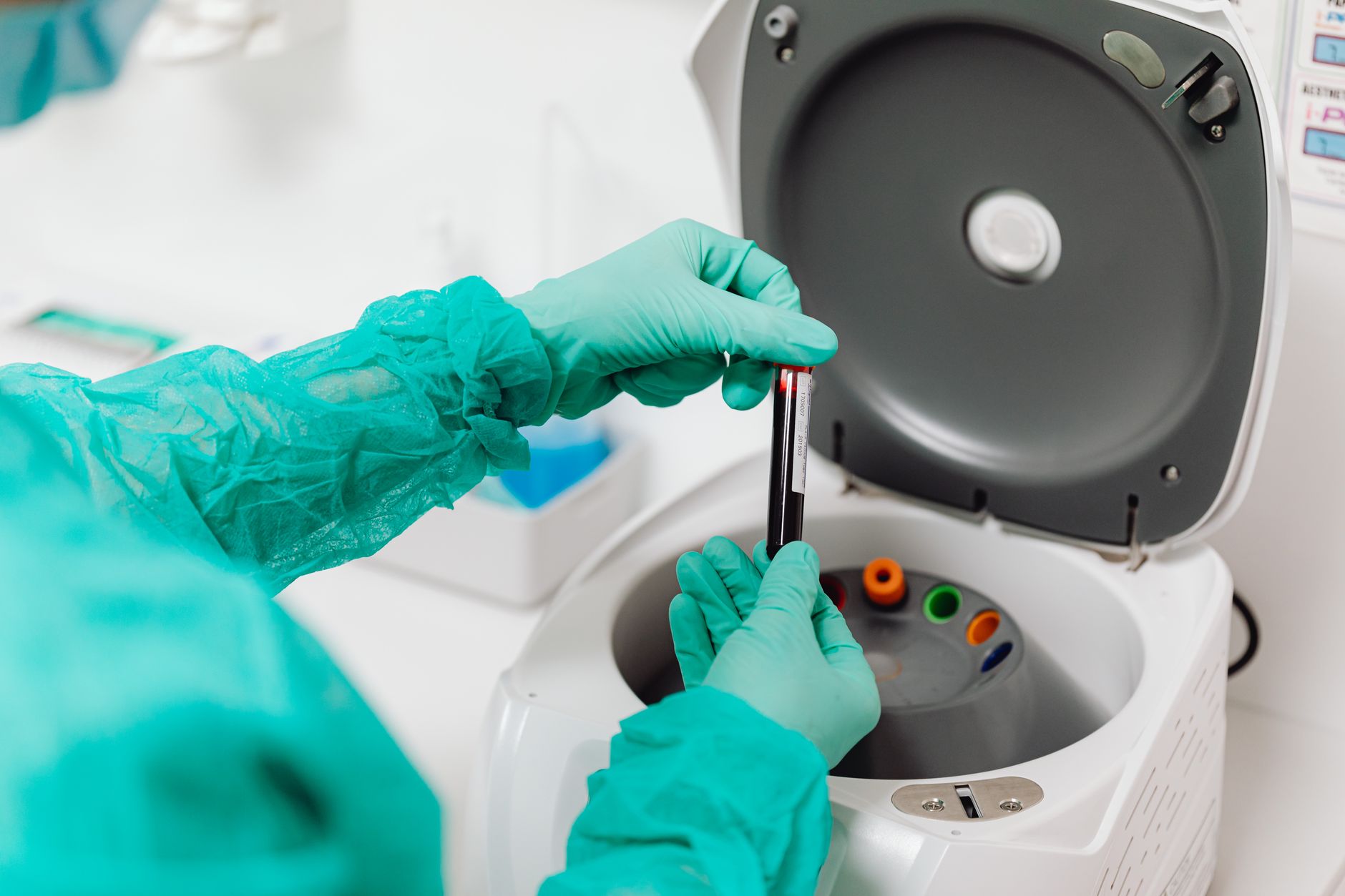
The most tangible interaction in practice is not one inside the body but one inside the measuring device. Dasgupta and colleagues examined in 2010 whether hawthorn interferes with the determination of the digoxin level in blood (Archives of Pathology & Laboratory Medicine 2010;134(8):1188–92, PubMed 20670141). Two immunoassays were tested with two liquid hawthorn extracts — one from leaves, flowers and berries, one from berries only.
The result was clearly split: the Digoxin III assay, based on polyclonal antibodies, showed interference; the Tina-Quant assay, based on monoclonal antibodies, did not. Whether a hawthorn preparation distorts the measured digoxin value therefore depends on which test procedure the laboratory uses — a piece of information that appears on no lab report and that few doctors carry in their heads either.
In the second part of the same work, both extracts increased the calcium content inside isolated rat heart muscle cells, without the effect adding to that of digoxin — which the authors take as an indication that both bind to the same site of the sodium-potassium pump. They conclude from this that anyone taking digoxin should avoid hawthorn. The European Medicines Agency rates the informative value of this cell experiment as limited, because no further details of the extracts used were available.
For practice a clear recommendation remains: anyone taking digoxin or digitoxin and having levels determined regularly should mention a hawthorn-containing preparation before the blood draw. Not because the value in the body would be wrong — but because it could be wrong on paper.
Blood clotting: a signal, not a proof
Hawthorn does appear in reviews of herbal preparations and blood clotting, though differently from what the warning lists suggest. A narrative review (McEwen, Seminars in Thrombosis and Hemostasis 2015;41(3):300–14, PubMed 25839871) places hawthorn among the plants for which reduced platelet aggregation has been shown only in the test tube. In the list of plants with possible interactions with warfarin — cranberry, danshen, ginkgo, ginseng, green tea, St John's wort — hawthorn does not appear.
A counter-signal comes from routine care: an analysis of Jordan's first anticoagulation clinic (Al-Momany and colleagues, Clinical and Applied Thrombosis/Hemostasis 2019;25:1076029619870252, PubMed 31409123) examined 89,488 INR values from 2,788 patients. Herbal preparations accounted for 15 % of the factors that took the INR out of the target range; hawthorn is named specifically, with raised INR values in 11 patients and, in two cases, severe bleeding that required hospital admission.
These figures are to be taken seriously and in themselves prove nothing: intake was reported by the patients themselves, hawthorn is a widespread home remedy in Jordan, and confounders such as diet, concomitant medication and adherence cannot be cleanly separated in an analysis of this kind. Anyone taking vitamin K antagonists such as phenprocoumon or warfarin does, however, have a simple way out that costs nothing: report new preparations at the anticoagulation clinic and have the INR checked once more after starting.
With our tablet it is the magnesium part that decides
All the figures named so far apply to medicinal extracts from leaf with flower in daily amounts of 240 to 1,750 mg. Our Hawthorn + magnesium provides, per tablet, a berry extract at a ratio of 20:1, corresponding to 600 mg of berry powder — that is 30 mg of extract — plus 56.25 mg of magnesium. That is a different plant species, a different plant part and an order of magnitude less extract; why species and plant part make more difference here than any milligram figure is set out in Hawthorn extract: what 20:1 actually means.

That shifts the question. The component of this tablet for which documented drug interactions actually exist is the magnesium. In the gut, magnesium forms poorly soluble complexes with quinolone antibiotics and tetracyclines and reduces their absorption; the same principle applies to bisphosphonates and thyroid hormones. This is documented for antacids in the gram range, not for 56 mg — but the usual gap of two to three hours costs nothing. The German Federal Institute for Risk Assessment proposes a maximum daily amount of 250 mg for magnesium from food supplements; anyone taking a second magnesium product alongside adds both portions together. How this can be arranged over the course of the day is set out in Taking hawthorn: timing, duration, course.
Food supplements are not a substitute for a balanced and varied diet and a healthy lifestyle. Further preparations with this plant extract are in the hawthorn category, pure magnesium products in the magnesium category.
When asking a doctor is not optional
Independently of any interaction, the monograph names situations in which one does not wait. With swollen ankles or legs, with pain in the region of the heart radiating into the arms, the upper abdomen or the throat area, or with shortness of breath, medical advice is to be sought immediately. If complaints persist unchanged for more than two weeks during use, or if they worsen, that too needs to be clarified.
The monograph also excludes: children and adolescents under 18 years for the first indication, children under 12 years for the second. For pregnancy and breastfeeding, safety has not been established and use is not recommended there. And the sentence from the German product information still applies: concomitant use of medicines with a narrow therapeutic index — cardiac glycosides, vitamin K antagonists, thyroid hormones, certain antiarrhythmics — is decided case by case, not according to a table on the internet.
Frequently asked questions
May I take hawthorn if I am on beta blockers? There is no targeted investigation of this combination. In the SPICE trial, 64 % of participants took beta blockers in addition to the hawthorn extract, without any interactions being reported. That is not a free pass, but it is the most robust indication available so far. Anyone taking cardiovascular medicines long-term should discuss a new preparation with their doctor — not because of a specific risk, but because the available data do not answer the question for them.
Does hawthorn distort my digoxin lab value? Possibly, depending on the test procedure. In the experiment, hawthorn interfered with the polyclonal Digoxin III assay but not with the monoclonal Tina-Quant assay. Which procedure your own laboratory uses does not appear on the report — which is why the intake belongs mentioned before the blood draw.
I take anticoagulants. Is that a reason to rule it out? No controlled study on this exists. For hawthorn, reduced platelet aggregation has been shown only in the test tube; a registry report from Jordan does, however, name hawthorn in connection with raised INR values. With vitamin K antagonists the rule is therefore: report the intake and have the INR checked additionally after starting.
Why do consumer sites still carry a long warning list? Because it is derived from pharmacology and has been passed on over decades. The assessment report of the European Medicines Agency examined the original references: much of it comes from books and review articles, individual sources could no longer be located, and where they could be located they named only suspected interactions without clinical investigation.
Sources: European Medicines Agency, EU monograph on Crataegus spp., folium cum flore, EMA/HMPC/159075/2014 (5 April 2016), sections 4.4, 4.5 and 4.6 · Assessment report thereto, EMA/HMPC/159076/2014, sections 2.3, 3.1.4, 5.5.4 and 5.6 · Tankanow R et al., J Clin Pharmacol 2003;43(6):637–42 (PubMed 12817526) · Dasgupta A et al., Arch Pathol Lab Med 2010;134(8):1188–92 (PubMed 20670141) · Walker AF et al., Br J Gen Pract 2006;56(527):437–43 (PubMed 16762125) · McEwen BJ, Semin Thromb Hemost 2015;41(3):300–14 (PubMed 25839871) · Al-Momany NH et al., Clin Appl Thromb Hemost 2019;25:1076029619870252 (PubMed 31409123) · German Federal Institute for Risk Assessment, proposed maximum amount for magnesium in food supplements (250 mg/day) · Product declaration Hawthorn + magnesium, 180 tablets.