Hawthorn and magnesium: why the combination?
Futures Nutrition Editorial Team · 14 August 2026
On a great many hawthorn packages a mineral sits next to the plant, usually magnesium. The obvious thought — the two complement each other, one boosts the other — is the wrong one. The reason is legal: for hawthorn there is no authorised health claim in the EU, for magnesium there are ten. Without the mineral, such a tub would literally be allowed to say nothing at all beyond the ingredient list.
The amount is no accident either. Our Hawthorn + Magnesium contains 56.25 mg of magnesium per tablet. That is exactly 15 % of the nutrient reference value — precisely the threshold from which an authorised claim may be used at all. Anyone who has done that sum once reads every combination package differently afterwards.
Two ingredients, two legal frameworks
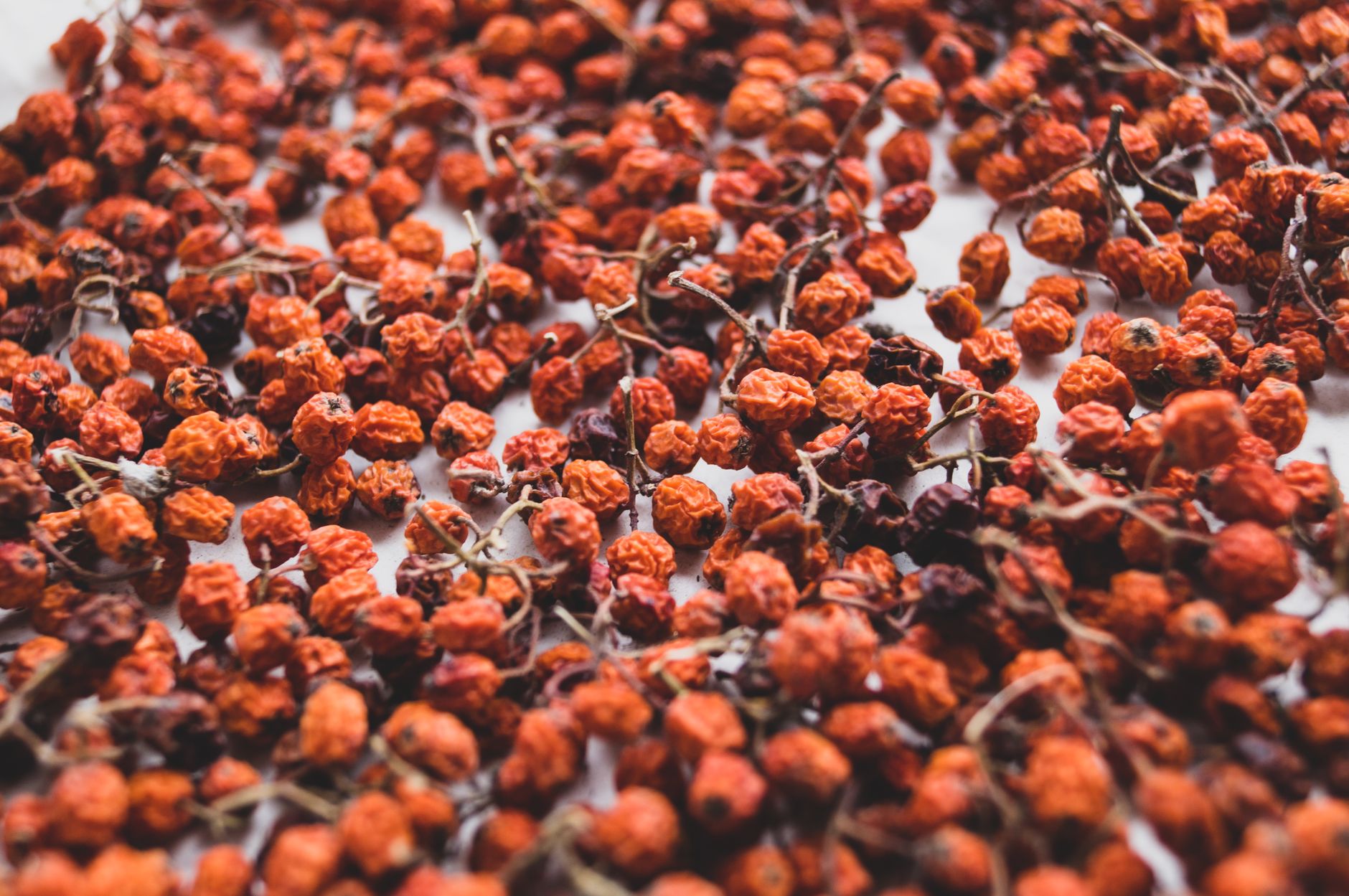
Hawthorn is a plant extract. Applications for health claims on botanical substances have been sitting unprocessed for years ("on hold"), and for the genus Crataegus no claim is authorised under the Health Claims Regulation (EC) No 1924/2006. A food supplement may therefore only describe the plant: which species, which plant part, which extract ratio, how much. Which species and which plant part that is in the individual case — and why this matters more than the milligram figure — is set out in Hawthorn: the plant, leaf with flower, origin.
Magnesium, by contrast, is a nutrient with a finished rulebook. Regulation (EU) No 432/2012 lists ten authorised claims, among them verbatim:
- Magnesium contributes to the reduction of tiredness and fatigue.
- Magnesium contributes to normal muscle function.
- Magnesium contributes to the normal functioning of the nervous system.
- Magnesium contributes to electrolyte balance.
- Magnesium contributes to normal energy-yielding metabolism.
- Magnesium contributes to the maintenance of normal bones and teeth.
These sentences belong to the magnesium, not to the hawthorn. That is exactly where the combination gets misread: the reader sees an authorised sentence on a hawthorn package and credits it to the plant. Under Article 10 of Regulation (EC) No 1924/2006 a claim has to relate to the nutrient for which it is authorised — the sentence belongs to the magnesium, even when it stands on a tub whose name starts with "hawthorn".
56.25 mg is not a random figure
The number arises from three provisions that interlock:
- The nutrient reference value. Annex XIII, Part A, point 1 of Regulation (EU) No 1169/2011 sets an EU-wide uniform reference value of 375 mg for magnesium. It is the value every percentage on a package refers to.
- The significant amount. Point 2 of the same annex names 15 % of that reference value as the significant amount. Only from this threshold does a food count as a "source of" a mineral.
- The reference to the daily portion. Under § 4(3) of the German food supplements ordinance (NemV), nutrient amounts and percentages relate to the daily amount stated on the label — for this product, one tablet a day.
Why these together produce the threshold is stated in Article 5(1)(b) of Regulation (EC) No 1924/2006: a claim is only permitted if the nutrient is present in the final product in a significant amount. And every single one of the ten magnesium claims in Regulation (EU) No 432/2012 carries the same rider in the "Conditions of use" column: the claim may only be used for foods which meet the minimum requirements for a source of magnesium.
| Quantity | Value | Source |
|---|---|---|
| Nutrient reference value, magnesium | 375 mg | Reg. (EU) No 1169/2011, Annex XIII, Part A, point 1 |
| Significant amount | 15 % of it | Reg. (EU) No 1169/2011, Annex XIII, Part A, point 2 |
| Hence: minimum per daily portion | 56.25 mg | 375 mg × 0.15 |
| Magnesium in our tablet | 56.25 mg (15 % NRV) | Product declaration |
So the arithmetic lands exactly on the mark. That is not a reproach to the product — it is the explanation for why combination preparations with plant extracts so often contain precisely 15 % of a nutrient and not 40 or 100 %. The nutrient is there so that the package is allowed to speak.
15 % NRV is a label figure, not a supply
The second half of the misunderstanding follows immediately: anyone who thinks such a tablet settles their magnesium supply is out by a factor of six.

The D-A-CH reference values, published among others by the German Nutrition Society (DGE), give estimated values for adults of 350 mg (men) and 300 mg (women) per day — referring to total intake from food and drink. According to the second German National Nutrition Survey (NVS II), actual intake in Germany averages around 345 mg (men) and 284 mg (women). Against that background the 56.25 mg are a small top-up, not a replacement for wholegrains, pulses, nuts and mineral water. Which figure applies to what is untangled in Magnesium daily requirement: 375 mg, 350 mg or 250 mg?.
The advantage of this small amount lies on the other side: the German Federal Institute for Risk Assessment (BfR) proposes a maximum daily amount of 250 mg for magnesium from food supplements, split over at least two intakes — the decisive effect above that is osmotic diarrhoea. At 56.25 mg there is ample headroom, even with a magnesium preparation standing next to it. Where that limit comes from is explained in Too much magnesium: reading the 250 mg limit properly.
Anyone who is after magnesium specifically rather than the plant extract is better served by a plain magnesium product: our Magnesium bisglycinate 150 mg delivers 150 mg of elemental magnesium per tablet, i.e. 40 % of the nutrient reference value; the remaining compounds are in the Magnesium category. Buying both together only makes sense if you genuinely want both ingredients.
Why magnesium oxide of all things
The ingredient list of our preparation names magnesium oxide — and there is a space-related reason for it. At around 60 %, magnesium oxide has the highest elemental share of all common compounds. For 56.25 mg of elemental magnesium you therefore need roughly 93 mg of magnesium oxide on paper; the same amount from bisglycinate (about 14 % elemental share) would mean some 400 mg of raw material and would burst the tablet, which also has to hold the extract. How the forms otherwise differ is set out in Magnesium forms compared.
One detail of the same ingredient list causes confusion regularly: magnesium salts of fatty acids are listed as an anti-caking agent. That is a technological additive in the milligram range, not a second magnesium source — it plays no part in the declared 56.25 mg. Anyone skimming the ingredient list and reading "magnesium" twice should not count it twice.
What the label actually says
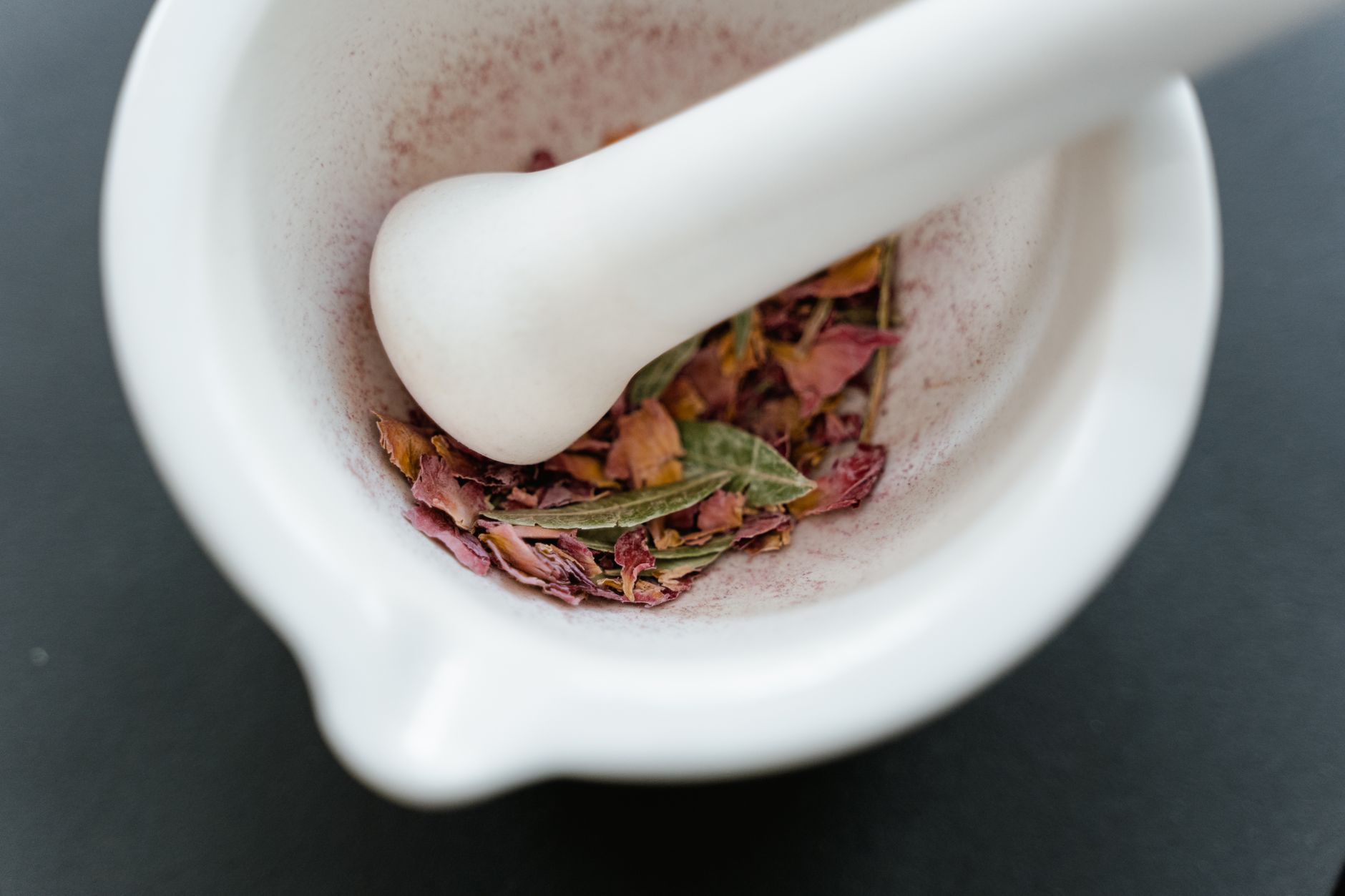
The second ingredient is a hawthorn berry extract from Crataegus pinnatifida at a ratio of 20:1, corresponding to 600 mg of pure hawthorn berry powder. The ratio gives the amount actually sitting in the tablet: 600 divided by 20 is 30 mg of extract. Both figures describe the same thing, and both belong together — one number alone says nothing. A "600 mg" print on the front does not mean 600 mg of powder in the tablet here, but the starting amount from which those 30 mg were obtained.

Added up, the two efficacy-relevant ingredients contribute roughly 123 mg to the tablet weight; the rest is bulking agent (cellulose) and the anti-caking agent mentioned. That too is normal and no shortcoming — a tablet has to be pressable.
Food supplements are not a substitute for a balanced and varied diet and a healthy lifestyle. Further preparations with this plant extract are in the Hawthorn category.
Frequently asked questions
Does magnesium boost the effect of hawthorn? There is no evidence for that, and the combination is not justified that way either. The two ingredients stand beside each other, not with each other: the extract is the name-giving component, the magnesium is the nutrient for which authorised claims exist. None of the authorised claims asserts an interaction between the two.
Why are there sentences about muscles and the nervous system on the package when it is about hawthorn? Because those sentences belong to the magnesium. They are authorised in Regulation (EU) No 432/2012 and tied to the condition that the product is a source of magnesium. They cannot be transferred to the plant extract.
Is 56.25 mg of magnesium enough for the day? No, and it is not meant to be. It corresponds to 15 % of the nutrient reference value of 375 mg. The estimated value in the D-A-CH reference values for adults is 300 to 350 mg from all sources combined — the largest share of that comes from food.
Can I take this preparation together with a magnesium product? Arithmetically, 56.25 mg is added to whatever the other product delivers. The BfR maximum of 250 mg of magnesium per day from food supplements serves as orientation; anyone wanting to stay within it adds both portions together. With impaired kidney function or long-term medication, this question belongs in medical hands.
Sources: Regulation (EC) No 1924/2006, Article 5(1)(b), Article 10 and Annex (claim "source of vitamins and/or minerals") · Regulation (EU) No 432/2012, list of authorised claims (magnesium, ten entries with the condition "minimum requirements for a source of magnesium") · Regulation (EU) No 1169/2011, Annex XIII, Part A, points 1 and 2 (nutrient reference value magnesium 375 mg; significant amount 15 %) · German food supplements ordinance (NemV) § 4(3) · D-A-CH reference values for nutrient intake, magnesium (2021 revision), DGE · second German National Nutrition Survey (NVS II) · Federal Institute for Risk Assessment (BfR), maximum level proposal for magnesium in food supplements (250 mg/day, 2017) · product declaration Hawthorn + Magnesium, 180 tablets.