Hawthorn: the plant, its species, the part used
Futures Nutrition Editorial Team · 14 August 2026
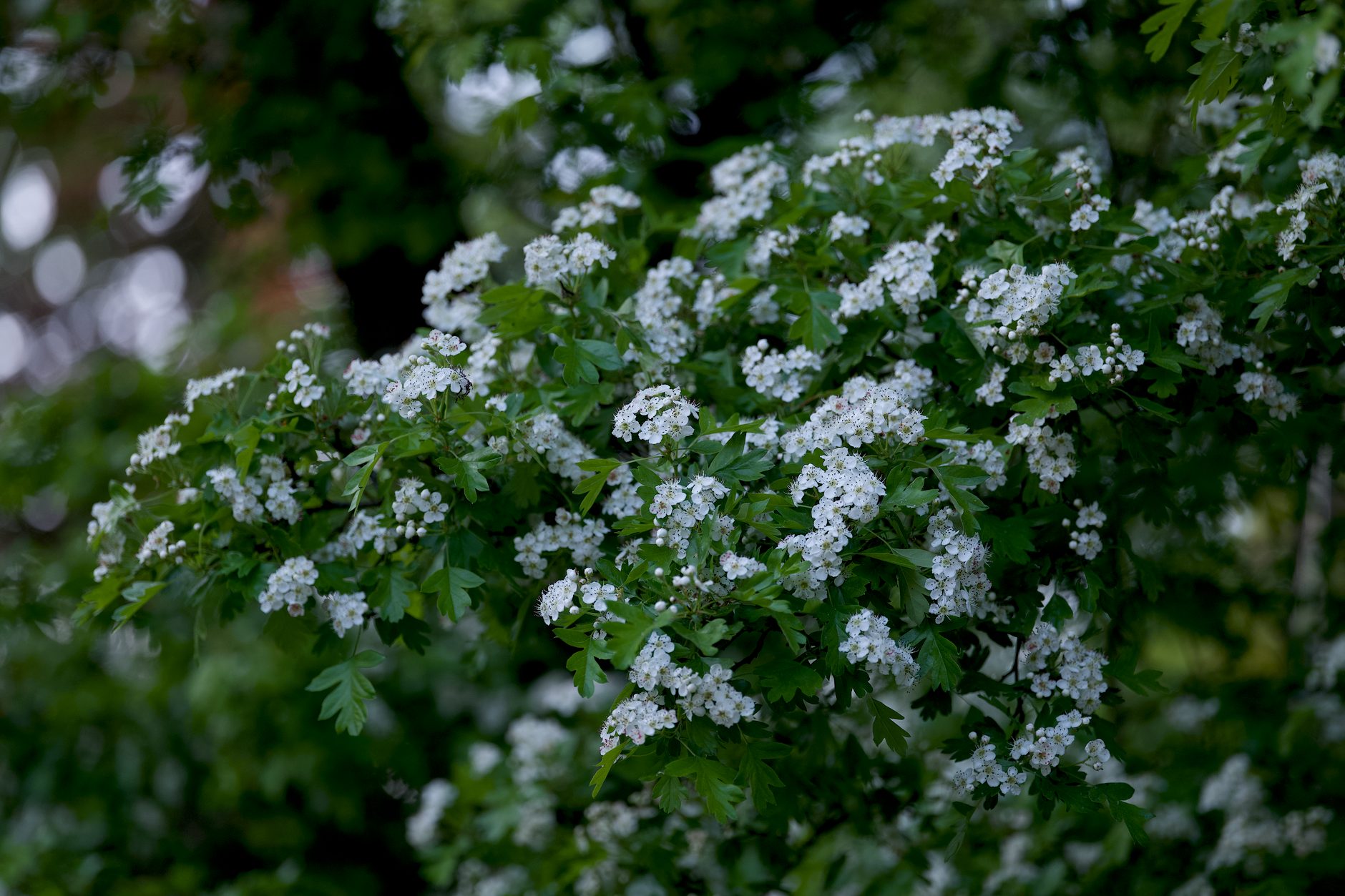
Hawthorn is not a single plant species but an entire genus — Crataegus, a rose family shrub with thorny branches and white blossom. A label therefore never says enough: "hawthorn" on its own tells you neither which species was processed nor which part of the plant. And everything else hangs on exactly that, because the European Pharmacopoeia lists leaf with flower and fruit as two separate herbal drugs with two different tests.
Once you know this, you read every hawthorn pack differently. The question is not "how much hawthorn", but: leaf with flower or fruit, a European or an East Asian species — and against what was the raw material measured.
A genus that resists tidy classification
Crataegus belongs to the rose family (Rosaceae). How many species that includes is a matter of opinion: depending on the classification, between 150 and 2000 are described, of which only 100 to 200 count as species in their own right. The reason is that the species hybridise with each other very readily — in the field, they can hardly be told apart cleanly.
For Europe, two matter above all: common hawthorn (Crataegus monogyna) and midland hawthorn (Crataegus laevigata, formerly C. oxyacantha). Their Latin names point to the very feature you can rely on least. C. monogyna does as a rule have one style and one carpel, C. laevigata two or three — but exceptions are frequent enough that the pharmacopoeia describes leaf shape as the more workable characteristic: the leaves of C. laevigata are pinnately lobed with 3, 5 or 7 blunt lobes, those of C. monogyna pinnately cut with 3 or 5 pointed lobes and thus clearly more deeply incised.
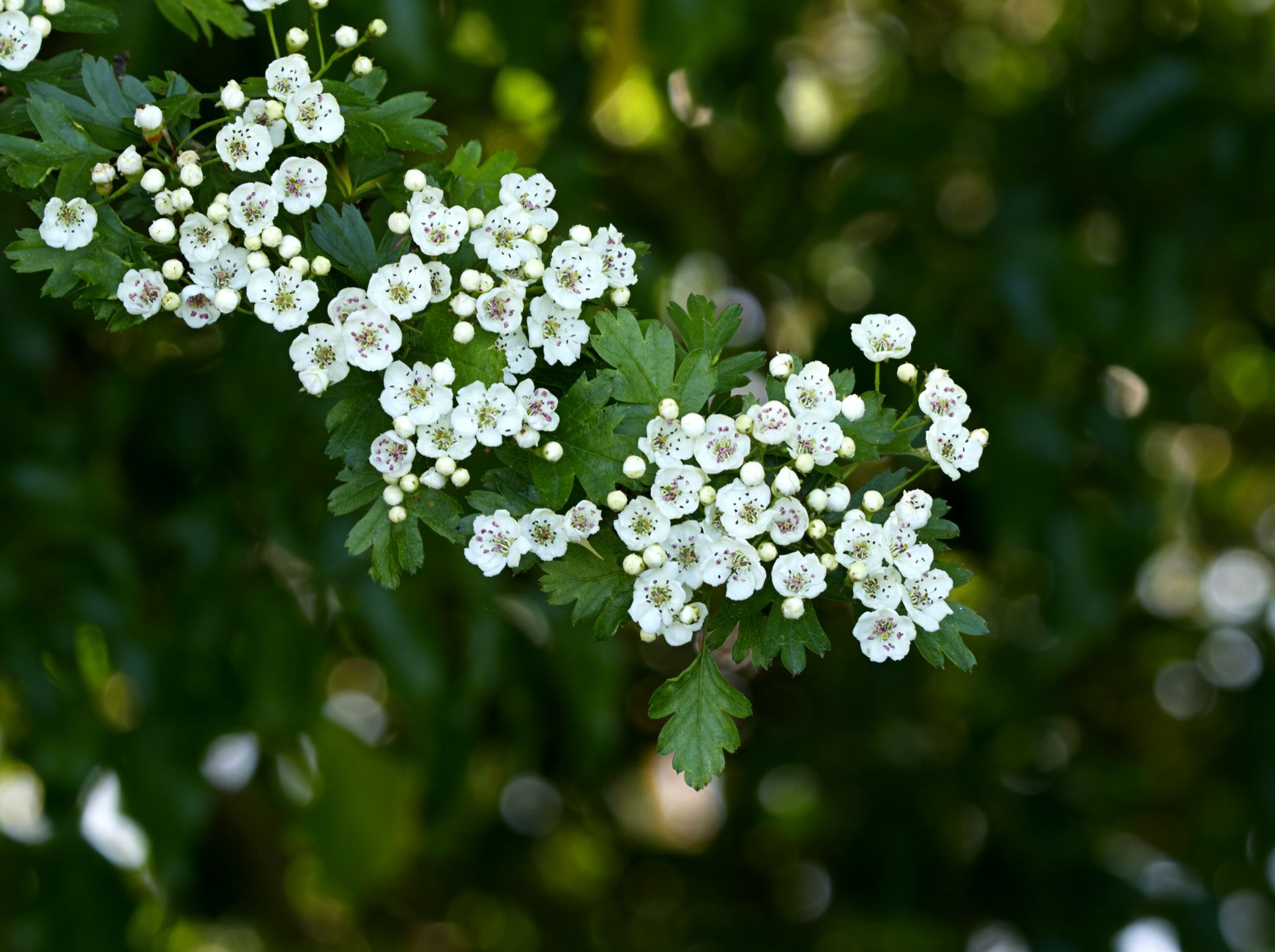
Both flower in May and June, the midland hawthorn around two weeks before the common one. The flowers sit in corymbs, have five free sepals, five yellowish-white petals and numerous stamens. The German name for the plant refers precisely to that: white blossom on thorny branches.
For the herbal drug "hawthorn leaf and flower", the pharmacopoeia expressly admits hybrids of the two as well, plus, more rarely, further European species — C. pentagyna, C. nigra and C. azarolus. The last two are recognised by their densely hairy leaves, while laevigata, monogyna and pentagyna are glabrous or bear only scattered hairs.
Leaf with flower: the part the pharmacopoeia refers to
The European reference is not the berry but the flowering branch. The European Pharmacopoeia monograph for hawthorn leaf and flower (Crataegi folium cum flore, Ph. Eur. no. 1432) defines the drug as the whole or cut, dried flower-bearing branches of the species named, and requires not less than 1.5 % total flavonoids, expressed as hyperoside, calculated with reference to the dried drug. What becomes of this drug on the market — tea, tincture or tablet — and how the preparations differ is set out in Hawthorn: tea, tincture or tablet?.
So what is measured are flavonoids. According to the assessment report of the European Medicines Agency (EMA/HMPC/159076/2014), the other main constituents of leaf and flower are flavan compounds such as catechin, epicatechin and oligomeric procyanidins, plus triterpene acids, amines and organic acids such as chlorogenic acid.
The extracts have their own monographs too, and they show how differently "hawthorn extract" can turn out:
| Pharmacopoeial drug | Latin name | What the content is measured against |
|---|---|---|
| Hawthorn leaf and flower | Crataegi folium cum flore | min. 1.5 % flavonoids as hyperoside |
| Liquid extract thereof | Crataegi folii cum flore extractum fluidum | 0.8–3 % flavonoids as hyperoside |
| Dry extract thereof, aqueous | Crataegi folii cum flore extractum siccum | min. 2.5 % flavonoids as hyperoside |
| Dry extract thereof, hydroalcoholic | Crataegi folii cum flore extractum siccum | min. 6 % flavonoids as hyperoside |
| Hawthorn berries | Crataegi fructus | procyanidins, expressed as cyanidin chloride |
The commercial raw material for the European drugs comes from various eastern and southern European countries. C. monogyna is native to southern and northern Europe, and also to Russia, Siberia, the Himalayas, North Africa, Chile and China; C. laevigata occurs throughout Europe and is cultivated in the Americas. Both grow as shrubs in deciduous woodland, scrub, hedges and gardens — in central Europe, hawthorn is a hedgerow plant, not a plantation crop.
The fruit is a different drug — and often a different species
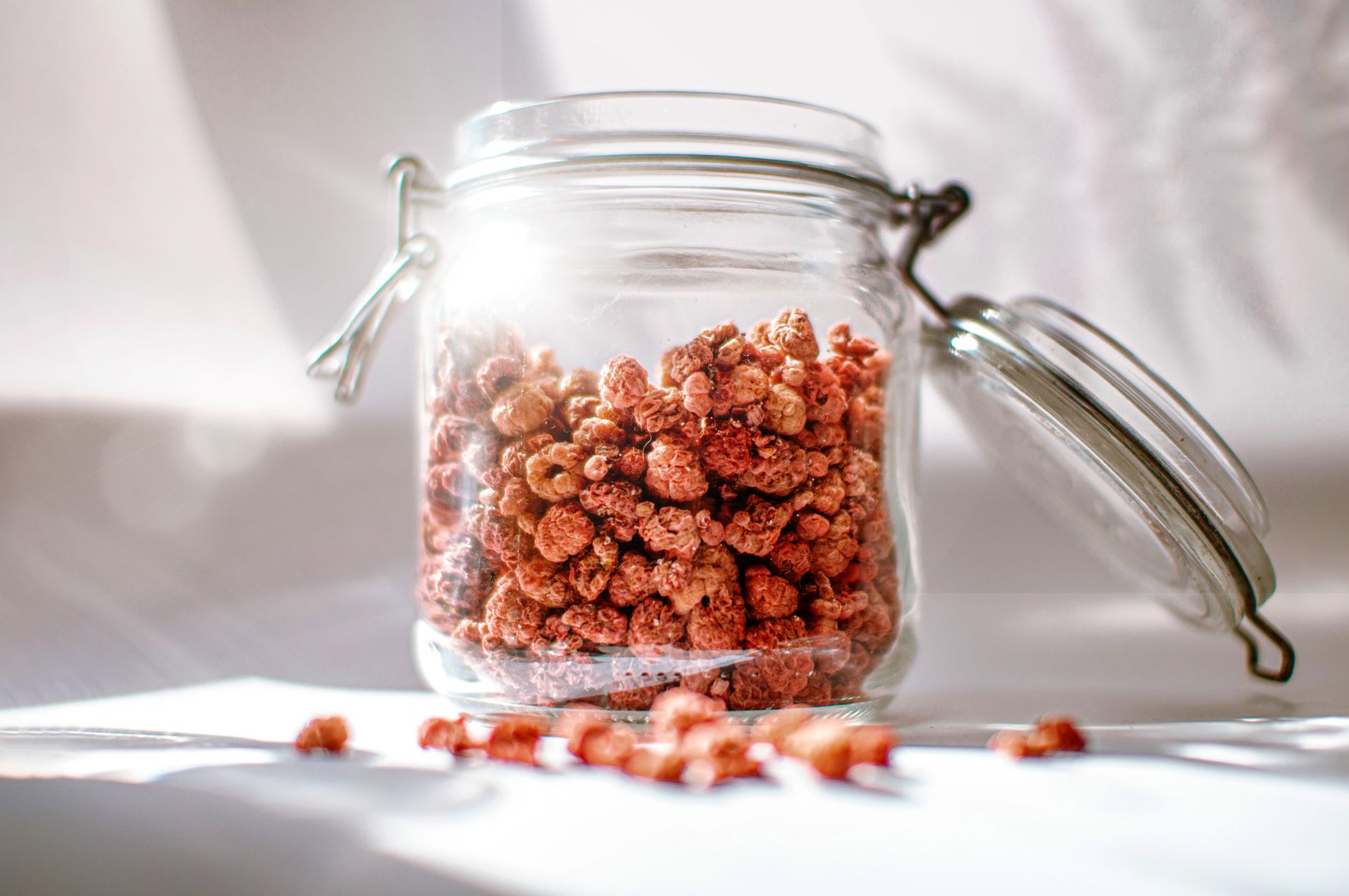
Alongside leaf with flower, the pharmacopoeia knows hawthorn berries (Crataegi fructus), botanically false fruits, which ripen to a bright red in autumn. They too contain oligomeric procyanidins and flavonoids, but are measured against the procyanidins rather than the flavonoids — two drugs, two sets of test requirements. That the fruit in particular turns up so often in older sources has historical reasons.
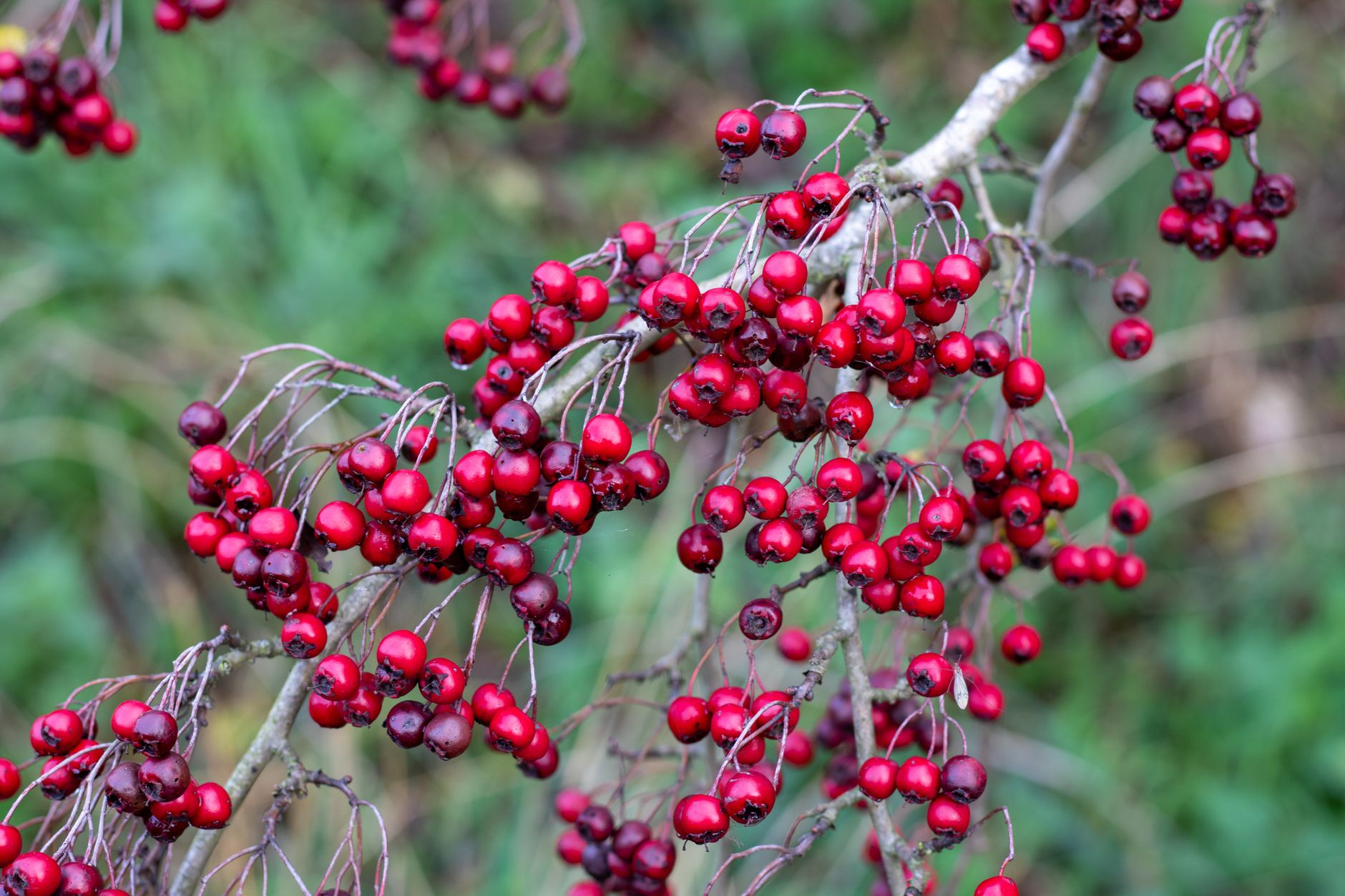
Historically, the fruits have been assessed less favourably in Germany than leaf with flower: on 19 July 1994, Commission E of the then Federal Health Office published a negative monograph on hawthorn berries — not because there was a risk, but because the scientific evidence on efficacy was insufficient at the time. For leaf with flower, by contrast, there was a positive monograph.
Then there is the species question. Besides the European species, Crataegus pinnatifida, Chinese hawthorn, is grown in northern China as a medicinal and useful plant. Its dried fruits are called "shanzha" and have been described in China as a food and medicinal plant since the "Xinxiu Bencao"; the traditional use there focuses mainly on digestion, not on the heart and circulation (Li et al., Journal of Ethnopharmacology 2023;301:115819, PubMed 36228891). It is the same genus name and a different plant with a different history.
Our own product is exactly this case, and the tin says so: Hawthorn + Magnesium contains an extract from hawthorn berries of Crataegus pinnatifida at a ratio of 20:1, corresponding to 600 mg of pure hawthorn berry powder per tablet, plus 56.25 mg of magnesium (15 % of the nutrient reference value) from magnesium oxide.

Why this ingredient nevertheless carries no claim, and what the magnesium beside it is doing there, is covered in the next section. Which magnesium compound supplies how much elemental magnesium is broken down in Magnesium forms compared — magnesium oxide is one of the four cases dealt with there.
What a European pack is allowed to say
Two legal frameworks apply side by side to the same plant, and that explains why two hawthorn packs on the same shelf are labelled so differently.
A preparation from hawthorn leaf and flower can be registered as a traditional herbal medicinal product. The EU monograph of the Committee on Herbal Medicinal Products (HMPC) of the European Medicines Agency of 5 April 2016 (EMA/HMPC/159075/2014) names two indications for it, both expressly based on long-standing use alone: temporary nervous cardiac complaints, once a doctor has ruled out serious conditions, as well as mild symptoms of mental stress and as a sleep aid. It also describes tea preparations (1–2 g of comminuted drug in 150 ml of boiling water, up to four times a day, maximum 6 g) and eleven different preparations, whose drug-to-extract ratios range from 4–7:1 for the dry extracts to 1:20 for an extract made with sweet wine.
As a food supplement, none of this may appear on the pack. For Crataegus there is no health claim authorised under the health claims Regulation (EC) No 1924/2006; applications on plant substances have been unprocessed for years and remain "on hold". A food supplement with hawthorn therefore describes what is in it — and says nothing about what it is supposed to do. Food supplements are not a substitute for a balanced and varied diet and a healthy lifestyle.
That is also the reason why many hawthorn preparations have a nutrient standing next to the plant. Magnesium has authorised claims, the plant extract has none. Permitted wordings include: Magnesium contributes to normal muscle function. Magnesium contributes to the normal functioning of the nervous system. Magnesium contributes to electrolyte balance. Magnesium contributes to the reduction of tiredness and fatigue. These sentences apply to the magnesium — not to the hawthorn. Anyone looking only for a defined amount of magnesium will find it in the Magnesium category; the hawthorn products are in the Hawthorn category.
Common questions
Is the hawthorn in the garden the same plant as the one in a supplement? Not necessarily. European hedgerows mostly hold Crataegus monogyna or C. laevigata; a berry extract in a supplement may come from C. pinnatifida in East Asia — in ours, it does. Same genus, different species; which one is meant is stated in the ingredients list.
Why do some packs say "leaf with flower" and others "berries"? Because they are two separate pharmacopoeial drugs. For leaf with flower there is an EU monograph and a defined minimum flavonoid content; the fruits are measured against the procyanidins and were assessed negatively by Commission E in 1994. That is why the plant part belongs on every label.
Can you gather and dry hawthorn flowers yourself? Gathering, yes — hawthorn is common and unmistakable once you look at blossom, thorns and leaf shape together. For a dosed preparation, your own harvest is still of little use: flavonoid content varies with species, site and harvest date, and the pharmacopoeial limit of 1.5 % cannot be checked at home. The main risk of confusion is in early spring with blackthorn, which flowers before the leaves appear.
Why does a pharmacy pack say more than a food supplement? Because these are two legal frameworks. A product registered as a traditional herbal medicinal product may name an indication; a food supplement may only do so with an authorised health claim — and for hawthorn there is none.
Sources: European Medicines Agency, EU monograph on Crataegus spp., folium cum flore, EMA/HMPC/159075/2014 (5 April 2016) · assessment report thereon, EMA/HMPC/159076/2014 (including details of Ph. Eur. no. 1432, the extract monographs and Commission E 1994) · Commission E, monograph Crataegi fructus, BAnz no. 133 of 19 July 1994 (assessment: negative) · Arzneipflanzenlexikon, hawthorn (Crataegus monogyna, C. laevigata) · Li R et al., Journal of Ethnopharmacology 2023;301:115819 (PubMed 36228891) · Regulation (EC) No 1924/2006 · Regulation (EU) No 432/2012 · Regulation (EU) No 1169/2011.