Hawthorn: tea, tincture or tablet?
Futures Nutrition Editorial Team · 14 August 2026
With hawthorn, the dosage form is not a question of convenience. It decides three things: how much plant is actually processed per day, which constituents end up in the preparation at all, and which law the product falls under. Between a daily portion of tea and a daily portion of powder there is, going by the figures in the EU monograph, roughly a factor of ten — same plant, same plant part, and both of them within the rules.
So anyone comparing tea, drops and tablets by the milligram figure is comparing nothing. The overview below converts every form back to the same reference: dried plant per day.
Four basic forms
Every hawthorn preparation on the market falls into one of four groups:
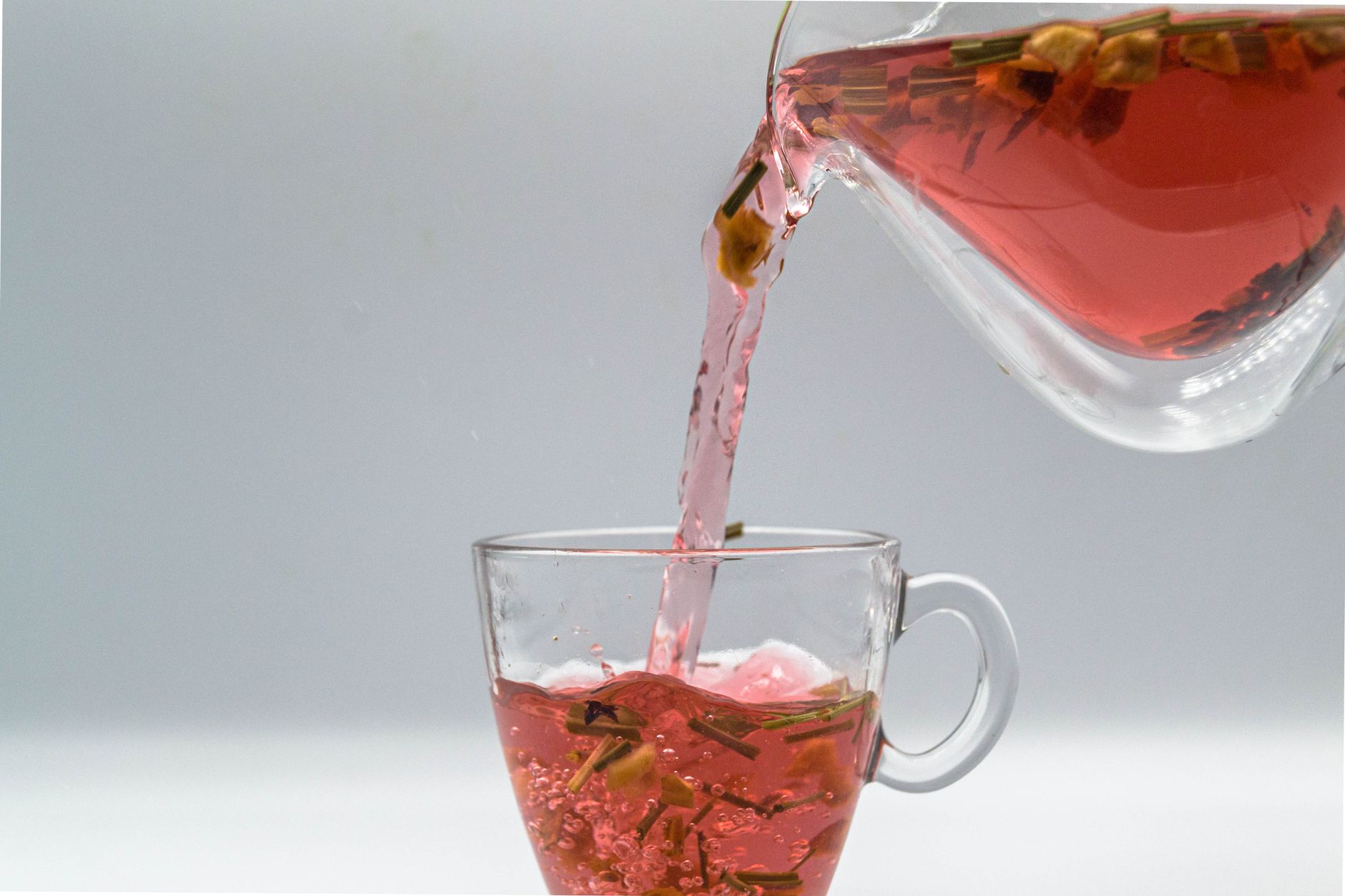
- Comminuted herbal substance — cut leaf with flower, in a tea bag or loose. Infused with boiling water; the extraction solvent is water, and the extract is only created in the cup.
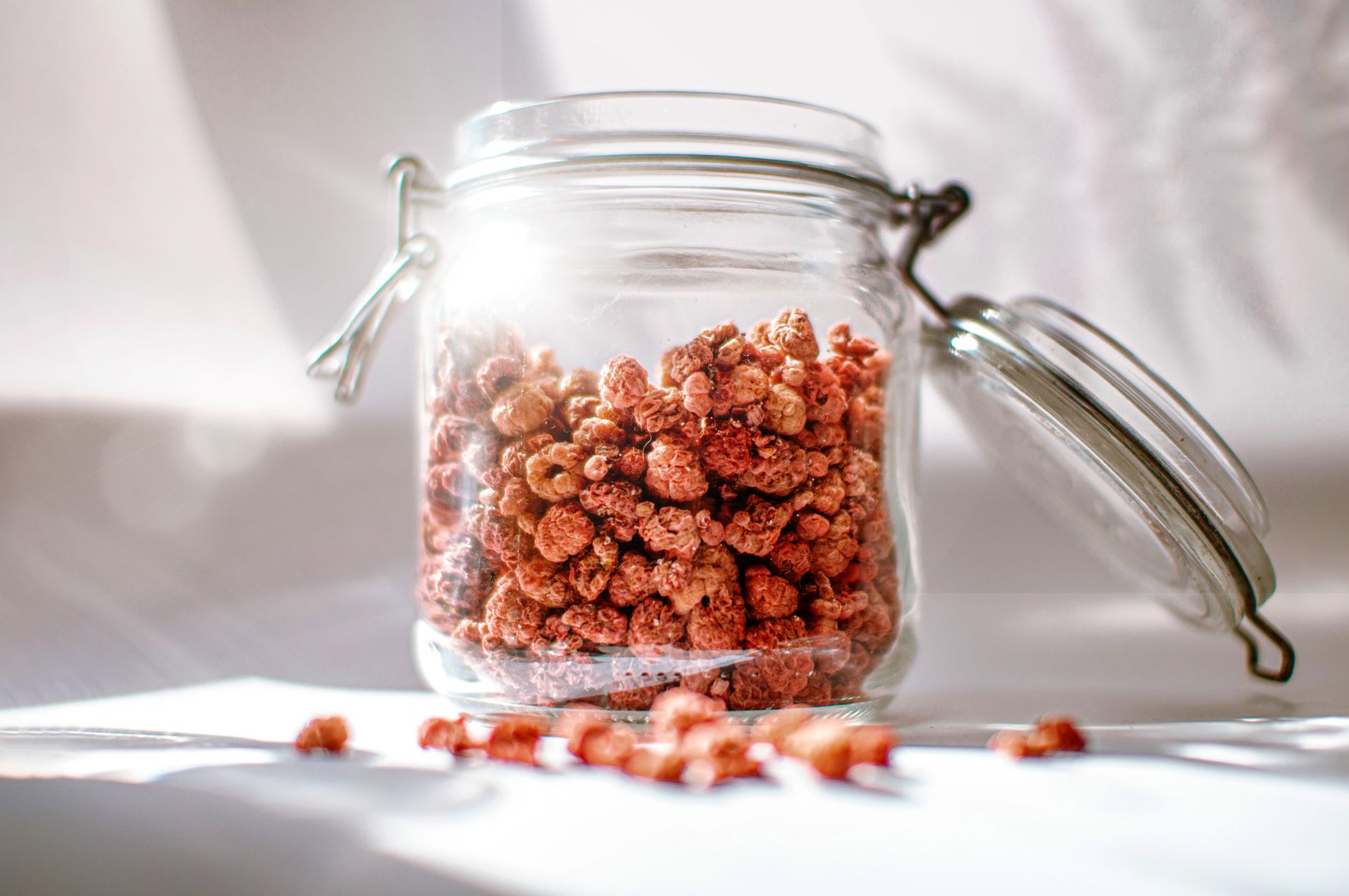
- Powder — the same dried plant, simply milled and pressed into a tablet or capsule. Nothing is extracted, everything is swallowed.
- Liquid preparations — tincture, liquid extract, pressed juice. The extraction solvent (usually diluted ethanol) stays in the product.
- Dry extract — extracted with a liquid, then evaporated. It arrives as a powder in tablets and capsules, but it is something entirely different from milled plant.
"Herbal substance" here simply means the dried plant part — a pharmacopoeial term, nothing more.
How much plant is in a daily dose?
The EU monograph of the Committee on Herbal Medicinal Products (HMPC) at the European Medicines Agency on Crataegus spp., folium cum flore (EMA/HMPC/159075/2014) names a daily dose for each accepted preparation. Convert those doses back to dried plant using the respective drug-extract ratio and the distance between the forms becomes visible:
| Preparation | Daily dose per the monograph | equals herbal substance/day | typical form |
|---|---|---|---|
| Infusion from comminuted herbal substance | 1–2 g per cup, up to 4× daily | up to 6 g | tea bag, loose |
| Powder | 570–1750 mg | 0.6–1.8 g | tablet, capsule |
| Dry extract 4–7:1 (methanol 70 %) | 240–900 mg | 1.0–6.3 g | tablet, capsule |
| Dry extract 4–7.1:1 (ethanol 45–70 %) | 240–900 mg | 1.0–6.4 g | tablet, capsule |
| Dry extract 4–5:1 (water) | 750–1000 mg | 3–5 g | tablet, capsule |
| Liquid extract 1:0.9–1.1 (ethanol 45 %) | 1.68–3.75 g | 1.5–4.2 g | drops |
| Liquid extract 1:2 (ethanol 45 %) | 5.52 g | 2.8 g | drops |
| Liquid extract 1:19.2–20 (sweet wine) | 16.5 g | 0.8 g | drinking vial |
| Tincture 1:3.5–4.5 (ethanol 35 %) | 5.1 g | 1.1–1.5 g | drops |
The range runs from a good half gram of herbal substance per day up to six grams. Both ends stand in the same monograph and both are used as intended — they simply answer different questions. An infusion takes a little out of a lot of material; a dry extract delivers a concentrated extract from little material. One cannot be converted into the other.
The figures apply to leaf with flower of Crataegus monogyna and C. laevigata. For the fruit there is no EU monograph — more on that below.
Tea: the infusion does not pull everything out
For the infusion the monograph gives 1–2 g of comminuted herbal substance per 150 ml of boiling water, up to four times daily, at most 6 g. The standard reference Blaschek et al. (2011), cited in the assessment report accompanying the monograph, gives around 1.5 g per 150 ml and 10 to 15 minutes of steeping, three to four times daily. German tea bags on the market contain 1.44 g or 2 g of cut leaf with flower (EMA/HMPC/159076/2014).
Water is a weaker extraction solvent than ethanol, and that is written down in the European Pharmacopoeia: the aqueous hawthorn dry extract must contain at least 2.5 % total flavonoids, the hydroalcoholic one at least 6 %. What an infusion actually takes along therefore depends on water volume, steeping time and degree of comminution — three variables that come out differently in every kitchen. That is why no tea packet carries a milligram figure for the finished infusion; what is declared is the herbal substance used, not the result.
How strongly these differences carry through in an extract, and why a high ratio number does not mean "stronger", is broken down in Hawthorn extract: what 20:1 actually means.
Tincture and drops: dosed in drops, not in milligrams
The monograph tincture has a ratio of 1:3.5–4.5 and is made with ethanol 35 % (V/V); the daily dose is 5.1 g. One German product on the market translates that into 59 drops three times daily at 35 drops per gram. Other liquid forms count similarly: three times 30 drops for the quantified liquid extract, twice 20 ml for the sweet-wine extract, three times 50 drops for the pressed juice.
Two things follow. First: drop size depends on the bottle, the pipette, the temperature and the angle at which it is held. Counting drops is a good approximation, not a scale. Second: tinctures and liquid extracts contain alcohol — for such preparations the monograph explicitly requires ethanol labelling under the EU guideline on excipients. Calculated from the monograph figures, a daily dose of tincture contains roughly 1.5 g of pure alcohol; a glass of wine contains about ten times that. Irrelevant for most people, and for some — pregnancy, abstinence, children — precisely the reason to reach for a solid form.
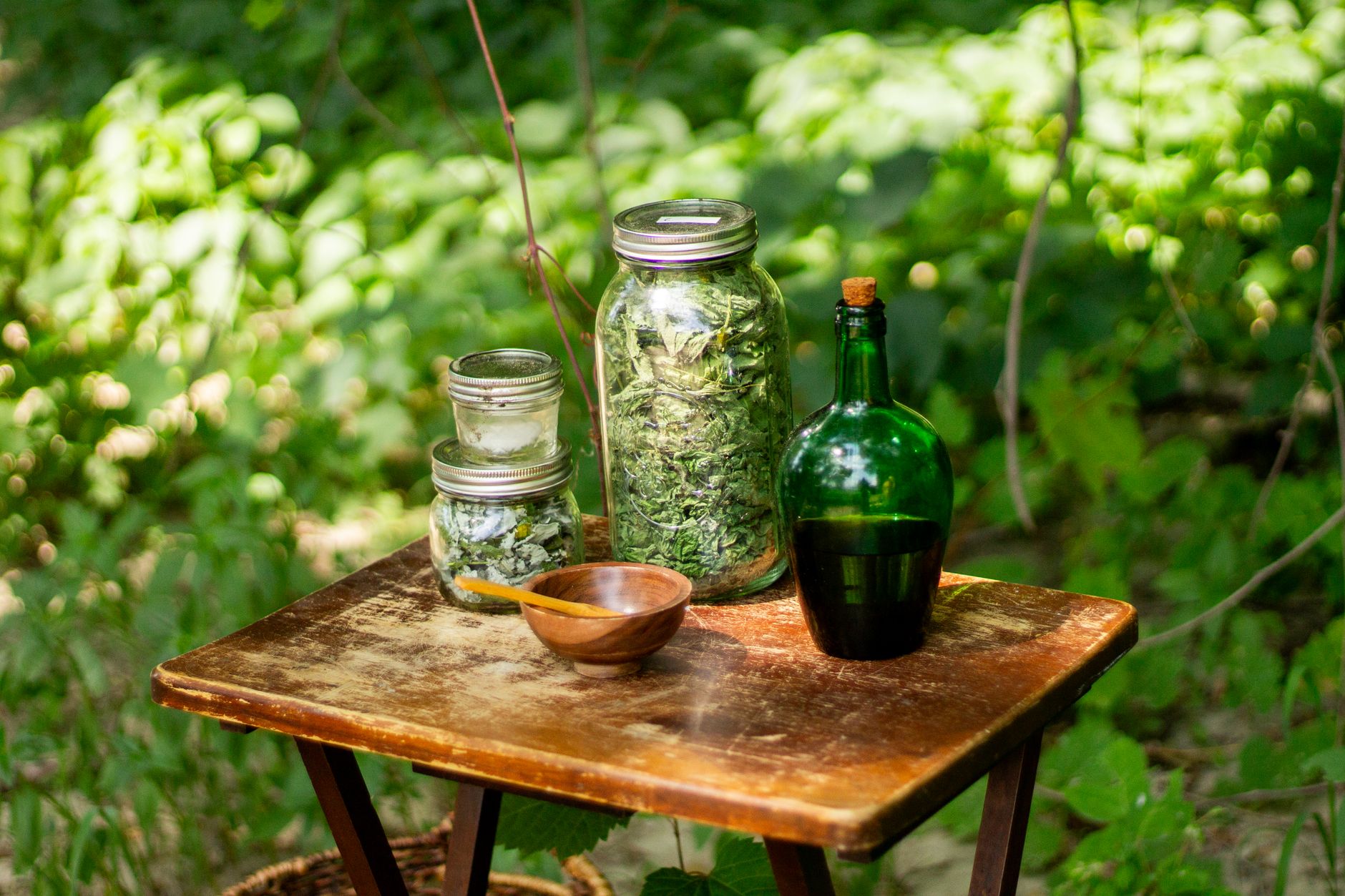
The pressed juice is a special case: it is obtained from fresh leaf and flower. Fresh plant consists largely of water, which is why the ratio figures of fresh preparations cannot be compared with those of dried material.
Tablet and capsule: pre-dosed — but of what?
With solid forms the counting falls away, but another question arrives: what is in the tablet — powder or extract? The assessment report lists side by side a German product with 190 mg of powder per coated tablet (one three times daily) and a Lithuanian one with 80 mg of dry extract per tablet (one to two three times daily). Here the smaller figure stands for the larger amount of plant: 80 mg of extract at a ratio of 4–7:1 corresponds to 320 to 560 mg of herbal substance, 190 mg of powder corresponds to 190 mg of herbal substance.
That is exactly why "500 mg hawthorn" on a tin, with nothing else stated, is not usable information. It only becomes comparable with three additions: plant part, ratio, and what the milligram figure refers to.
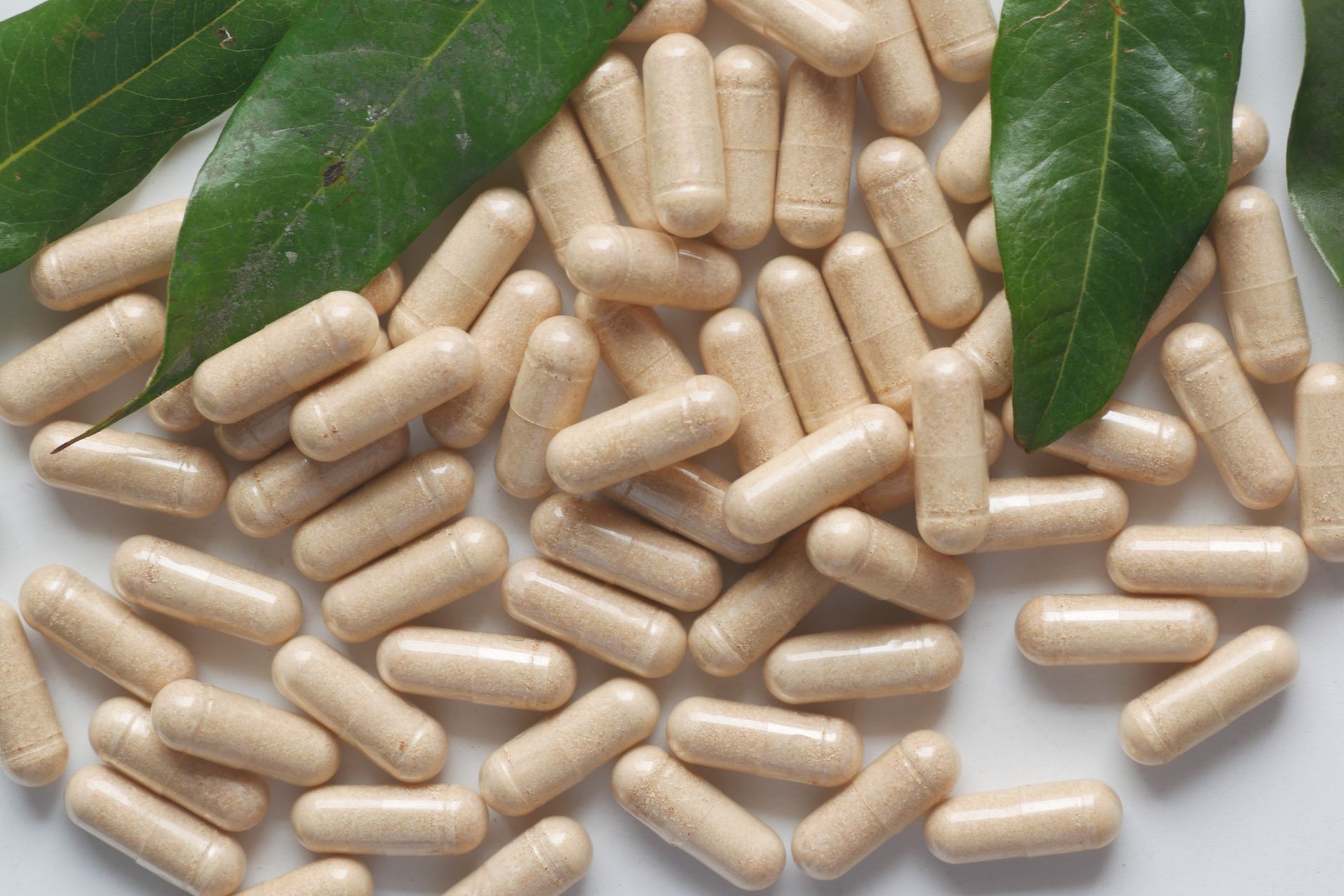
Our own product Hawthorn + magnesium is a tablet with a dry extract: hawthorn berry extract at a ratio of 20:1, corresponding to 600 mg of berry powder per tablet, plus 56.25 mg of magnesium from magnesium oxide.

Anyone looking only for a defined amount of magnesium will find it in the magnesium category; the hawthorn products are in the hawthorn category.
Not every form contains the same plant part
The question of form hangs on the plant part, and almost always in the same direction. Tea, tincture and pressed juice of European manufacture consist as a rule of leaf with flower — that is the herbal substance for which the EU monograph, the pharmacopoeial testing and the marketing registrations exist. Berry preparations, by contrast, frequently come from Crataegus pinnatifida, the Chinese hawthorn, whose dried fruits are traded under the name "shanzha" and were traditionally used for digestive complaints (Li et al., Journal of Ethnopharmacology 2023;301:115819, PubMed 36228891) — as an infusion too, only in a different tradition.
For the European fruit, Crataegi fructus, there is neither an EU monograph nor a positive assessment by the German Commission E; its 1994 monograph came out negative. That is not a safety finding but a statement about the data available at the time.
Medicine or food supplement
The most striking dividing line does not run between tea and tablet but between two legal frameworks.
Registered traditional herbal medicinal products — usually teas, tinctures and extract tablets from the pharmacy — may name a field of application. The EU monograph provides for two: for temporary nervous cardiac complaints, after serious causes have been excluded by a doctor, and for mild symptoms of mental stress and as an aid to sleep. The basis is long-standing use alone; registration under Directive 2004/24/EC requires 30 years of use, 15 of them in the EU. The same monograph also governs duration: if complaints persist for longer than two weeks, that belongs in a doctor's hands.
Food supplements fall under food law. They may not name a field of application, and for Crataegus there is no health claim authorised under the Health Claims Regulation (EC) No 1924/2006. Food supplements are not a substitute for a balanced and varied diet and a healthy lifestyle.
The two can look identical from the outside — same tablet shape, same plant. The difference is on the pack: a registered medicine carries a registration number and a package leaflet with a field of application, a food supplement an ingredient list and a serving recommendation. What that means for the timing and the duration of intake is set out in Taking hawthorn: timing, duration, course.
Common questions
Is tea weaker than a tablet? Not necessarily. Going by the monograph figures, a daily portion of tea contains up to 6 g of herbal substance — more than almost any solid preparation. What is less certain with tea is how much of it arrives in the cup: that depends on steeping time, water volume and degree of comminution. The dry extract is not stronger, it is more predictable.
Can I make a tea from hawthorn tablets? No — and it would serve no purpose. The extract in the tablet is the extract that a tea only creates in the cup; it has already been drawn and evaporated. On top of that come pressing excipients that are not meant to be infused. Whoever wants tea needs cut herbal substance.
How much alcohol is in a tincture? The extraction solvent of the monograph tincture is ethanol 35 % (V/V). Calculated from the daily dose of 5.1 g, that is around 1.5 g of pure alcohol per day — rounded, and to be read only as an order of magnitude. The EU monograph requires corresponding labelling for alcohol-containing preparations; the exact figure is on the individual product.
Why does no tea packet state an active-substance amount? Because the amount in the finished infusion is not fixed. What is declared is what went in — 1.44 g or 2 g of cut herbal substance per bag. With a dry extract it is the other way round: there the extract is already finished, so it can be written on the pack in milligrams.
Sources: European Medicines Agency, EU monograph on Crataegus spp., folium cum flore, EMA/HMPC/159075/2014 (5 April 2016), sections 2, 3, 4.2 and 4.4 · assessment report thereto, EMA/HMPC/159076/2014 (market overview of German and Lithuanian products, Blaschek et al. 2011, Commission E 1994) · European Pharmacopoeia, monograph no. 1432 · Directive 2004/24/EC · Regulation (EC) No 1924/2006 · Li R et al., Journal of Ethnopharmacology 2023;301:115819 (PubMed 36228891).