Selenium and the thyroid: what the claim covers
Futures Nutrition Editorial Team · 12 August 2026
Many selenium packs carry a sentence that is officially authorised: Selenium contributes to normal thyroid function. It is correct — it just says something other than what most buyers read into it. It describes the maintenance of a function that is already normal, not that a tablet gives the thyroid extra performance. Above all: selenium is not the raw material of thyroid hormones. That is iodine — and iodine, not selenium, is the item in short supply in Germany.
So anyone reaching for a selenium supplement because "the thyroid" is the topic should keep two things apart: the building material and the tool. The thyroid needs both, but only one of them is regularly missing here.
What the authorised claim says — and what it does not
The sentence comes from Regulation (EU) No 432/2012, the list of authorised health claims. It was assessed by EFSA in two opinions (EFSA Journal 2009;7(9):1220 and 2010;8(10):1727). What sounds so plain is narrowly drawn:
| The sentence says … | … and does not say |
|---|---|
| "contributes" — selenium is one of several factors | that selenium alone carries thyroid function |
| "normal function" — maintaining the normal state | that a disturbed function can be changed with it |
| it applies to foods that are a source of selenium | that a higher dose permits a stronger claim |
| it applies to healthy people in general | anything about people with thyroid disease |
The last point in the left-hand column matters most in practice. The claim may only be used if the product is at least a source of selenium — that is, if it supplies 15 % of the nutrient reference value per daily portion (Annex to Regulation (EC) No 1924/2006 in conjunction with Directive 2002/46/EC). With a nutrient reference value of 55 µg that comes to 8.25 µg of selenium. No more is needed for the thyroid sentence to appear on the pack. So the sentence on the label tells you nothing about whether there are 10 µg or 200 µg inside — for that you have to read the nutrition table. What else is worth checking on the label is covered in Buying selenium: more µg is not a better deal.
What selenium actually does in the thyroid
Selenium does not act as selenium but as a component of around 25 selenoproteins. Three groups of them serve the thyroid:
- Deiodinases (types 1, 2 and 3). They split iodine off the thyroid hormone and thereby convert the storage hormone thyroxine (T4) into the active triiodothyronine (T3) — or break it down. The German Nutrition Society (DGE) puts it this way in its questions and answers on selenium: other selenium-dependent enzymes regulate the balance of thyroid hormones.
- Glutathione peroxidases. Hormone synthesis runs via hydrogen peroxide; the thyroid produces it itself in order to incorporate iodine. The selenium-dependent peroxidases clear away the excess. That is also the reason why a second claim is authorised for selenium, namely that it contributes to the protection of cells from oxidative stress.
- Thioredoxin reductases, which support the same redox system.
This is why the thyroid, relative to its weight, contains more selenium than any other organ.
The thyroid stands at the front of the queue
Here lies the point that advertising for selenium supplements rarely mentions: when selenium becomes scarce, the body does not distribute it evenly but according to a ranking. The thyroid, the brain and other endocrine tissues keep their selenium; liver, kidney, muscle and blood serum give up their stores first. Within the selenoproteins the deiodinases rank high in that order, glutathione peroxidase 1 far down (review: Köhrle, Selenium and the control of thyroid hormone metabolism, Thyroid 2005;15(8):841–853).
The practical consequence: the T4-to-T3 step only suffers under severe selenium deficiency. And that is rare in Europe. The DGE names as regions with deficiency diseases the highlands of central Africa and Asia as well as certain regions of China with an intake of around 10 µg per day; in Europe a risk exists "as a rule only in illnesses with reduced utilisation or increased loss of selenium", for instance in chronic inflammatory bowel disease, cystic fibrosis or dialysis. Anyone eating an average diet in Germany does not have a selenium problem at the thyroid — they have, if anything, an iodine problem.
Iodine is the building material, selenium the tool
Thyroid hormones are made of iodine: T4 carries four iodine atoms, T3 three. Without iodine there is no hormone — no amount of selenium replaces that. And for iodine the supply situation in Germany looks different from selenium:
| Iodine | Selenium | |
|---|---|---|
| Role | part of the hormones themselves | part of the enzymes that rebuild and protect them |
| DGE reference value, adults | 150 µg/day (recommended intake, 2025 derivation) | 60 µg (women) / 70 µg (men), estimated value |
| Pregnant / breastfeeding | 220 / 230 µg | 60 / 75 µg |
| Main sources | sea fish, iodised table salt, milk and eggs given appropriate feeding | meat, eggs, fish, mushrooms, brassicas and onions |
| Supply in Germany | declining: 32 % of adults and 44 % of children and adolescents at risk of too low an intake | mid-range in Europe, genuine deficiency rare |
The 150 µg are new: the DGE revised the iodine reference value in 2025 and published it in the 3rd edition of the Reference Values for Nutrient Intake. The supply figures come from the Robert Koch Institute. A visible sign of longer-standing iodine deficiency is, according to the DGE, enlargement of the thyroid.
For pregnant and breastfeeding women the DGE recommends, in addition to a balanced diet with iodised table salt, a supplement of 100 µg (up to 150 µg) of iodine daily — expressly after consulting a doctor, and all the more so with existing thyroid disease. A selenium supplement does not do this; we do not carry an iodine product, and the usual route is a different one anyway: iodised salt in the kitchen, and when shopping, an eye on iodised salt in bread, sausage and cheese.
Historically there is even a case in which the order matters: in regions with simultaneous iodine and selenium deficiency, a selenium deficiency can worsen the expression of myxoedematous cretinism — the two trace elements mesh together and cannot be swapped for one another.
Iron belongs at the table too
The enzyme that incorporates iodine into the hormone precursor — thyroid peroxidase — is a haem-containing enzyme and therefore depends on iron. With low iron stores it works less well. That is why reviews on the thyroid regularly list the trio of iodine, selenium and iron together. Whether iron stores are low at all is settled by a laboratory value, however, and not by an assumption — ferritin and transferrin saturation, not haemoglobin alone. Our Iron with inulin is one example of such a preparation — it makes sense only once the value says so.
What large trials found in existing thyroid disease
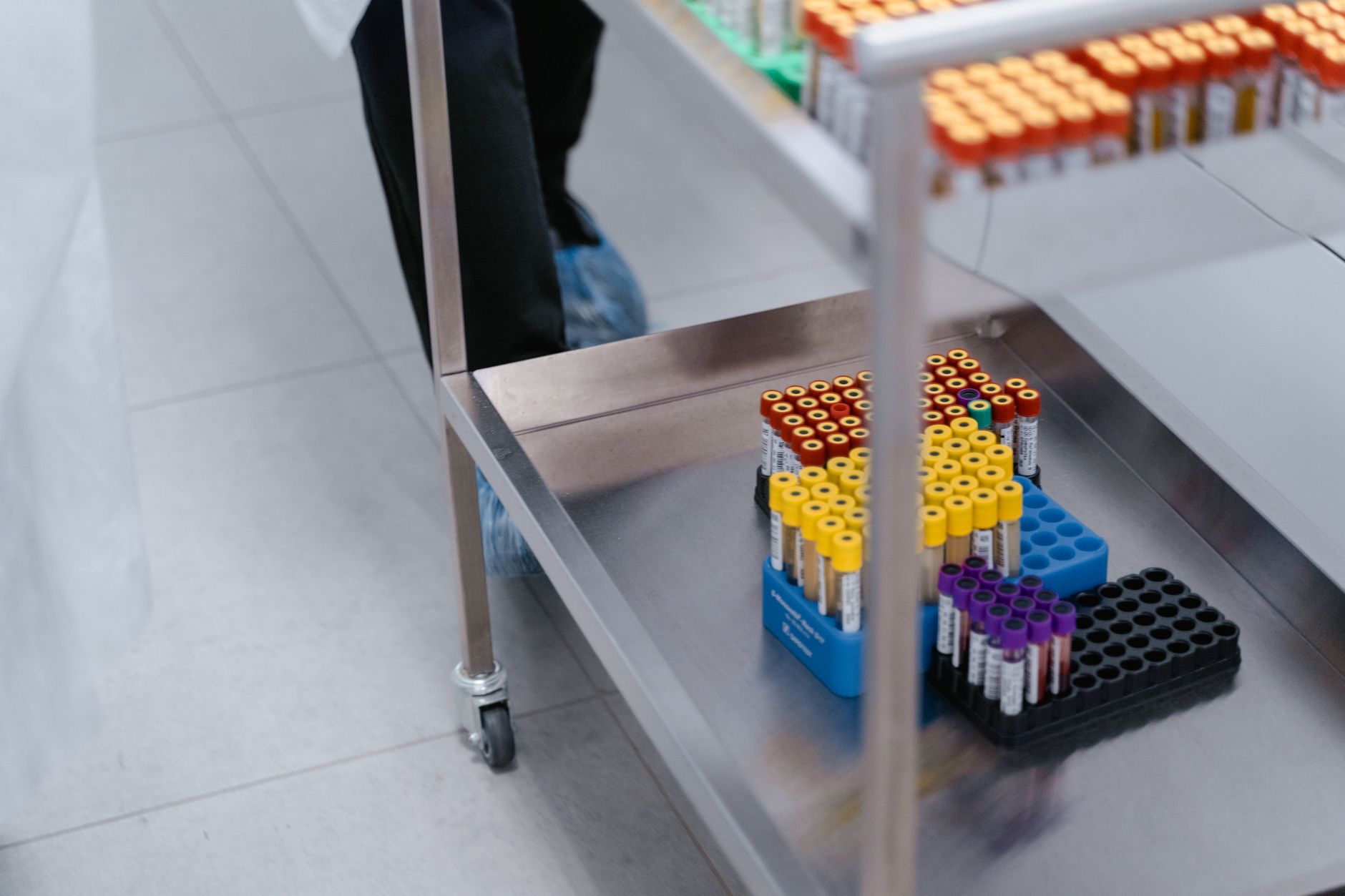
Selenium has been a topic in thyroid disease for years — not as a food supplement but as a test substance in clinical trials. The results are more sobering than the trace element's reputation suggests:
- Cochrane review 2013/2014. Four randomised trials with 463 participants, a mean duration of 7.5 months, mostly with unclear to high risk of bias. Conclusion: the evidence on selenium in chronic thyroid inflammation (Hashimoto's thyroiditis) is incomplete. Antibodies against thyroid peroxidase did fall in three trials; what clinical significance that has remained open.
- CATALYST, 2024. 412 people with hypothyroidism and elevated antibodies received, in addition to their levothyroxine treatment, 200 µg of selenium as selenium yeast or placebo for twelve months. Result: in no scale of the ThyPRO-39 quality-of-life questionnaire did the groups differ. Antibodies were lower in the selenium group without the levothyroxine dose or the fT3/fT4 ratio changing as a result (European Thyroid Journal 2024;13(1):e230175).
- GRASS, 2026. 430 people with newly diagnosed hyperthyroidism of the Graves' type, 200 µg of selenium or placebo over 24 to 30 months in addition to standard therapy. No difference in the relapse rate (54.6 % versus 53.3 %), no difference in quality of life. The authors write expressly that their results do not support the use of selenium in this situation (European Thyroid Journal 2026;15(1):ETJ250264).
For the question in front of the shelf this means two things. First: anyone with thyroid disease settles the selenium question with the doctor who also knows the laboratory values — it is not a question a food supplement answers. Second: for healthy people exactly the one authorised claim above remains, and that describes maintenance, not change.
What this means for the choice

Our Selenium 100 µg supplies 100 µg per tablet, that is 182 % of the nutrient reference value, as selenium-enriched yeast; the recommended intake is one tablet daily after a meal. At the top end EFSA sets the tolerable upper intake level at 255 µg per day (EFSA Journal 2023;21(1):7704), while the German Federal Institute for Risk Assessment proposes a considerably lower 40 µg per daily recommended intake for food supplements (opinion 010/2024) — a proposal, not a maximum level in force. Further strengths are listed in the Selenium category, the remaining trace elements under Minerals.
Four claims are authorised for selenium (Regulation (EU) No 432/2012): Selenium contributes to the normal thyroid function. Selenium contributes to the normal function of the immune system. Selenium contributes to the protection of cells from oxidative stress. Selenium contributes to the maintenance of normal hair and nails. Food supplements are not a substitute for a balanced and varied diet and a healthy lifestyle.
Common questions
Is the thyroid sentence on every selenium pack? Only on products that are at least a source of selenium — 8.25 µg per daily portion. Conversely, a supplier may leave it off even where it would be permitted. Nothing about the dose can be inferred from the presence or absence of the sentence.
I take selenium for the thyroid — is that enough without iodine? No. Iodine is the building material of the hormones, selenium a component of the enzymes that rebuild them. The DGE names 150 µg of iodine per day for adults and points to sea fish, iodised table salt, milk and eggs. According to the Robert Koch Institute, 32 % of adults in Germany are at risk of too low an iodine intake — with selenium, by contrast, a genuine deficiency is rare.
Does 200 µg do more than 100 µg? Not for the authorised claim: it applies from 8.25 µg per daily portion and does not grow stronger with the amount. Both amounts lie below the tolerable upper intake level of 255 µg, with dietary intake counting towards it. How much selenium the diet already supplies is shown in Selenium in foods.
I take levothyroxine — should I add selenium? That is a medical question. The largest trial on it (CATALYST, 412 participants, twelve months) found no difference between 200 µg of selenium and placebo in quality of life. With thyroid disease and ongoing medication the rule is: speak to the doctor first, do not supplement on your own initiative.
Sources: Regulation (EU) No 432/2012 · EFSA, Scientific Opinion on the substantiation of health claims related to selenium, EFSA Journal 2009;7(9):1220 and 2010;8(10):1727 · Regulation (EC) No 1924/2006, Annex · Directive 2002/46/EC · Regulation (EU) No 1169/2011, Annex XIII · DGE, Selected questions and answers on selenium (2021) · DGE, iodine reference value, 2025 derivation, with Robert Koch Institute data on iodine supply · DGE/ÖGE, Reference Values for Nutrient Intake, 3rd edition · Köhrle, Selenium and the control of thyroid hormone metabolism, Thyroid 2005;15(8):841–853 · van Zuuren et al., Selenium Supplementation for Hashimoto's Thyroiditis: Summary of a Cochrane Systematic Review, European Thyroid Journal 2014;3(1):25–31 · Larsen et al., Selenium supplementation and placebo are equally effective in improving quality of life in patients with hypothyroidism, European Thyroid Journal 2024;13(1):e230175 · Cramon et al., Selenium supplementation in individuals with newly diagnosed Graves' hyperthyroidism, European Thyroid Journal 2026;15(1):ETJ250264 · EFSA, Tolerable upper intake level for selenium, EFSA Journal 2023;21(1):7704 · BfR, opinion 010/2024.