Too much selenium: where the limit lies
Futures Nutrition Editorial Team · 12 August 2026

The tolerable upper intake level for selenium is 255 µg per day for adults — that is the figure EFSA set in 2023, and it means everything together: food plus supplements. Requirements lie between 55 and 70 µg depending on which reference value you follow. Between the two sits a good factor of four, which makes the distance far narrower for selenium than for most other nutrients. With vitamin C or magnesium you can be off by an order of magnitude; with selenium you cannot.
In practice that still does not mean one tablet a day gets tight. Diet in Europe supplies an average of 31 to 66 µg daily; a supplement with 100 or 200 µg therefore stays below the upper level. It gets tight where several sources come together without anyone doing the arithmetic — two preparations that both contain selenium, plus Brazil nuts on a regular basis.
The four figures in circulation
| Value | Where it comes from | What it means |
|---|---|---|
| 55 µg | Regulation (EU) No 1169/2011, Annex XIII | nutrient reference value for the percentage on the pack |
| 60 / 70 µg | DGE, reference values | estimated value for an adequate intake (women / men) |
| 255 µg | EFSA, 2023 | tolerable upper intake level per day — food and supplements |
| 40 µg | BfR, 2024 proposal | proposed maximum amount per daily dose of a supplement |
Only one of these figures is an upper limit in the proper sense: the 255 µg. The rest are reference and target values, and the BfR figure is a proposal, not law in force. Where the first two come from is set out in detail in Selenium daily requirement: 55, 60 or 70 µg?.
Why the upper level fell from 300 to 255 µg
Until 2023 an upper level of 300 µg applied in Europe, derived from cases of clinical selenosis. EFSA re-evaluated it and chose an earlier and more sensitive endpoint: hair loss. It occurs before the more serious signs and is well documented.
The data basis is the SELECT trial, a large randomised study in which participants received 200 µg selenium daily as L-selenomethionine over several years. Hair loss occurred there more often than under placebo. Together with intake from the diet this gave a lowest observed adverse effect level (LOAEL) of 330 µg per day. EFSA applied an uncertainty factor of 1.3 to it — the result was 255 µg, valid for adult men and women including pregnant and breastfeeding women.
The authority examined other endpoints and discarded them because the data were not sufficient for a derivation: brittle nails, high blood pressure, thyroid and cancer endpoints, all-cause mortality. They are not disproved, they simply do not carry a number.
Lower values apply to children and adolescents
The values were scaled down from the adult figure via body weight:
| Age | Tolerable upper intake level |
|---|---|
| 1 to 3 years | 60 µg |
| 4 to 6 years | 90 µg |
| 7 to 10 years | 130 µg |
| 11 to 14 years | 200 µg |
| 15 to 17 years | 250 µg |
| 18 years and over | 255 µg |
The value for small children therefore sits roughly where a single adult tablet sits. Selenium supplements for adults belong out of the reach of children.
What a persistently high intake shows up as
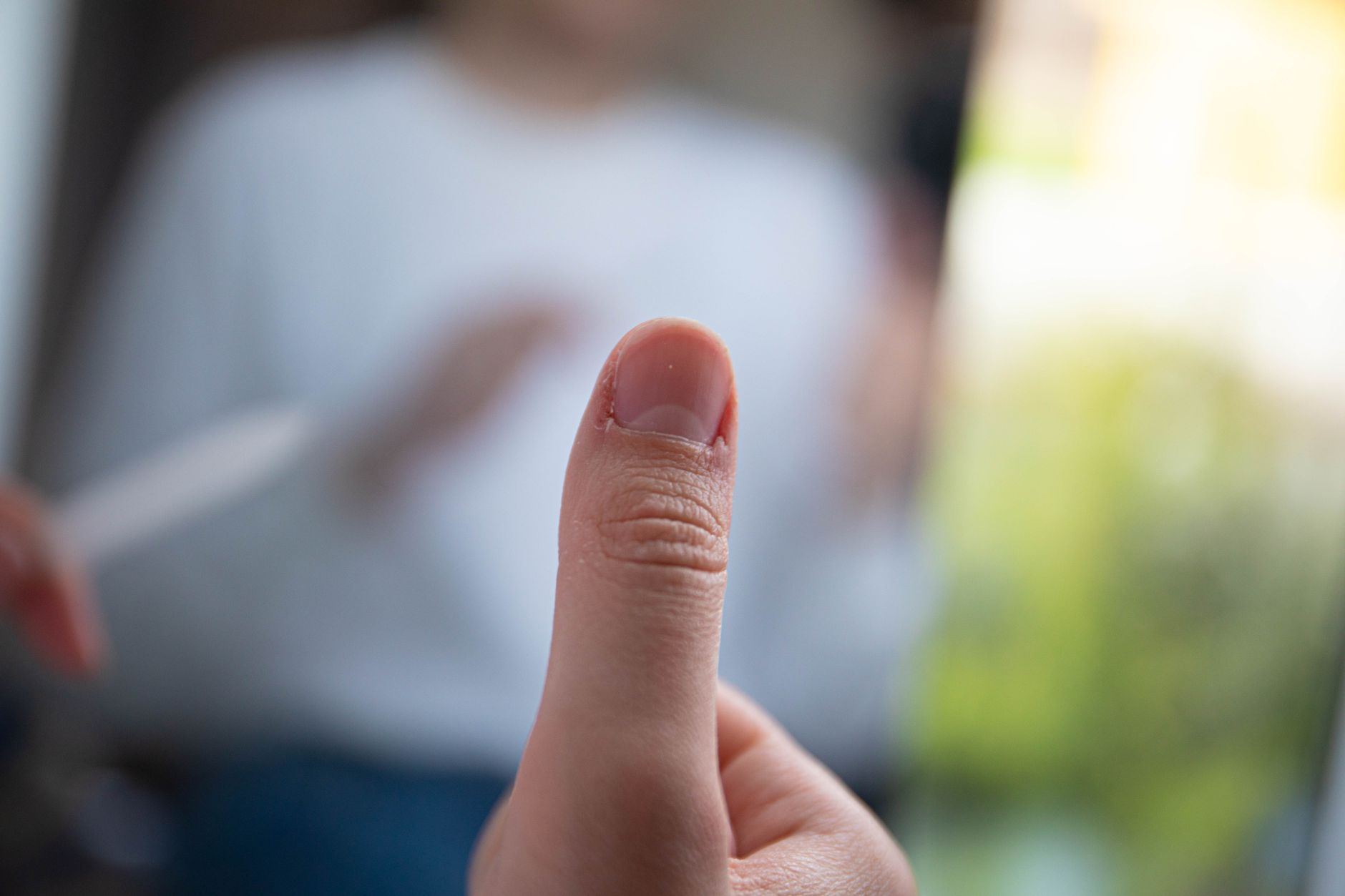
Hair and nails are the first thing to react — they become brittle, nails discolour or come away, hair falls out. The DGE also describes tiredness, joint pain, nausea and diarrhoea, plus a garlic-like smell on the breath that comes from volatile selenium compounds. In severe cases neurological disturbances are added. The picture as a whole is called selenosis.
Two orders of magnitude help with placing this. In the Chinese region of Enshi, selenosis occurred in the late 1950s at intakes in the range of several thousand micrograms daily — the soil there is exceptionally rich in selenium. And in 2008 more than 200 people in the USA fell ill after a liquid food supplement contained more than 200 times the declared amount of selenium because of a manufacturing error; the complaints were exactly those named above. Both are outliers, not everyday scenarios — but they show what the picture looks like when it really is too much.
Where too much adds up in everyday life
EFSA considers it unlikely that adults exceed the upper level through diet — with two exceptions: regular users of high-dose supplements and regular eaters of Brazil nuts. 100 g of Brazil nuts contain around 103 µg selenium, and the variation from nut to nut is large. As an addition to muesli that is unproblematic; as a daily handful it is an item worth counting in.
The second collecting point is combination products. Selenium is often in multivitamin, skin-hair-nails and thyroid preparations without having been the reason for the purchase. Anyone who takes two of those plus a selenium supplement quickly adds up 200 µg and more without noticing. A look at the ingredient lists of all products taken is more useful here than any calculation with individual values. Which foods contribute how much is set out in Selenium in foods.
The form matters for accumulation in tissue: selenomethionine is incorporated into body proteins in place of methionine and thus builds a store, whereas selenite does not take that route. EFSA does not assess this separately for the upper level, but it does matter for understanding blood values — more on that in Selenium forms compared.
The BfR proposal: 40 µg per daily dose
The German Federal Institute for Risk Assessment proposes 40 µg per daily recommended intake for food supplements (opinion 010/2024, which replaces the 2021 proposal of 45 µg). How it gets there: from the upper level for 15- to 17-year-olds (250 µg), the intake of high consumers via the diet is subtracted, half of the remainder is reserved for fortified foods, and the amount left is halved once more because of possible multiple intake.
This is not a maximum amount in force. Maximum amounts for minerals in food supplements have to this day not been set EU-wide, and between the BfR's 40 µg and EFSA's 255 µg lies the entire range in which the strengths on offer move. Anyone who sees the figures side by side understands why a 200 µg product and a 40 µg product can both legally sit on the shelf.
The diabetes finding that is often quoted
In an older cancer prevention study (the NPC trial) participants received 200 µg selenium daily over an average of 7.7 years. In the 2007 analysis more cases of type 2 diabetes occurred under selenium than under placebo, and the association showed up above all in participants who already had the highest blood selenium values at the start. EFSA included this endpoint in its 2023 assessment but did not use it as the basis for the upper level, because the data were not sufficient for that. As an argument the finding is therefore no basis for a ban, but it is a reason not to let high amounts run along permanently without an occasion for them.
What is on our label

Our Selenium 100 µg provides 100 µg per tablet and therefore 182 % of the nutrient reference value; the recommended intake is one tablet daily after a meal. Together with an average diet that puts you in the range of 130 to 170 µg and clearly below the tolerable upper intake level — as long as no second selenium-containing preparation stands next to it. Further strengths are in the Selenium category, the remaining trace elements under Minerals.
The following statements are authorised for selenium (Regulation (EU) No 432/2012): Selenium contributes to the normal function of the immune system. Selenium contributes to the normal thyroid function. Selenium contributes to the protection of cells from oxidative stress. Selenium contributes to the maintenance of normal hair and nails. What the thyroid sentence covers in detail is set out in Selenium and the thyroid. Food supplements are not a substitute for a balanced and varied diet and a healthy lifestyle.
Frequently asked questions
Is 200 µg per day too much? No, the amount is below the tolerable upper intake level of 255 µg — but together with the diet it leaves little room above. Anyone taking 200 µg should be sure that no further preparation brings selenium along. The BfR proposal of 40 µg per daily dose lies clearly below that; it is not a limit value, but it is the reason some suppliers dose lower.
I accidentally took two tablets — what now? With a one-off double amount in the range of 100 to 200 µg per tablet no reaction is to be expected; the upper level is a value for permanent daily intake, not a threshold above which a single dose does harm. It looks different if the dose has been doubled over weeks — then the recommended intake is the better point of reference and, in case of doubt, a word with a doctor.
How many Brazil nuts are harmless? There is no fixed number, because the content varies strongly by origin — 100 g supply around 103 µg on average. The German Federal Office for Radiation Protection advises against excessive consumption anyway because of the natural radium content, and advises against it entirely for pregnant and breastfeeding women, children and adolescents. Unproblematic as an occasional nut, unsuitable as a daily selenium source.
Does too much selenium reverse itself? The described changes to hair and nails usually reverse after stopping, but they need time, because hair and nails have to grow back. Selenium from selenomethionine is moreover stored in body protein and is broken down more slowly than selenium from inorganic sources.
Sources: EFSA, Scientific opinion on the tolerable upper intake level for selenium, EFSA Journal 2023;21(1):7704 · EFSA, Dietary Reference Values for selenium (2014) · BfR, update (2023): maximum amount proposals for selenium in foods including food supplements, opinion 010/2024 · DGE, selected questions and answers on selenium · Lippman et al., SELECT, JAMA 2009 · Stranges et al., Effects of long-term selenium supplementation on the incidence of type 2 diabetes, Annals of Internal Medicine 2007;147:217–223 · FDA/CDC, Selenium toxicity associated with a dietary supplement, 2008 · German Federal Office for Radiation Protection, notes on eating Brazil nuts · Souci/Fachmann/Kraut, Die Zusammensetzung der Lebensmittel · Regulation (EU) No 1169/2011, Annex XIII · Regulation (EU) No 432/2012.